Sageuk K Drama Beginner Guide: Tropes, History, and Shows
At a glance
- In shortA local guide explaining Korean historical drama subgenres, tropes, eras, terms, and recommended starter shows.
- Best forBeginner viewers interested in Korean historical dramas
- WhereNationwide
- Key pointsSageuks split into traditional history and modern fusion subgenres. · Most shows are set in the Three Kingdoms, Goryeo, or Joseon eras. · Top starter shows include Kingdom, Mr. Queen, and The Red Sleeve.
- Heads-upRakuten Viki subtitles often include footnotes explaining court ranks and terms.
A Local Korean Perspective on Historical Dramas
When I was growing up in Seoul, Sunday evenings meant one thing in my household: gathering around the television with my grandparents to watch grand palace politics unfold on screen. My grandmother would quietly sip her barley tea while explaining the complex family trees of 15th-century kings, pointing out the intricate embroidery on royal robes. Back then, historical Korean dramas were long, slow-paced epics that catered mostly to older generations. Today, that has completely transformed.
Historical K-dramas—known locally as sageuk (사극)—have evolved into some of the most dynamic, visually stunning, and globally beloved storytelling coming out of South Korea. Whether you were drawn in by the terrifying political intrigue of zombie-infested Joseon or the charming romantic antics of a modern chef trapped in a queen’s body, entering the world of sageuk can feel intimidating. There are unique speech patterns, ancient court ranks, distinct fashion styles, and centuries of real history wrapped into these narratives. If you are seeking a practical sageuk k drama guide for beginners, this local breakdown will help you navigate the subgenres, decode the cultural tropes, and choose the perfect series to start your journey.
✈️ Book your trip to Korea — hotels, flights & more
What Exactly Is a Sageuk?
The word sageuk literally translates to “historical drama” in Korean, combining sa (history) and geuk (drama or play). However, in Korean pop culture, the term covers a broad spectrum of storytelling styles set anywhere from ancient antiquity to the early 20th century. To understand what you are watching, it helps to know the two primary categories modern viewers divide these shows into.
Traditional Sageuk (Jeongtong Sageuk)
Traditional historical dramas (정통 사극) adhere closely to documented historical records, such as the Annals of the Joseon Dynasty. These shows typically focus on major political shifts, military battles, royal succession crises, and famous historical figures like King Sejong the Great or Admiral Yi Sun-sin. They often run longer (30 to 50+ episodes), feature dense political dialogue, and rely heavily on formal, archaic Korean speech. While deep and rewarding, traditional sageuks can be challenging for absolute beginners.
Fusion Sageuk (Fusion Sageuk)
Fusion historical dramas (퓨전 사극) blend real historical settings with modern storytelling tropes, fictional characters, fantasy elements, romance, comedy, or thriller motifs. Instead of strict historical accuracy, fusion sageuks prioritize emotional resonance, sleek aesthetics, modern pacing, and accessible character arcs. Shows like Kingdom, Mr. Queen, and Alchemy of Souls fit into this category. For international viewers, fusion sageuks serve as the perfect starting point.
Understanding the Historical Eras in K-Dramas
Most sageuks take place across three distinct eras of Korean history. Recognizing the visual markers and social norms of each era makes watching much more enjoyable.
| Historical Era | Key Visual Markers | Recommended Beginner Show |
|---|---|---|
| Three Kingdoms (57 BCE–668 CE) | Armored warriors, leather gear, fluid swordplay | Hwarang |
| Goryeo Dynasty (918–1392) | Silk robes, ornate jewelry, Buddhist themes | Moon Lovers: Scarlet Heart Ryeo |
| Joseon Dynasty (1392–1910) | Black horsehair hats (gat), colorful hanbok | The Red Sleeve |
The Joseon Dynasty (1392–1910)
By far the most common setting for K-dramas, Joseon was heavily shaped by Neo-Confucian ideals. Society was strictly stratified into four main classes: the yangban (aristocratic scholars), jungin (middle-class specialists), yangmin (commoners), and cheonmin (outcast classes, including performers and court servants). In Joseon dramas, men wear tall black horsehair hats called gat, and court politics revolve around the scholar-officials clashing with the king.
The Goryeo Dynasty (918–1392)
Before Joseon, Goryeo was an empire deeply influenced by Buddhism. Visually, Goryeo dramas feature richer colors, more intricate hair accessories for both men and women, and flowing silk robes. The social atmosphere was generally less rigid regarding gender roles compared to the later Joseon era, making Goryeo-era dramas feel distinct in tone and fashion.
The Three Kingdoms Period
Comprising Goguryeo, Baekje, and Silla, this ancient period is characterized by warrior culture, territorial expansion, and epic warfare. Costumes feature leather armor, intricate metalwork, and elaborate hair styling. Dramas set in this era often emphasize martial arts and grand strategic rivalries.
🎟️ Popular tours & experiences in Korea
Klook.comEssential Sageuk Tropes and Vocabulary
As a local, one of my favorite parts of watching historical dramas with foreign friends is watching them learn court vocabulary. Korean historical dialogue uses archaic grammar and specific titles that carry deep social meaning. Here are a few essential terms and tropes you will run into constantly:
- Jeonha (전하): Translated as “Your Majesty.” Used when directly addressing the reigning King.
- Jeoha (저하): Translated as “Your Royal Highness.” Specifically used when addressing the Crown Prince.
- Mama (마마): An honorific title added after royal designations, such as Daebi-mama (Queen Dowager) or Jungjeon-mama (Queen Consort).
- Nauri (나리): A respectful term used by commoners or servants when addressing high-ranking male nobles or government officials.
- The Cross-Dressing Heroine: A beloved trope where a young woman disguises herself as a male scholar, eunuch, or guard to survive or fulfill a goal (e.g., Love in the Moonlight or The King’s Affection).
- Royal Poisoning & Seditious Plots: In court politics, food tasting is serious business. Poisoned tonic tea, forged treasonous letters, and exiled ministers are core plot engines in almost every palace drama.
Top Sageuk Dramas for First-Time Viewers
If you are ready to start watching, here are four outstanding series that offer high production value, engaging stories, and gentle entry points into Korean history.
1. Kingdom (Netflix)
If you love action and tension, Kingdom is the ideal gateway. Set during a plague-ridden Joseon era, it follows a Crown Prince investigating a bizarre disease that turns the dead into ravenous monsters, while fighting off a power-hungry political clan at court. The cinematography highlights traditional Korean architecture and countryside landscapes while keeping the pacing fast and modern.
2. Mr. Queen (Netflix / Viki)
For those who prefer comedy and romance, Mr. Queen tells the story of a modern male chef from Seoul whose soul unexpectedly ends up trapped inside the body of Queen Cheorin in the 19th-century Joseon court. It offers a hilarious contrast between modern mindsets and ancient royal decorum, while still delivering strong dramatic tension regarding palace power struggles.
3. The Red Sleeve (Viki)
If you want a deeply moving, historically grounded romance, The Red Sleeve is a masterpiece based on the real-life romance between King Jeongjo and court lady Seong Deok-im. It offers an incredible look into the daily lives, duties, and silent sacrifices of court women who worked inside the palace walls.
4. Moon Lovers: Scarlet Heart Ryeo
A classic gateway drama for international fans, this Goryeo-set series features a modern woman who travels back in time during a solar eclipse and becomes involved with a group of royal princes competing for the throne. It is stylish, emotional, and filled with memorable character dynamics.
Where to Watch and How to Get the Best Viewing Experience
Finding legal, high-quality streams with accurate translations is crucial for historical dramas because complex titles and idioms require context.
Streaming Platforms
Major platforms regularly license sageuks for global audiences:
- Rakuten Viki: Viki is widely considered the best platform for historical drama lovers because user-contributed subtitling teams often include on-screen footnotes explaining historical ranks, idioms, and cultural context. Subscriptions generally range from $6 to $10 USD per month depending on the tier.
- Netflix: Netflix offers high-budget original and co-produced sageuks with polished, accessible subtitles. Standard streaming plans typically range between $7 and $23 USD monthly depending on your region and feature level.
Tips for Subtitles
When watching a sageuk, pay attention to how characters address one another rather than relying purely on translated names. Notice how speech becomes extremely formal when standing before the king versus how characters speak behind closed doors. Tuning into these subtle shifts in language will reveal layers of political tension that simple English text cannot fully convey.
Experiencing Sageuk Culture in Korea
If you are planning a trip to South Korea, step directly into the world of historical dramas through practical cultural experiences in Seoul.
Palace Tours and Hanbok Rental
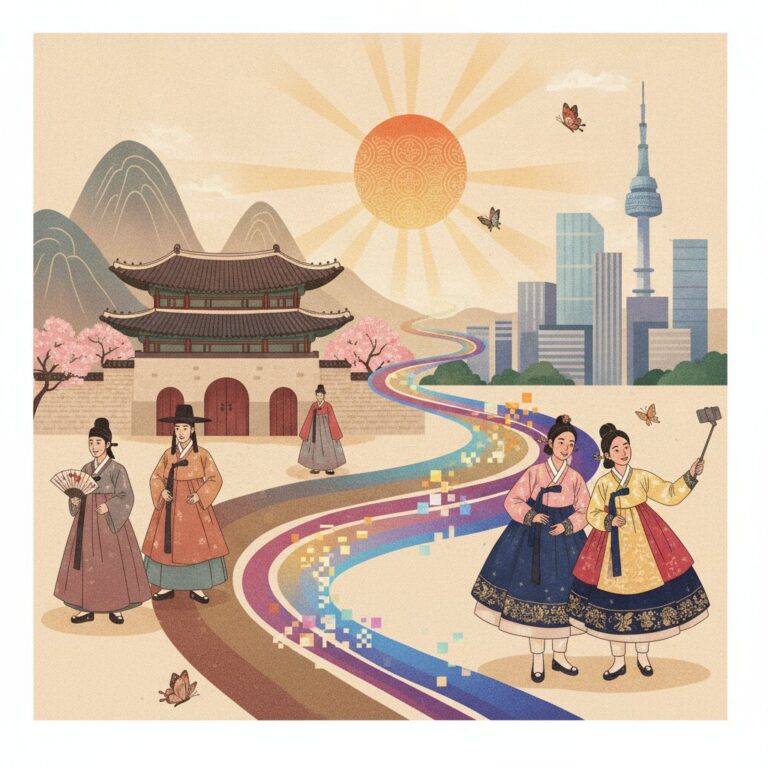
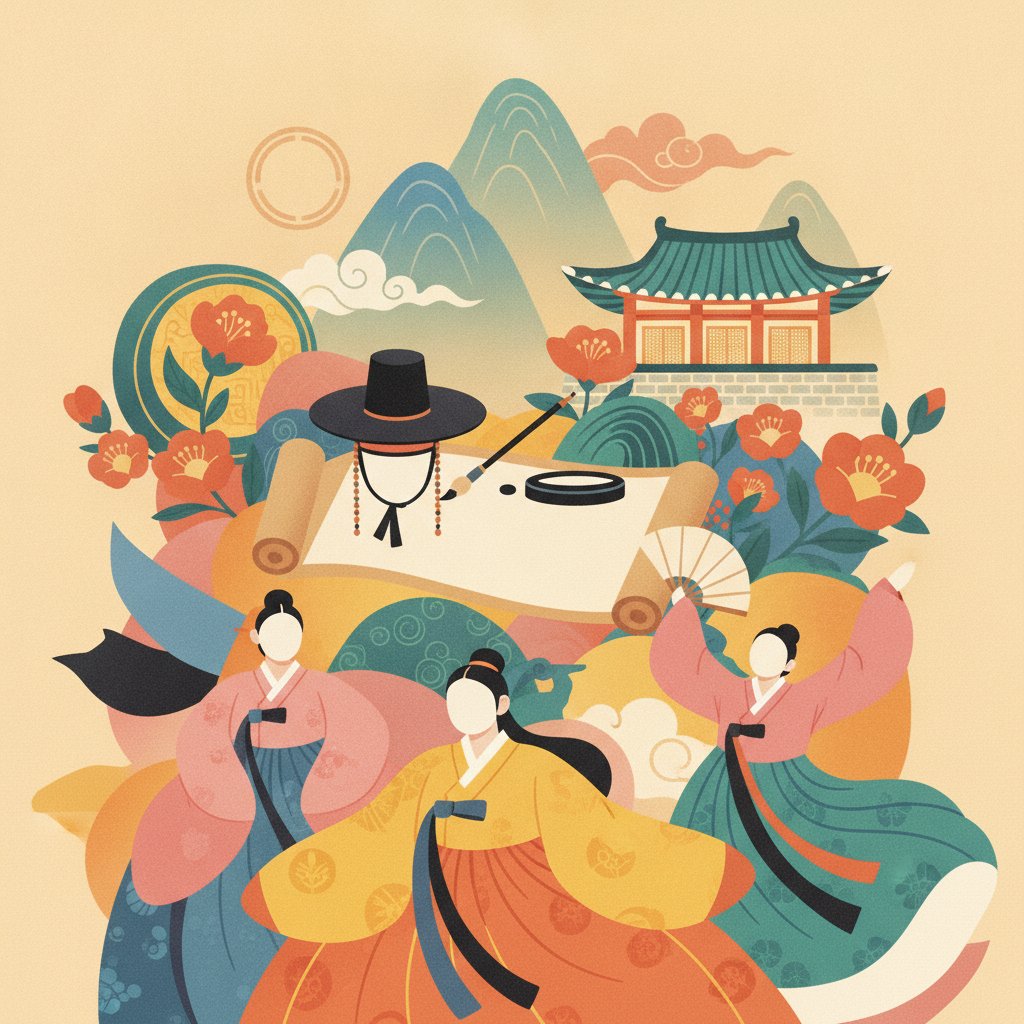
Visiting Gyeongbokgung or Changdeokgung Palace in traditional clothing is one of the most popular activities for visitors. Dozens of rental shops surround the main palace grounds. Standard rentals usually cost around 15,000 to 35,000 Korean Won (approximately $11 to $26 USD) for two to four hours, depending on whether you choose traditional or elaborate royal-style hanbok.
As a practical local tip: anyone wearing a full hanbok receives free entry into Seoul’s four main royal palaces (Gyeongbokgung, Changdeokgung, Changgyeonggung, and Deoksugung). It makes for incredible photos and lets you feel like a character stepping through the palace gates.
Visiting Actual Filming Sets
If you want to see where major dramas are filmed, visit Yongin Daejanggeum Park, located just outside Seoul. Built by major Korean broadcaster MBC, this massive open-air studio features realistic reconstructions of Joseon, Goryeo, and Three Kingdoms buildings, markets, and palace halls. It is open to visitors year-round, with admission tickets typically costing around 9,000 to 10,000 Korean Won (roughly $7 to $8 USD).
🎟️ Popular tours & experiences in Korea
Klook.comFAQ
What is the difference between fusion sageuk and traditional sageuk?
Traditional sageuk sticks closely to documented historical facts, featuring long episode counts and heavy political themes. Fusion sageuk blends historical settings with modern drama elements like romance, fantasy, time travel, or comedy to make the story more dynamic and accessible.
Do I need to know Korean history to enjoy historical K-dramas?
No prior knowledge is required. Fusion sageuks are designed to explain character motivations and conflicts clearly within the story. Watching with platform subtitles that provide context notes, like those on Rakuten Viki, makes understanding political backgrounds easy.
Where can I watch historical K-dramas with English subtitles?
The best streaming platforms for historical K-dramas are Rakuten Viki and Netflix. Both offer extensive catalogs of popular and classic sageuk titles with high-quality English subtitling.
More on K-Drama Tropes & Industry
- Classic K-Drama Tropes ExplainedAn overview of iconic K-drama tropes and why they captivate global audiences.
- Why K-Drama OSTs Matter & How to Enjoy ThemExplains why original soundtracks matter in K-dramas and how fans can stream or collect them.
- Webtoon K-Drama Adaptations GuideA guide to why webtoons suit K-dramas, platforms to read them, and where to watch adaptations.
See every K-Drama Tropes & Industry post in our K-DRAMA guide.
Handy toolsKorea travel essentials · Korea Guide Finder
Keep Reading
- Where to Buy Official K-Drama Merchandise in Seoul
- Famous K Drama Foods to Try and How Locals Eat Them
- Korean High School Culture vs K-Dramas: What Is Real?
- K-Drama Drinking Etiquette: Real Korean Rules Explained
🎟️ Popular tours & experiences in Korea
Klook.com