Hanbok in Korean Dramas: Historical Fact vs TV Fiction
Reading the Screen: Visual Codes and Social Class
Growing up in Seoul, Sunday nights meant sitting on the floor with my family to watch long historical period dramas, known locally as sageuk. My grandmother would lean toward the television screen, squinting at the leading actress’s vibrant blue silk sleeves, and murmur, “In my mother’s time, no ordinary girl could ever wear a shade that bright.” That was my earliest lesson in the fascinating gap between real Korean heritage and the colorful portrayal of Hanbok in Korean dramas.
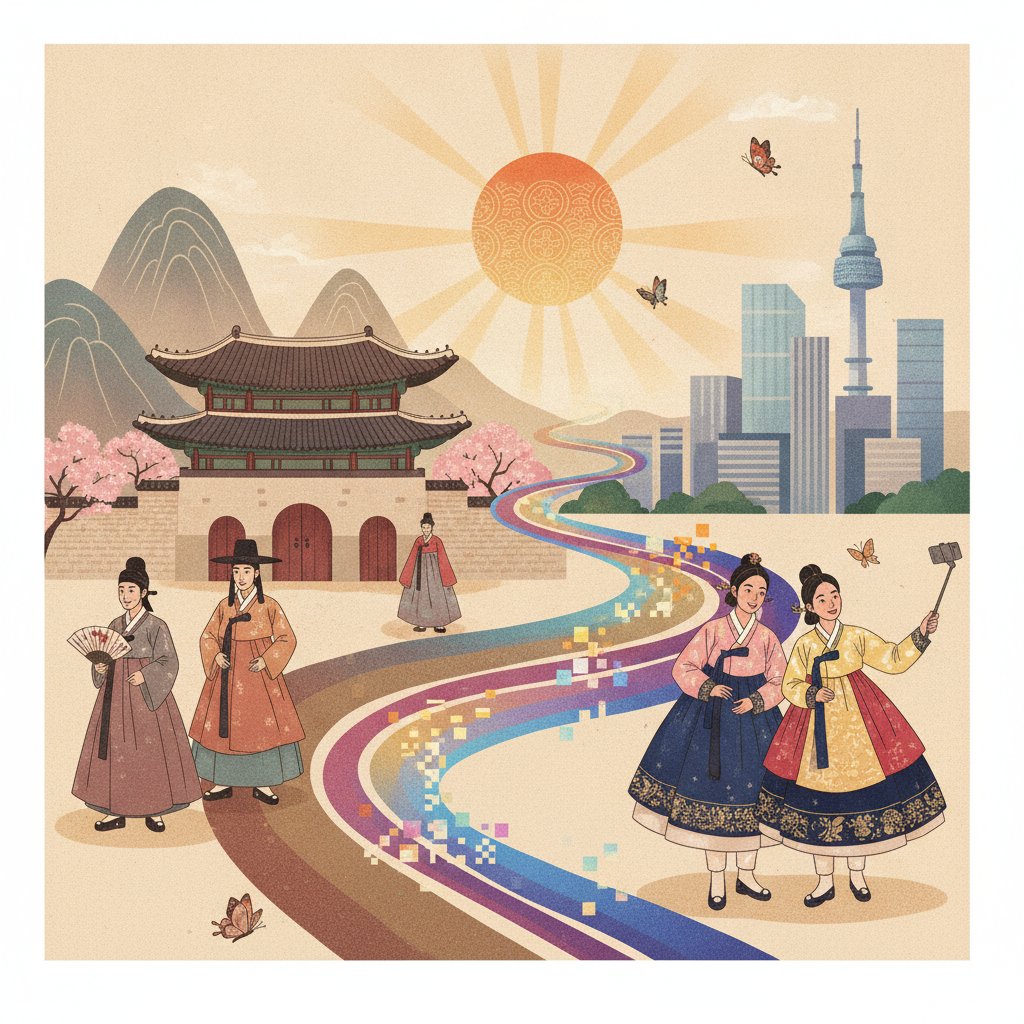
Today, millions of international fans watch historical shows on streaming platforms like Netflix and Rakuten Viki, captivated by sweeping skirts, dramatic wide-brimmed hats, and delicate embroidery. As a Korean, watching these shows unfold is a mix of pride and amusement. K-dramas have successfully transformed our traditional clothing from museum exhibits into modern cultural icons. However, what appears on screen is often a carefully crafted visual fantasy tailored for cinematic impact rather than a strict historical document.
In historical Korea, Hanbok was not merely fashion; it was a rigid visual code system governed by law and social standing. Under the Joseon Dynasty’s sumptuary laws, color, material, and patterns immediately communicated a person’s age, marital status, and socio-economic class. Royalty wore deeply saturated dyes like crimson and indigo, decorated with gold leaf (geumbak) or dragons. The elite ruling class (yangban) wore finely woven silk and ramie in elegant colors. Meanwhile, commoners were legally restricted to un-dyed plain cotton or hemp in shades of white, beige, or pale light gray, earning Koreans the historical nickname “the white-clad people” (baekui minjok).
If television producers adhered strictly to these rules, most background actors and commoner protagonists would spend entire series dressed in plain off-white garments. To keep scenes visually dynamic, K-drama costume designers routinely blend color palettes, giving ordinary characters pastel-dyed cottons that would have been financially or legally impossible during the era.
✈️ Book your trip to Korea — hotels, flights & more
Decoding Eras: How Hanbok Evolved Across History
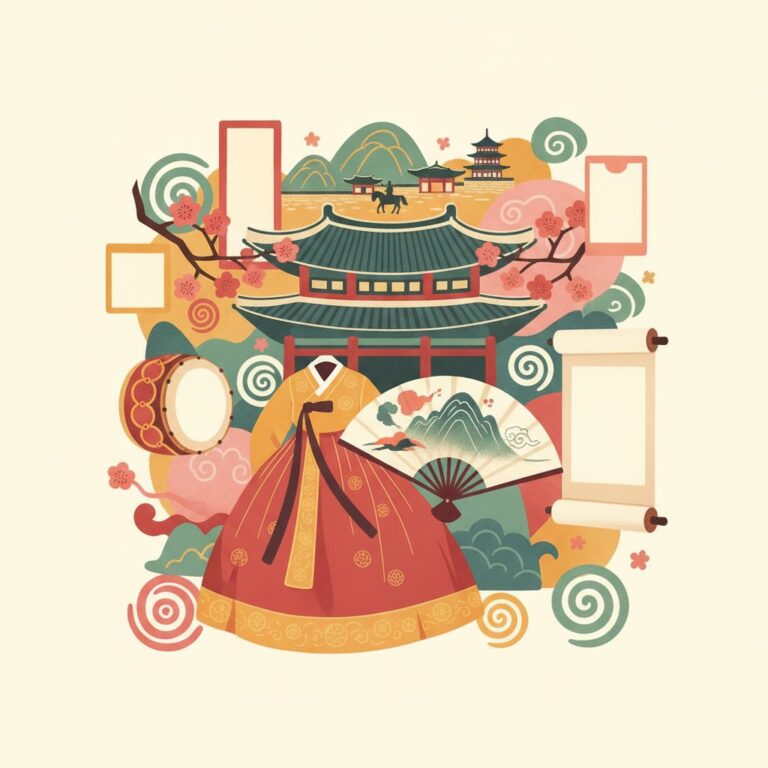
When foreign viewers think of Hanbok in Korean dramas, they usually picture the classic silhouette of the late Joseon Dynasty: a short, cropped jacket (jeogori) paired with a voluminous, high-waisted skirt (chima) for women, or long robes (durumagi) with broad hats (gat) for men. Yet Korea’s clothing history spans thousands of years, evolving significantly across different dynasties.
The Three Kingdoms Era (1st Century BCE – 7th Century CE)
In dramas set during the Goguryeo, Baekje, or Silla periods—such as River Where the Moon Rises—you will notice a vastly different silhouette. Men and women wore hip-length jackets belted tightly at the waist over comfortable trousers or pleated skirts. Clothes were practical and suited for horseback riding and active outdoor life. The overall aesthetic felt closer to Eurasian nomadic cultures than late Joseon court wear.
The Goryeo Dynasty (918–1392)
During the Goryeo period, international trade flourished and foreign relations heavily influenced royal fashion. Dramas like Empress Ki or Moon Lovers: Scarlet Heart Ryeo display lavish, flowing robes with exceptionally broad sleeves and decorative chest sashes. Due to political ties with the Yuan Dynasty, Mongol styles crossed into Korean royal fashion, bringing shorter inner sleeves and specific hair ornaments that lingered for generations.
The Joseon Dynasty (1392–1910)
Neo-Confucianism became the state ideology during Joseon, introducing strict modesty standards that reshaped daily garments. Over 500 years, the female jeogori underwent a dramatic transformation. In the early Joseon period, jackets reached down to the hips. By the late 19th century, the jacket had shortened so significantly that it barely covered the chest, requiring a wide fabric chest band (heoritti) to bridge the gap beneath the armpits. Shows like The Red Sleeve and Under the Queen’s Umbrella meticulously highlight these subtle shifts in court and noble costume design.
| Historical Era | Key Hanbok Feature | K-Drama Example |
|---|---|---|
| Three Kingdoms | Hip-length jackets, waist belts, functional trousers | River Where the Moon Rises |
| Goryeo Dynasty | Broad sleeves, high waist sashes, Mongol influences | Empress Ki |
| Late Joseon | Ultra-short jacket, billowy bell skirt, broad hats | The Red Sleeve |
The Fusion Hanbok Controversy and Global Fashion
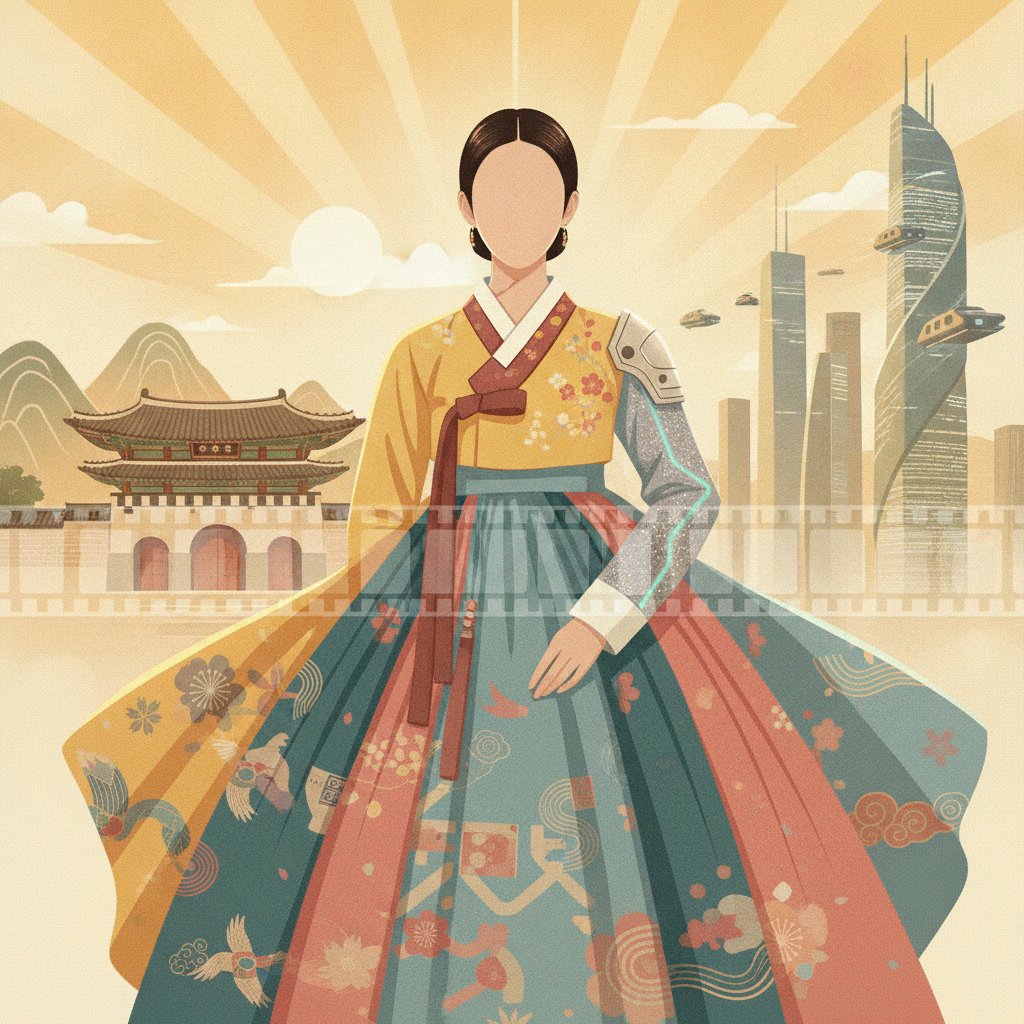
In recent years, screenwriters and costume departments have shifted toward “fusion sageuk”—dramas that weave elements of fantasy, romance, and sci-fi into historical settings. Shows like Love in the Moonlight, The Crowned Clown, and the fantasy hit Alchemy of Souls deliberately throw traditional tailoring rules out the window in favor of high-fashion storytelling.
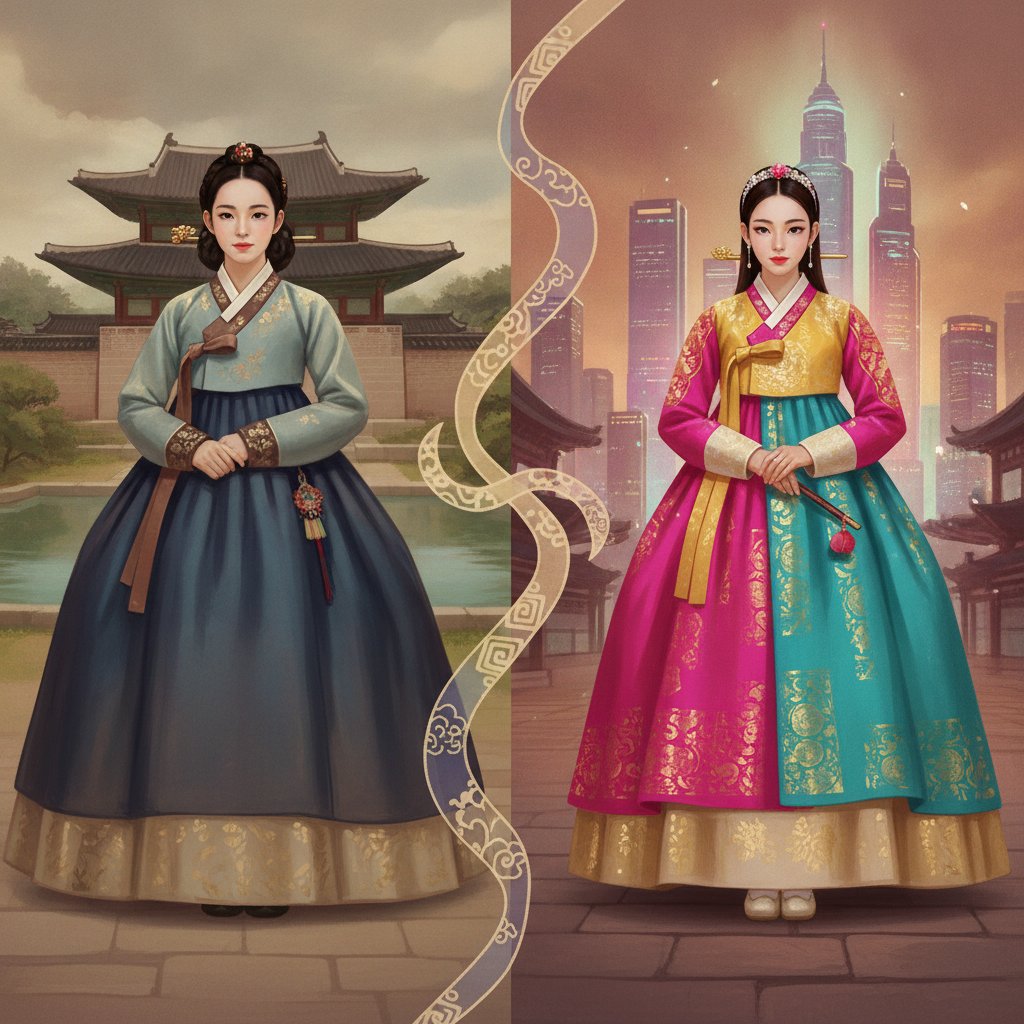
This shift created a debate inside Korea. Cultural purists sometimes express concern that hyper-stylized dresses—featuring modern lace, wire hoop skirts, western tulle, and synthetic organza—mislead international viewers about actual Korean heritage. On the flip side, younger generations and cultural commentators celebrate fusion designs for keeping traditional motifs relevant in global contemporary media.
The global impact is indisputable. When global K-pop icons like BTS wore traditional-inspired coats in their music videos or when BLACKPINK performed in modified short modern Hanbok, interest exploded online. Contemporary designers in Seoul began creating saenghwal hanbok (casual daily Hanbok)—incorporating elastic waistbands, breathable linen, cropped jackets with denim, and functional side pockets for practical everyday wear.
🎟️ Popular tours & experiences in Korea
Klook.comA Local Guide: Experiencing and Buying Hanbok in Seoul
If watching Korean dramas makes you want to step into a traditional robe yourself, visiting Seoul offers immediate hands-on opportunities. Experiencing the clothing firsthand gives you a whole new appreciation for the clever tailoring hacks used by TV costume departments.
Renting Hanbok for Palace Visits
Walking around Seoul’s historic neighborhoods near Gyeongbokgung Palace, Changdeokgung Palace, or Bukchon Hanok Village in rental attire is a beloved activity for both local Koreans on dates and visiting international tourists.
- How to Book: You can walk into dozens of rental shops surrounding Anguk Station (Seoul Subway Line 3) or pre-book time slots through international tour platforms like Klook to secure specific high-grade costume packages.
- Typical Rental Prices: A basic traditional rental generally costs between 15,000 and 25,000 won (approximately $11–$19 USD) for 2 to 4 hours. High-end “themed” or royal replica rentals usually range from 30,000 to 50,000 won ($23–$38 USD). Note that specialized hair braiding, traditional handbags, or winter footwear may add small extra fees ranging from 3,000 to 10,000 won.
- Palace Perk: The Cultural Heritage Administration offers free admission to major Seoul palaces for any visitor wearing proper traditional or modernized Hanbok.
Buying Daily Hanbok (Saenghwal Hanbok)
If you want to bring wearable Korean fashion back home without looking like you are wearing a theater costume, daily modern Hanbok is your best option. These garments combine traditional collar lines (깃, git) and overlapping fronts (웪, seop) with machine-washable cottons, midi skirts, and casual outer cardigans.
- Where to Shop in Seoul: Insadong Main Street and Samcheong-dong host numerous independent boutiques specializing in daily Hanbok.
- Shopping Online Internationally: Established global shopping platforms like Amazon feature verified Korean apparel sellers, while specialty online brands ship directly from Seoul worldwide.
- Typical Purchase Prices: Everyday casual Hanbok skirts or jackets generally range from 80,000 to 200,000 won (about $60–$150 USD) depending on fabric quality. Custom hand-tailored silk traditional sets remain a luxury investment, usually running from 300,000 won to over 1,000,000 won ($225–$750+ USD).
Where to Stream Authentic Sageuk Dramas
To analyze costume design across different Korean historical eras yourself, global streaming networks offer extensive libraries with high-definition subtitles. Services such as Netflix and Rakuten Viki carry extensive collections ranging from strict historical recreations to imaginative fantasy sagas. Paying attention to how collars overlap, how hats change with social rank, and how color palettes reflect personal status will elevate your watching experience from simple entertainment to a rich cultural deep dive.
FAQ
Is it culturally respectful for foreigners to wear Hanbok in Korea?
Yes, absolutely. In Korea, locals and government tourism organizations actively welcome international visitors wearing Hanbok. Renting traditional clothing to explore historical palaces is viewed as an affectionate celebration of Korean culture, not cultural appropriation.
Does wearing Hanbok really grant free entry to Seoul palaces?
Yes, wearing Hanbok grants completely free admission to Seoul’s four major palaces: Gyeongbokgung, Changdeokgung, Deoksugung, and Changgyeonggung. Both traditional sets and modern daily variants qualify, provided they maintain the basic top-and-bottom silhouette guidelines.
What is the main difference between traditional Hanbok and fusion Hanbok?
Traditional Hanbok uses historical tailoring methods, natural silk or cotton fabrics, and structured layering reflective of specific historical eras. Fusion Hanbok incorporates modern elements like synthetic fabrics, western lace, elastic bands, velcro closures, and shortened hemlines designed for comfort, photography, or contemporary fashion statement.
Keep Reading
- Level Up Your Korean: A Realistic Guide to Learning Through K-Dramas
- Beyond the Screen: Essential Korean Variety Shows K-Drama Fans Will Adore
- Webtoon K-Drama Adaptations: Picks and Watching
- K-Drama Cafes & Filming Spots in Seoul: Local Finds
🎟️ Popular tours & experiences in Korea
Klook.com