Korean High School Culture vs K-Dramas: What Is Real?
At a glance
- In shortCompares real Korean high school routines and dress codes to popular K-drama tropes.
- Best forK-drama fans and tourists curious about Korean culture
- WhereSeoul
- Key pointsReal uniforms have strict dress codes, often covered by long black puffer coats. · Students follow intense schedules with hagwons and study cafes until late. · School rooftops are strictly locked, unlike the open hangouts shown in K-dramas.
- Heads-upDaily uniform rentals generally cost between 20,000 and 35,000 won in Seoul.
The Drama Lens Versus Reality
I still remember the freezing winter morning during my second year of high school in Seoul when my homeroom teacher walked into the classroom with a stack of mock exam score sheets. The collective sigh that echoed through the room was almost cinematic, but there were no background songs playing, no lingering close-ups on a quiet heartthrob, and certainly no time to run off to the school rooftop to ponder life. We had exactly forty-five seconds to check our percentile rankings before turning to page forty-eight of our math workbooks.
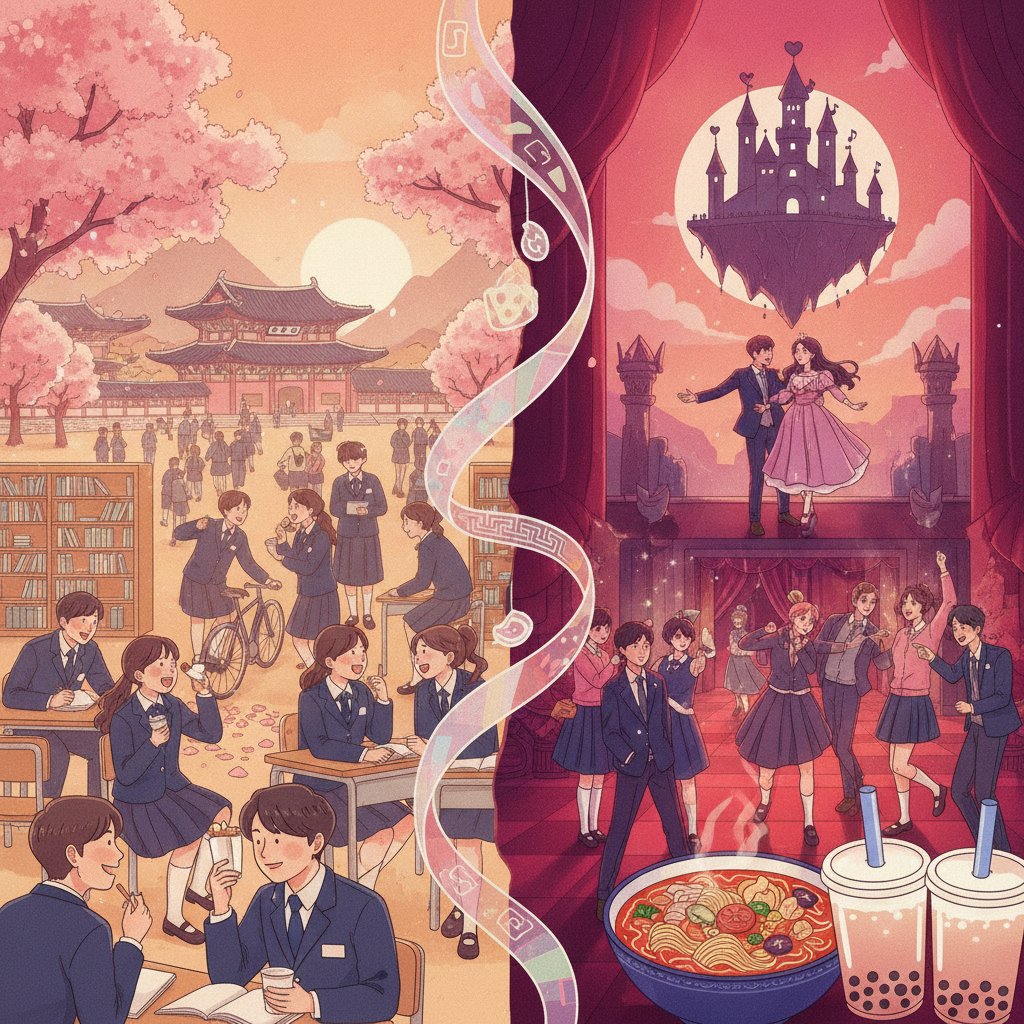
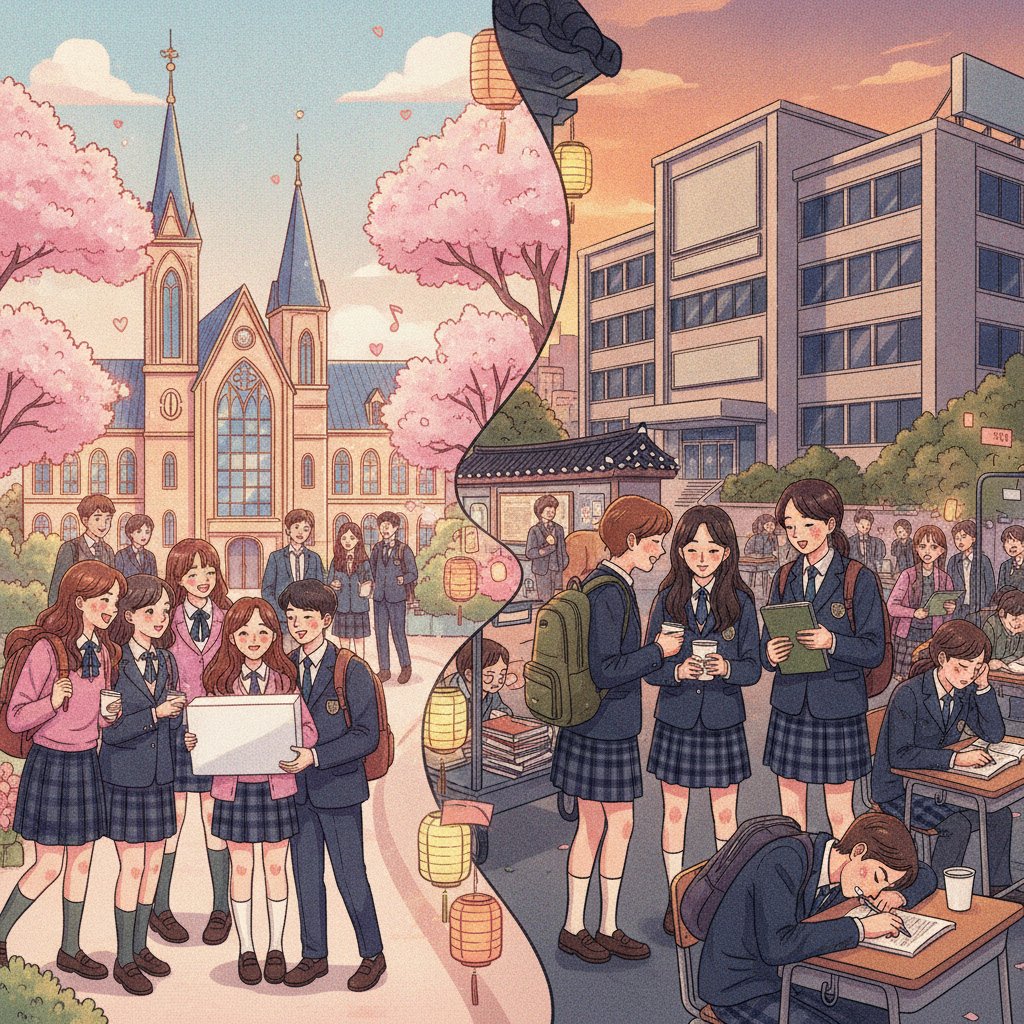
If your understanding of Korean youth comes primarily from screen watching, it is easy to assume that school days are filled with stylized uniforms, slow-motion courtyard meetings, and dramatic rooftop confrontations. Shows like True Beauty, Extraordinary You, and Boys Over Flowers have shaped how international audiences picture student life in Korea. While these series capture genuine emotional themes, the everyday logistics of Korean high school culture vs k drama portrayals reveal two very different worlds. As a Korean who survived three intense years in the local school system, I want to pull back the curtain and show you what life inside a real Korean high school looks like, alongside tips for how visitors can experience pieces of this unique culture firsthand.
✈️ Book your trip to Korea — hotels, flights & more
Uniforms and Style: Fashion Runway vs Strict Dress Codes
In almost every high school K-drama, characters look like they stepped off a Seoul Fashion Week runway. Skirts are tailored precisely above the knee, ties are loosely styled for a cool aesthetic, and makeup looks effortlessly luminous. Characters easily switch between designer jackets and custom knitted vests without a word from their instructors.
In a real Korean high school, the uniform—known as gyobok (교복)—is indeed a major point of pride, but the reality is governed by strict regulations. Most schools mandate two distinct sets: the summer uniform (haebok) and the winter uniform (dongbok), along with a PE uniform (cheyookbok) that students often wear during study hours for comfort.
The Reality of School Dress Codes
While dress codes have relaxed somewhat in recent years across Seoul and major metropolitan areas, high schools still enforce basic guidelines. Teachers stand near the main entrance in the morning to check for compliance. Here is how real life differs from the drama screen:
- Makeup and Hair: While drama heroines wear full glass-skin makeup and soft curls, real schools often restrict heavy makeup, bright hair dye, and flashy jewelry. Tinted lip balm and subtle sunscreen are usually as far as students can push the envelope without getting pulled aside.
- Modification Rules: Tailoring uniforms to fit tighter or shorter used to be a common trend among students, but many schools penalize altered hemlines.
- The Black Long Padding Phenomenon: In winter, Korean classrooms can get chilly despite floor heating. Rather than wearing cute customized coats like in dramas, almost the entire student body wears long, ankle-length black puffer coats (long padding) over their uniforms. Walking into a school yard in January feels like entering a sea of identical black jackets.
How to Experience Korean Uniform Culture
If you want to try wearing an authentic Korean school uniform, you do not need to enroll in school. Seoul has a thriving uniform rental culture aimed at both locals taking nostalgic photos and international tourists. Rental shops near major tourist spots offer full sets including blazers, vests, shirts, skirts or trousers, and ties.
Popular platforms like Klook or local shop sites allow you to book uniform rentals in advance. A standard day rental generally costs between 20,000 and 35,000 won (roughly $15 to $26 USD), depending on whether you opt for jacket upgrades or additional accessories. Many visitors rent uniforms near Jamsil to explore Lotte World theme park, which has become a quintessential modern Korean youth date tradition.
The Daily Routine: Endless Free Time vs The Hagwon Marathon
The most significant contrast between real life and screen representations is how students manage their time. Dramas often depict characters hanging out in cafes after class, wandering romantic alleyways at sunset, or spending hours on extracurricular hobbies. Real Korean high school life, by contrast, is defined by an intense academic rhythm driven by preparation for the Suneung (College Scholastic Ability Test).
A Day in the Life of a Real Korean High Schooler
To understand the sheer scale of the academic commitment, consider the average weekday schedule for a typical Korean eleventh or twelfth grader:
- 07:40 AM – 08:10 AM: Arrival at school and morning self-study or morning reading.
- 08:30 AM – 12:30 PM: Morning academic classes (4 periods of 50 minutes each).
- 12:30 PM – 01:30 PM: School lunch break and quick store runs.
- 01:30 PM – 04:30 PM: Afternoon classes (3 periods).
- 04:30 PM – 05:30 PM: Cleaning duty (students clean their own classrooms) followed by homeroom.
- 06:00 PM – 10:00 PM: Yaja (night self-study at school) or attendance at a private academy (hagwon).
- 10:30 PM – 01:00 AM: Studying at a local study cafe (study cafe) or home before sleep.
Because of this demanding timetable, free time during the school week is rare. Moments of fun are squeezed into ten-minute breaks between periods or during the lunch hour.
Comparing Drama Tropes to Reality
| Aspect | K-Drama Representation | Real Korean High School |
|---|---|---|
| After-School Hours | Exploring cafes, hobbies, and romantic dates | Hagwon classes and study cafes until 10:00 PM |
| Rooftop Access | Open hangout spot for quiet talks and drama | Strictly locked for safety and security reasons |
| Classroom Duty | Rarely shown or used as a punishment scene | Daily mandatory chore split among all students |
🎟️ Popular tours & experiences in Korea
Klook.comSchool Cafeterias and the Convenience Store Sprint
In dramas, school lunch scenes are often backdrop events for social conflict or romantic encounters, where characters drop food trays or exchange meaningful glances. In reality, cafeteria time is one of the most anticipated highlights of the day.
The Power of School Meals (Geupsik)
Korea’s public school lunch system—known as geupsik (급식)—is highly regarded. Meals are planned by licensed nutritionists to ensure balanced, high-calorie food suitable for growing teenagers. A standard tray usually includes:
- A hot bowl of rice (often mixed grains or purple rice)
- A hearty soup or stew like kimchi jjigae or doenjang jjigae
- A main protein dish, such as spicy bulgogi, fried chicken, or grilled fish
- Three to four side dishes (banchan), including fresh kimchi and seasoned vegetables
- A dessert or drink, such as boxed banana milk, fresh fruit, or yogurt
Students take their lunch menus very seriously. Monthly meal schedules are printed and pinned to classroom bulletin boards, and students regularly highlight days featuring fan favorites like cheese pork cutlet or spicier stew options.
The Legend of the School Store (Maejeom)
If a school has a built-in snack shop (maejeom), the ten-minute break after third period turns into an energetic sprint. Students rush down hallways to grab popular items before they sell out. Staples include wrapped sweet pastries, ice cream, spicy sausage sticks, and carbonated drinks. While convenience stores like GS25, CU, and Seven-Eleven outside school are popular after hours, the internal maejeom holds a special nostalgic place for anyone who attended school in Korea.
Rooftops, Friendships, and Social Hierarchy
One of the most persistent visual tropes in youth dramas is the unlocked school rooftop. It serves as a hideout for rebellious students, a spot for dramatic confessions, or a place to sit quietly and gaze at the Seoul skyline. In actual Korean high schools, rooftops are almost universally locked for safety and liability reasons. If a student tries to go up to the roof, they will encounter a sturdy deadbolt and a security alarm.
How Friendships Actually Form
Social life in a real high school centers on the classroom unit. In Korea, students stay in one homeroom while teachers rotate between rooms for different subjects (with exceptions for specialized science or language classes). This means you spend up to twelve hours a day seated near the same group of thirty classmates for an entire academic year.
This arrangement creates deep bonds. Friendships are forged through shared experiences: surviving mock exam weeks together, ordering late-night snacks during evening study sessions, performing together at the annual school festival (haaksaeng feustival), and cheering for your class during sports day (cheyook daehwe).
How Visitors Can Experience Authentic Korean School Culture
If you love K-dramas and want to touch the real cultural roots behind school-themed shows, there are several authentic ways to explore this side of Korea when visiting Seoul.
1. Rent a Uniform and Visit Lotte World or Everland
As mentioned, renting a high school uniform is a completely normal activity for youth in Seoul. Major rental outlets near Jamsil Station offer well-maintained uniforms inspired by both classic styles and idol-like modern designs. Put on a uniform, head into Lotte World, and try classic Korean student amusement park snacks like churros and iced Americanos.
2. Visit Drama Filming Locations with Real History
Several real Korean educational institutions have served as iconic filming locations due to their beautiful historic architecture. Choongang High School, located near Bukchon Hanok Village in Seoul, features stunning gothic-style brick buildings that appeared in classic dramas like Winter Sonata and modern hits. While you cannot enter classrooms during active school hours, you can walk along the exterior paths on weekends and take photos of the traditional neighborhood surroundings.
3. Stream Realistic Dramas on Global Platforms
If you want to watch shows that reflect realistic school dynamics rather than pure fantasy, look for series focused on character growth and realistic family pressure. Series like Reply 1997, Twenty-Five Twenty-One, and Sky Castle (which focuses heavily on the intense academic pressure behind the scenes) offer authentic insights. You can easily stream these on global platforms such as Netflix and Rakuten Viki.
Frequently Asked Questions
Do Korean high school students really spend all day at school?
Yes, most high school students spend the majority of their day on school grounds or at educational facilities. Regular classes usually run from around 8:00 AM until 4:00 PM, followed by optional or mandatory evening self-study (yaja) or private academy classes (hagwon) that keep students busy until 10:00 PM or later.
Are Korean high school rooftops really accessible like in K-dramas?
No, high school rooftops in Korea are almost always locked shut with heavy security doors to ensure student safety. Scenes showing students hanging out, eating lunch, or having conversations on rooftops are artistic devices used by screenwriters and directors for visual style.
How can tourists rent a real Korean school uniform in Seoul?
Visitors can easily book uniform rentals online through major travel services like Klook, or walk directly into rental shops located around Jamsil Station, Hongdae, or Anguk Station. Rentals usually require a temporary cash deposit and a photo ID, with daily prices typically ranging between 20,000 and 35,000 won (approximately $15–$26 USD).
🎟️ Popular tours & experiences in Korea
Klook.comMore on K-Dramas vs Real Life
- Famous K-Drama Foods and How Locals Eat ThemA guide to iconic K-drama dishes, how to order them, local etiquette, and estimated prices.
- Korean Family Hierarchy in K-DramasExplains the real cultural rules and Confucian roots behind family dynamics in K-dramas.
- Korean Convenience Store Culture in K-DramasExplains why convenience stores feature in K-dramas, popular DIY recipes, major chains, and how to use them.
See every K-Dramas vs Real Life post in our K-DRAMA guide.
Handy toolsKorea travel essentials · Korea Guide Finder
Keep Reading
- K-Drama Drinking Etiquette: Real Korean Rules Explained
- K-Drama Product Placement Explained: Why Brands Love PPL
- Korean Blind Dating and Mat-seon Explained by a Local
- Korean Apartment Culture: What K-Dramas Get Right and Wrong
🎟️ Popular tours & experiences in Korea
Klook.com