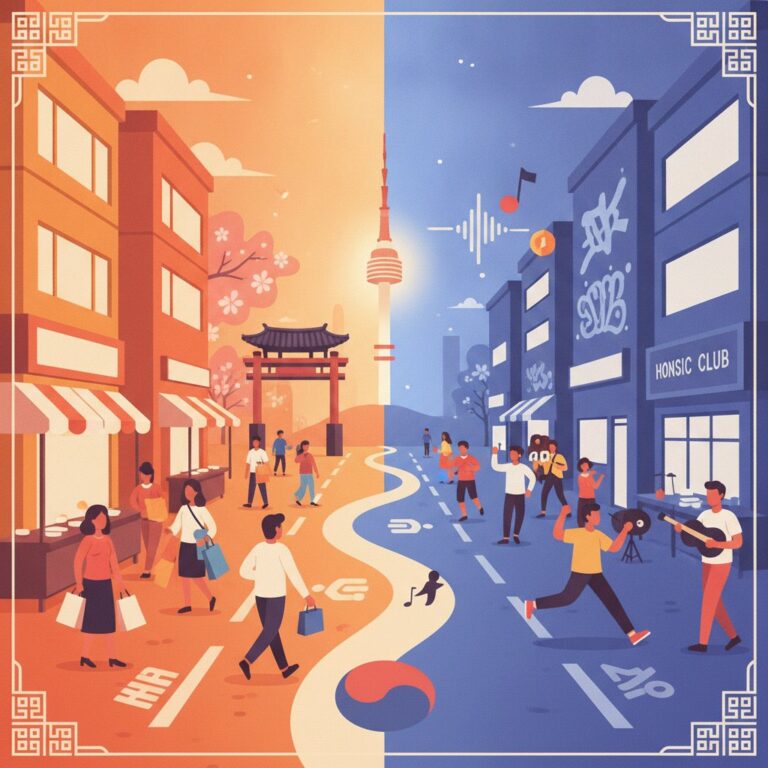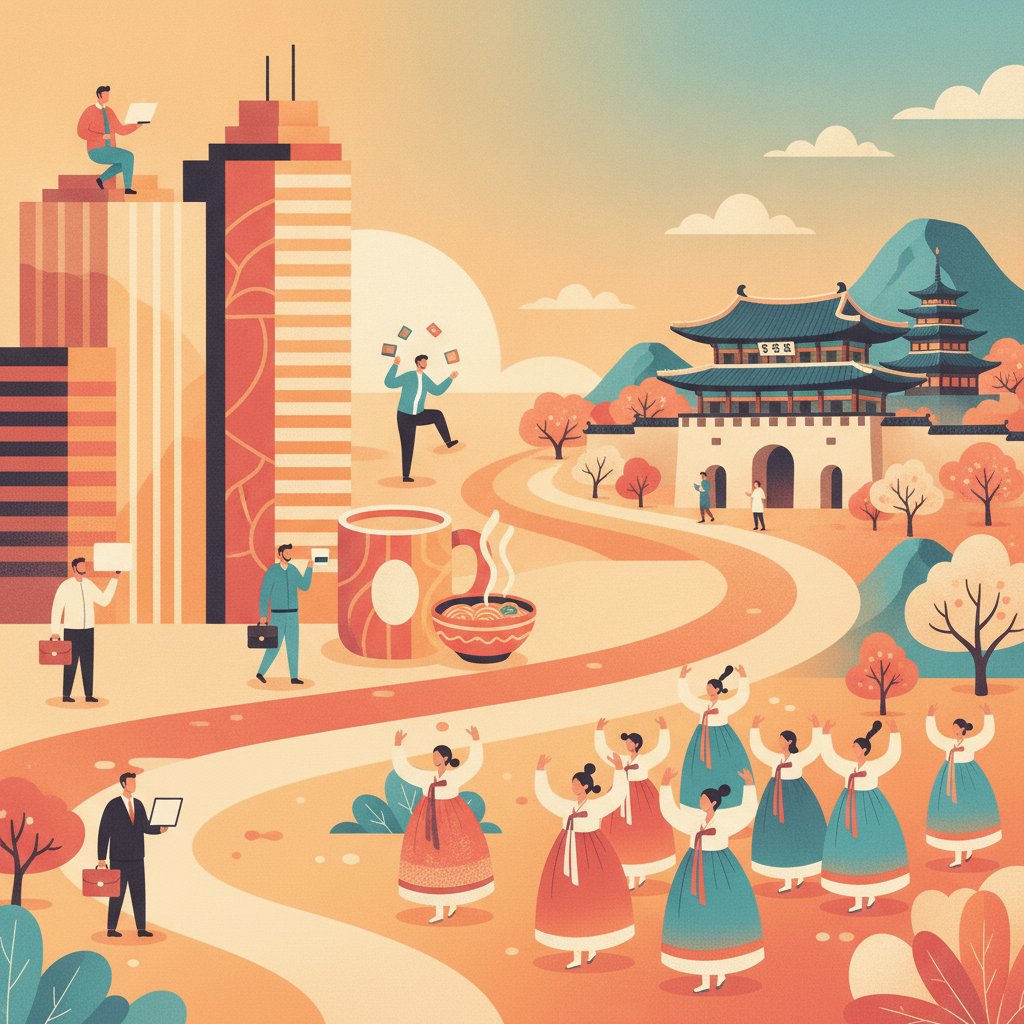
Korean Office Culture vs K-Dramas: Myths and Reality
At 6:30 PM on a rainy Tuesday in Yeouido, Seoul’s financial heart, my smartphone buzzed with a notification from my team manager: ‘Hoeshik tonight. Pork belly at 7:00 PM.’ In K-dramas like Business Proposal or What’s Wrong with Secretary Kim, company dinners look like glamorous, lighthearted scenes where coworkers banter effortlessly and attractive CEOs quietly gaze across the table. In reality, my immediate thought was strategic: I needed to arrive five minutes early to choose a seat far enough from the senior boss so I would not spend the next three hours grilling meat and pouring drinks with two hands.
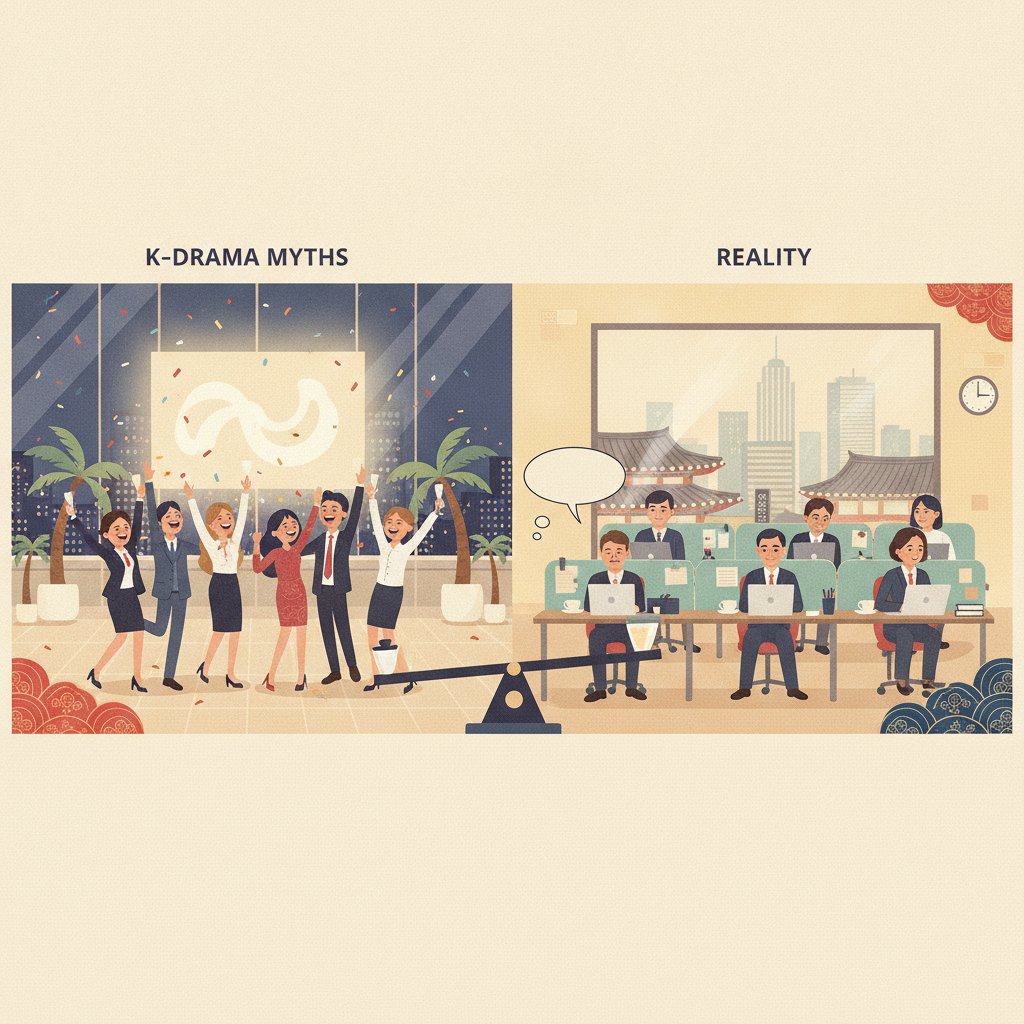
As a Korean who has worked in both mid-sized domestic firms and corporate offices in Gangnam, I find the global obsession with Korean office dramas fascinating. Showrunners get certain aesthetic details surprisingly right—like the endless sea of black padded coats in winter and iced coffees in summer. However, the social dynamics, hierarchy, and romantic possibilities depicted on screen are heavily stylized. If you love K-dramas and want to understand how real Korean work culture operates behind the glossy camera lens, here is an honest look at how daily corporate life actually plays out in Seoul.
The Rank System and Corporate Hierarchy
In K-dramas, job titles like ‘Team Leader’ (Timjang-nim) or ‘Director’ (Isa-nim) sound like sleek labels meant to distinguish love interests from entry-level staff. In actual Korean corporate life, these ranks form the backbone of every single interaction, determining how you speak, where you sit, and when you can leave the office.
Traditional Korean companies rely on a strict ladder system. While modern tech startups in Pangyo (Korea’s Silicon Valley) have begun adopting English names or flat titles, the vast majority of Korean companies still use standard hierarchical ranks:
- Sawon (Associate/Entry Level): Fresh university graduates in their first few years of corporate work.
- Daeri (Assistant Manager): Typically achieved after 2 to 4 years of solid experience.
- Gwachang (Manager): Mid-level leadership handling day-to-day operations.
- Chajang (Senior Manager): Upper-mid management preparing for executive responsibilities.
- Bujang (Department Head/General Manager): Senior leader in charge of an entire department.
As a Korean worker, you learn honorific language (jondeatmal) early on. You do not address colleagues above your rank by their first names. Calling your department head by his first name, as characters frequently do in dramatic K-drama confrontation scenes, would cause an immediate, awkward silence in a real conference room. Respect is embedded in language, body language, and everyday etiquette—such as handing over business cards with two hands or bowing slightly when passing a supervisor in the hallway.
✈️ Book your trip to Korea — hotels, flights & more
The Truth About Chaebol CEOs and Office Romance
The single biggest myth perpetuated by K-dramas is the young, single, devastatingly handsome third-generation corporate heir (chaebol) who falls in love with a newly hired assistant or junior designer. Dramas like King the Land or Her Private Life make secret office romance seem like a daily workplace hazard.
In real Korean corporate culture, romance between team members is generally viewed with deep caution. Many companies discourage internal dating because team cohesion and harmony are prioritized. When office romances do occur, couples usually keep them entirely secret from colleagues for as long as possible to avoid awkward gossip or performance scrutiny. If a relationship becomes public and ends badly, it is often one of the employees—frequently the junior person—who ends up transferring departments or seeking a job elsewhere.
Furthermore, actual corporate leadership in Korea looks very different from TV. Boardrooms are predominantly filled with seasoned executives who have worked their way up the ladder over several decades. While younger founders do exist in the startup ecosystem, traditional conglomerate leaders are rarely 28-year-old directors spending their afternoons arranging dramatic grand gestures.
Hoeshik Culture: Team Dinners in Drama vs. Reality
If you watch Korean dramas, you are likely familiar with the concept of hoeshik (after-work team gatherings). Dramas often show these events as fun, bonding experiences filled with comical drinking games, karaoke (norebang) solos, and warm heart-to-heart conversations.
The reality of hoeshik is a bit more complex. Historically, mandatory after-work drinking sessions were a regular fixture of Korean office life, sometimes stretching into three or four rounds (1-cha, 2-cha, 3-cha) until late at night. There were strict rules about drinking etiquette: never fill your own glass, always turn your torso away from a senior colleague when taking a sip out of respect, and accept every shot offered to you.
However, modern Korean work culture has undergone a massive generational shift, accelerated by the COVID-19 pandemic and the rise of the ‘MZ generation’ (a Korean term grouping Millennials and Gen Z). Today, forced drinking is widely criticized, and many companies have transformed hoeshik culture entirely. Department budget allocations—typically running around 30,000 to 50,000 won (approximately $22 to $38 USD) per person—are increasingly used for high-end team lunches, cafe gatherings, or cultural outings like attending baseball games or art exhibits rather than late-night drinking sessions.
🎟️ Popular tours & experiences in Korea
Klook.comCoffee Runs: The Fuel of the Korean Workplace
One visual K-dramas get completely right is the ubiquitous coffee run. In almost every episode of a workplace drama, characters can be seen walking back to the office holding trays loaded with iced coffees. In Seoul, coffee is not just a beverage; it is an essential fuel for survival and social interaction.
In Korea, there is a popular slang phrase: Eorjuk-ah, which translates to ‘Even if I freeze to death, I drink Iced Americano.’ Rain, snow, or heatwave, office workers carry iced coffees back to their desks every single day. The post-lunch coffee walk, usually between 12:30 PM and 1:00 PM, serves as a crucial window where colleagues can step outside the office hierarchy and catch up informally.
If you visit Seoul and want to experience this daily routine firsthand, you will notice three main tiers of coffee shops around office hubs like Gangnam, Gwanghwamun, and Yeouido:
- Budget Chains: Paik’s Coffee, Mega Coffee, and Compose Coffee offer massive 24oz iced americanos for around 1,500 to 3,000 won ($1.10–$2.30 USD). These are the daily go-to spots for quick afternoon caffeine runs.
- Mid-Range Chains: Brands like A Twosome Place, Hollys, and Ediya offer spacious seating and dessert options, with drinks ranging from 4,500 to 6,500 won ($3.40–$5.00 USD).
- Premium & Specialty Outlets: Starbucks Korea, Blue Bottle, and local specialty roasters are popular places for informal business meetings or Friday morning treats.
Overtime, ‘Blind’, and the Modern Workplace Shift
In K-dramas, conflict often centers around dramatic corporate espionage or personal rivalries. In reality, the main point of stress for Korean office workers has traditionally been overtime (yageun) and workload management.
To combat intense working hours, the Korean government introduced a 52-hour weekly work cap law in recent years. Many offices now feature automatic system shutdowns, where computer monitors automatically power off at 6:00 PM or 7:00 PM unless an official overtime extension has been approved by upper management. This has significantly reduced late-night desk sitting compared to a decade ago.
Another major aspect of modern Korean office life that dramas rarely show accurately is Blind. Blind is an anonymous corporate forum app where employees must verify their workplace using their official company email address. Once verified, workers can anonymously discuss company culture, salary expectations, management decisions, and industry rumors. It has become a powerful tool in real-life Korean corporate culture, holding management accountable and giving employees a collective voice that hierarchy previously kept quiet.
At a Glance: K-Drama Expectations vs. Korean Reality
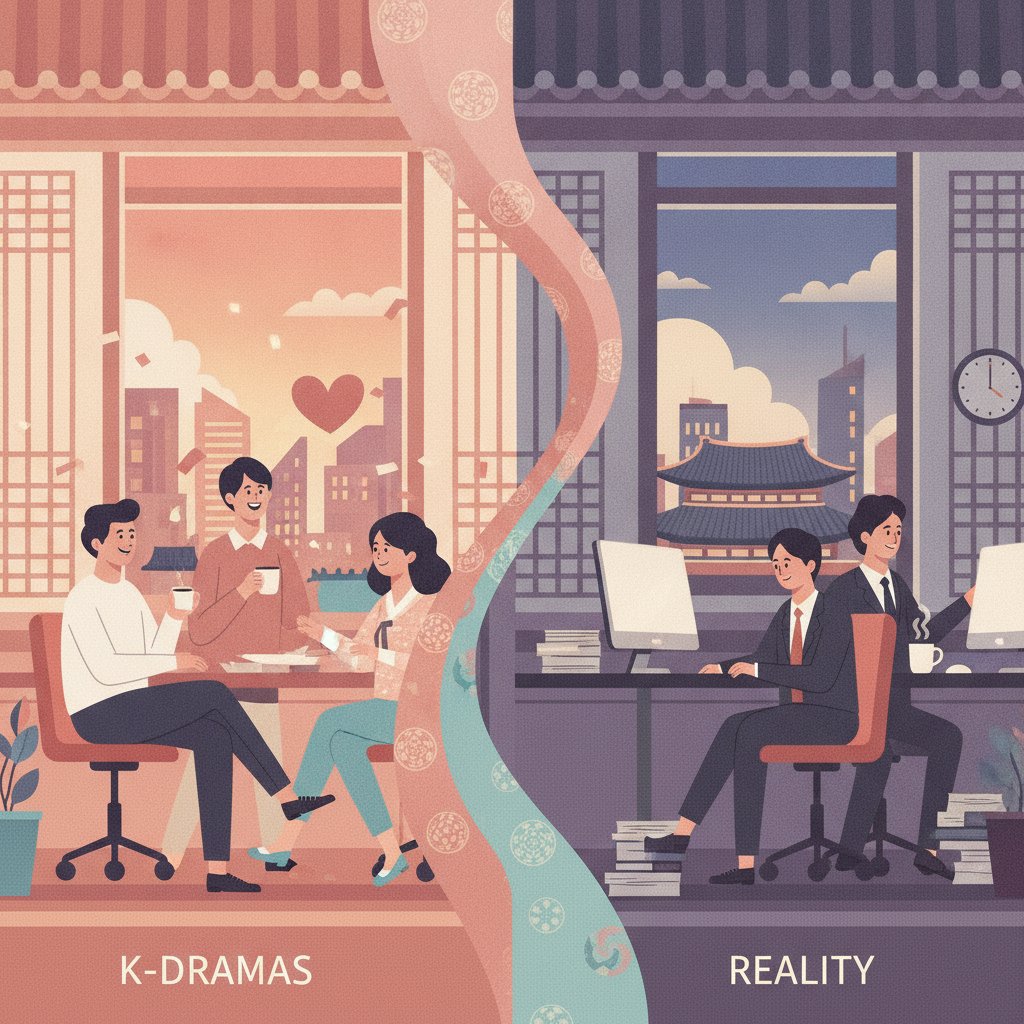
To help summarize how fictional portrayal compares to everyday life in Seoul, here is a breakdown of common workplace tropes:
| Workplace Aspect | K-Drama Depiction | Real Korean Office Life |
|---|---|---|
| Hierarchy | Playful or easily challenged by brave protagonists | Strict etiquette, honorific speech, and structured ranks |
| Team Dinners | Nightly drinking, dramatic confessions, late karaoke | Less frequent today; often replaced by team lunches |
| Office Romance | Common, openly passionate, often with executive management | Kept strictly hidden to avoid gossip and professional friction |
| Workplace Venting | Dramatic bar chats over hot pots of soup | Anonymous discussions on online workplace forums like Blind |
Where to Watch Korean Office Dramas Legally
If you want to watch workplace K-dramas to compare their portrayals with reality, several streaming services offer licensed titles with accurate translations:
- Netflix: Hosts popular workplace dramas including Misaeng: Incomplete Life (widely considered by locals to be the most realistic depiction of Korean office life ever produced), Business Proposal, and Start-Up. Subscription plans typically range from $6.99 to $22.99 USD per month depending on your region and tier.
- Rakuten Viki: Excellent for specialized Asian dramas with community-subtitled context notes explaining Korean cultural nuances, titles, and idioms. Free options exist with ads, while ad-free passes range roughly from $5.99 to $9.99 USD per month.
🎟️ Popular tours & experiences in Korea
Klook.comFAQ
Is Misaeng really the most realistic Korean office drama?
Yes, ask almost any Korean office worker and they will confirm that Misaeng: Incomplete Life is remarkably accurate. Unlike romantic comedies set in corporate buildings, Misaeng focuses realistically on contract work anxieties, team politics, administrative burnout, and the subtle emotional dynamics of corporate life in Korea.
Do Korean companies really make employees wear formal suits every day?
It depends heavily on the industry. Traditional sectors like banking, law, and corporate finance still expect business formal suits. However, major conglomerates and tech firms have widely shifted toward ‘smart casual’ or complete casual attire, allowing sneakers and jeans unless formal client meetings are scheduled.
What is the polite way to hand something to a senior colleague in Korea?
In Korean culture, whenever you hand a document, business card, or beverage to someone older or of higher rank, you should always use two hands. Alternatively, you can support your right elbow or forearm with your left hand while presenting the item, accompanied by a slight bow of the head.
Keep Reading
- Level Up Your Korean: A Realistic Guide to Learning Through K-Dramas
- Beyond the Screen: Essential Korean Variety Shows K-Drama Fans Will Adore
- Webtoon K-Drama Adaptations: Picks and Watching
- K-Drama Cafes & Filming Spots in Seoul: Local Finds
🎟️ Popular tours & experiences in Korea
Klook.com