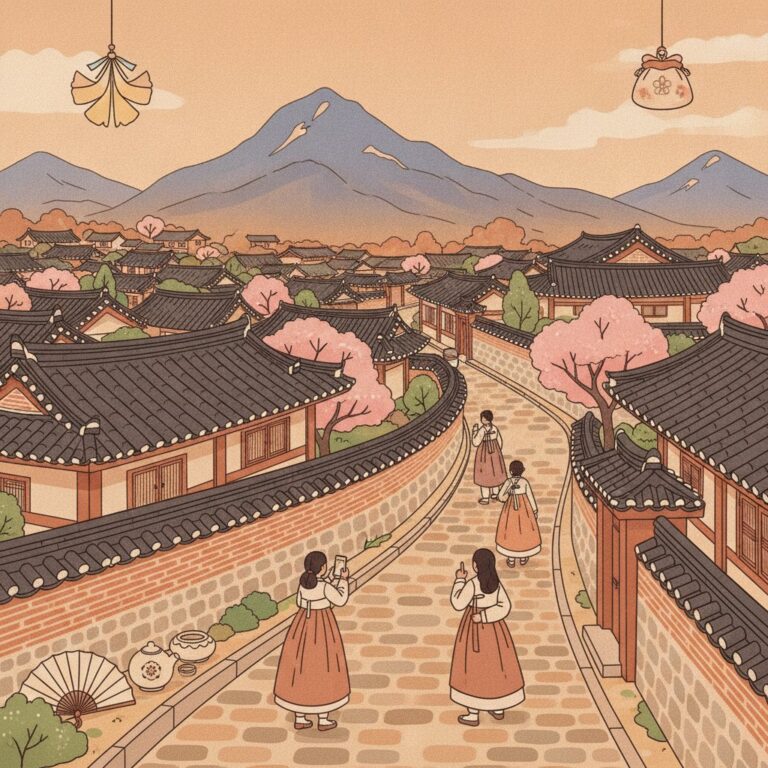
K-Drama Drinking Etiquette: Real Korean Rules Explained
At a glance
- In shortExplains core Korean drinking etiquette rules seen in K-dramas for social and workplace settings.
- Best forK-drama viewers and travelers visiting South Korea
- WhereNationwide
- Key pointsUse two hands to pour or receive drinks when with elders or superiors. · Turn your body away from seniors when taking a sip of alcohol. · Avoid refilling your own glass or topping off half-full cups.
- Heads-upAccept the first poured glass with both hands even if you do not consume alcohol.
I still remember my very first hoesik—the traditional Korean company dinner—after landing my first full-time office job in Seoul. I sat across from my team leader, nervously holding a cold bottle of soju. Just like you see in dramas, I instinctively gripped the green bottle with two hands, waited until he held up his glass, and poured steadily until it was nearly full. When he poured one back for me, I held my glass with both hands, turned my torso slightly to the left, and took the shot away from his line of sight.
If you watch K-dramas like Work Later, Drink Now, Business Proposal, or Itaewon Class, you have seen these exact gestures dozens of times. What looks like an intricate script to international viewers is second nature to us here in Korea. Understanding K-drama drinking etiquette opens up a whole new layer of storytelling, showing who holds power, who is offering respect, and who is quietly trying to close a social gap.
The Social Meaning of Drinking in Korean Culture
In Korea, drinking together is rarely just about enjoying a beverage. It is built around a concept called jeong—a deep feeling of emotional connection, warmth, and solidarity. Sharing a drink is one of the fastest ways Koreans break down formal social barriers. In workplace dramas, you often see a distant boss finally warm up to an employee over a late-night street tent meal at a pojangmacha. That transition from formal speech to relaxed conversation over drinks is a staple plot point for a reason.
Company dinners serve as an informal extension of office life. While office dynamics remain rigid during working hours, drinking sessions allow people to speak a bit more candidly, clear up misunderstandings, and bond across different age groups and job titles. However, the social hierarchy remains active, which is why etiquette rules stay strictly enforced even after a few rounds of drinks.
✈️ Book your trip to Korea — hotels, flights & more
Core K-Drama Drinking Etiquette Rules
If you want to read K-drama scenes like a local, here are the essential rules of Korean table manners when alcohol is served.
1. Always Use Two Hands When Pouring and Receiving
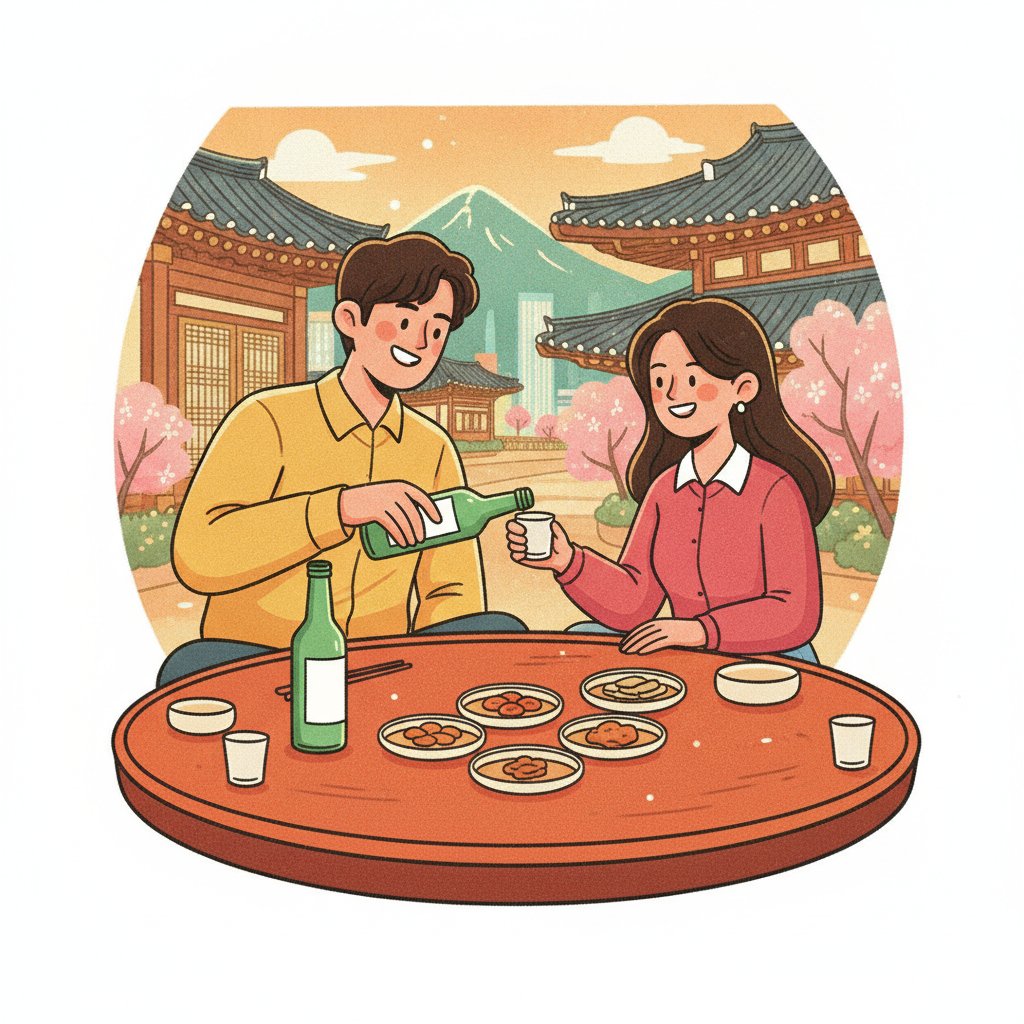
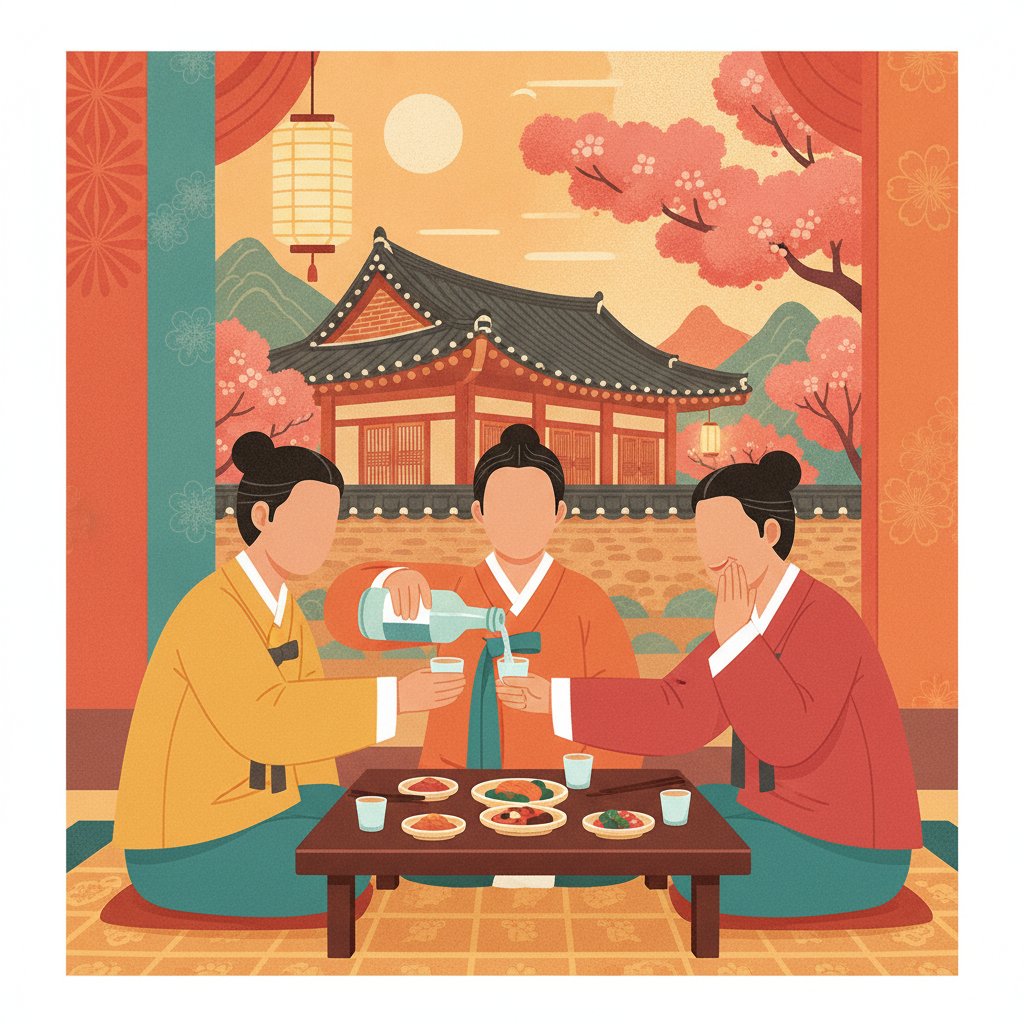
The golden rule of Korean table etiquette is that one hand is rarely enough when interacting with someone older or higher in status. When pouring a drink for a senior, hold the bottle with your right hand and lightly support your right forearm or wrist with your left hand. Alternatively, place your left hand flat against your chest or supporting the base of the bottle.
When someone older pours a drink for you, hold your glass with both hands as well. Using only one hand can be viewed as casual or slightly dismissive, unless you are drinking with close friends of the exact same age.
2. Turn Your Body Away for the First Sip
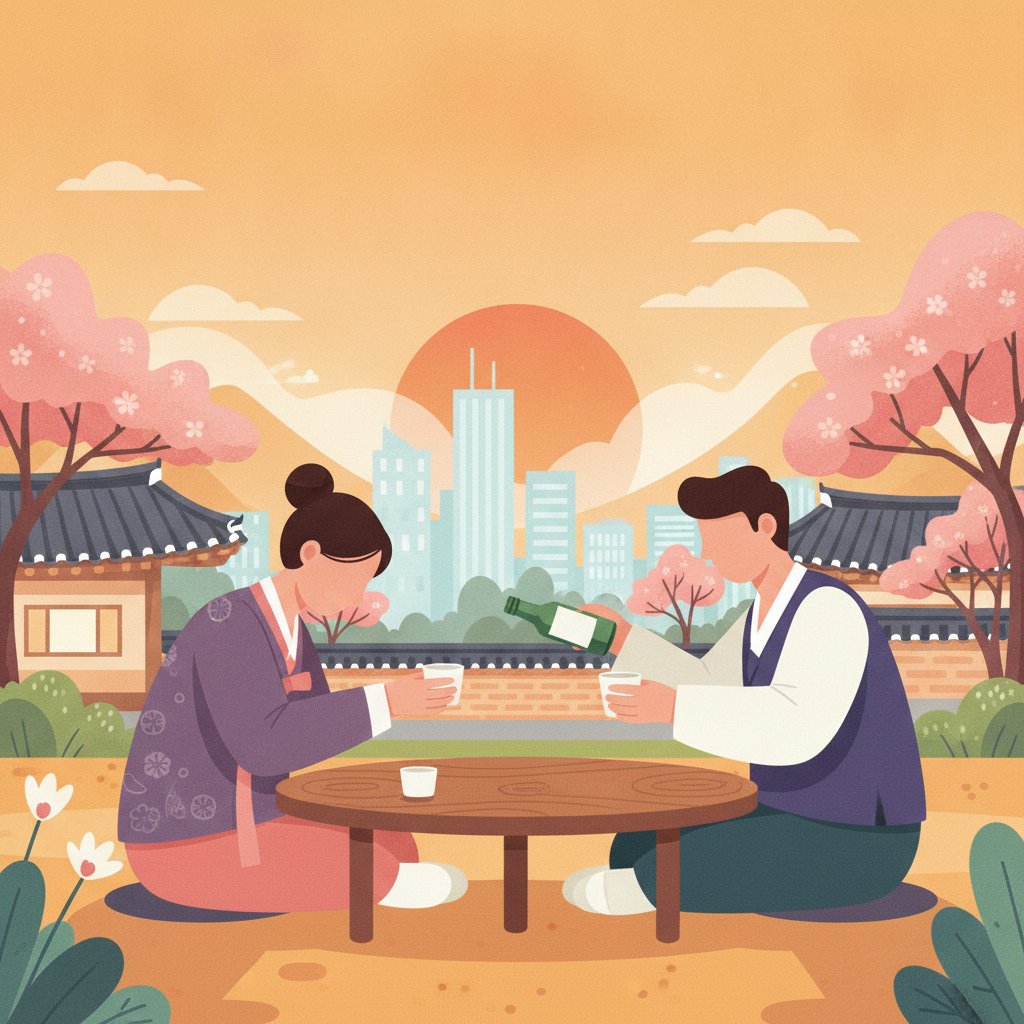
When drinking in front of someone older or superior to you in rank, you should never drink facing them directly. Instead, turn your head—and ideally your upper body—slightly away from them, covering the side of your glass with your hand as you drink.
In K-dramas, you will notice characters turning their heads to the side at a 45-degree angle to take a shot of soju. This gesture prevents elders from having to stare directly into your open mouth while you swallow. If you are drinking with friends of equal age or younger, you can look straight ahead and drink normally.
3. Never Refill Your Own Glass
In many Western cultures, filling your own cup is standard practice. In Korea, refilling your own glass is considered bad form because pouring for others is how you express hospitality and consideration. In fact, an old superstition claims that if you fill your own glass, the person sitting across from you will suffer bad luck.
The ideal rhythm is to keep an eye on your tablemates’ glasses. When a senior’s glass is empty, you offer to refill it. As a general rule, do not top off a drink that is half-full. Wait until the glass is completely empty before pouring a fresh round. If your own glass is empty, someone at the table will usually catch on and offer to fill it for you.
4. Pay Attention to Glass Height During Toasts
When clinking glasses for a toast—commonly accompanied by the word geonbae (literally meaning “empty the glass”)—the height of your glass relative to others carries social meaning. Out of respect, younger or lower-ranking participants should lower the rim of their glass so it strikes slightly below the rim of the senior’s glass. Watch closely during K-drama business dinner scenes on platforms like Netflix or Viki, and you will spot junior employees lowering their glasses almost to the table surface out of politeness.
Popular Drinks Featured in K-Dramas
K-dramas feature a specific rotation of alcoholic beverages, each carrying its own distinct social context and price point in Korea.
Soju
Soju is Korea’s national spirit, clear and clean with an alcohol content usually between 16% and 17%. Green bottles are everywhere in Korea, from local convenience stores like GS25 and CU to upscale restaurants. A standard 360ml bottle typically costs around 1,500 to 2,500 KRW (roughly $1.10–$1.80 USD) in convenience stores, while casual restaurants usually price it around 4,000 to 6,000 KRW ($3.00–$4.50 USD).
Makgeolli
Makgeolli is a traditional unfiltered rice wine with a cloudy appearance, slightly sweet and tangy taste, and mild carbonation. It usually sits around 5% to 7% ABV. Historically associated with farmers, it is traditionally served in wide shallow bowls and paired with savory Korean pancakes (jeon), especially on rainy days.
Somaek
A classic K-drama party scene involves mixing soju with beer (maekju), creating a cocktail called somaek. The standard ratio is roughly 3 parts soju to 7 parts beer. Characters often mix it with flair, using a spoon or chopstick plunged into the bottom of the glass to create a dramatic foaming effect.
| Drink Name | Alcohol % (ABV) | Approx. Store Price |
|---|---|---|
| Soju | 16% – 17% | 1,500–2,500 KRW |
| Makgeolli | 5% – 7% | 1,800–3,500 KRW |
| Korean Beer | 4.5% – 5% | 2,000–3,000 KRW |
🎟️ Popular tours & experiences in Korea
Klook.comPractical Advice for Experiencing Korean Drinking Culture
If you are traveling to Seoul or visiting a local Korean restaurant, keeping these tips in mind will make your experience smooth and respectful.
- Handling Alcohol Refusals: In modern Korea, drinking pressure has decreased significantly. If you do not drink alcohol, accept the first poured glass with both hands to acknowledge the gesture, set it down, and politely explain that you do not consume alcohol. You can fill your glass with water or soda for subsequent toasts.
- Convenience Store Seating: Major retail chains like GS25, CU, and Seven-Eleven operate around the clock across Korea. During warmer months, many branches set up outdoor plastic tables where locals grab quick, affordable drinks and snacks late at night.
- Hangover Remedies: In K-dramas, morning-after scenes almost always feature characters drinking hangover relief tonics or eating spicy hangover soup (haejang-guk). Popular hangover drinks like Condition or Morning Care are sold at every convenience store and Olive Young location for roughly 4,000 to 6,000 KRW ($3.00–$4.50 USD) per bottle.
Frequently Asked Questions
What happens if you accidentally drink facing an elder directly in Korea?
It is rarely treated as a harsh offense, especially if you are a foreign visitor. Most Koreans understand that international guests are unfamiliar with the practice. Gently turning your head for the next sip is all it takes to show you are making an effort to follow local customs.
Can you refuse a drink poured by a boss or older person in Korea?
While refusing used to be difficult in past decades, modern Korean workplace culture is much more understanding. The best approach is to accept the glass with both hands out of courtesy, set it down without drinking, and softly mention that you cannot drink for health, personal, or religious reasons.
Is hangover drink culture really as popular in Korea as shown in K-dramas?
Yes, hangover relief products are a massive industry in Korea. Convenience stores stock entire shelves dedicated to hangover drinks, gel packs, and pills. It is very common for coworkers to buy hangover drinks for each other before or after a long evening out.
More on K-Dramas vs Real Life
- Korean High School: Reality vs K-DramasCompares real Korean high school routines and dress codes to popular K-drama tropes.
- Famous K-Drama Foods and How Locals Eat ThemA guide to iconic K-drama dishes, how to order them, local etiquette, and estimated prices.
- Korean Family Hierarchy in K-DramasExplains the real cultural rules and Confucian roots behind family dynamics in K-dramas.
See every K-Dramas vs Real Life post in our K-DRAMA guide.
Handy toolsKorea travel essentials · Korea Guide Finder
Keep Reading
- K-Drama Product Placement Explained: Why Brands Love PPL
- Korean Blind Dating and Mat-seon Explained by a Local
- Korean Apartment Culture: What K-Dramas Get Right and Wrong
- Korean Funeral Scenes in K-Dramas Explained by a Local
🎟️ Popular tours & experiences in Korea
Klook.com