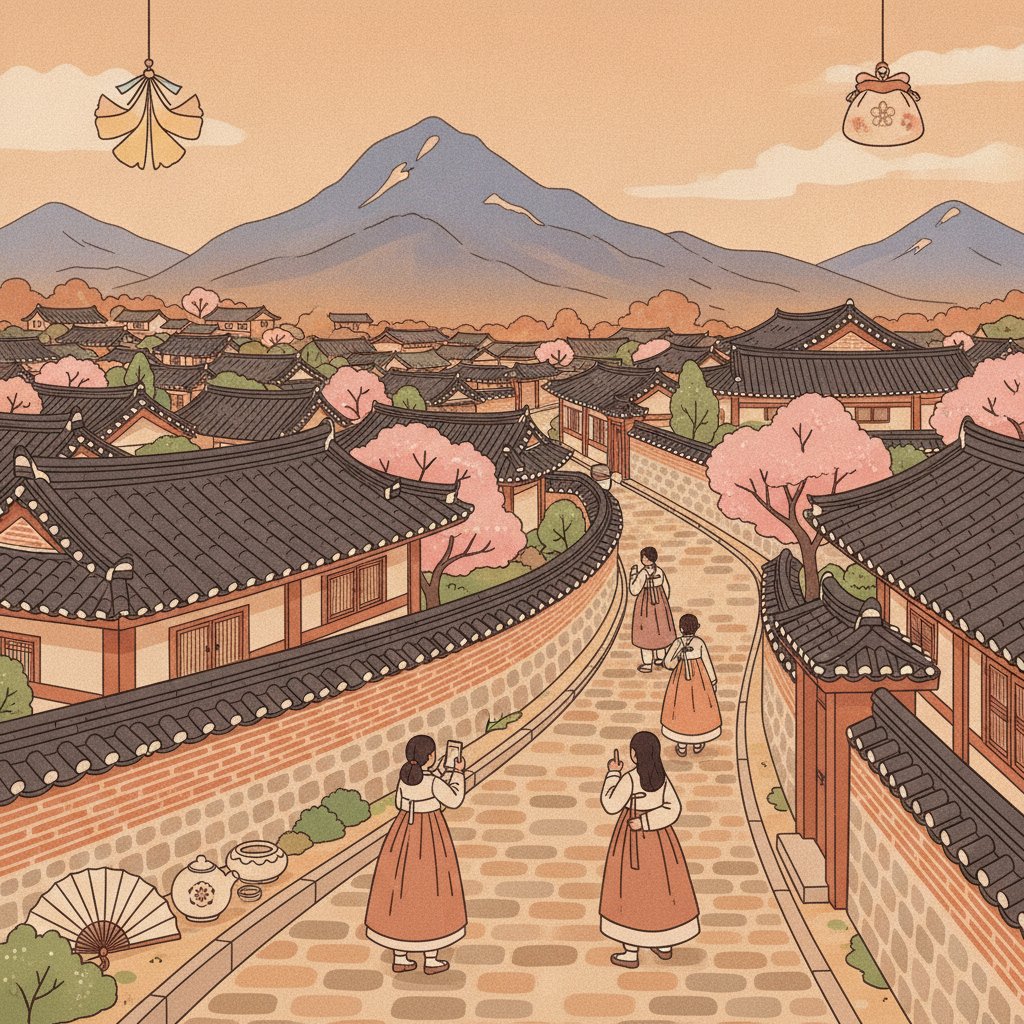
Bukchon Hanok Village: Essential Walking Route and Etiquette
Understanding Bukchon: A Living Neighborhood, Not a Theme Park
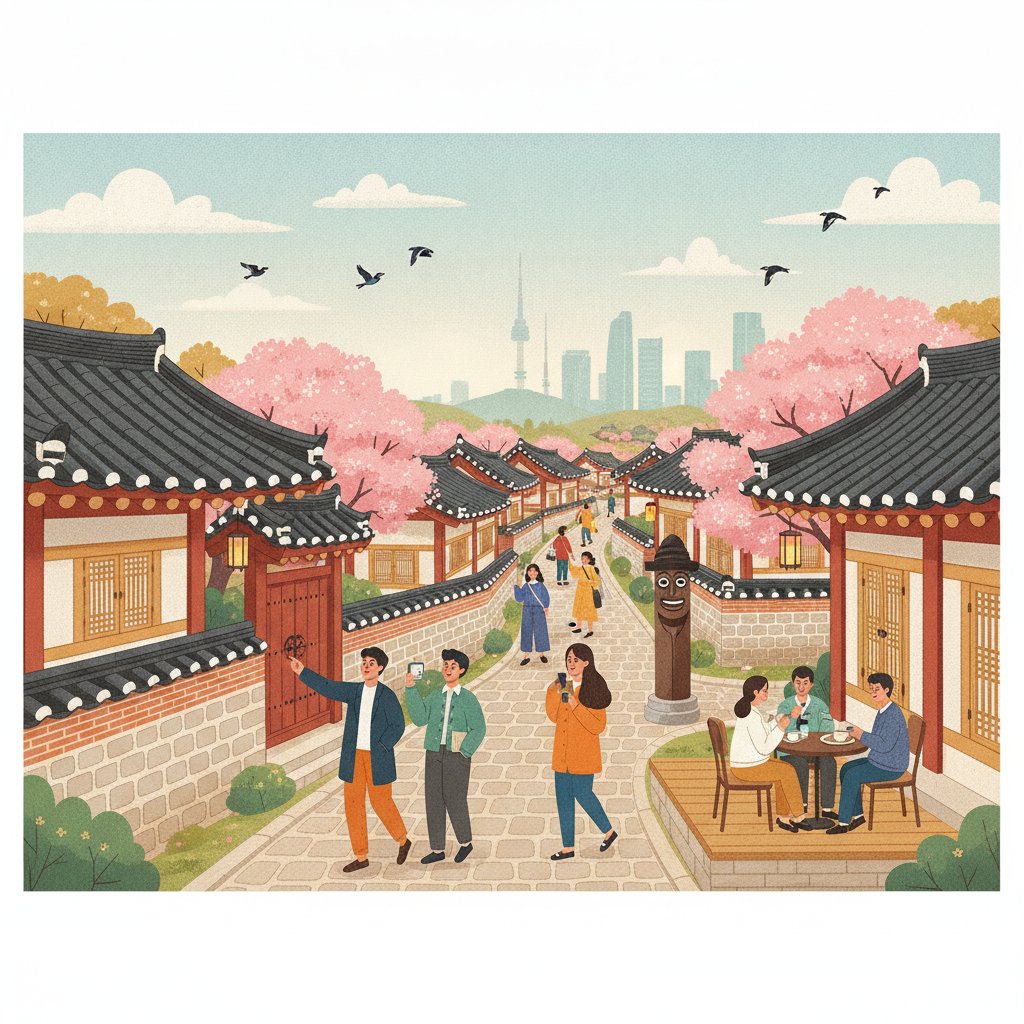
Every weekend, I see visitors walking up the steep stone alleys of Bukchon with iced coffees in hand, talking animatedly, completely unaware that the wooden door right beside them belongs to an elderly couple trying to enjoy a quiet morning. As a Korean who grew up visiting this area and watching its transformation over the years, I fully understand the appeal. The sight of traditional tiled roofs contrasting against the sleek glass of modern Seoul skyscrapers in the distance is breathtaking.
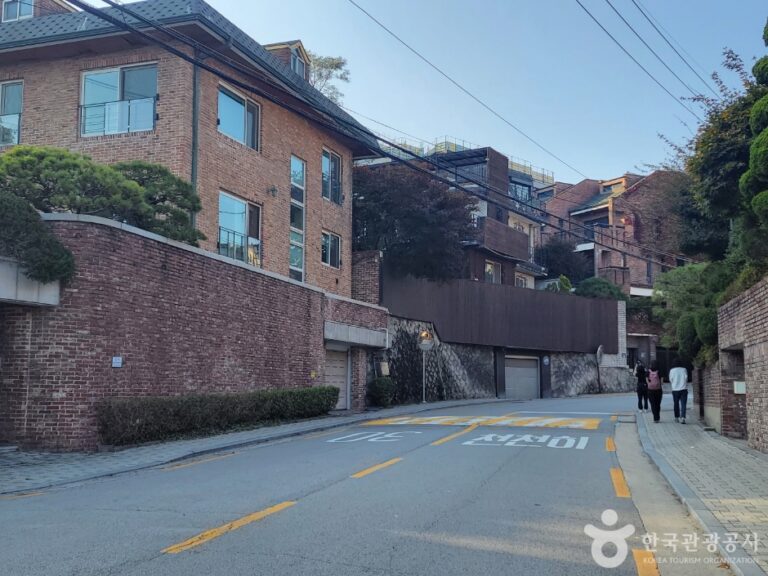
However, the single most important thing to remember before setting foot in Bukchon is that it is not an open-air museum like Folk Village in 용인 (Yongin). It is a working, living residential neighborhood. Hundreds of local citizens wake up, head to work, study for exams, and raise their children behind those historic wooden walls. Because of the massive influx of tourism over the past decade, resident frustration has led local government authorities, specifically the Jongno-gu district office, to introduce strict visiting guidelines and designated quiet zones.
Visiting Bukchon Hanok Village respectfully doesn’t mean you can’t have fun or take beautiful photos. It simply means understanding how to move through the space thoughtfully. By following a smart walking route and keeping a few basic local courtesy rules in mind, you can experience the beauty of traditional Korean architecture while ensuring the community remains welcoming to future travelers.
✈️ Book your trip to Korea — hotels, flights & more
Essential Local Etiquette Rules for Visitors
In recent years, the district council introduced measures to curb noise pollution and overcrowding in residential zones. You will often see local volunteers wearing yellow vests holding signs that read quiet in multiple languages. Here are the core rules every foreign visitor should follow:
- Respect designated visiting hours: Residential alleyways (especially around Gahoe-dong) have officially designated visiting hours, typically from 10:00 AM to 5:00 PM on Mondays through Saturdays. Visiting outside these hours, especially late at night or very early in the morning, disturbs residents.
- Keep your voice at a whisper: Traditional wooden hanok structures lack modern soundproofing. Loud laughter, shouting across alleys, or playing music on portable speakers carries directly into people’s living rooms and bedrooms.
- Do not peek into private homes: Doors are sometimes left cracked open for ventilation. Peeking inside, leaning over low perimeter walls, or sticking cameras through door gaps is considered a severe invasion of privacy.
- Take your trash with you: Public trash cans are notoriously rare in Seoul streets, including Bukchon. Bring a small plastic bag in your daypack to hold your coffee cups, water bottles, and snack wrappers until you return to a subway station or cafe.
- Do not sit on residential doorsteps: While the stone steps and wooden sills look picturesque for photos, sitting on private entryways blocks access for homeowners and delivery drivers.
Preparing for Your Visit: Tools and Timing
A smooth trip to Bukchon requires a tiny bit of advance preparation. Because Google Maps does not provide detailed pedestrian turn-by-turn navigation in South Korea due to national mapping security laws, you should download localized navigation apps before setting out.
Recommended Apps
Download either KakaoMap or Naver Map (both support English UI). They offer precise walking directions through the narrow, winding alleys of Bukchon where standard international apps often get confused. For language assistance, the Papago translation app is invaluable if you need to read local menu boards or signage.
When to Go
The ideal window to visit is between 10:00 AM and 11:30 AM on a weekday morning. During this time, daylight is bright enough for photography, tour buses have not yet arrived in full force, and you are strictly adhering to community visiting hours. Aiming for an early weekday slot also makes it much easier to snag a table at nearby tea houses without waiting in long queues.
🎟️ Popular tours & experiences in Korea
Klook.comThe Ideal Step-by-Step Bukchon Walking Route
This walking route is designed to cover key cultural highlights while managing physical exertion, as Bukchon involves steep inclines and stone steps. The entire walking loop takes roughly 1.5 to 2.5 hours depending on your pace and photo stops.
Stop 1: Anguk Station (Exit 2 or 3)
Begin your journey at Anguk Station on Seoul Subway Line 3. Exit 2 or 3 puts you right at the southern threshold of the Bukchon neighborhood. Before heading into the alleys, drop into a local convenience store if you need water, or use the public restrooms inside the subway station, as facilities inside the residential neighborhood are limited.
Stop 2: Bukchon Cultural Center
Walk north from Exit 3 for about five minutes until you reach the Bukchon Cultural Center. Housed inside a restored traditional hanok that once belonged to a Joseon Dynasty official, this center offers free informational maps, architectural exhibits explaining hanok construction (such as the ondol underfloor heating system and wooden joinery), and clean public restrooms. Spending fifteen minutes here provides essential context for what you will see along the trail.
Stop 3: Gahoe-dong Main Alley (The Iconic Slope)
Head up towards Bukchon-ro 11-gil, widely considered the heart of Gahoe-dong. This is the famously photographed uphill alley flanked by continuous rows of beautifully restored hanok roofs. As you walk up, turn around at the crest of the hill: on a clear day, you get a stunning view of traditional tiled eaves framing N Seoul Tower on the horizon. Remember to keep your voice low here, as this alley receives the highest density of tourism complaints from homeowners.
Stop 4: Baek In-je House
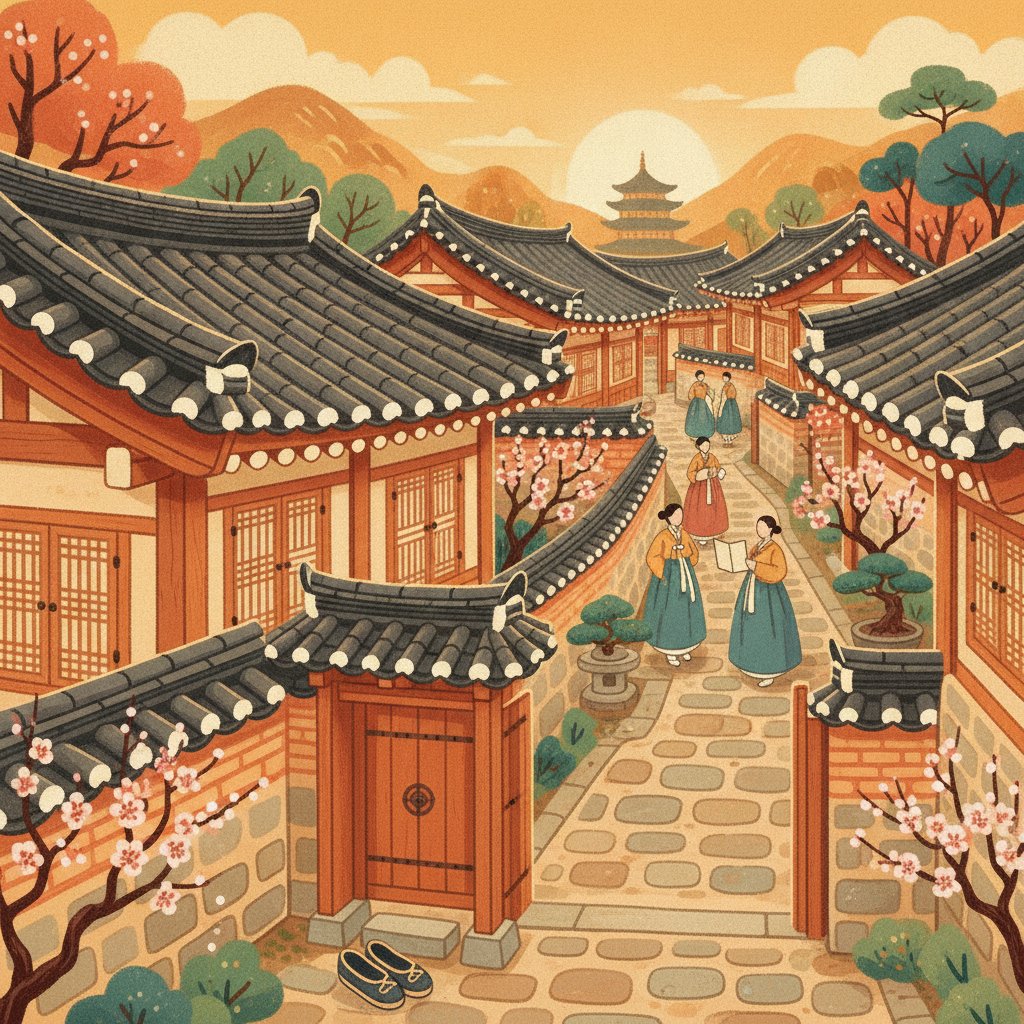
From the top of Gahoe-dong, head west toward Baek In-je House. Built in 1913 during the early modern era, this grand estate combines traditional Korean architectural elements with modern Japanese influences. Unlike the private residences nearby, Baek In-je House is owned by the Seoul Metropolitan Government and open to the public as a museum house. You can walk through the expansive garden, admire the second-story timber framing (unusual for traditional hanok), and see how Korean upper-class families lived in the early 20th century. General entry is free, though guided indoor tours require advance booking.
Stop 5: Descending into Samcheong-dong
Follow the stone staircases leading down from the western edge of Bukchon into Samcheong-dong. This lower street runs parallel to the eastern wall of Gyeongbokgung Palace and offers a complete shift in atmosphere. Here, narrow residential alleys give way to indie art galleries, boutique fashion stores, leather craft shops, and traditional tea salons.
Renting a Hanbok Responsibly
Renting a traditional hanbok (Korean traditional clothing) to wear while walking through Bukchon and neighboring royal palaces is a favorite activity for visitors. Near Anguk Station and along Bukchon-ro, you will find dozens of rental shops.
Typical rental prices generally range from 15,000 won to 35,000 won (approximately $11 to $26 USD) depending on the quality of the fabric, whether you select standard or luxury/themed designs, and rental duration (usually 2 to 4 hours). Basic hair styling and simple accessories are often included or available for a small add-on fee of around 3,000 to 5,000 won.
If you choose to wear a hanbok, keep in mind that the long skirts and wide sleeves require extra awareness when navigating narrow, crowded pathways. Hold your skirts slightly raised while walking up Bukchon’s stone stairs to prevent tripping or dragging fabric through street dirt. Also note that wearing a full hanbok grants you free entry into all major royal palaces in Seoul, including Gyeongbokgung and Changdeokgung.
Where to Rest: Tea and Local Bites
After walking the hilly terrain of Bukchon, taking a break at a traditional tea house (다원 or 찻집) completes the experience. Traditional teas in Korea are often brewed from dried fruits, roots, and herbs rather than tea leaves.
- Omija-cha (Five-flavor Berry Tea): A refreshing, tart, slightly sweet cold drink made from magnolia berries, perfect for warm days. Typical price: 7,000 to 9,000 won per glass.
- Daechu-cha (Jujube Tea): A thick, naturally sweet, warm dark tea made from boiled red dates. It is soothing and considered deeply comforting in cooler weather. Typical price: 7,000 to 10,000 won.
- Jeon-deug Injeolmi / Rice Cakes: Many local tea houses serve chewy rice cakes dusted with roasted soybean powder alongside tea service for around 5,000 to 8,000 won.
If you prefer a full meal, Samcheong-dong at the bottom of the hill is famous for hand-torn noodle soup (sujebi) and hand-pulled knife noodles (kalguksu). A hearty bowl usually costs between 9,000 and 13,000 won.
Quick Practical Reference
| Location / Spot | Main Attraction | Approximate Cost / Notes |
|---|---|---|
| Bukchon Cultural Center | Maps, exhibits, restrooms | Free entry / Open daily |
| Baek In-je House | Historic hanok museum | Free general admission |
| Hanbok Rental Shops | Traditional clothing experience | ~15,000–35,000 won (2–4 hrs) |
| Samcheong-dong Alleyway | Cafes, food, local shopping | Varies by shop and cafe |
🎟️ Popular tours & experiences in Korea
Klook.comFrequently Asked Questions
Is Bukchon Hanok Village free to enter?
Yes, Bukchon Hanok Village is a public neighborhood and completely free to walk around. There are no ticket counters or entry gates for the public streets. However, specific attractions within or near the village, such as private art galleries or specialized craft museums, may charge small separate admission fees.
What is the best time of day to visit Bukchon?
The best time to visit is between 10:00 AM and 11:30 AM on weekdays. Official neighborhood quiet hours start ending at 10:00 AM, allowing you to walk the residential streets legally while avoiding the heavier afternoon crowds, tour groups, and high sun.
Can I go inside the hanok houses in Bukchon?
Most hanok houses in Bukchon are private family residences and are strictly closed to the general public. However, you can go inside publicly managed historical properties like Baek In-je House, designated cultural centers, or the numerous commercial hanoks that operate as public tea houses, cafes, and guesthouses.
Keep Reading
- KTX Train Travel: Korea’s High-Speed Rail Tips
- Seoul Subway Tips for First-Time Visitors
- Your Essential T-money Card Guide: A Local’s Tips for Buying and Charging
- Seoul Subway Tips for First Time Visitors
🎟️ Popular tours & experiences in Korea
Klook.com