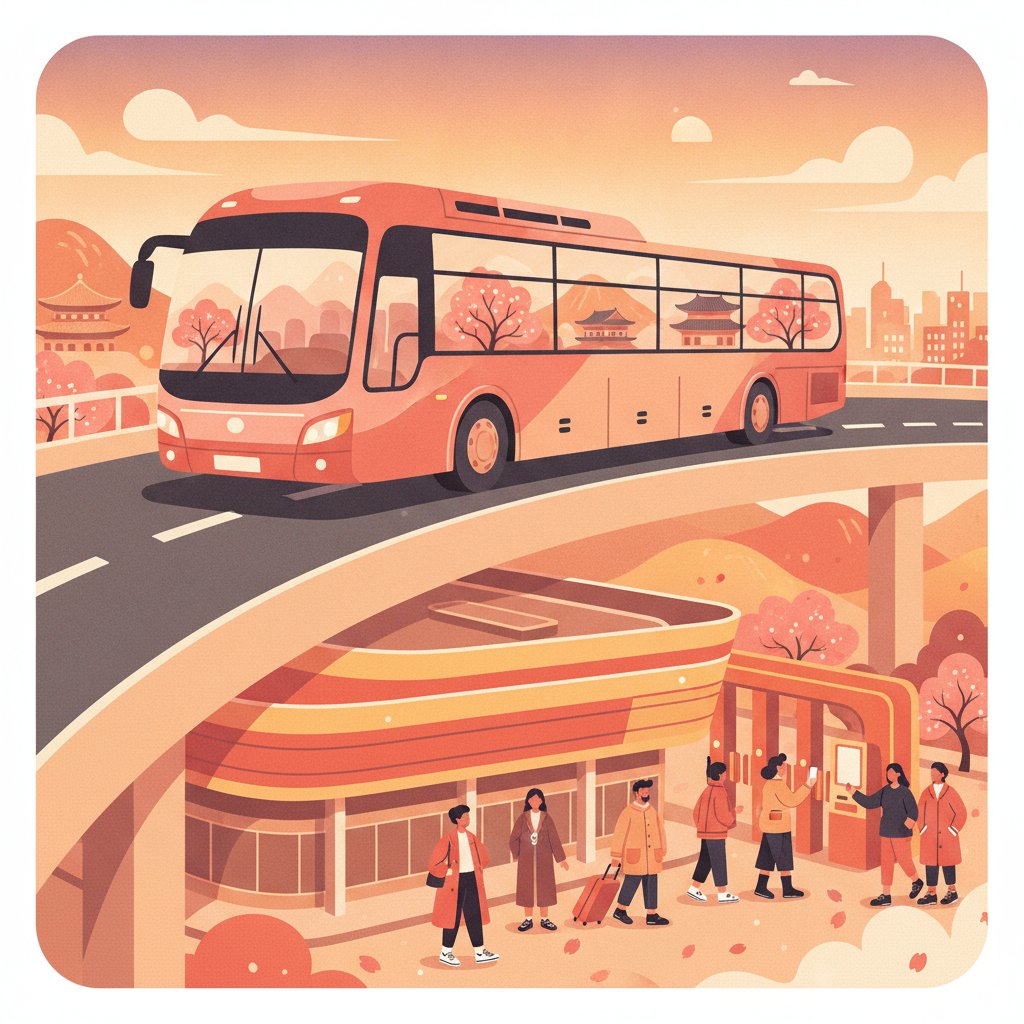
How to Book and Ride Express Buses in Korea
Most travelers default to the KTX high-speed train when planning trips outside Seoul, but as a Korean who travels across the country regularly, I frequently take express buses instead. Buses go directly to coastal towns, mountain valleys, and smaller heritage cities where train tracks never reached. They are exceptionally clean, remarkably punctual, and often cost half the price of high-speed rail. On major routes, express buses even use dedicated bus lanes on highways, letting you bypass heavy traffic jams during peak hours.
Navigating the highway bus system in a foreign country can feel intimidating if you do not speak the language. Between different bus classes, multiple terminal buildings in Seoul, and foreign credit card quirks on domestic booking apps, it helps to know how the system operates before heading to the terminal. Here is everything you need to know about making a Korea express bus booking and riding the bus like a local.
Express Bus vs. Intercity Bus: Understanding the Difference
In Korea, long-distance buses are broadly divided into two categories: Express Buses (고속버스, goseok beoseu) and Intercity Buses (시외버스, sioe beoseu). While they might look identical from the outside, they operate under different booking systems and ticketing networks.
Express buses generally run non-stop between major cities or make at most one brief stop. They run almost entirely on expressways and usually arrive at dedicated Express Bus Terminals. Intercity buses, on the other hand, make multiple stops at smaller towns along local highways before reaching their final destination. For long trips between major hubs—such as Seoul to Busan, Daegu, Gwangju, or Gangneung—you will almost always want an express bus for speed and comfort.
✈️ Book your trip to Korea — hotels, flights & more
Choosing the Right Bus Class
Express buses in Korea come in three distinct classes. Ticket prices vary based on the class you select, but even the highest tier remains surprisingly affordable compared to international standards.
- Standard (일반, Ilban): Features four seats per row (2×2 layout). Legroom is decent, similar to a standard economy flight, but seats do not recline very far. These are the most economical option.
- Honor / Excellence (우등, Udeung): Features three seats per row (2×1 layout). These seats are much wider, offer generous legroom, and include footrests and deep reclining angles. This is the most common class across most routes.
- Premium (프리미엄, Peurimieom): The ultimate comfort option. Features individual seat pods with privacy curtains, personal TV screens, wireless phone chargers, individual reading lights, and seats that recline nearly flat without disturbing the person behind you.
| Bus Class | Seat Layout | Key Features |
|---|---|---|
| Standard (일반) | 2 x 2 seats | Basic legroom, budget-friendly |
| Honor (우등) | 2 x 1 seats | Extra width, footrest, deep recline |
| Premium (프리미엄) | 2 x 1 pods | Privacy curtain, personal screen, wireless charger |
As a general price reference, a standard express bus ticket from Seoul to a mid-distance city like Jeonju usually costs around 15,000 to 20,000 KRW (roughly $11 to $15 USD), while an Honor bus runs approximately 22,000 to 28,000 KRW ($16 to $21 USD), and a Premium bus costs around 28,000 to 35,000 KRW ($21 to $26 USD). Keep in mind that exact fares vary by route, travel time, and operator, so check official schedules when planning.
Navigating Korea Express Bus Booking as a Foreigner
Securing your seat in advance is recommended during weekends, national holidays, or summer vacation seasons. However, the online booking process for international travelers comes with a few specific hurdles to keep in mind.
1. Booking Online via Official Websites
The official Korean express bus booking portal is Kobus (kobus.co.kr). Kobus offers an English interface, but its payment gateway frequently struggles with non-Korean credit cards due to local security authentication requirements (such as 3D Secure or local SMS verification). If you have a local Korean bank card or a Korean resident registration number, online booking is seamless. If you are relying entirely on an international card, the website may reject your transaction at the final payment stage.
2. Using Third-Party Booking Platforms
If you want to secure your tickets online before arriving in Korea and wish to use an international credit card, you can book through established travel platforms like Klook. These platforms support foreign credit cards and provide digital vouchers that make online reservation far simpler for overseas visitors.
3. Buying Tickets In Person at the Terminal
For most non-holiday travel days, you do not need to stress about booking weeks ahead. You can simply walk into the bus terminal and buy a ticket for the next available bus. Automated self-service kiosks inside major Korean bus terminals feature English, Japanese, and Chinese language options. Unlike the native mobile apps, these physical terminal kiosks generally accept international credit cards (Visa and Mastercard) without requiring local phone verification.
If a kiosk does not accept your card, simply step up to the manned ticket window. You can show the ticketing agent your destination written in Korean on your phone screen along with your preferred time, and they will process your purchase smoothly.
🎟️ Popular tours & experiences in Korea
Klook.comLocating the Right Express Bus Terminal in Seoul
Seoul has multiple long-distance bus terminals, and going to the wrong one is a common mistake for first-time visitors. The two primary terminals for express buses are located right next to each other at Express Bus Terminal Station (Seoul Subway Lines 3, 7, and 9).
- Gyeongbu / Yeongdong Terminal: Departs for cities in the eastern and southeastern regions of Korea, including Busan, Daegu, Gyeongju, Daejeon, and Gangneung.
- Central City Terminal (Honam Line): Departs for cities in the southwestern region, including Jeonju, Gwangju, Mokpo, and Yeosu.
Always double-check your departure terminal name printed on your ticket or booking confirmation before heading out. Another major station is Nambu Bus Terminal (Line 3), which primarily handles intercity routes to southern destinations, and East Seoul Bus Terminal (Gangbyeon Station, Line 2), which serves both express and intercity routes heading east and north.
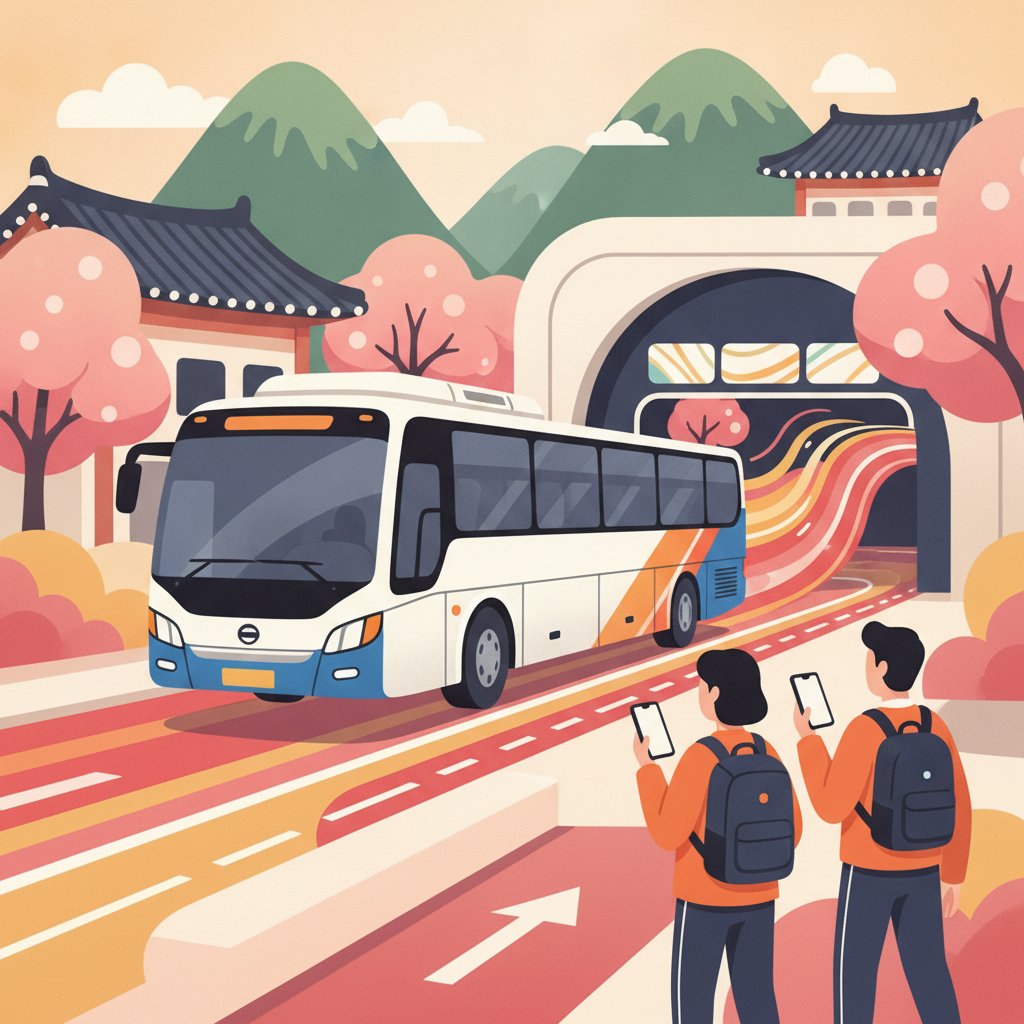
Step-by-Step: What to Expect on Ride Day
Finding Your Departure Gate
Bus terminals operate much like airports. Look at the digital departure boards displayed across the main hall to match your bus company, departure time, and destination city. Walk out to the numbered platform (홈, hom) indicated on your ticket about 10 to 15 minutes before departure.
Boarding the Bus
When the bus arrives at the platform, the driver will open the luggage compartment under the bus body. Place your large suitcases inside yourself; there is no extra charge for standard baggage. Step onto the bus and hold your paper ticket or electronic QR code up to the digital scanner next to the driver’s seat. A chime will ring, and a display monitor above the windshield will highlight your seat number in green, confirming your boarding.
Enjoying Highway Rest Areas (Hyu-ge-so)
For journeys lasting longer than two hours, the bus will pull into a highway rest area (휴게소, hyugeso) for approximately 15 minutes. Korean rest stops are famous food destinations in their own right. Drivers will announce the stop over the intercom and display the remaining break time on the front screen.
Before stepping off the bus to grab street food, pay close attention to three crucial things:
- Memorize your bus license plate number: Rest stop parking lots are filled with dozens of identical-looking buses.
- Take your valuables with you: Do not leave passports or wallets on your seat.
- Watch the clock: Express buses run on precise schedules and will depart promptly when the 15 minutes are up.
While at the rest stop, try local roadside favorites like freshly baked walnut cakes (호두과자, hodu-gwaja), sausage and rice cake skewers (소떡소떡, sotteok-sotteok), or sweet grilled buttered potatoes.
FAQ
Can I use an international credit card for Korea express bus booking online?
Official domestic booking websites like Kobus often fail with non-Korean credit cards due to local security verification. To use an international credit card online, book through global travel platforms like Klook. Alternatively, you can easily buy tickets using international cards at self-service kiosks inside Korean bus terminals.
Do I need to book express bus tickets weeks in advance?
For normal weekdays and non-holiday weekends, booking a few hours in advance or right at the terminal is usually fine. However, during major Korean national holidays—specifically Lunar New Year (Seollal) and Chuseok—or popular summer beach weekends, tickets sell out instantly and should be booked as early as allowed.
How much luggage can I bring on a Korean express bus?
Passengers are allowed to load up to two large suitcases or bags into the lower luggage compartment free of charge, plus a small backpack or personal item to carry inside the cabin. Excessive cargo or exceptionally bulky items like bicycles may require special arrangements or additional fees depending on available space.
Keep Reading
- KTX Train Travel: Korea’s High-Speed Rail Tips
- Seoul Subway Tips for First-Time Visitors
- Your Essential T-money Card Guide: A Local’s Tips for Buying and Charging
- Seoul Subway Tips for First Time Visitors
🎟️ Popular tours & experiences in Korea
Klook.com