Korean Makgeolli Guide for Beginners
On rainy days in Seoul, you can hear the sizzle of jeon (savory Korean pancakes) drifting from neighborhood taverns long before you see them. Step inside any of these cozy spots, and almost every table will have a round brass kettle filled with a cloudy, milky white drink that fizzes gently as it pours into shallow metal bowls. That drink is makgeolli, Korea’s oldest traditional alcoholic beverage.
For decades, makgeolli was seen primarily as a drink for blue-collar workers and elderly farmers who drank it for refreshment after a long day in the fields. Today, it is experiencing a massive revival across South Korea. Young Koreans and international visitors alike are falling in love with its complex flavor profile, low alcohol content, and deep connection to Korean culture. As a Korean who has watched this humble rice wine transform into one of the country’s most exciting craft drink trends, I want to share this comprehensive Korean makgeolli guide to help you navigate bottles, flavors, etiquette, and pairings like a true local.
What Is Makgeolli?
At its most basic level, makgeolli (pronounced mahg-guh-lee) is an unfiltered, naturally fermented rice wine. The name translates roughly to “coarsely strained” or “roughly filtered,” which describes how the drink was traditionally made in Korean households.
Unlike clear liquors like soju or refined Korean rice wines like cheongju, makgeolli retains its natural rice sediment. This sediment gives the drink its signature milky appearance, creamy mouthfeel, and rich texture. A standard bottle of makgeolli usually sits at an alcohol content of around 5% to 8% ABV, making it similar in strength to a standard beer or hard cider. Its flavor profile is a delicate balance of sweet, sour, tangy, and slightly bitter notes, topped off with a soft natural effervescence created during fermentation.
✈️ Book your trip to Korea — hotels, flights & more
The Core Ingredients: Rice, Water, and Nuruk
Understanding makgeolli requires a look at three fundamental ingredients: steamed rice, fresh water, and a traditional fermentation starter called nuruk.
- Steamed Rice (Ssal): High-quality white rice, glutinous rice (chapssal), or even barley and wheat form the carbohydrate base. The choice of grain dictates the body, natural sweetness, and aroma of the final pour.
- Water (Su): Because makgeolli is roughly 80% to 90% water, local water quality heavily influences the taste. Historically, regional breweries developed distinct flavor styles based on their local spring water sources.
- Nuruk: This is where the magic happens. Nuruk is a traditional Korean fermentation starter made from wild grains (usually wheat or barley) that have been moistened, compressed into solid cakes, and left to dry outdoors. During this time, wild molds, yeasts, and beneficial bacteria naturally settle on the cake. When mixed with rice and water, nuruk breaks down rice starches into sugars while simultaneously converting those sugars into alcohol.
The wild, unpredictable nature of nuruk gives authentic makgeolli a vibrant depth of flavor that industrial yeast strains simply cannot replicate. It creates natural lactic acid, which provides the distinctive tart yogurt-like flavor that makes fresh makgeolli so refreshing.
Fresh vs. Pasteurized Makgeolli
When shopping for makgeolli at convenience stores or international Asian markets, you will generally encounter two distinct categories: fresh (saeng) and pasteurized.
1. Fresh Makgeolli (Saeng Makgeolli)
Fresh makgeolli is alive. Because it is unpasteurized, active yeast and beneficial lactic acid bacteria continue to ferment inside the bottle. This produces ongoing natural carbonation, giving the wine a crisp, sparkling quality. Fresh makgeolli typically lasts anywhere from three weeks to two months when kept constantly refrigerated. As it ages in the bottle, the yeast continues to consume residual sugars, meaning a bottle opened on day 30 will taste noticeably drier and tart than it did on day five.
Because the fermentation process creates gas, fresh makgeolli bottles are sealed with breathable caps that allow carbon dioxide to escape slowly. You must always keep fresh makgeolli upright in the refrigerator to prevent leaking.
2. Pasteurized Makgeolli
Pasteurized makgeolli has been heat-treated to kill off active yeast and bacteria, stopping the fermentation process completely. While pasteurization removes the live probiotics and reduces the drink’s natural fizz, it creates a stable product that can be stored at room temperature for up to a year. Many imported bottles sold outside of Korea are pasteurized so they can survive long shipping journeys. While still pleasant and sweet, pasteurized versions lack the vibrant, tangy effervescence of living saeng makgeolli.
🎟️ Popular tours & experiences in Korea
Klook.comHow to Mix and Pour Makgeolli Without a Mess
Because makgeolli is unfiltered, the chalky rice sediment naturally settles at the bottom of the bottle, leaving a clearer, amber-colored liquid at the top. While some people like to drink the clear top layer (which resembles dongdongju), traditional enjoyment requires mixing both layers together into a uniform, opaque liquid.
However, opening a fresh, naturally carbonated bottle can result in an explosion of foam if you simply shake it vigorously. Here is the step-by-step local method to mix your bottle safely:
Step 1: The Gentle Tilt
Turn the bottle upside down gently and hold it inverted for about 10 seconds to allow the heavy sediment to drop toward the neck.
Step 2: The Soft Swirl
Invert the bottle back right-side up. Give it a slow, circular swirl rather than a harsh up-and-down shake. Repeating this two or three times will blend the sediment into the liquid smoothly.
Step 3: The Gas Release
Set the bottle upright on a flat surface. Squeeze the sides of the bottle gently while slowly loosening the cap just enough to let trapped carbon dioxide gas hiss out. Tighten the cap back down, wait two seconds for the bubbles to subside, and then loosen it again. Repeat this two or three times until the liquid stops rising before removing the cap completely.
Essential Korean Drinking Etiquette
In Korea, drinking is deeply social, and shared rituals build connection. While modern makgeolli pubs are relaxed, following basic traditional etiquette is a wonderful way to show respect and immerse yourself in the local culture.
- Never Pour Your Own Glass: It is customary to pour drinks for others at the table first. Keep an eye on your companion’s bowl, and offer a refill whenever it gets low.
- Use Two Hands: When pouring makgeolli for someone else—especially someone older or in a position of respect—hold the bottle with your right hand while lightly supporting your right forearm or wrist with your left hand. Similarly, when receiving a pour, hold your bowl with both hands.
- Clink Bowls Properly: Tap your brass bowls together while saying “Geonbae!” (cheers). If drinking with an elder, hold your bowl slightly lower than theirs when clinking as a sign of respect.
- Turn Away to Sip: When taking a drink in front of someone senior to you, politely turn your head slightly away from the table while covering your mouth with your hand.
Classic Food Pairings: What to Eat with Makgeolli
As a Korean, I rarely drink makgeolli by itself. In Korean culinary culture, drinks are almost always paired with specific foods called anju. The high acidity, low alcohol, and gentle carbonation of makgeolli make it exceptionally versatile at the dinner table, cutting through rich, greasy, or spicy dishes easily.
1. Korean Pancakes (Jeon)
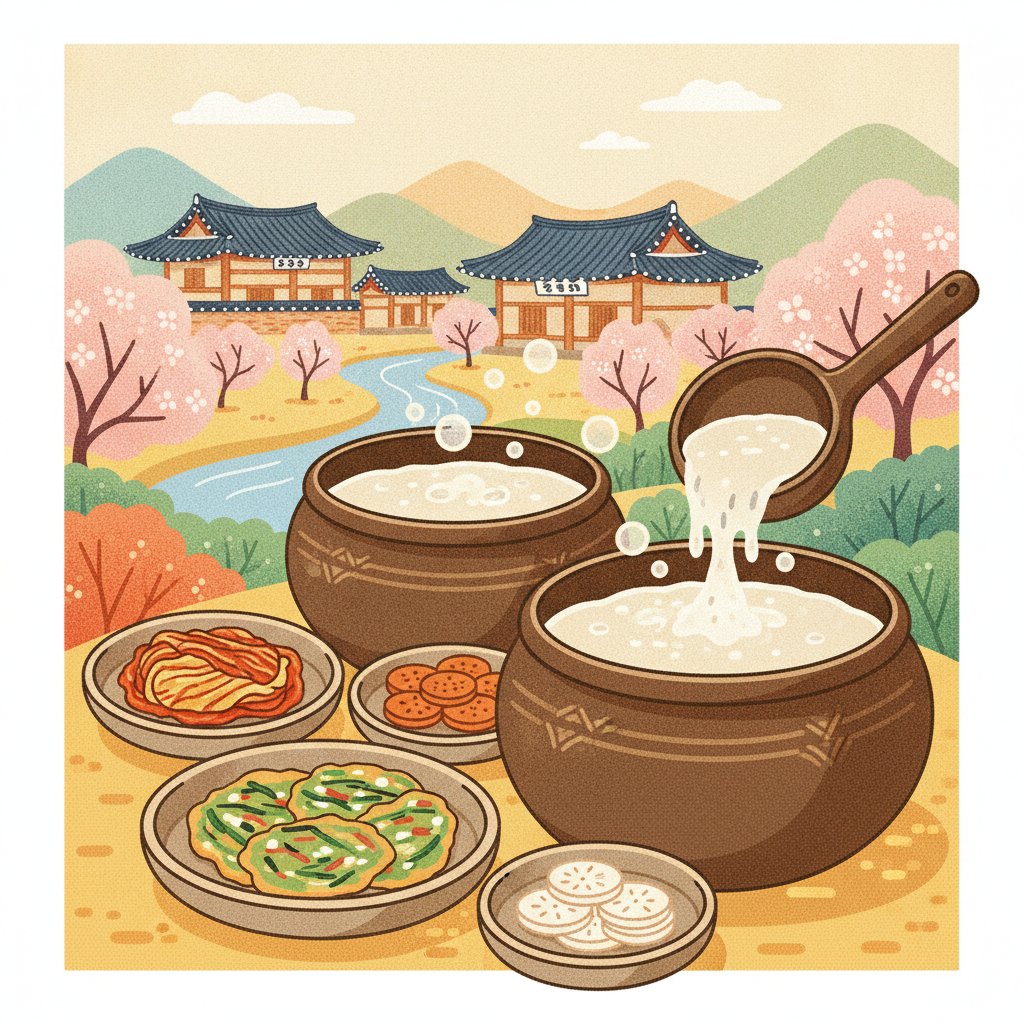
The absolute classic pairing for makgeolli is jeon. Whether it is haemul pajeon (seafood green onion pancake) or kimchijeon (kimchi pancake), the bubbly, cold acid of makgeolli cuts through the crisp oiliness of fried batter instantly. This pairing is so iconic that whenever dark rain clouds roll over Seoul, Koreans immediately message friends to meet up for pajeon and makgeolli.
2. Bossam (Boiled Pork Wrap)
Bossam consists of tender slices of boiled pork belly wrapped in fresh cabbage with spicy radish kimchi. The creamy texture of makgeolli complements the rich pork fat while toning down the sharp garlic and chili kick of the spicy condiment.
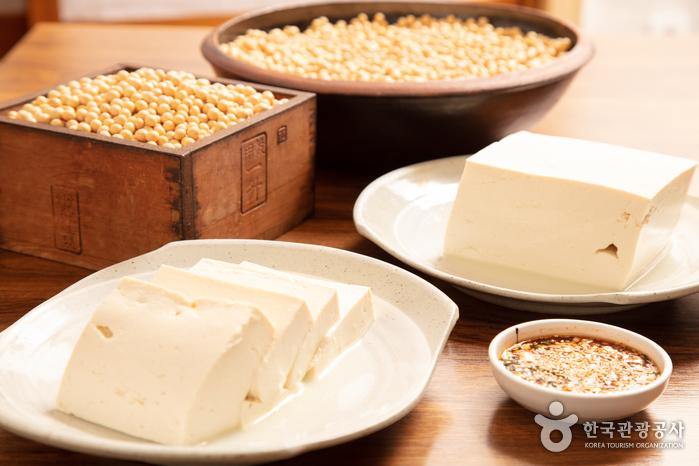
3. Dubu Kimchi (Tofu with Stir-Fried Kimchi)
Steamed warm tofu served alongside caramelized, stir-fried kimchi (often with pork pieces) provides a smoky, tangy flavor profile that harmonizes beautifully with the natural lactic sweetness of fermented rice wine.
Summary of Popular Makgeolli Types & Food Pairings
| Makgeolli Style | Flavor Profile | Best Food Pairing |
|---|---|---|
| Classic Fresh (Saeng) | Crisp, tart, naturally fizzy, moderately sweet | Seafood Pajeon, Kimchijeon |
| Pure Craft (Aspartame-Free) | Complex, full-bodied, rich rice sweetness | Bossam, Grilled Pork Belly |
| Flavored (Chestnut/Yuzu) | Nutty, fruity, dessert-like, sweet | Spicy Dubu Kimchi, Dakgalbi |
Where to Buy and Try Makgeolli
Whether you are traveling across South Korea or shopping in your home country, finding good makgeolli is straightforward once you know where to look.
In South Korea
Convenience Stores: Local Korean convenience store chains like CU, GS25, and Seven-Eleven stock everyday commercial fresh makgeolli in their refrigerated drink section. Standard 750ml bottles typically run between 2,000 and 5,000 won (roughly $1.50 to $4.00 USD), making them incredibly affordable. Look out for well-known national brands like Seoul Jangsoo Makgeolli or Kooksoondang, alongside local regional specialties.
Traditional Markets: Visiting traditional street markets like Seoul’s Gwangjang Market offers an authentic atmospheric drinking experience. Sit on a bench at a lively food stall, order a freshly fried green onion pancake, and receive a cold aluminum kettle of house makgeolli poured straight into your bowl.
Craft Makgeolli Bars: Modern craft breweries and dedicated makgeolli pubs have popped up across major nightlife districts like Hongdae, Insadong, and Gangnam. These specialty bars serve artisanal, small-batch bottles made using 100% local rice without any artificial sweeteners (such as aspartame). Premium craft bottles generally range from 10,000 to 25,000 won (roughly $7.50 to $19.00 USD) depending on fermentation age and ingredient quality. If you want a structured guided experience, booking a traditional alcohol tasting tour through platforms like Klook is a great way to learn directly from local master brewers.
Outside of Korea
If you live abroad, visit local Korean or pan-Asian supermarkets such as H Mart. The refrigerated dairy or alcohol section often carries fresh imported bottles, while ambient liquor aisles house pasteurized varieties. You can also find DIY home brewing kits on online platforms like Amazon, allowing you to ferment your own fresh batch of rice wine at home using rice flour and real nuruk culture.
🎟️ Popular tours & experiences in Korea
Klook.comFAQ
Does makgeolli give you a bad hangover?
Commercial makgeollis that contain added artificial sweeteners (like aspartame) or cheap wheat adjuncts can sometimes cause headaches if consumed in large quantities. However, drinking high-quality, pure-rice craft makgeolli in moderation generally leads to a smoother morning because of its lower alcohol content and natural fermentation process.
How long does an unopened bottle of makgeolli last?
Unpasteurized fresh makgeolli (saeng makgeolli) must be kept refrigerated and is best consumed within 30 to 60 days of manufacture. Pasteurized makgeolli can be safely stored unopened at room temperature for up to one year, though it should still be served chilled.
Can you drink makgeolli warm or on the rocks?
Makgeolli is traditionally served very cold, straight out of the refrigerator, without ice. Adding ice cubes dilutes the rich texture and delicate rice flavors, while heating it can destroy beneficial active live probiotic cultures and alter its refreshing acidity.
Keep Reading
- Korean Convenience Stores: GS25 & CU Food Picks
- Korean Street Food: Learning the Names
- Modern Nulang Central City (모던눌랑): Seoul’s Shanghai Chic
- Texas de Brazil Central City (텍사스 데 브라질): Churrasco in Seoul
🎟️ Popular tours & experiences in Korea
Klook.com