Korean Street Food: Learning the Names
This post contains affiliate links. As an Amazon Associate, we earn from qualifying purchases at no extra cost to you.
At a glance
- In shortEssential guide to popular Korean street foods, local ordering tips, and handy phrases.
- Best forInternational visitors navigating Korean street food stalls
- WhereSeoul
- Key pointsMany street vendors prefer or exclusively accept cash in Korean Won. · Key street foods include Tteokbokki, Eomuk, Gimbap, Sundae, and Hotteok. · Handy ordering phrases include 'Igeo juseyo' and 'Eolmayeyo?'.
- Heads-upHot syrup inside Hotteok can cause burns, so take small bites from the edge.
Annyeonghaseyo, Fellow Foodies! Welcome to Seoul’s Street Food Scene!
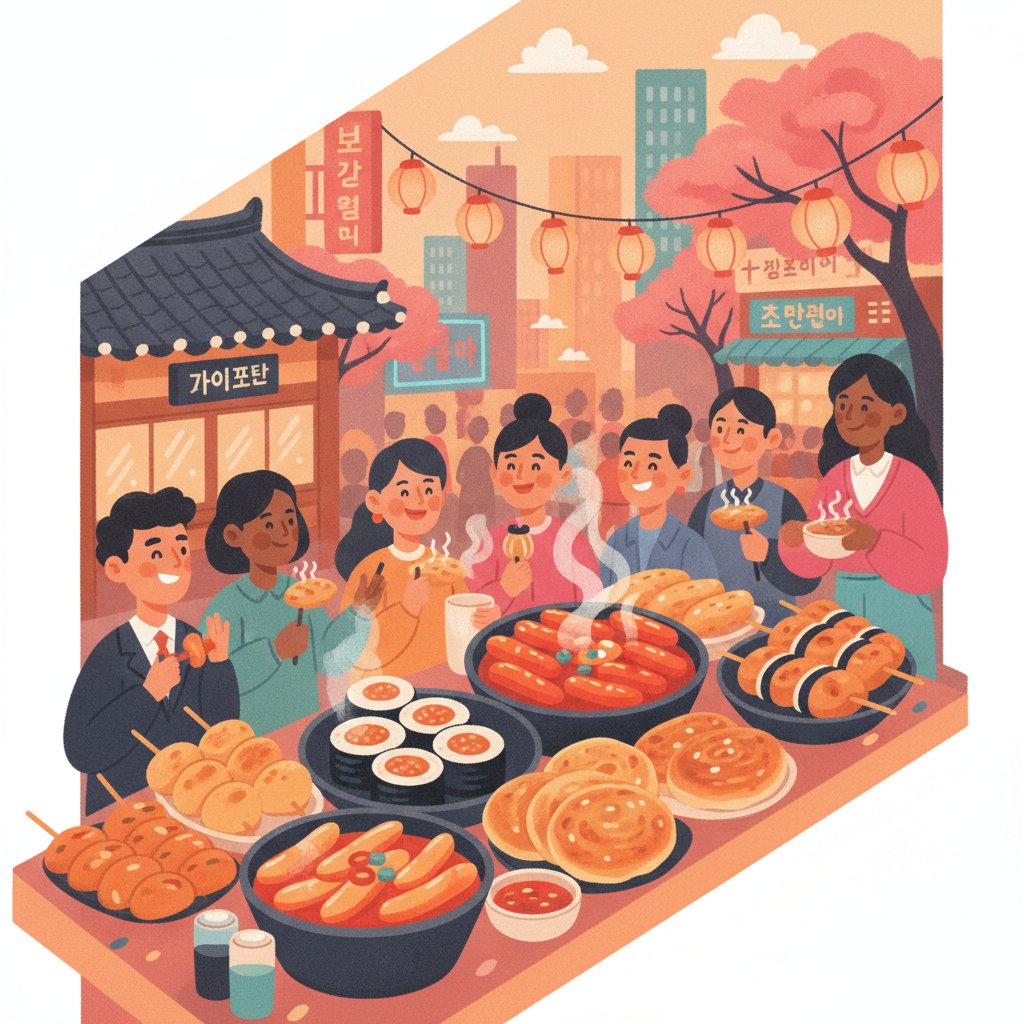
As a Korean, there’s one thing I can confidently say defines our bustling cities and vibrant culture more than anything: street food! From the moment you step off the plane, the tantalizing aromas of savory, spicy, and sweet treats will beckon you from every corner. But for many international visitors, navigating the sheer variety of deliciousness can be a bit daunting, especially when faced with unfamiliar Korean street food names. Don’t worry, I’m here to be your personal guide!
Seoul, and Korea in general, is a paradise for street food lovers. It’s not just about eating; it’s an experience – a cultural immersion, a taste of everyday life, and a journey through our culinary heritage. To help you truly savor every bite and confidently order like a seasoned local, I’ve put together this essential glossary of Korean street food names. Get ready to impress the vendors and your travel companions!
✈️ Book your trip to Korea — hotels, flights & more
Navigating the Street Food Stalls: Tips from a Local
Before we dive into the delicious details, here are a few practical tips to make your street food adventure smooth and enjoyable:
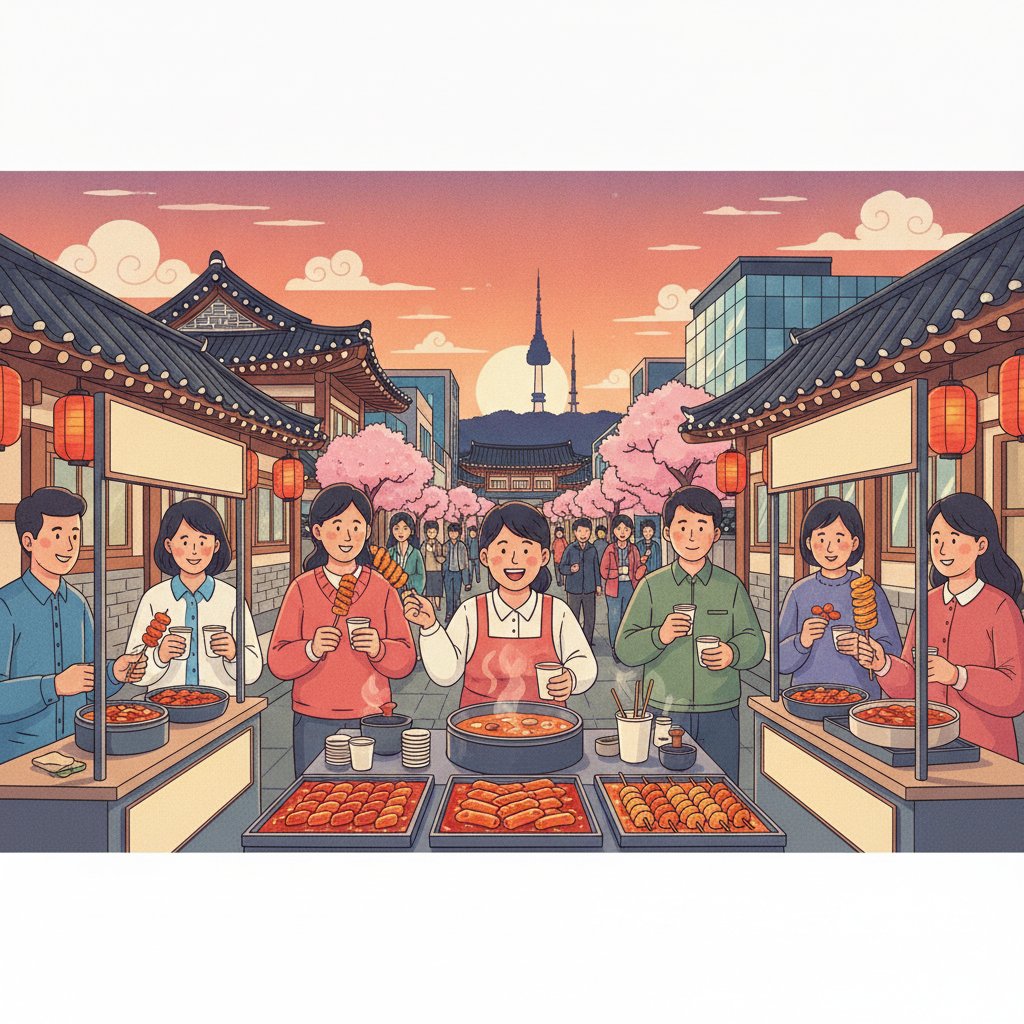
- Cash is King (or Queen!): While some larger stalls or those in tourist-heavy areas might accept card payments, many traditional street food vendors prefer, or even exclusively accept, cash (Korean Won). It’s always a good idea to carry small denominations (1,000, 5,000, 10,000 won bills) for quick transactions.
- Ordering is Easy: Don’t be shy! Most vendors are used to international visitors. You can point to what you want, hold up the number of fingers for quantity, or use a few simple Korean phrases (see below!). Many popular stalls in tourist areas even have English signs.
- Eat as You Go: Street food is meant to be eaten on the spot. Most stalls provide skewers, small plates, or cups. Feel free to stand around the stall or find a nearby spot to enjoy your treats. Don’t forget to dispose of your trash properly in designated bins, if available, or hold onto it until you find one.
- Hygiene: While generally good, exercise common sense. Look for busy stalls with high turnover, as this indicates freshness. Hand sanitizer is always a good companion!
Handy Korean Phrases for Street Food
| Phrase | Meaning |
|---|---|
| 이거 주세요. (Igeo juseyo.) | Give me this (while pointing). |
| 얼마예요? (Eolmayeyo?) | How much is it? |
| 하나 주세요. (Hana juseyo.) | One, please. |
| 맛있어요! (Masisseoyo!) | It’s delicious! |
| 감사합니다! (Gamsahamnida!) | Thank you! |
Essential Korean Street Food Names You MUST Know!
1. Tteokbokki (떡볶이) – Spicy Rice Cakes
If there’s one dish that screams ‘Korean street food,’ it’s Tteokbokki. These chewy, cylindrical rice cakes are simmered in a vibrant, sweet, and spicy gochujang (Korean chili paste) sauce, often with fish cakes (eomuk), boiled eggs, and green onions. It’s a staple for Koreans, a comfort food that warms you from the inside out.
- Taste Profile: Sweet, spicy, savory, and wonderfully chewy.
- How to Eat: Typically served in a cup or on a small plate with a skewer or fork. Be prepared for the heat!
- Typical Price Range: A serving usually costs around 3,000-5,000 won (roughly $2.50-$4 USD), depending on the size and added ingredients. Prices vary by vendor and location.
2. Eomuk/Odeng (어묵/오뎅) – Fish Cakes
Often found alongside tteokbokki, Eomuk (the Korean term) or Odeng (a Japanese loanword, also commonly used) refers to skewers of various shapes of fish cakes served in a light, savory broth. This is a must-have, especially on a chilly day!
- Taste Profile: Mildly savory, umami-rich, and comforting. The broth is a delightful bonus.
- How to Eat: Grab a skewer (or several!), dip them in the broth to soak up more flavor, and enjoy. Most stalls offer small paper cups for the broth, which you can freely refill.
- Typical Price Range: 500-1,000 won per skewer (roughly $0.40-$0.80 USD). Very affordable and satisfying.
3. Gimbap (김밥) – Seaweed Rice Rolls
While often seen as a picnic food, mini Gimbap (also known as Kimbap) are a popular street food snack. These rolls of seasoned rice and various fillings (like egg, ham, pickled radish, carrots, and spinach) are tightly wrapped in a sheet of dried seaweed (gim) and sliced into bite-sized pieces.
- Taste Profile: Savory, slightly sweet, and incredibly versatile depending on the fillings. A perfect balanced snack.
- How to Eat: Usually served in a plastic container with a toothpick. Great for a quick, filling bite.
- Typical Price Range: A small roll or a few slices can be 1,000-3,000 won (roughly $0.80-$2.50 USD). Larger rolls can be 3,000-5,000 won.
4. Sundae (순대) – Korean Blood Sausage
Don’t let the name scare you off! Sundae is a unique and much-loved Korean delicacy made from pig’s intestines stuffed with a mixture of cellophane noodles, barley, and pig’s blood. It’s often steamed and served with a side of salt and pepper mixture for dipping, or sometimes with tteokbokki sauce.
- Taste Profile: Earthy, savory, and slightly chewy. The texture is key here!
- How to Eat: Served sliced, often with a side of steamed liver and lung (which you can decline if you prefer). Dip in salt or the accompanying tteokbokki sauce.
- Typical Price Range: A plate usually costs 3,000-5,000 won (roughly $2.50-$4 USD).
5. Hotteok (호떡) – Sweet Pancake
My personal favorite for a sweet treat, especially in winter! Hotteok is a delightful sweet pancake typically filled with brown sugar syrup, cinnamon, and sometimes nuts. It’s pan-fried to a golden crispness, leaving the inside molten and gooey.
- Taste Profile: Sweet, warm, cinnamon-spiced, and wonderfully sticky.
- How to Eat: Be careful! It’s served piping hot, often in a paper cup. Bite into it gently to avoid burning your tongue with the hot syrup. The best way is to take small bites from the edge.
- Typical Price Range: 1,000-2,000 won per piece (roughly $0.80-$1.70 USD). An absolute steal for the joy it brings!
6. Bungeoppang (붕어빵) – Fish-Shaped Pastry
Another winter classic! Bungeoppang are charming fish-shaped pastries, similar to Japanese taiyaki. The most traditional filling is sweet red bean paste, but you can also find them with custard cream, chocolate, or even savory fillings like sweet potato.
- Taste Profile: Sweet, fluffy, and slightly crispy on the outside, with a warm, soft filling.
- How to Eat: Grab it warm! Best enjoyed immediately after it comes off the grill. No special technique needed, just pure enjoyment.
- Typical Price Range: Often sold in sets, e.g., 3 for 2,000 won or 2 for 1,000 won (roughly $0.80-$1.70 USD per set), depending on size and filling. Prices may increase during peak season or popular locations.
7. Kkwabaegi (꽈배기) – Twisted Donut
A simple yet incredibly satisfying snack, Kkwabaegi are Korean twisted donuts. These light, airy, and slightly chewy donuts are deep-fried to perfection and usually coated in a generous dusting of sugar. Sometimes they’re plain, sometimes filled with red bean or other sweet fillings.
- Taste Profile: Sweet, soft, and lightly crisp with a delightful chewiness.
- How to Eat: Pick one up and enjoy! They are usually served warm.
- Typical Price Range: 1,000-2,000 won per piece (roughly $0.80-$1.70 USD).
8. Dakkochi (닭꼬치) – Chicken Skewers
For something savory and meaty, look no further than Dakkochi. These grilled chicken skewers are marinated in a savory-sweet soy-based sauce or a spicy gochujang sauce, often interleaved with green onions. They’re a fantastic, protein-packed snack.
- Taste Profile: Sweet and savory, or spicy and savory, with tender chicken and aromatic grilled onions.
- How to Eat: Served on a skewer, hot off the grill. Hold it carefully as it can be messy, especially with the sauce.
- Typical Price Range: 3,000-5,000 won per skewer (roughly $2.50-$4 USD).
9. Korean Corndog (핫도그) – Hotdog on a Stick
While the name might sound familiar, Korean corndogs are a whole new level of deliciousness! Wrapped in a sweet, often chewy rice flour batter, and then deep-fried, they can contain a hotdog, mozzarella cheese (or both!), and are frequently coated with various toppings like French fries, ramen crumbs, or sugar before serving. Don’t forget the sauce bar!
- Taste Profile: Crispy, chewy, sweet, savory, and cheesy depending on your choice. A delightful explosion of textures and flavors.
- How to Eat: Take your freshly fried corndog, head to the sauce bar, and load it up with ketchup, mustard, sweet chili, and sugar (yes, sugar!). Enjoy immediately.
- Typical Price Range: 2,000-4,000 won (roughly $1.70-$3.50 USD), depending on fillings and toppings. Definitely worth trying a few variations!
10. Tanghulu (탕후루) – Candied Fruit Skewers
A relatively new but wildly popular trend on the Korean street food scene, Tanghulu are skewers of fresh fruit (strawberries, grapes, tangerines, blueberries, etc.) coated in a hard, clear, sugary candy shell. Originally from China, it has become a sensation here, especially among younger generations.
- Taste Profile: Sweet, tart, and crunchy. The thin candy shell shatters delightfully to reveal juicy fruit.
- How to Eat: Hold the skewer and bite carefully. The candy shell is hard, so take small bites. It’s a sweet, refreshing treat.
- Typical Price Range: 3,000-5,000 won per skewer (roughly $2.50-$4 USD), depending on the fruit and number of pieces.
11. Gyeranppang (계란빵) – Egg Bread
A simple yet incredibly comforting snack, Gyeranppang is a fluffy, slightly sweet bread with a whole egg baked right into the top. It’s a delightful combination of savory and sweet, perfect for a quick breakfast or a light snack.
- Taste Profile: Soft, subtly sweet bread with a warm, savory egg center. A perfect balance.
- How to Eat: Served warm. Just pick it up and enjoy its comforting flavors.
- Typical Price Range: 1,500-2,500 won per piece (roughly $1.30-$2.20 USD).
12. Hodugwaja (호두과자) – Walnut Cakes
These adorable, bite-sized walnut-shaped cakes are a popular snack, especially if you’re traveling a bit outside of Seoul. Each cake is soft, fluffy, and typically filled with a sweet red bean paste and a piece of walnut.
- Taste Profile: Sweet, nutty, and soft with a pleasant chew from the red bean paste.
- How to Eat: Served warm, often in small bags. Perfect for sharing or for a little sweet treat on the go.
- Typical Price Range: Often sold in packs, e.g., 5,000-10,000 won (roughly $4-$8 USD) for a bag of 10-20 pieces. Great for souvenirs too!
🎟️ Popular tours & experiences in Korea
Klook.comWhere to Find the Best Street Food Experiences
While street food stalls pop up virtually everywhere in Korea, some areas are particularly famous for their diverse and delicious offerings. Here are a few top spots:
Myeongdong Street Food Alley
This is probably the most famous street food destination for tourists in Seoul. In the evenings, the main shopping streets transform into a vibrant food alley with countless stalls offering almost every item on this list, and more. It’s a fantastic place to sample a wide variety of snacks in one go, though prices might be slightly higher than in local neighborhoods.
Gwangjang Market (광장시장)
One of Korea’s oldest and largest traditional markets, Gwangjang Market is an absolute must-visit for foodies. It’s particularly famous for its bindaetteok (mung bean pancakes), mayak gimbap (addictive mini gimbap), and tteokbokki. You can sit at communal tables and enjoy the lively atmosphere as vendors prepare food right in front of you. This is an authentic local experience you won’t forget!
Namdaemun Market (남대문시장)
Another historic market, Namdaemun is huge and offers a vast array of goods, including a fantastic selection of street food. From various types of eomuk to hotteok, and many local specialties, you can easily spend hours here tasting your way through the market.
Hongdae & Ewha Womans University Area
These areas, known for their youthful energy and trendy shops, also boast a fantastic street food scene catering to students. You’ll find a great mix of classic favorites and newer, trendier items like elaborate corndogs, fruit skewers, and unique takes on traditional snacks. It’s a great spot to see what’s currently popular among younger Koreans.
Local Neighborhood Spots
Don’t be afraid to wander into smaller neighborhoods! Often, the best and most authentic (and sometimes cheapest!) street food can be found just outside subway stations or in local residential areas. Look for stalls bustling with locals – that’s usually a sign of good food!
If you prefer a structured experience, you can also look into guided street food tours offered on platforms like Klook. These tours often provide insight into the food and culture, making it a wonderful way to explore!
Happy Eating!
Korean street food is more than just a meal; it’s a sensory adventure and a vibrant part of our culture. Armed with these Korean street food names and tips, you’re now ready to dive in headfirst and explore the incredible flavors Korea has to offer. Don’t be afraid to try new things, strike up a conversation with a vendor, and most importantly, enjoy every single delicious bite!
Which one are you most excited to try first? Let me know in the comments below!
More on Street Food & Markets
- Tongin Market Dosirak Cafe GuideHow to build a custom Korean lunchbox using traditional brass coins at Tongin Market.
- Guide to Seoul Pojangmacha Tent BarsA guide to understanding, finding, and ordering at traditional street tent bars in Seoul.
- Noryangjin Fish Market GuideA step-by-step guide on navigating, buying, and dining at Noryangjin Fish Market in Seoul.
See every Street Food & Markets post in our K-Food guide.
Handy toolsKorea travel essentials · Korea Guide Finder
Keep Reading
- Modern Nulang Central City (모던눌랑): Seoul’s Shanghai Chic
- Texas de Brazil Central City (텍사스 데 브라질): Churrasco in Seoul
- Sichuan House (시추안하우스 본점): A Local’s Guide to Fiery Flavors in Seoul
- Korean Dining Etiquette in Seoul & Beyond
🎟️ Popular tours & experiences in Korea
Klook.com