Visiting a Pojangmacha in Seoul: Local Tent Bar Tips
This post contains affiliate links. As an Amazon Associate, we earn from qualifying purchases at no extra cost to you.
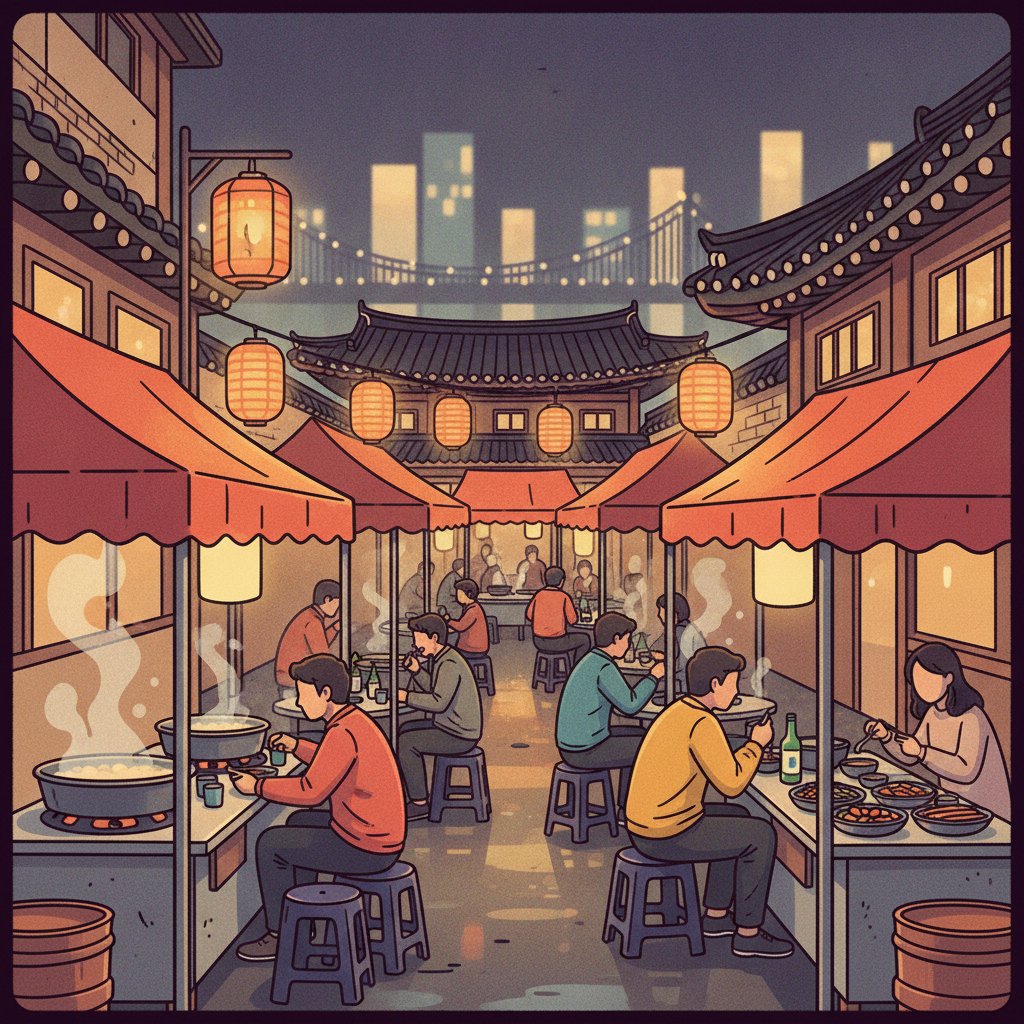
On a chilly October night in Euljiro, steam rises from a bubbling pot of fishcake broth inside a bright orange tarp tent. Squeezed onto bright green plastic stools, office workers in suits laugh alongside college students while the street cart vendor flips scallion pancakes over an open flame. A bottle of cold soju clinks against a green plastic cup, and for a moment, the bustling Seoul metropolis outside vanishes behind canvas walls.
As a Korean who grew up taking late-night food breaks at these street carts, I find that nothing captures the raw, human heartbeat of Seoul nightlife quite like a pojangmacha (포장마차). Literally translating to "covered wagon," these iconic tent bars are an essential part of local drinking culture. Yet for many international visitors, stepping under that canvas curtain for the first time can feel intimidating. Between the unwritten rules, cash-only customs, and Korean-only menus, knowing what to expect turns a confusing night into an unforgettable evening.
Understanding the Two Types of Pojangmacha
Before heading out into the night, it helps to understand that not all street stalls are created equal. When Koreans talk about visiting a pojangmacha, we generally refer to two distinct styles of street vendors.
Daytime Snack Stalls (Bunsik-jip)
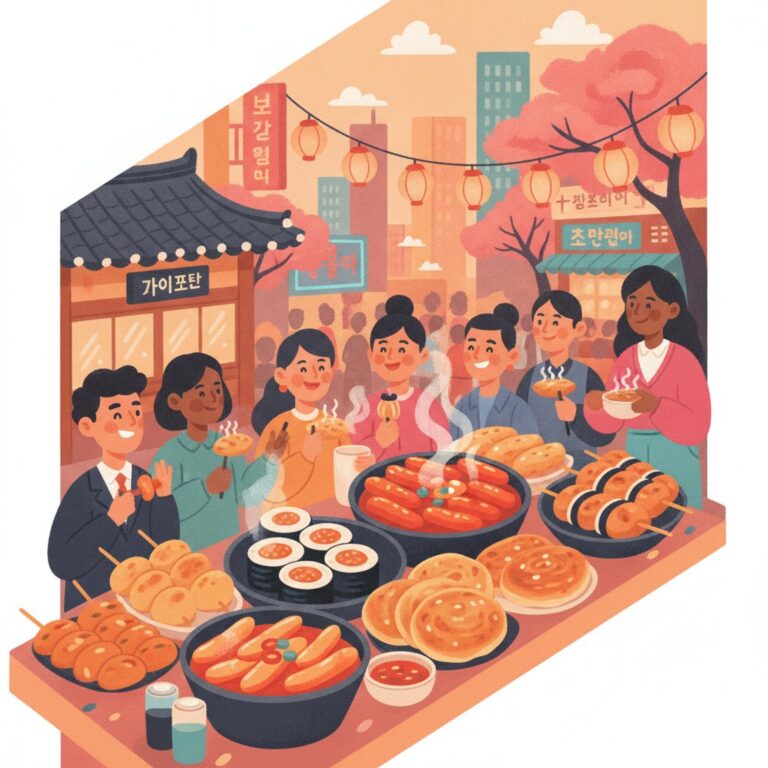
These are daytime or early evening standing carts focused primarily on quick comfort eats. You will find them stationed near busy subway entrances and traditional markets. They specialize in classic street snacks like tteokbokki (spicy rice cakes), sundae (blood sausage), and crispy twigim (deep-fried veggies and seafood). You stand at the counter, eat your quick portion, drink a paper cup of complimentary broth, pay a few thousand won, and move on. Alcohol is rarely served here.
Nighttime Tent Bars (Anju Stalls)
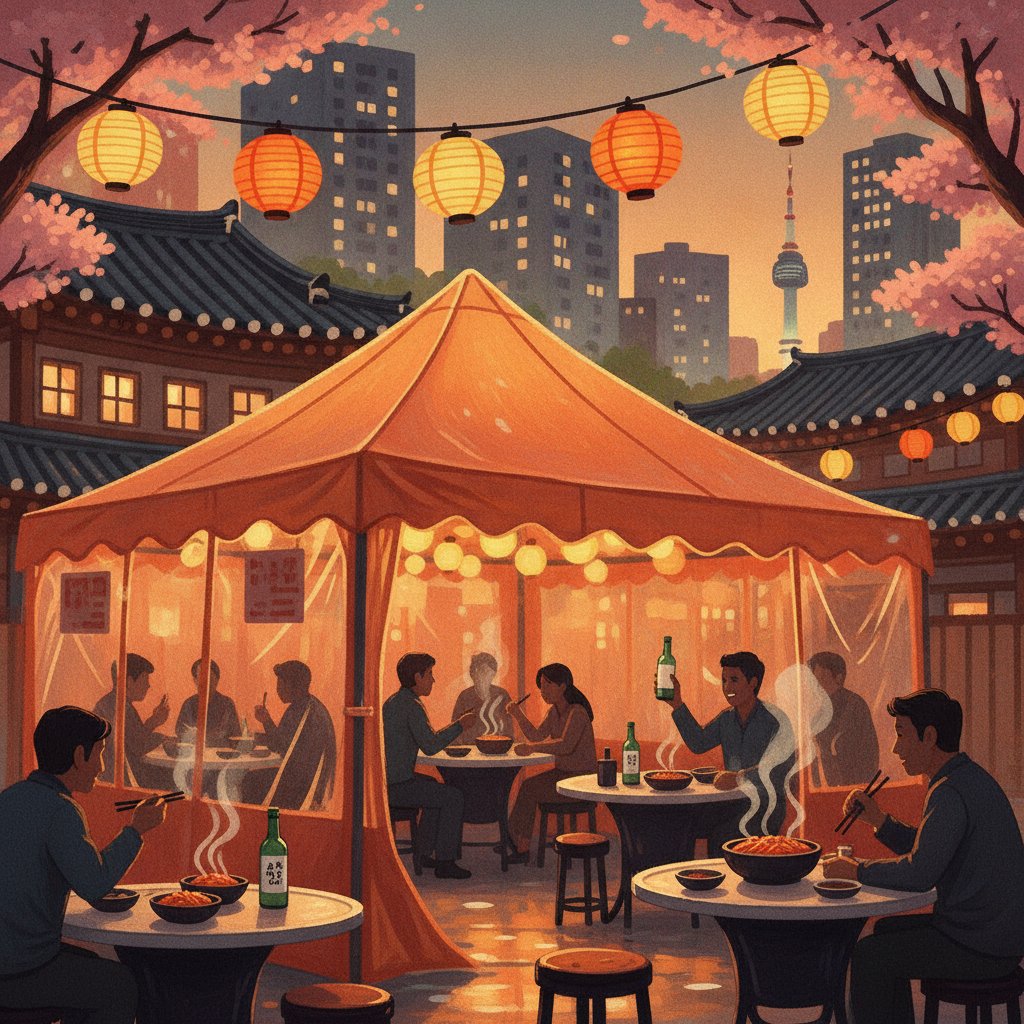
This is the classic late-night tent bar made famous by K-dramas. Opening around dusk and running until the early morning hours, these temporary structures feature full plastic seating, heating units in winter, and lighting strung across metal frames. They serve an extensive menu of anju (food specifically made to accompany alcohol) along with soju, beer, and makgeolli. Sitting down implies an unspoken agreement: you are expected to order at least one main dish along with your drinks.
✈️ Book your trip to Korea — hotels, flights & more
Where to Find the Best Pojangmacha Street Clusters
While isolated tent bars dot neighborhood corners across the city, several main districts host lively clusters where dozens of tents line up shoulder-to-shoulder. To locate them easily, local navigation apps like Naver Map or KakaoMap are much more reliable than Google Maps in South Korea.
1. Jongno 3-ga (Subway Lines 1, 3, and 5)
If you only visit one location, make it Jongno 3-ga. Exit around Subways Exits 3, 4, and 6 transforms every evening into a massive street festival of lights and tarps. The crowd here is a wonderful mix of older locals who have frequented the neighborhood for decades and young crowds drawn to the retro vibe. The atmosphere is energetic, friendly, and deeply historic.
2. Euljiro 3-ga (Subway Lines 2 and 3)
Known affectionately as "Hipjiro," the industrial printing alleyways of Euljiro turn into an outdoor drinking haven at night. While Euljiro is famous for its outdoor beer street (Nogari Alley), you will also find traditional red and orange tarps tucked into the alleys. It attracts a younger, creative crowd looking for post-work relaxation among light manufacturing shops.
3. Yeouido Station (Subway Lines 5 and 9)
Located near Seoul’s financial heart, the pojangmacha around Yeouido cater heavily to corporate employees unwinding after long office hours. The vibe here is slightly quieter and focused heavily on food quality, making it a great destination if you prefer a less chaotic environment.
Essential Pojangmacha Menu Guide
Ordering at a street tent without English signage can feel like a puzzle. Most full-service drinking tents specialize in savory, salty, or spicy dishes cooked quickly over high-heat gas burners. Here is a breakdown of classic food options you will encounter.
| Dish Name | Korean Name | What to Expect |
|---|---|---|
| Gyeranmari | 계란말이 | Thick, savory rolled omelet filled with scallions and vegetables. |
| Dakdongjib | 닭똥집 | Stir-fried chicken gizzards cooked with garlic and green peppers. |
| Eomuk Tang | 어묵탕 | Warm fishcake soup served in a deep pot; highly comforting. |
| Golbaengi Muchim | 골뱅이무침 | Spicy sea snails tossed with thin noodles and fresh veggies. |
| Odoc-뼈 (Ododok-byeo) | 오돌뼈 | Spicy stir-fried pork cartilage served with a side of rice. |
In addition to these favorites, simple quick dishes like udong (thick wheat noodle soup) are staple comfort foods. A bowl of hot udong is often the cheapest dish on the menu and serves as an ideal baseline order while you settle into the space.
🎟️ Popular tours & experiences in Korea
Klook.comStep-by-Step Etiquette and Ordering Process
Navigating your evening at a local street tent runs smoothly once you understand the natural rhythm of the business.
Step 1: Arriving and Seating
Walk right up to an open tent. If you see open plastic stools, signal the owner (often called Imo, meaning auntie, or Sajang-nim, meaning boss) with a polite nod and indicate how many people are in your group. Seating is tight. Space is at a premium, so keep your bags on your lap or tucked beneath your plastic stool, which often has a removable lid for storage.
Step 2: Ordering Food and Drinks
Once seated, the owner will usually hand you a laminate menu or point to a board hung on the tent framework. If there is no English, pointing at photos or using translation apps works completely fine. Remember that ordering alcohol is standard practice at night tents. If you do not drink alcohol, ordering soft drinks along with a heartier food selection keeps the host happy.
Shortly after you sit down, you will often receive a complimentary bowl of hot fishcake broth along with raw cucumber or carrot sticks dipped in ssamjang. This free appetizer is a classic gesture of Korean hospitality (service).
Step 3: Refills and Self-Service
Water, extra cups, and soft drinks are often self-serve in small tents due to limited staff. If you need another bottle of soju or beer, it is acceptable to catch the owner’s eye and hold up the empty bottle or politely say "Yogiyo!" (Over here, please!).
Practical Realities: Payments, Restrooms, and Comfort
While street bars offer an incredible cultural experience, prospective visitors should prepare for a few practical realities of street dining in Seoul.
Cash vs. Credit Cards
This is the most critical detail for foreign travelers: most temporary pojangmacha operate on a cash-only or domestic bank transfer basis. Because these pop-up stalls lack permanent land addresses or traditional card terminals, international credit cards are frequently declined or simply not accepted. Always carry physical Korean Won cash when planning a night out at street tents.
While snack stalls might charge around 3,000 to 6,000 won for street snacks, night tent main dishes generally range between 12,000 and 22,000 won (roughly $9 to $17 USD depending on exchange rates). A typical night for two people with drinks and two dishes usually costs around 35,000 to 50,000 won overall.
Restroom Access
Pojangmacha do not have built-in bathrooms. Tent owners make arrangements with nearby commercial buildings or public subway stations. Look around the tent interior for a key attached to a large plastic object or ask the vendor where the bathroom is. You will often need to carry toilet paper provided at the main stall desk, as building restrooms may not keep it stocked late at night.
Seasonal Preparation
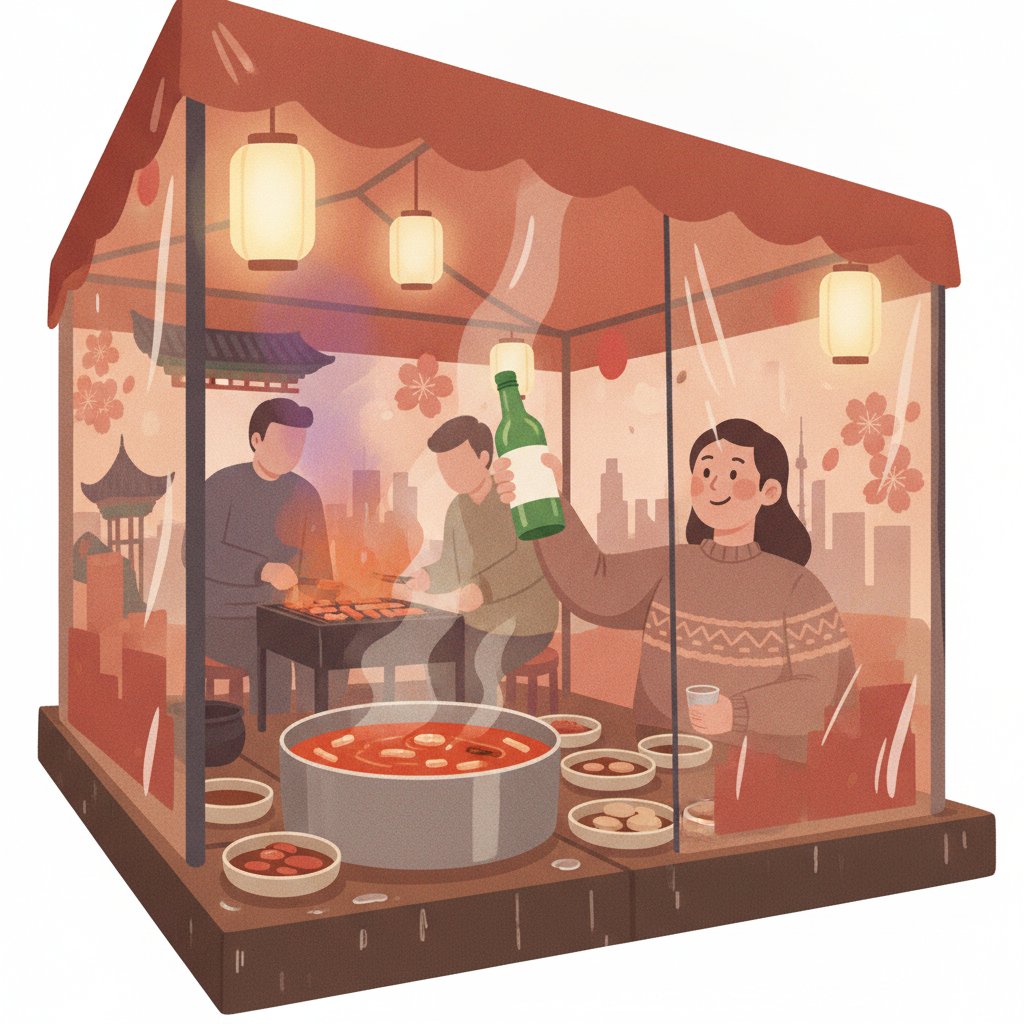
Korean street tents run year-round, adapting cleverly to extreme weather. In winter, tents are sealed tight with heavy industrial vinyl and heated with space heaters. In spring and autumn, side flaps roll up to catch evening breezes. If visiting in winter, keep your coat on inside the tent until the space heats up.
Late-Night Transportation Home
Pojangmacha sessions frequently extend past midnight, well after Seoul’s subway lines shut down around midnight to 1:00 AM. When wrapping up your evening, download the Kakao T app in advance to hail a taxi easily. Setting up your destination in the app avoids language barriers with late-night drivers, ensuring a safe ride back to your hotel.
FAQ
Do Seoul pojangmacha accept credit cards?
Most traditional street canvas tents operate as cash-only businesses or accept local Korean bank transfers. It is highly recommended to bring physical Korean Won cash, as foreign credit cards are rarely supported by temporary street cart operators.
Are pojangmacha safe for foreign tourists and solo travelers?
Yes, street tent bars in Seoul are extremely safe, welcoming environments. While language barriers can occasionally occur, tent owners are accustomed to guiding guests via menu photos and pointing. Solo travelers are welcome, though ordering at least one food dish along with a drink is standard practice.
What time do street tent bars open and close in Seoul?
Nighttime pojangmacha generally set up around 5:00 PM or 6:00 PM as daily business traffic winds down. They usually remain open until early morning, around 2:00 AM to 4:00 AM, depending on customer flow and neighborhood regulations.
🎟️ Popular tours & experiences in Korea
Klook.comKeep Reading
- Korean Convenience Stores: GS25 & CU Food Picks
- Korean Street Food: Learning the Names
- Modern Nulang Central City (모던눌랑): Seoul’s Shanghai Chic
- Texas de Brazil Central City (텍사스 데 브라질): Churrasco in Seoul
🎟️ Popular tours & experiences in Korea
Klook.com