Seoul Subway Tips for First Time Visitors
At a glance
- In shortA guide covering transit cards, navigation apps, and etiquette for riding the Seoul subway.
- Best forFirst-time foreign visitors traveling in Seoul
- WhereSeoul
- Key pointsUse transit cards like T-Money, Climate Card, or WOWPASS to pay fares. · Download Naver Map or KakaoMap instead of relying on Google Maps. · Observe unspoken etiquette on reserved seating, volume, and rush hour.
- Heads-upForeign Visa or Mastercard credit cards are not supported directly at subway turnstiles.
Navigating Seoul Underground: A Local Perspective
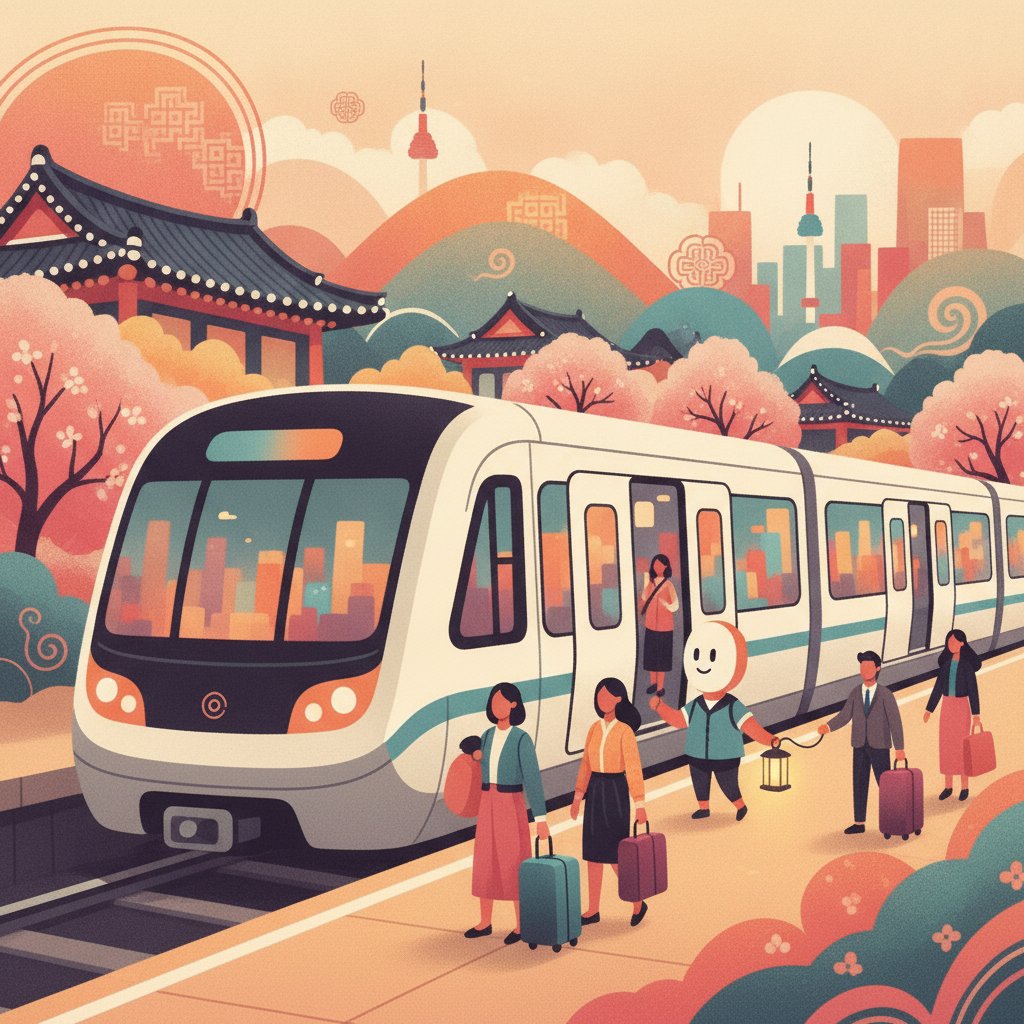
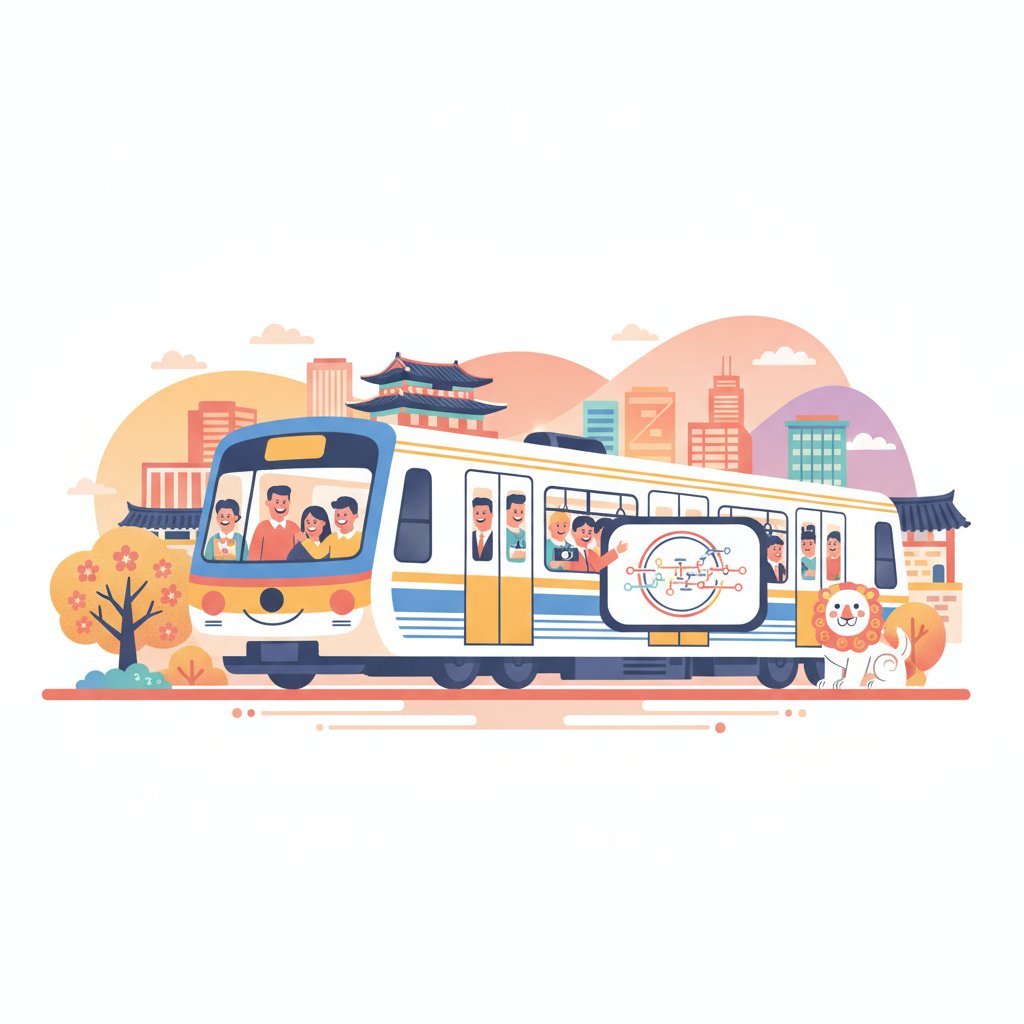
Standing in front of the fare gates at Myeongdong Station during morning rush hour while a loud beep triggers a red X on the screen is a rite of passage for almost every visitor in Seoul. As a Korean who has ridden the Seoul metropolitan transit network for over fifteen years, I see confused international travelers every day. The network spans over twenty lines, stretching across Seoul, Incheon, and Gyeonggi-do province. It is remarkably efficient, spotless, and safe, but its sheer scale can feel overwhelming when you first step off the plane.
Understanding how the subway system operates will drastically transform your experience in South Korea. With a few core strategies, clear app recommendations, and a quick grasp of local station customs, you will be traveling across the capital like a born-and-raised Seoulite. Here are the crucial seoul subway tips for tourists that every first-time visitor needs before tapping through the gates.
✈️ Book your trip to Korea — hotels, flights & more
1. Choosing the Right Payment Method: T-Money, Climate Card, or WOWPASS
You cannot simply tap a standard foreign Visa or Mastercard at Seoul subway turnstiles yet. You must use a dedicated transit card or a single-use paper token. For 95% of tourists, getting a rechargeable transit card on your first day is the single best decision you can make.
T-Money Card
The classic T-Money card remains the gold standard. You can purchase a blank card at virtually any convenience store—such as CU, GS25, 7-Eleven, or Emart24—or at transit card vending machines inside subway stations. The blank card typically costs around 3,000 to 5,000 won (roughly $2.20 to $3.80 USD), depending on the design. Once purchased, you load cash onto the card at station reloader kiosks or convenience store counters.
Climate Card (Gihu Donghaeng Card)
Seoul City recently introduced short-term tourist passes for the Climate Card. These passes allow unlimited rides on Seoul subways and municipal buses for fixed periods (1-day, 2-day, 3-day, or 5-day options). A 3-day pass generally costs around 10,000 won (about $7.50 USD). If you plan to ride public transit four or five times a day, this pass pays for itself quickly. Keep in mind, however, that the Climate Card currently has geographic boundaries and may not cover certain express lines or stations extending deep into neighboring Gyeonggi province, such as certain legs toward Nami Island or Incheon Airport.
WOWPASS
If you prefer not to carry foreign exchange cash, WOWPASS functions as a prepaid card for tourists that holds foreign currencies, converts them to Korean Won, and includes an integrated T-Money chip. You can purchase and reload WOWPASS at specialized yellow kiosks located in major stations like Hongdae, Myeongdong, and Seoul Station.
| Card Type | Best Used For | Approx. Initial Cost |
|---|---|---|
| T-Money | General travel anywhere in Korea | 3,000–5,000 KRW (card only) |
| Climate Card | Heavy travel inside Seoul proper | 10,000 KRW (3-day pass) |
| WOWPASS | Cashless payments + transit combined | 5,000 KRW registration fee |
Quick Card Selection Checklist
- Choose T-Money if: You plan to travel outside Seoul (e.g., Incheon, Suwon, Busan) or take only 1–3 transit trips per day.
- Choose Climate Card if: You are staying 1–5 days exclusively within Seoul and taking 4+ subway or bus rides daily.
- Choose WOWPASS if: You prefer a cash-free experience to convert foreign currency into local card payments alongside transit usage.
Real Cost Example
Consider a traveler spending 3 full days in central Seoul, averaging 5 subway trips per day at approximately 1,400–1,500 KRW per ride:
- T-Money Option: Card purchase (~4,000 KRW) + 15 rides (~21,000–22,500 KRW) = ~25,000–26,500 KRW total.
- Climate Card Option: 3-day pass (~10,000 KRW) + reusable card fee (~3,000 KRW) = ~13,000 KRW total.
In this scenario, a high-frequency traveler saves over 12,000 KRW using the Climate Card. Note that transit rates, card pricing, and pass structures drift over time, so verify current fare schedules before relying on exact totals.
To reload any standard T-Money card inside a subway station, head to the automated reload machines (labeled “Ticket Vending and Card Reload Machine”). Select English on the touch screen, place your card on the designated reader tray, insert cash notes (Korean Won only), and wait for the confirmation sound before removing your card.
2. Why Google Maps Fails and Which Apps to Use Instead
One of the biggest mistakes tourists make after landing in South Korea is relying on Google Maps. Due to Korean national security laws regarding geographic data storage, Google Maps does not offer full turn-by-turn walking or transit navigation in Korea. It frequently shows outdated route options or fails to compute walking transfers entirely.
To navigate the Seoul subway smoothly, download one of these three apps before leaving your hotel:
- Naver Map: The undisputed king of navigation in South Korea. Available in English, Chinese, and Japanese. It provides real-time subway arrival predictions, precise exit recommendations, and tells you which train car number to board for the fastest transfer.
- KakaoMap: A very strong alternative to Naver Map with intuitive English interfaces and accurate transit routing.
- Subway Korea (by Malang Studio): A dedicated transit map app that works offline. It allows you to tap a departure station and an arrival station to instantly see the fastest route, transfer points, and total fare.
Station Numbers: Your Secret Navigation Tool
Every station in Seoul has a unique three-digit station number alongside its Korean and English names. The first digit usually corresponds to the line number. For example, Hongik University Station on Line 2 is station number 239. If you struggle to pronounce station names or find English signage tricky at a busy junction, simply match the three-digit number on platform signs and app schedules.
🎟️ Popular tours & experiences in Korea
Klook.com3. Boarding Etiquette and Unspoken Local Rules
Seoul subways are renowned for being peaceful and clean. To ensure a smooth journey and avoid dirty looks from locals, keep these simple unspoken rules in mind:
The Reserved Seats Rule
At both ends of every subway car, you will see designated seats for the elderly, pregnant women, and people with disabilities. Unlike in some Western cities where anyone can sit until an elderly person boards, in Korea, these end seats remain empty even on packed trains. Do not sit in them unless you clearly meet the criteria. Additionally, Line 2 and Line 3 trains feature brightly marked pink seats in the middle sections specifically reserved for pregnant mothers; locals leave these vacant as well.
Volume Decibels and Phone Calls
Conversing quietly with travel companions is completely fine, but talking loudly or making phone calls on speaker mode is considered rude. Most commuters read, play phone games, or watch videos using headphones. If you need to answer an urgent call, keep your voice low and brief.
Rush Hour Backpack Awareness
Seoul’s morning rush hour (8:00 AM to 9:00 AM) and evening rush hour (6:00 PM to 7:00 PM) can get incredibly crowded, particularly on Line 2 (the green loop line) and Line 9 (the express line crossing south of the river). If you board a crowded train with a bulky backpack, take it off and hold it down by your feet or wear it on your front to avoid bumping into fellow passengers.
4. Transfers, Exits, and Transit Hacks
Seoul’s subway stations are practically subterranean cities. Major interchange hubs like Express Bus Terminal, Dongdaemun History & Culture Park, or Seoul Station feature vast underground walkways spanning several city blocks. Knowing how to navigate these hubs saves both time and foot fatigue.
Always Navigate by Exit Numbers
When locals meet up in Seoul, they never say “Meet me outside the main entrance of the mall.” They say “Meet me at Exit 9 of Hongdae Station.” Seoul station exits are clearly numbered (Exit 1 through Exit 12 or higher). When using Naver Map to search for a cafe or restaurant, the app specifies which exact exit number to use. Follow the yellow exit signs overhead inside the concourse before tapping out through the fare gates.
The 15-Minute Re-entry Rule
Have you ever tapped into a turnstile only to realize you walked onto the platform heading in the wrong direction? In the past, you had to call a station manager or pay a double fare to cross over. Seoul Metro now features a 15-minute re-entry policy. If you tap out of a gate and tap back into the gate on the opposite side at the same station within 15 minutes, you will not be charged an additional base fare (applies to standard T-money usage on metro-operated lines).
Bus-to-Subway Free Transfer Window
When using a T-Money card, your transit fare incorporates a distance-based discount across subways and city buses. If you tap out of the subway and hop onto a local city bus (or vice versa) within 30 minutes, the second leg of your journey is either free or heavily discounted. Just remember to tap your card against the card reader near the door when exiting both the train station and the bus!
Key Takeaways
- Pick the Right Payment Method: Use T-Money for broad flexibility across all Korean cities, or opt for a short-term Climate Card if taking 4+ daily trips within Seoul.
- Rely on Local Apps: Avoid Google Maps and use Naver Map or KakaoMap for accurate exit planning, optimal transfer train doors, and live schedules.
- Observe Local Etiquette: Keep conversation volumes low, never sit in designated elderly or pink pregnant seats, and hold backpacks in front during rush hour.
- Use Smart Underground Hacks: Follow 3-digit station numbers, utilize the 15-minute wrong-direction re-entry rule, and take advantage of 30-minute subway-to-bus transfer discounts.
More on Transit & Transportation
- T-money Card Buying and Charging GuideA guide explaining how to buy, charge, and use a T-money card for travel in South Korea.
- Seoul Subway Tips for First-Time VisitorsA guide covering T-Money cards, navigation apps, local etiquette, and tips for Seoul's subway system.
- KTX High-Speed Rail Guide for Korea TravelA local guide to booking and taking KTX high-speed trains to explore South Korea.
See every Transit & Transportation post in our K-Travel guide.
Handy toolsKorea travel essentials · Trip budget calculator · Korea Guide Finder
🎟️ Popular tours & experiences in Korea
Klook.comKeep Reading
- How to Visit the DMZ From Seoul Step by Step
- Seoul Luggage Storage Guide: Lockers, Apps, and Delivery
- Hongdae Travel Guide Seoul: What to Do on Your First Visit
- How to Use T-Money Card in Korea for Easy Seoul Travel
🎟️ Popular tours & experiences in Korea
Klook.com