Seoul Luggage Storage Guide: Lockers, Apps, and Delivery
At a glance
- In shortCovers subway lockers, mobile apps, transit hubs, and airport delivery options to explore Seoul hands-free.
- Best forTravelers visiting Seoul who need luggage storage
- WhereSeoul
- Key pointsAutomated S-Locker and T-Locker systems exist in most subway stations. · The T-Locker app lets users check locker availability in real time. · Services like SAFEX deliver bags directly between Incheon Airport and hotels.
- Heads-upStation lockers at key hubs fill up quickly during peak hours and seasonal travel.
Dragging a 28-inch suitcase over the granite paving outside Hongik University Station while attempting to navigate a crowded sidewalk is practically a rite of passage for first-time visitors. As a Korean living in Seoul, I regularly meet overseas friends who land at Incheon Airport at 6:00 AM, head straight into the city center, and realize their hotel check-in is not until 3:00 PM. Hauling heavy bags through multi-level subway stations, hilly neighborhoods like Bukchon Hanok Village, or bustling shopping alleys in Myeongdong is exhausting and unnecessary.
Seoul is one of the most convenient cities in the world for travelers, provided you know where to look. From automated lockers inside almost every subway station to door-to-door luggage delivery services that take your bags straight from the airport terminal to your hotel lobby, you have plenty of options. This practical seoul luggage storage guide covers everything you need to know to explore the city completely hands-free.
Seoul Metro Subway Lockers: S-Locker and T-Locker
The standard way locals and experienced travelers handle short-term luggage storage in Seoul is by using the automated locker systems located inside subway stations. The majority of stations on Lines 1 through 8 feature locker banks, usually branded as T-Locker or S-Locker depending on the line operator.
These lockers are clean, secure, and monitored by security cameras. However, knowing how they work before you stand in front of the digital kiosk will save you time and frustration.
How Subway Locker Pricing Works
Subway locker pricing operates on a tiered hourly system. Typically, the initial charge covers the first 4 hours of storage, after which an additional fee is assessed every 12 hours or per extra hour depending on the exact operator system.
- Small Lockers: Typically range from 2,000 to 4,000 won (approximately $1.50–$3.00 USD) for the first 4 hours. These comfortably fit small backpacks, shopping bags, or carry-on duffel bags.
- Medium Lockers: Typically range from 3,000 to 6,000 won (approximately $2.20–$4.50 USD) for 4 hours. Good for standard carry-on suitcases.
- Large / Extra Large Lockers: Typically range from 4,000 to 8,000 won (approximately $3.00–$6.00 USD) for 4 hours. Designed to fit large 28-inch to 30-inch checked suitcases.
Note: Prices are approximate, vary slightly between metro lines, and are subject to change over time. Overtime charges apply automatically upon retrieval if you stay past your initial window.
Step-by-Step Guide to Using Kiosk Lockers
You do not need to speak Korean to use these lockers. The touchscreen interfaces support English, Japanese, and Chinese.
- Step 1: Select Your Action. Touch the screen and tap the English button in the top corner. Choose “Store” (or “Keep”).
- Step 2: Choose an Available Locker. The screen displays a map of the locker layout. Blue or green boxes are usually available, while gray or red boxes are occupied. Touch an open box that fits your bag size.
- Step 3: Authenticate. The machine will ask you to set a 6-digit numerical passcode or scan a mobile phone number/QR code. Write down or take a photo of the passcode you set!
- Step 4: Select Payment Method. Most modern kiosks accept physical Korean credit cards, mobile payment methods, or standard T-Money transit cards. Some older kiosks accept cash (1,000 won bills and 500 won coins), but card/T-Money payments are far more common.
- Step 5: Lock Your Door. The selected locker door will pop open automatically. Put your items inside, push the door completely shut until you hear a mechanical click, and verify on screen that the lock confirmed.
Using the T-Locker App
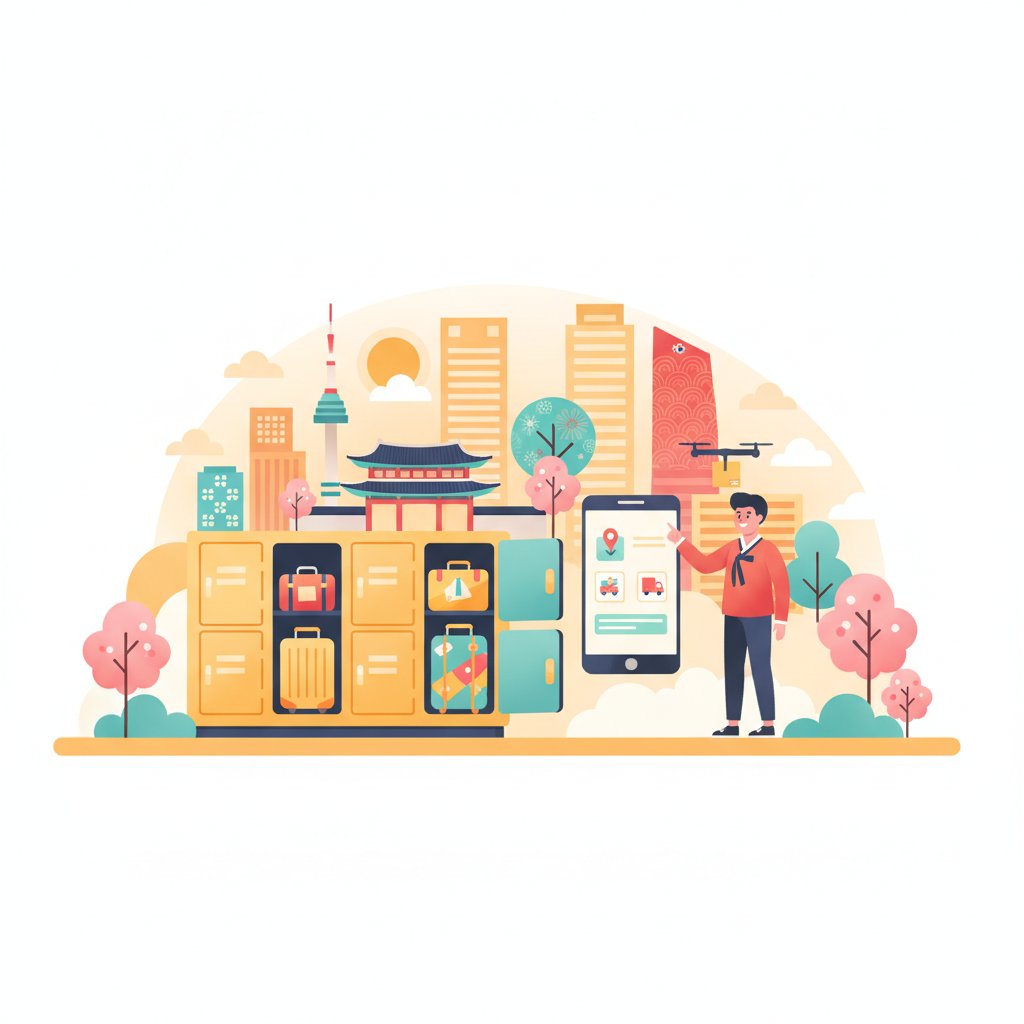
If you plan to use subway lockers frequently, you can download the mobile app called T-Locker (available on the Apple App Store and Google Play). As long as you have mobile data, the app allows you to search for subway stations across Seoul and check locker availability in real time before you physically arrive at the station exit. This prevents walking up to a locker area during peak tourist hours only to find every large box occupied.
✈️ Book your trip to Korea — hotels, flights & more
Luggage Storage at Major Seoul Transit Hubs
If you are traveling with very oversized luggage, sports equipment, or multiple large bags that might not fit in standard station lockers, major transportation hubs offer staffed storage desks.
Seoul Station (KTX & Airport Express Hub)
Seoul Station is the primary transit point connecting Incheon International Airport to central Seoul via the AREX train, as well as KTX high-speed rail lines to Busan, Gangneung, and Gyeongju. Because of this high traffic volume, locker competition can be fierce during weekends and holidays.
In addition to automated lockers located near the AREX gates and KTX main lobby, Seoul Station features dedicated staffed luggage storage centers such as the AREX Travel Center and private luggage counters on the main concourse floor. Staffed counters charge flat rates based on bag size and daily duration, typically ranging between 5,000 and 12,000 won per day depending on size.
Hongdae (Hongik University Station)
Hongdae is one of the most popular neighborhoods for international tourists to book accommodation. Because Hongik University Station connects the AREX line, Line 2, and the Gyeongui-Jungang Line, luggage storage here fills up quickly. In addition to station lockers, several private storage shops operate directly outside Exits 2, 3, and 9. These private facilities offer staffed monitoring and allow you to store unusually shaped luggage, camera equipment, or extra-large rolling trunks that will not fit into standard locker dimensions.
Hands-Free Airport Luggage Delivery Services
One of the best modern travel hacks for visiting South Korea is skipping station lockers entirely and utilizing airport luggage delivery. If your flight lands at Incheon Airport Terminal 1 or Terminal 2 in the morning, you can drop your heavy bags off at an airport counter and have them delivered directly to your hotel or Airbnb accommodation in Seoul later that evening.
How Luggage Delivery Works
Services such as SAFEX or delivery bookings available on well-established platforms like Klook make this process straightforward.
- Drop-off Window: You drop off your luggage at the designated airport service counter (usually located in the arrivals or departures hall) before a specified cut-off time, often around 12:00 PM or 2:00 PM.
- Transit & Delivery: Transport teams collect the luggage and drive it directly to hotels across Seoul. Your bags are generally delivered to hotel front desks by 4:00 PM to 7:00 PM.
- Hotel Pick-up: When you arrive at your hotel in the evening after sightseeing, simply show your passport or claim ticket at the front desk to retrieve your bags.
- Price Expectation: Luggage delivery typically costs around 15,000 to 25,000 won (approximately $11–$19 USD) per piece of luggage, depending on the luggage dimensions and distance.
You can also book this service in reverse: leave your bags with your hotel reception in the morning when checking out, explore the city all day, and pick them up at the Incheon Airport departure terminal before your evening flight home.
🎟️ Popular tours & experiences in Korea
Klook.comPrivate App Networks: LugStay and Local Cafe Storage
During peak seasonal travel (such as cherry blossom season in April or autumn foliage season in October), station lockers at key hubs like Myeongdong, Anguk, and Seongsu can fill up completely by midday. When station lockers are full, app-based networks like LugStay provide an effective backup option.
LugStay functions similarly to a sharing-economy app for baggage. Local verified businesses—including cafes, boutiques, print shops, and convenience stores—register their unused storage space on the platform. Through the app, you can view a real-time map of available storage spots around your current location, reserve space, and pay securely online.
When you drop off your bags at the participating shop, the staff member scans your booking QR code, stores your bags in a designated secure room, and takes a photo of the item for safety records. Rates generally range between 3,000 and 7,000 won per day depending on bag size.
Luggage Storage Options Comparison
To help you choose the best storage solution for your trip schedule, here is a breakdown of how the primary methods compare:
| Storage Method | Best For | Typical Cost Range |
|---|---|---|
| Subway Lockers | Short trips (2–6 hours) | 2,000–8,000 won |
| Airport Delivery | Full-day sightseeing | 15,000–25,000 won |
| LugStay / Shops | Busy tourist hubs | 3,000–7,000 won |
Practical Tips from a Seoul Local
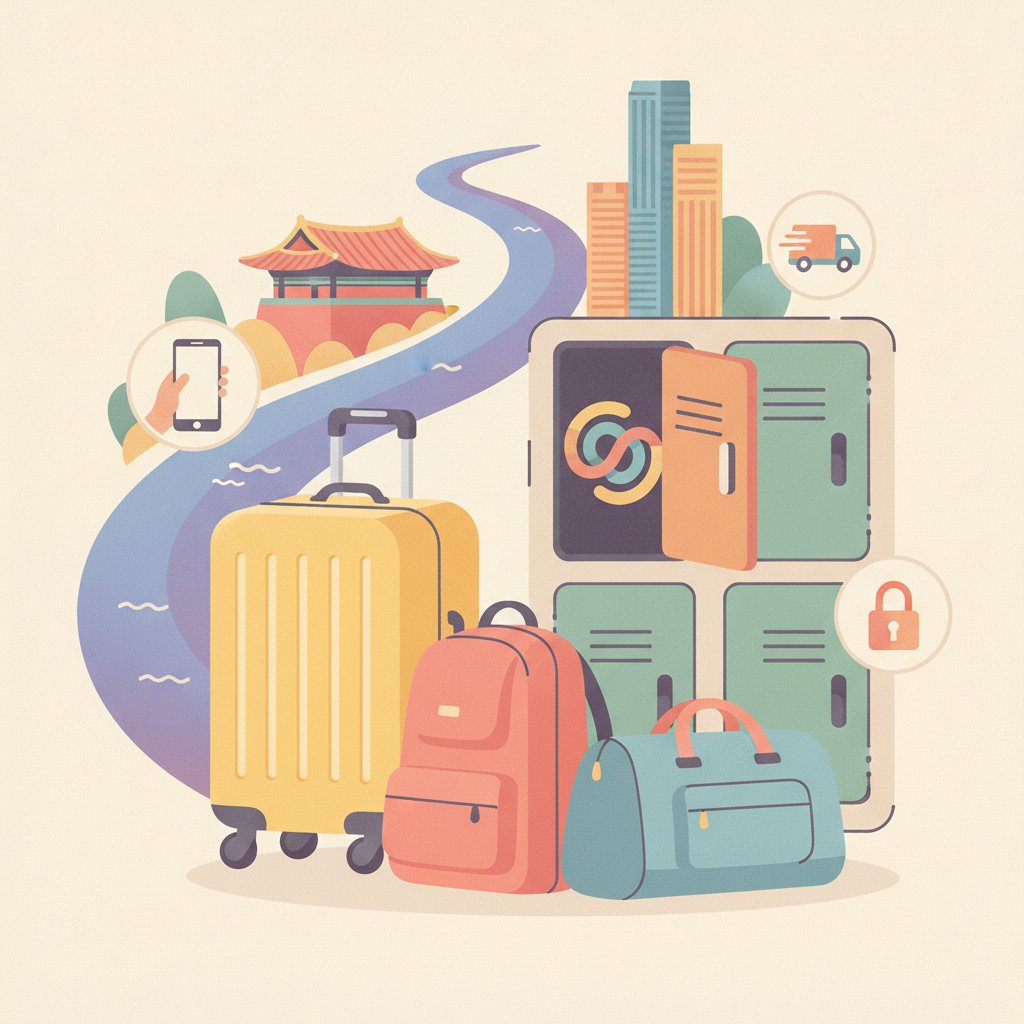
Navigating Seoul with luggage becomes much easier when you keep a few real-world logistics in mind:
- Mind the Subway Stairs: Many older subway stations in Seoul have long flights of stairs between underground lines, especially when transferring between lines operated by different companies. Always look for elevator indicators on station maps or use navigation apps like Naver Map or Kakao Map to locate elevator-accessible exits.
- Avoid Rush Hour Transit with Large Bags: Riding the Seoul subway system between 7:30 AM – 9:00 AM or 5:30 PM – 7:00 PM on weekdays with large suitcases is very stressful for both you and local commuters. If you must travel during these hours, consider using luggage delivery or taking a taxi.
- Keep T-Money Loaded: Having extra balance on your physical T-Money card ensures you can pay for public lockers quickly without searching for an international credit card reader that might require special processing steps.
- Remember Locker Hours: While subway stations are open from roughly 5:30 AM until midnight, lockers located deep inside station gates cannot be accessed after the station closes for the night. Do not leave essential items like passports, medication, or flight tickets inside a station locker if you plan to retrieve them late at night.
FAQ
Can I pay for subway station lockers using an international foreign credit card?
Most updated digital kiosks at major subway stations in Seoul accept international Visa and Mastercard credit cards. However, connectivity can occasionally vary depending on card security protocols. Carrying a T-Money card loaded with cash balance serves as a reliable backup payment method for lockers across all metro lines.
What happens if I leave my luggage in a station locker overnight?
If you leave items in a subway locker past midnight, the system will apply overnight overtime fees. If luggage remains uncollected past 3 to 5 days depending on the operator, station staff will transfer the items to a central lost-and-found management center, where additional long-term storage administration fees apply upon retrieval.
Can airport luggage delivery services deliver bags directly to an Airbnb?
Luggage delivery services readily deliver to traditional hotels, hostels, and guesthouses with staffed front desks. For unstaffed private apartments or Airbnb rentals, delivery is usually only possible if the host agrees to meet the courier in person or provides secure entry code access to a dedicated lobby drop-off point in advance.
🎟️ Popular tours & experiences in Korea
Klook.comMore on Practical Travel Tips
- Practical Korean Dining Etiquette TipsCovers basic mechanics, table etiquette, drinking customs, and payment rules in Korea.
- Korea Internet: eSIM, SIM Card & Pocket WiFiA guide to mobile connectivity options including eSIMs and physical SIM cards for travelers in Korea.
- Why Naver Map Beats Google Maps in KoreaAn explanation of why Naver Map is more accurate and useful than Google Maps for traveling in South Korea.
See every Practical Travel Tips post in our K-Travel guide.
Handy toolsKorea travel essentials · Trip budget calculator · Korea Guide Finder
Keep Reading
- Hongdae Travel Guide Seoul: What to Do on Your First Visit
- How to Use T-Money Card in Korea for Easy Seoul Travel
- Tipping in South Korea: When to Pay Extra and How to Haggle
- How to Get from Seoul to Jeju: Flights and Ferries
🎟️ Popular tours & experiences in Korea
Klook.com