Myeongdong Street Food Guide: What to Eat and Expected Prices
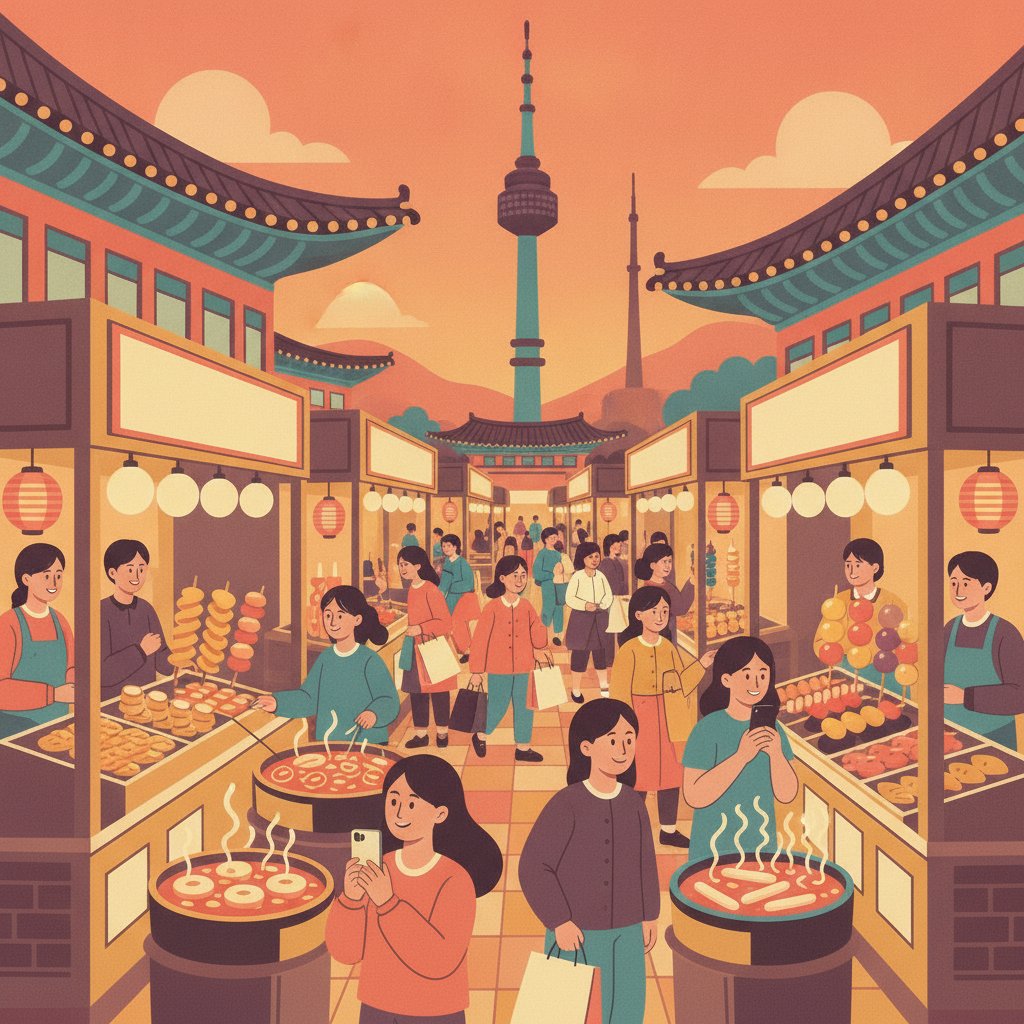
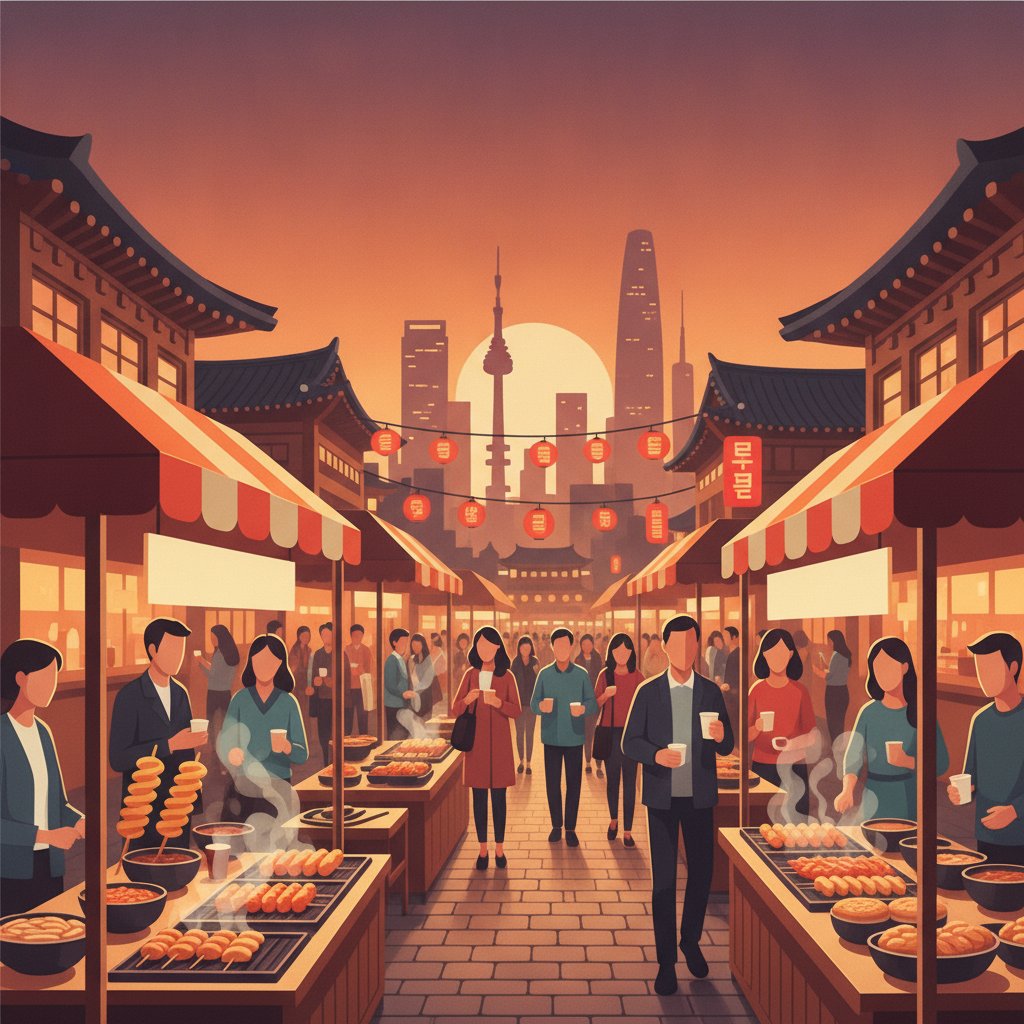
Exit 6 of Myeongdong Station opens up around 5:00 PM to the scent of melted butter, garlic, sweet caramelizing sugar, and simmering spicy gochujang before you even take your first step onto the pedestrian avenue. As a Korean who has watched Myeongdong evolve over the years, I have seen this neighborhood change from a quiet fashion district into one of the most energetic street dining hubs in Seoul. The glowing red lights of dozens of wooden carts line the central alleyways every evening, turning a routine shopping stroll into a full evening feast.
If you are planning your first trip to Seoul, navigating the dozens of vendors can feel overwhelming. With so many options competing for your attention, knowing what to choose, how much things cost, and how to navigate street food etiquette will make your evening much smoother. Here is an honest, local look at what to eat in Myeongdong, what you should expect to spend, and how to get the best experience possible.
When to Visit and How Myeongdong Food Carts Work
The street food stalls in Myeongdong do not stay open all day. During the morning and early afternoon, the main streets remain clear for store deliveries and regular foot traffic. Vendors begin wheeling their carts into position in the late afternoon. On weekdays, most stalls open between 3:00 PM and 4:00 PM, while on weekends they often start setting up closer to 2:00 PM. They usually operate until around 10:00 PM or 11:00 PM, depending on weather and crowd size.
The main stretch runs along Myeongdong 8-gil, right outside Myeongdong Station (Seoul Subway Line 4, Exits 5 and 6), expanding into the side alleys leading toward the UNESCO Building and the main Olive Young Flagship Store. You can easily spend an hour or two slowly walking down these corridors, picking up snacks as you go.
Payment Rules: Cash, Cards, and Transport Cards
While brick-and-mortar stores in Korea accept credit cards everywhere, street carts are an exception. Cash remains the preferred and most reliable payment method for street vendors in Myeongdong. Always carry physical Korean Won bills (1,000 KRW, 5,000 KRW, and 10,000 KRW notes work best).
Some newer, modernized stalls accept local mobile transfers, T-money cards, or WOWPASS, but physical cash is still king. If you run out of cash while browsing, major bank ATMs like Shinhan Bank or Woori Bank are located near Myeongdong Station Exit 6 and along the main shopping strips. Note that prices vary slightly depending on the vendor and seasonal ingredient costs, but average price ranges remain quite consistent across the main alleyways.
✈️ Book your trip to Korea — hotels, flights & more
Classic Korean Street Foods You Must Try
If you want to start with traditional street snacks that Koreans have loved for decades, look for the traditional stainless-steel steaming carts. These items offer classic comfort flavors and are usually the most budget-friendly options on the street.
Gyeran-ppang (Egg Bread)
Gyeran-ppang is one of Korea’s quintessential cool-weather street snacks. It features a small loaf of sweet, moist pancake-like batter cooked inside a specialized mold, topped with a whole egg that cooks directly on top of the cake. The balance between the sweet vanilla-toned cake and the savory, salted egg makes it an effortless snack to eat on the go.
Approximate price: 2,000 to 3,000 KRW (roughly $1.50–$2.30 USD)
Hotteok (Sweet Filled Pancakes)
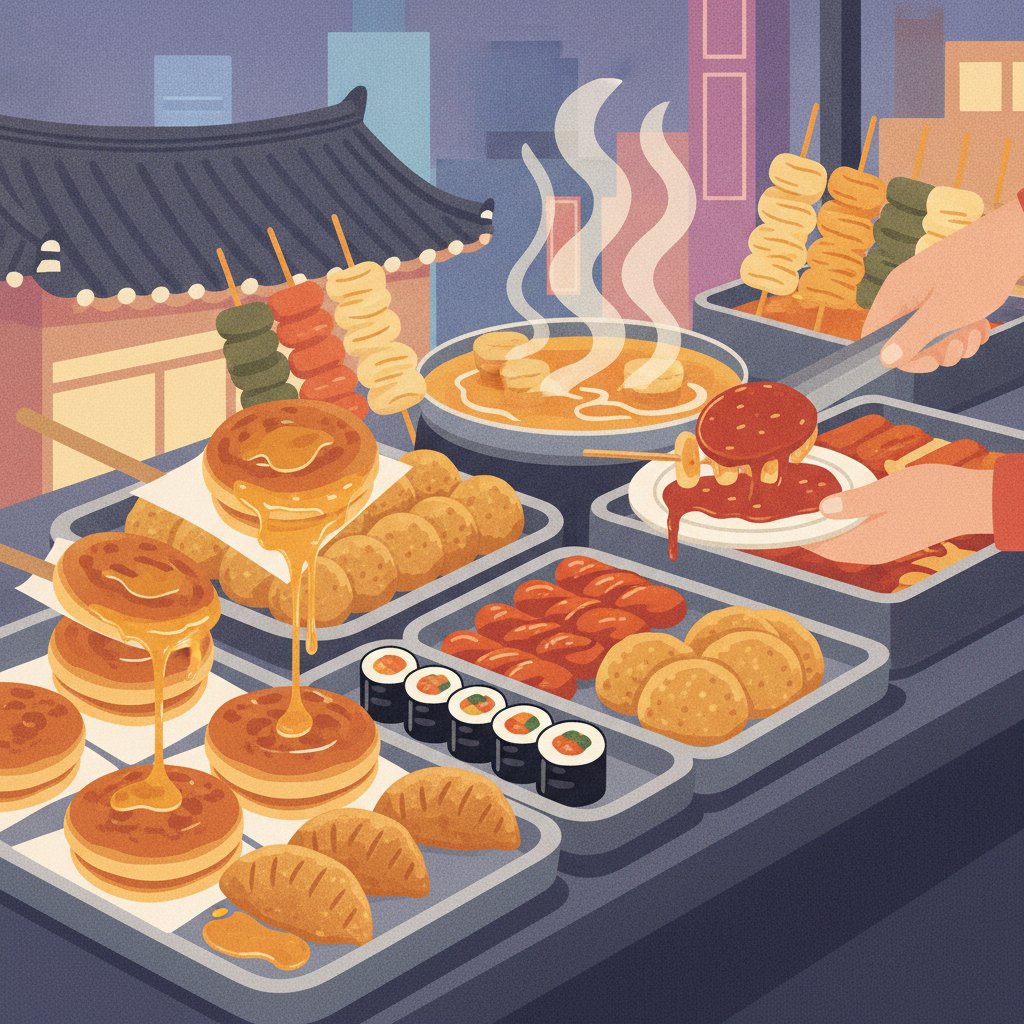
Hotteok is a golden dough ball stuffed with brown sugar, cinnamon, and finely crushed peanuts or seeds. The dough is fried on a flat griddle pressed down with a circular iron tool until crispy on the outside and molten on the inside. Be careful on your first bite—the brown sugar syrup inside gets extremely hot!
In Myeongdong, you will find both traditional sweet syrup hotteok and Busan-style seed hotteok (Ssiat Hotteok), which is stuffed with pumpkin and sunflower seeds for an extra nutty crunch.
Approximate price: 2,000 to 3,500 KRW (roughly $1.50–$2.70 USD)
Tteokbokki and Eomuk (Spicy Rice Cakes and Fishcake Skewers)
You cannot talk about Korean street food without mentioning tteokbokki. Chewy cylindrical rice cakes simmer in a glossy, spicy-sweet gochujang red pepper sauce along with sheet fishcakes and scallions. Right beside the tteokbokki pan, you will always see large steaming troughs of eomuk (fishcake skewers simmered in a warm radish and kelp broth).
When you buy a fishcake skewer, you are welcome to ladle yourself a cup of the savory hot broth for free. It is the ultimate way to warm up while eating outdoors.
Approximate price: 4,000 to 6,000 KRW per serving for Tteokbokki; 1,500 to 2,500 KRW per Fishcake skewer (roughly $1.15–$4.50 USD)
K-Style Corn Dogs and Sottok Sottok
Korean hot dogs (often called corn dogs internationally) are coated in a thick yeast batter, rolled in breadcrumbs or cubed potato pieces, and deep-fried until golden. They are frequently filled with half mozzarella cheese and half sausage, then dusted with granulated sugar before being drizzled with ketchup and mustard.
Another popular skewer item is Sottok Sottok, which alternates mini sausages (so) and rice cakes (ttok) on a stick, fried crisp and brushed with a sweet chili glaze.
Approximate price: 4,000 to 5,000 KRW per skewer (roughly $3.00–$3.80 USD)
Modern and Gourmet Street Food Trends
Over the past few years, Myeongdong has become famous for elevated, seafood-centric, and cheese-loaded street creations that you will rarely find in traditional residential markets. While these items carry higher price points, they offer impressive visual flair and unique flavor combinations.
Grilled Cheese and Rice Cake Skewers
This crowd-pleaser features alternating blocks of thick halloumi-style grilling cheese and chewy Korean rice cakes threaded onto a wooden skewer. The skewer is seared on a flat-top griddle until the cheese develops a golden crust, then drizzled generously with sweetened condensed milk. The mix of salty grilled cheese and sweet milk creates an irresistible flavor profile.
Approximate price: 4,000 to 5,000 KRW (roughly $3.00–$3.80 USD)
Grilled Lobster Tail with Cheese
One of the most famous luxury street food items in Myeongdong is fresh lobster tail split open, brushed with garlic butter, topped with shredded mozzarella, and seared directly with a kitchen blowtorch until bubbly and charred. While it is one of the priciest items on the street, it remains a favorite for food photography and special treats.
Approximate price: 15,000 to 20,000 KRW (roughly $11.50–$15.00 USD)
Dakkochi (Charcoal Grilled Chicken Skewers)
Dakkochi features large tender pieces of chicken thigh layered with thick pieces of scallion on long wooden skewers. They are grilled over flames and brushed continuously with your choice of sauce—usually ranging from sweet soy glaze (ganjang) to mild BBQ or extra spicy chili sauce.
Approximate price: 4,000 to 5,000 KRW (roughly $3.00–$3.80 USD)
Strawberry Daifuku (Ddalgi Mochi)
For sweet lovers, fresh fruit stalls offer ripe, sweet Korean strawberries wrapped in a thin layer of sweet red bean paste (or chocolate), encased inside a soft, pillowy layer of chewy white mochi flour. It is fresh, sweet, and provides a light ending to a savory street food run.
Approximate price: 3,000 to 4,000 KRW per piece (roughly $2.30–$3.00 USD)
🎟️ Popular tours & experiences in Korea
Klook.comMyeongdong Street Food Price Summary
To help you budget your evening food tour, here is a quick reference table of common street food items and their typical prices. Please note that prices are approximate and can vary slightly between individual stall operators.
| Item Name | Approximate Price (KRW) | Approximate Price (USD) |
|---|---|---|
| Gyeran-ppang (Egg Bread) | 2,000 – 3,000 KRW | $1.50 – $2.30 |
| Hotteok (Sweet Pancake) | 2,000 – 3,500 KRW | $1.50 – $2.70 |
| Fishcake Skewer (Eomuk) | 1,500 – 2,500 KRW | $1.15 – $1.90 |
| Tteokbokki (Spicy Rice Cakes) | 4,000 – 6,000 KRW | $3.00 – $4.50 |
| K-Style Corn Dog / Sottok | 4,000 – 5,000 KRW | $3.00 – $3.80 |
| Grilled Cheese Skewer | 4,000 – 5,000 KRW | $3.00 – $3.80 |
| Chicken Skewer (Dakkochi) | 4,000 – 5,000 KRW | $3.00 – $3.80 |
| Strawberry Mochi (Daifuku) | 3,000 – 4,000 KRW | $2.30 – $3.00 |
| Grilled Lobster Tail with Cheese | 15,000 – 20,000 KRW | $11.50 – $15.00 |
Practical Local Tips for a Smooth Experience
Eating on the street in Seoul comes with a few unwritten rules and practical habits that will make your visit comfortable and hassle-free.
- Master the Trash Situation: Public garbage cans are notoriously hard to find in Seoul streets. When eating street food, the general rule is to eat near the cart where you purchased your item, then return the used wooden skewer, cup, or napkin to the vendor’s small disposal bin before moving on.
- Stand to the Side: Myeongdong’s alleyways get very crowded between 6:30 PM and 8:30 PM. Step slightly behind or to the side of the stall while eating so you don’t block pedestrian traffic or accidentally bump into someone with a hot sauce-covered skewer.
- Pacing Your Meal: Portions can be surprisingly filling. If traveling with friends, share items so you can taste six or seven different dishes without filling up on the first two stops.
- Combine with Shopping: Myeongdong is home to massive beauty flagship stores like Olive Young. A popular strategy is to do your skincare shopping early in the afternoon, drop your bags at your hotel or store them in subway station lockers, and hit the food street empty-handed when the carts roll out. You can also easily book local transport passes or guided walking tours through services like Klook to organize your itinerary before heading out.
Frequently Asked Questions
Are credit cards accepted at Myeongdong street food stalls?
Most individual food carts in Myeongdong do not accept international credit cards. Cash in Korean Won (KRW) is the standard and most reliable method of payment. It is best to keep small bills (1,000, 5,000, and 10,000 KRW notes) ready when ordering. Nearby subway stations and bank branches have international ATMs if you need to withdraw cash.
What are the operating hours for Myeongdong street food stalls?
Stalls generally set up around 3:00 PM to 4:00 PM on weekdays and around 2:00 PM on weekends. Most vendors remain open until about 10:00 PM or 11:00 PM daily, though exact operating times depend on weather conditions, holiday schedules, and foot traffic.
Is street food in Myeongdong safe and hygienic to eat?
Yes, street food in Myeongdong is safe to eat. Seoul city authorities enforce regular sanitation inspections on registered street vendors, and turnover is extremely fast, meaning raw ingredients are cooked fresh right in front of you over high heat.
Keep Reading
- KTX Train Travel: Korea’s High-Speed Rail Tips
- Seoul Subway Tips for First-Time Visitors
- Your Essential T-money Card Guide: A Local’s Tips for Buying and Charging
- Seoul Subway Tips for First Time Visitors
🎟️ Popular tours & experiences in Korea
Klook.com