How to Eat Alone in Seoul Without Feeling Awkward
The Quiet Evolution of Honbap Culture
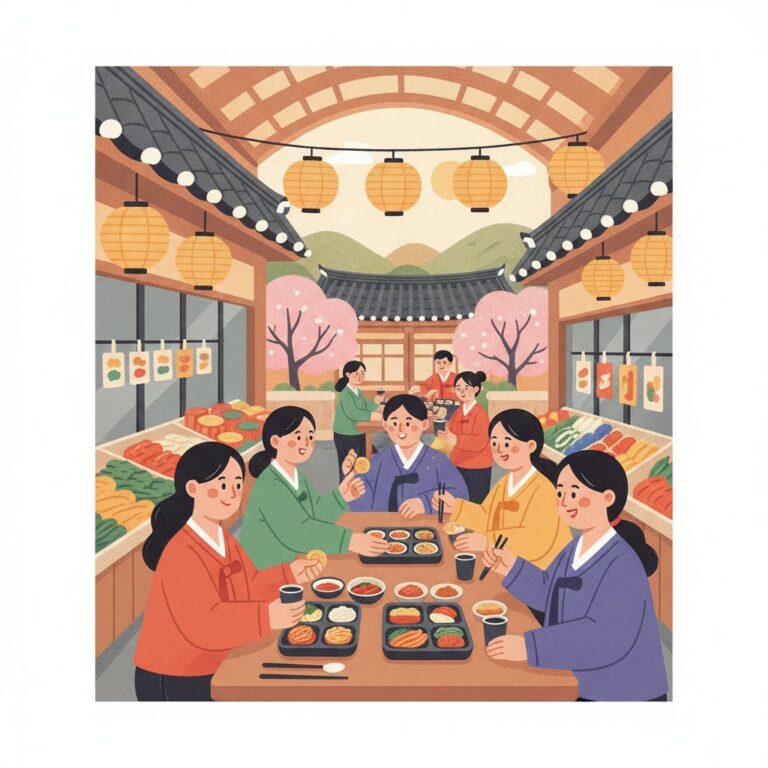
Ten years ago, walking into a Korean barbecue spot by yourself in Seoul would often get you a sympathetic look from the server and a polite wave toward the exit. Traditional Korean dining was built around sharing. Tables were designed for groups to gather over a bubbling pot of kimchi stew, flip strips of pork belly together over glowing coals, and pass side dishes back and forth. Eating by yourself wasn’t just unusual; it carried a slight social stigma, suggesting you had no colleagues or friends to share a meal with.
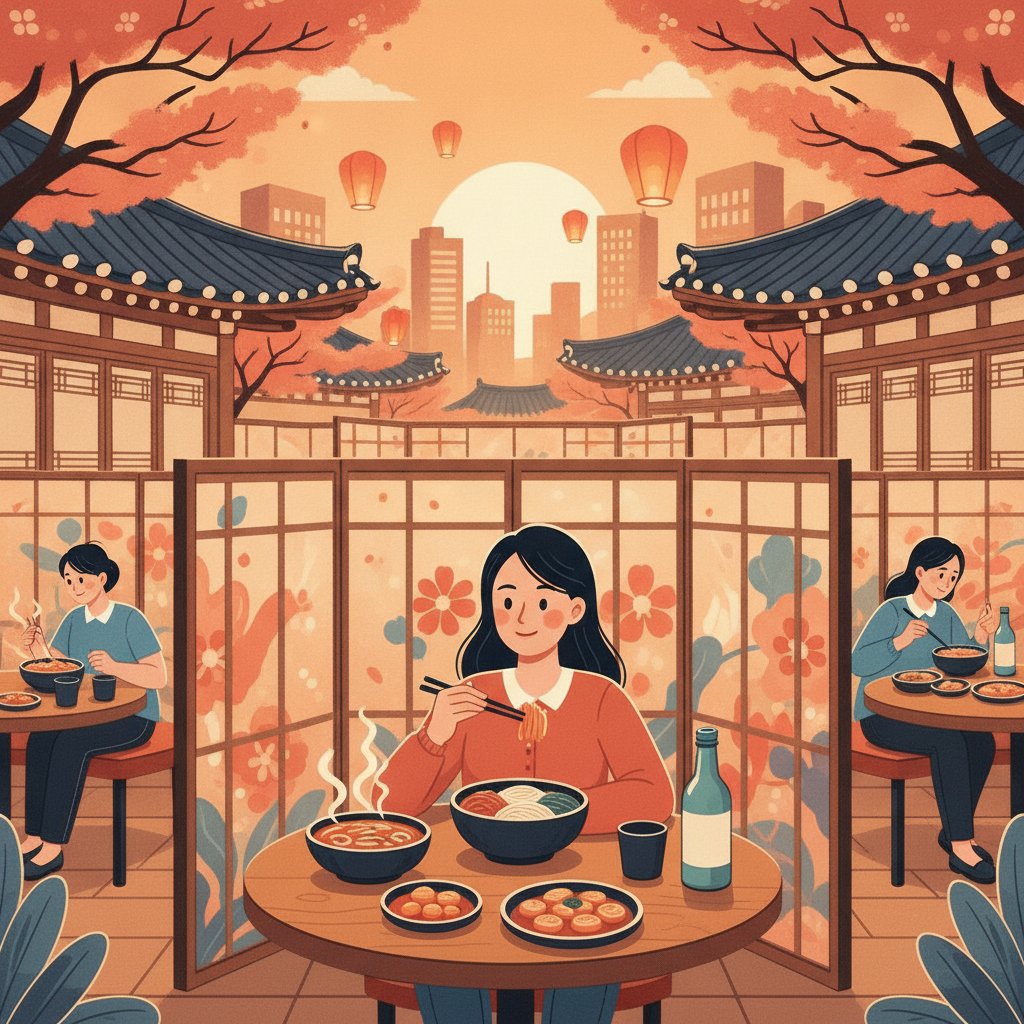
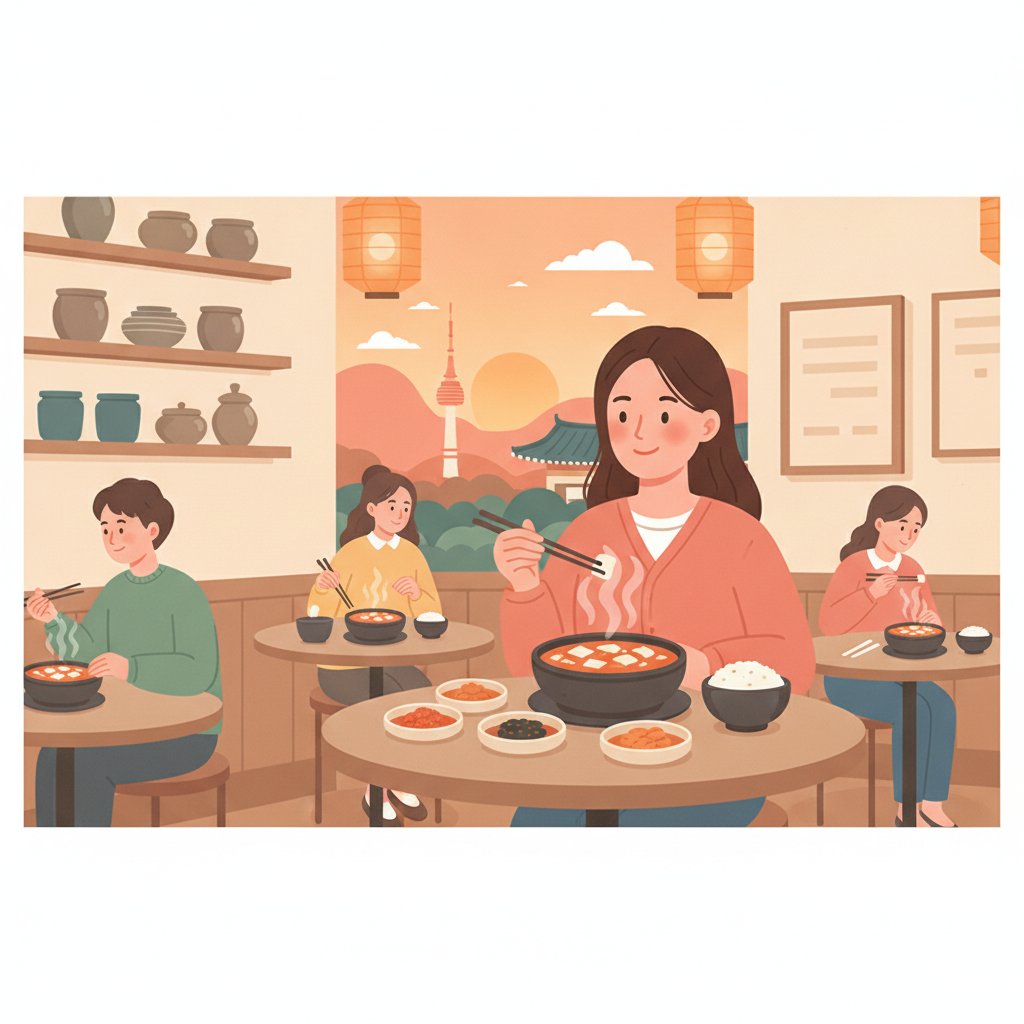
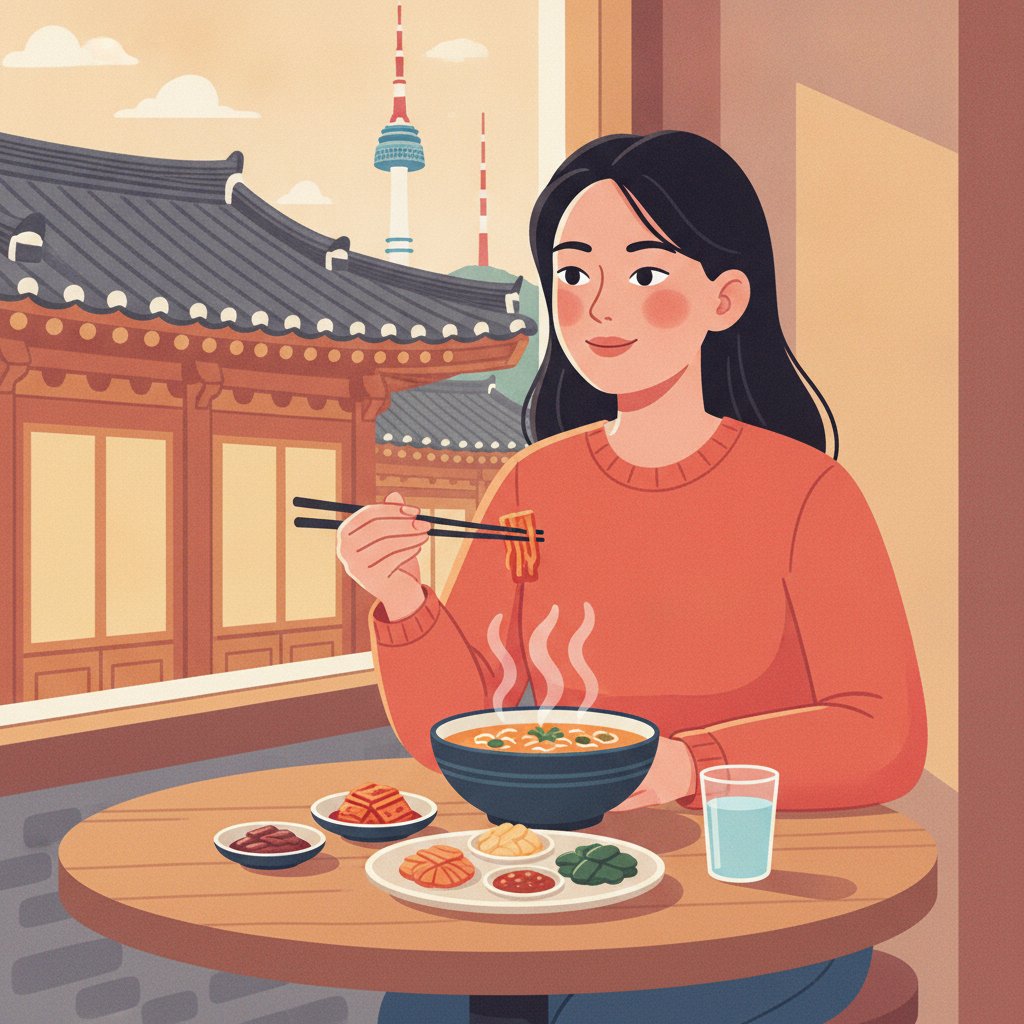
As a Korean who grew up watching this dining landscape transform, I can tell you that those days are officially behind us. Today, if you walk through neighborhoods like Gangnam, Hongdae, or Euljiro during peak lunch hour, you will see office workers wearing wireless earbuds at individual counter seats, university students quietly eating beef bone soup (*seolleongtang*), and sleek digital kiosks designed specifically for quick single orders. We even have a dedicated word for it: honbap (혼밥), a portmanteau of honja (alone) and bap (meal or rice).
Whether you are traveling across South Korea as a solo adventurer or taking a break between sight-seeing stops, learning how to navigate solo dining in Korea will unlock incredible meals without a trace of awkwardness. Here is everything you need to know to eat confidently across Seoul.
✈️ Book your trip to Korea — hotels, flights & more
Understanding the Solo Dining Spectrum in Seoul
While honbap culture has exploded across the country, not every Korean restaurant operates under the same style. Knowing which spots cater naturally to single diners saves you time and prevents awkward interactions at the door.
1. Green Light Spots: Effortless Solo Dining
At these locations, nobody will bat an eye when you walk in alone. They are structured for quick turnaround, individual portioning, and low-interaction service.
- Bunsik Joints (Casual Korean Snack Restaurants): Famous chains like Gimbap Cheonguk (Gimbap Heaven) or local neighborhood snack shops serve individual dishes like tuna gimbap, spicy rice cakes (*tteokbokki*), and pork cutlet (*donkatsu*). Meals here typically cost between 5,000 and 10,000 won (roughly $3.75 to $7.50).
- Soup and Rice Shops (Gukbap Houses): Dishes like *sundae gukbap* (blood sausage soup), *seolleongtang*, and *dwaeji gukbap* (pork soup) are served in individual bubbling earthenware pots accompanied by rice and kimchi. They are inherently single-portion meals. Expect to pay around 9,000 to 13,000 won ($6.75 to $9.75).
- Noodle and Ramen Counters: Japanese-style ramen shops, Korean knife-cut noodle (*kalguksu*) spots, and cold noodle (*naengmyeon*) restaurants almost always feature counter seating facing a wall or an open kitchen.
- Department Store Food Halls: The basement levels of major department stores like Shinsegae, Lotte, and Hyundai (especially The Hyundai Seoul in Yeouido) feature high-end food courts. They offer individual counter seating with personal hot pots, teppanyaki, and gourmet Korean sets ranging from 11,000 to 20,000 won ($8.25 to $15).
2. Yellow Light Spots: Moderate Effort Required
Places like stew shops (*jjigae*), stir-fried chicken spots (*dakgalbi*), or classic fish grill places often list prices per person, but their kitchen setups might require minimum orders. When entering, hold up one finger and ask, “Il-in-bun dwaeyo?” (Is a one-person serving available?). If they say yes, you are good to go!
3. Red Light Spots: Traditional K-BBQ and Sharing Pots
Traditional Korean barbecue (*samgyeopsal*, *galbi*) and giant sharing pots like *budae jjigae* (army stew) or *gamjatang* (pork bone stew) are challenging for solo diners. However, difficult does not mean impossible—there is a simple local workaround that I often recommend to visiting friends.
How to Eat Korean Barbecue (K-BBQ) Alone
The biggest heartbreak for solo travelers in Seoul is missing out on authentic Korean barbecue. Most traditional charcoal grill restaurants require a minimum order of two servings (*eoi-in-bun*) of meat to cover the operational cost of starting the charcoal grill and preparing full sets of side dishes (*banchan*).
Here are two straightforward ways to enjoy K-BBQ on your own:
Method 1: The Double Serving Hack
If you are hungry after a long day of walking around Myeongdong or Seongsu-dong, simply walk into a standard BBQ spot and order two portions of meat for yourself. In Korea, menu prices for BBQ are displayed per serving (usually 150g to 200g per portion). Ordering two portions of pork belly (*samgyeopsal*) typically costs between 28,000 and 38,000 won ($21 to $28.50) total—a very reasonable expense for a high-quality feast.
When you sit down, tell the server: “Samgyeopsal i-in-bun juseyo” (Two servings of pork belly, please). They will gladly fire up the grill, set out the full array of side dishes, and leave you to enjoy your meal in peace.
Method 2: Seek Out Solo-Specific K-BBQ Chains
Seoul now has fast-casual K-BBQ chains specifically built for single diners. Places like Ssaum Sikdang serve individual grilled meat sets on hot stone plates alongside rice, ssamjang (dip paste), and fresh lettuce wraps. You get all the flavor of traditional pork belly or spicy grilled pork without burning through charcoal grills. These individual sets usually run between 8,500 and 14,000 won ($6.40 to $10.50).
🎟️ Popular tours & experiences in Korea
Klook.comMastering the Hidden Restaurant Mechanics in Seoul
For international visitors, dining in a Korean restaurant can sometimes feel confusing due to distinct local service habits. Once you know these four unwritten rules, you will feel completely at home anywhere in Seoul.
1. The Secret Table Drawer
When you take a seat at a casual or mid-range restaurant, do not worry if you see no spoons, chopsticks, or napkins on top of the table. Look under the side edge of your table. Almost every modern local eatery features a sliding wooden drawer stocked with polished chopsticks, spoons, paper napkins, and sometimes individually wrapped wet wipes.
2. The Call Button System
Korean service is designed to be non-intrusive. Servers will rarely come over to ask how your food tastes while you are chewing. Instead, look for a small plastic button attached to the corner of your table or mounted on the wall next to you. When you are ready to order, request more water, or ask for the bill, press the button once. A pleasant chime will sound across the room, and a staff member will immediately come to assist you.
3. The Self-Service Station (Selpeu)
If you see a sign that says **셀프** (Selpeu / Self), it means water, extra side dishes, and broth are self-service. You will usually find a cold water filter stainless dispenser with tiny metal cups nearby, along with small salad-bar trays filled with extra kimchi, pickled radishes, and bean sprouts. Feel free to help yourself, but take only what you intend to finish.
4. Paying at the Front Counter
In almost all casual Korean dining establishments, you do not pay at your table. Instead, take the plastic clipboard or paper receipt left at your table when you finish eating and walk up to the register near the front exit. You can pay using major international credit cards or cash.
Using Digital Kiosks in Seoul
Self-service touch-screen kiosks are now standard across Seoul, especially near university districts like Sinchon, Hongdae, and Hyehwa. They are a massive blessing for travelers who do not speak Korean.
- Language Options: Look for icon flags (US/UK flag for English, Japanese, or Chinese) on the top right or bottom corner of the home screen before ordering.
- Customizing Dishes: Kiosks allow you to select spice levels, remove onions, or add extra toppings like cheese or soft-boiled eggs without any language barriers.
- Payment: Insert your credit card into the illuminated card reader slot at the bottom. Note that international cards with IC chips work smoothly at almost all Korean restaurant kiosks.
Convenience Store Dining: The Ultimate Honbap Experience
No guide to solo dining in Korea would be complete without mentioning convenience stores like CU, GS25, and Seven-Eleven. In Korea, convenience stores are not a last resort for cheap food; they are vibrant culinary hubs with dedicated dining counters equipped with hot water taps, microwaves, and charging stations.
For a quick, satisfying meal under 8,000 won ($6.00), try pairing a packed lunch box (*dosirak*) featuring bulgogi and side dishes with a cup of instant ramen and a triangular rice ball (*samgak gimbap*). It is one of the most popular quick-lunch options for local students and workers on tight schedules.
Essential Korean Phrases for Solo Diners
Having a few simple phrases ready on your phone will make your dining experience seamless and friendly:
| Korean Phrase | Pronunciation | English Meaning |
|---|---|---|
| 혼자 왔어요. | Hon-ja wa-sseo-yo. | I came alone / Table for one. |
| 1인분 되나요? | Il-in-bun dwae-na-yo? | Is a 1-person serving available? |
| 이거 하나 주세요. | I-geo ha-na ju-se-yo. | Please give me one of this. |
| 잘 먹었습니다! | Jal meog-eot-seum-ni-da! | I ate well! (Thank you for the meal) |
🎟️ Popular tours & experiences in Korea
Klook.comQuick Solo Friendliness Cheat Sheet
| Restaurant Category | Solo Friendliness Level | Typical Price Range (KRW) |
|---|---|---|
| Convenience Stores | Extremely High | 3,000 – 7,000 won |
| Bunsik / Noodle Shops | Extremely High | 6,000 – 11,000 won |
| Soup Houses (Gukbap) | High | 9,000 – 14,000 won |
| Dept Store Food Halls | High | 11,000 – 20,000 won |
| Standard K-BBQ | Medium (Order 2 servings) | 28,000 – 40,000 won |
Frequently Asked Questions
Is it weird to eat alone in Korea?
Not at all! Due to the rapid growth of single-person households and the popularity of *honbap* culture over the past decade, eating alone is completely normal in Seoul. You will see locals dining solo every day in noodle shops, soup houses, fast-casual restaurants, and food halls.
Can I eat K-BBQ alone in Seoul?
Yes, you can. While traditional charcoal BBQ places usually require a minimum order of two servings, you can simply order two portions for yourself as a solo diner. Alternatively, look for modern fast-casual solo BBQ spots like Ssaum Sikdang, which serve individual grilled meat sets on hot plates.
How do self-ordering kiosks work if I don’t speak Korean?
Most modern touch-screen kiosks in Seoul offer English language options. Simply tap the English button on the home screen, select your items, customize your order, and pay directly using an international credit card with an IC chip.
Keep Reading
- KTX Train Travel: Korea’s High-Speed Rail Tips
- Seoul Subway Tips for First-Time Visitors
- Your Essential T-money Card Guide: A Local’s Tips for Buying and Charging
- Seoul Subway Tips for First Time Visitors
🎟️ Popular tours & experiences in Korea
Klook.com