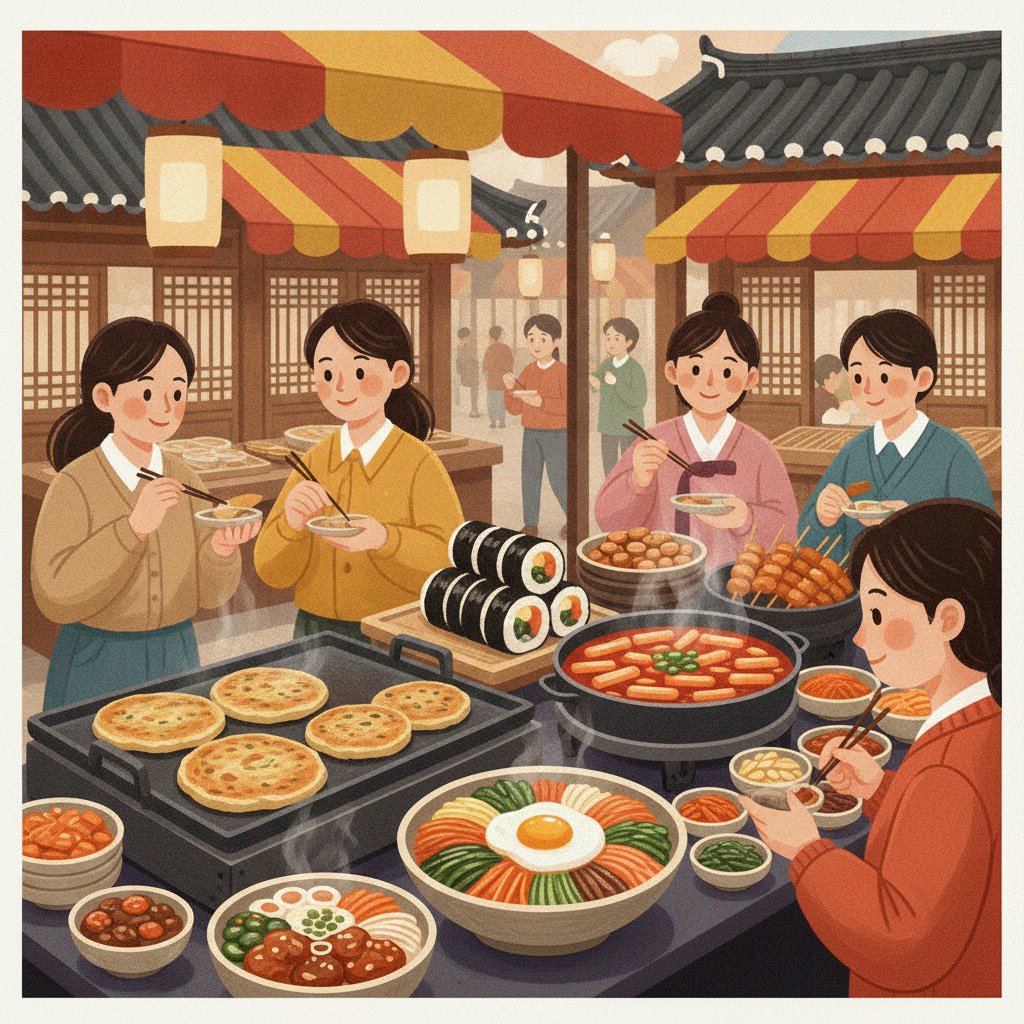
Gwangjang Market Food Guide from a Seoul Local
This post contains affiliate links. As an Amazon Associate, we earn from qualifying purchases at no extra cost to you.
At a glance
- In shortA guide to visiting hours, essential dishes, etiquette, and navigation at Seoul's Gwangjang Market.
- Best forTravelers and food enthusiasts visiting Gwangjang Market
- WhereSeoul
- Key pointsVisit early morning or late afternoon to avoid heavy crowds. · Try signature dishes like bindaetteok, yukhoe, mayak gimbap, and kalguksu. · Use Naver Map or KakaoMap instead of Google Maps for local navigation.
- Heads-upCarry 20,000 to 30,000 won in cash, as small vendors may not accept credit cards.
Timing Your Visit Like a Local
If you walk into Gwangjang Market around 1:00 PM on a Saturday, you will spend forty minutes trapped in a slow-moving crowd before you even smell a mung bean pancake. As a Korean who grew up in Seoul, watching international visitors stand in endless lines along the main intersection makes me wish I could guide them toward the side alleys instead. Gwangjang Market is one of the oldest continuously operating traditional markets in Korea, dating back to 1905, but it operates under a distinct local rhythm that most casual tourists miss.
To experience the stalls without feeling overwhelmed, plan your arrival for early morning or late afternoon. The street food zone generally wakes up around 9:00 AM, though some vendors do not fully open until 10:00 AM. Breakfast at the market between 9:30 AM and 11:00 AM offers quiet benches, steaming bowls of hand-cut noodles, and attentive stall owners who actually have time to chat. If you prefer the lively evening atmosphere with ice-cold beer and rice wine, arrive between 4:00 PM and 5:30 PM. This sweet spot sits right after the afternoon snack rush and before local office workers claim every stool for post-work drinks around 6:30 PM.
✈️ Book your trip to Korea — hotels, flights & more
Essential Dishes in a Gwangjang Market Food Guide
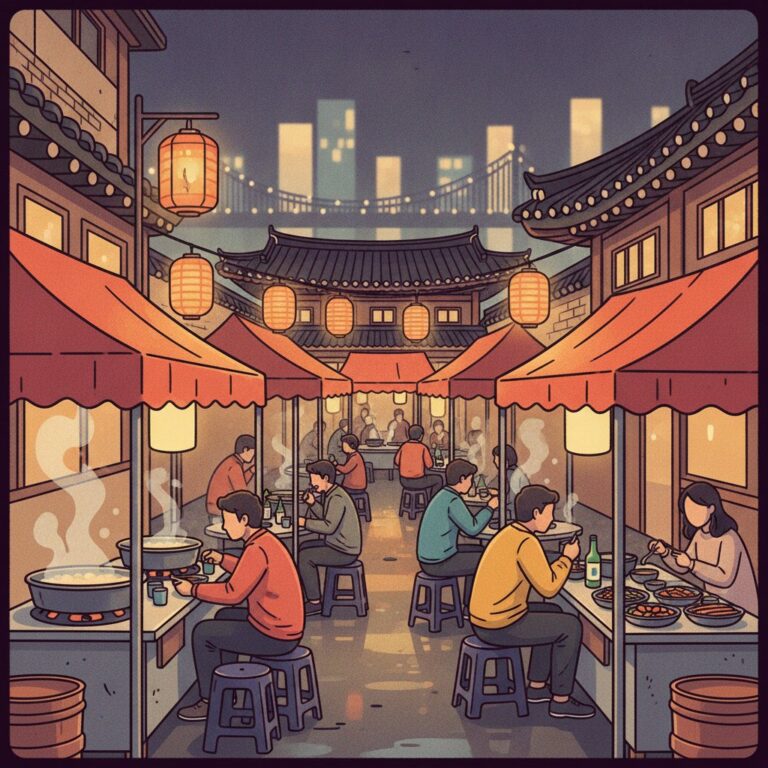
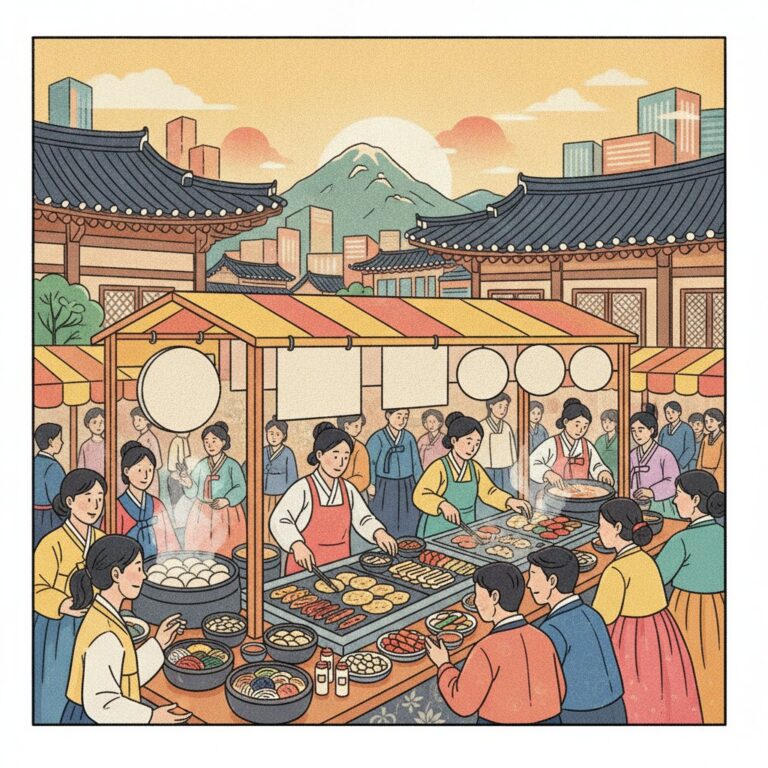
The vast layout of Gwangjang Market can feel overwhelming. Food stalls spill out into every aisle under hanging fluorescent bulbs, filled with sizzling frying pans, boiling cauldrons, and stacks of fresh ingredients. To make the most of your stomach space, focus on these signature dishes that locals have relied on for generations.
1. Bindaetteok (Crispy Mung Bean Pancakes)
You will hear bindaetteok before you see it. The rhythmic crunch of giant stone mills grinding soaked mung beans into a thick batter echoes through the central plaza. The batter is combined with bean sprouts, scallions, and chopped kimchi, then shallow-fried in wide, shimmering cast-iron pans until the exterior turns deep golden brown.
The contrast between the shatteringly crispy crust and the soft, savory center is incredible. Eat it hot with pickled onions soaked in soy sauce, which cuts through the richness of the oil. Most stalls offer classic bindaetteok for roughly 5,000 to 6,000 won (about $3.80–$4.50 USD) and pork-filled versions (gogi-bindaetteok) for around 8,000 to 10,000 won ($6.00–$7.50 USD). Pair your pancake with a bottle of chilled makgeolli (traditional Korean unrefined rice wine) for the authentic local combination.
2. Yukhoe (Fresh Beef Tartare)
Tucked away in a narrow alleyway behind the main food concourse lies Yukhoe Alley. While raw beef might sound intimidating to first-time visitors, Korean yukhoe is prepared with extreme precision using high-grade, freshly butchered beef seasoned with sesame oil, garlic, soy sauce, and a touch of sugar. It is served topped with a bright yellow egg yolk over crisp julienned Korean pear.
Mix the yolk and pear into the beef, pick up a bite with your chopsticks, and dip it lightly into additional toasted sesame oil with salt. The sweetness of the fruit balances the rich savory meat. A standard plate of yukhoe typically ranges from 19,000 to 22,000 won ($14.00–$16.50 USD). High-profile spots like Buchon Yukhoe have received Michelin Bib Gourmand recognition, but nearly every alley stall serves fresh quality beef sourced daily.
3. Mayak Gimbap (Mini Addictive Rice Rolls)
The word mayak translates to ‘narcotic’ or ‘addictive’ in Korean—a lighthearted nickname given to these bite-sized gimbap rolls because people cannot stop eating them. Unlike full-sized gimbap rolls filled with dozens of ingredients, mayak gimbap keeps things deceptively simple: seasoned rice, pickled radish (danmuji), and spinach wrapped tightly in seaweed, brushed with toasted sesame oil, and sprinkled with sesame seeds.
The secret is the tangy mustard dipping sauce served alongside it. The sharp mustard punch cuts right through the savory sesame oil. An order usually costs around 3,000 to 4,000 won ($2.20–$3.00 USD) for a portion of six to eight mini rolls, making it a perfect quick snack while walking between larger meals.
4. Kalguksu and Mandu (Hand-Cut Noodles and Dumplings)
Look for stalls surrounded by wooden benches and large wooden rolling boards. Here, home cooks roll out fresh wheat dough by hand and slice it into rustic noodles using heavy knives. The noodles simmer in a deep anchovy and kelp broth, served alongside handmade kimchi dumplings (kimchi-mandu) and pork dumplings (gogi-mandu).
A steaming bowl of kalguksu or mixed dumpling noodle soup (mandoo-kalguksu) usually runs between 7,000 and 9,000 won ($5.20–$6.70 USD). The stall featured in popular food documentaries is always crowded, but neighboring noodle vendors use identical traditional broth recipes and hand-rolling techniques without the hour-long wait.
5. Tteokbokki and Sundae (Spicy Rice Cakes and Blood Sausage)
You cannot write an honest gwangjang market food guide without mentioning the thick, chewy tteokbokki served at the market stalls. Unlike the thinner rice cakes found in modern chain restaurants, market vendors use thick, extra-chewy rice cake logs simmered in a dark, rich gochujang sauce that leans more savory than overly sweet.
Locals frequently pair their tteokbokki with sundae—Korean traditional blood sausage steamed with glass noodles—and assorted offal. The market version of sundae is famously thick, often twice the size of standard street cart varieties. Expect to pay around 4,000 to 6,000 won ($3.00–$4.50 USD) per plate.
Gwangjang Market Food Options at a Glance
| Dish Name | Approximate Price Range | Best Time to Eat |
|---|---|---|
| Bindaetteok | 5,000–10,000 KRW | Late Afternoon / Evening |
| Yukhoe | 19,000–22,000 KRW | Lunch or Dinner |
| Mayak Gimbap | 3,000–4,000 KRW | Morning to Mid-Day |
| Kalguksu | 7,000–9,000 KRW | Breakfast or Lunch |
🎟️ Popular tours & experiences in Korea
Klook.comLocal Etiquette and Seating Rules
Navigating the food aisles requires a quick understanding of unwritten market customs. Sitting down at a stall implies a commitment to order a main dish from that specific vendor. It is considered polite to avoid taking up a seat at a crowded bench just to eat food purchased from a competing stall nearby.
- Bench space is shared space: Squeeze in tightly when asked. It is completely normal to sit shoulder-to-shoulder with strangers.
- Ordering system: Simply point at what you want if you do not speak Korean. Most stall owners are comfortable communicating through hand gestures or translated phone screens.
- Hot water and napkins: Tissues are often suspended in dispensers above your head or attached to nearby wooden posts to save counter space.
- Trash disposal: Hold onto your trash until you return to the stall where you bought your food, as public trash cans are rare inside market aisles.
Payment, Transportation, and Essential Apps
While many permanent indoor restaurants and established stalls inside Gwangjang Market now accept international credit cards, carrying physical cash remains practical. Small street carts and minor vendors prefer cash (Korean Won) or local bank transfers. Keeping 20,000 to 30,000 won in physical bills ensures you won’t miss out on smaller food carts.
Reaching the market is straightforward via the Seoul Subway system. Take Line 1 to Jongno 5-ga Station and leave through Exit 7, which opens almost directly onto the food aisle entrance. Alternatively, take Line 2 or Line 5 to Euljiro 4-ga Station (Exit 4) and walk across the Cheonggyecheon Stream for about five minutes.
For navigation around Seoul, skip Google Maps, which lacks complete walking directions in South Korea due to local map data regulations. Download Naver Map or KakaoMap instead. They offer detailed English language interfaces, real-time subway schedules, and pinpoint locations for specific market vendors and hidden side-street stalls. If you are planning an extended trip across the country, booking regional transit through platforms like Klook can simplify your travel schedule alongside subway navigation.
FAQ
Is Gwangjang Market open on Sundays?
Yes, the food stalls in Gwangjang Market are open on Sundays, generally operating from around 9:00 AM to 10:00 PM. However, non-food sectors like vintage clothing shops, fabric vendors, and traditional blanket stores are usually closed on Sundays.
How much money should I bring for a food tour?
A budget of 20,000 to 30,000 won (roughly $15–$23 USD) per person is plenty to try three to four different dishes, including drinks. If you plan to sit down for high-grade yukhoe (beef tartare), budget an extra 20,000 won.
Are there vegetarian options available at Gwangjang Market?
Vegetarian options are somewhat limited but available. Plain bindaetteok (mung bean pancake) is primarily made of beans, vegetables, and rice flour, but you should verify if it is fried in vegetable oil or pork fat (lard). Mayak gimbap can also be vegetarian, provided it contains no ground meat fillings.
More on Street Food & Markets
- Korean Street Food Guide and NamesEssential guide to popular Korean street foods, local ordering tips, and handy phrases.
- Tongin Market Dosirak Cafe GuideHow to build a custom Korean lunchbox using traditional brass coins at Tongin Market.
- Guide to Seoul Pojangmacha Tent BarsA guide to understanding, finding, and ordering at traditional street tent bars in Seoul.
See every Street Food & Markets post in our K-Food guide.
Handy toolsKorea travel essentials · Korea Guide Finder
🎟️ Popular tours & experiences in Korea
Klook.comKeep Reading
- Korean Dining Etiquette Rules: How to Eat Like a Local
- Essential Korean Bakery Items to Try in Seoul
- Types of Korean Tteokbokki From Classic Street Food to Rose
- Noryangjin Fish Market Guide: How to Buy, Bargain, and Eat
🎟️ Popular tours & experiences in Korea
Klook.com