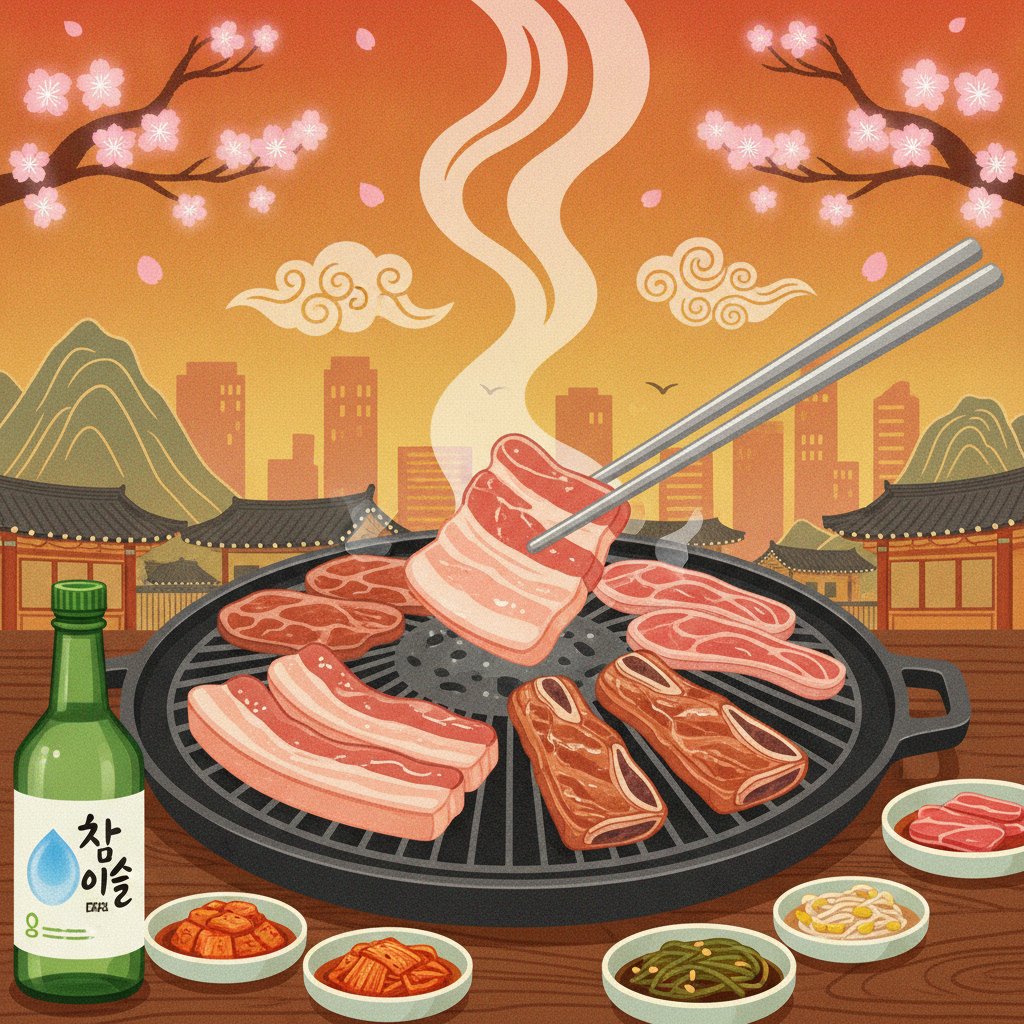
Korean BBQ Cuts: Samgyeopsal, Galbi, and More
This post contains affiliate links. As an Amazon Associate, we earn from qualifying purchases at no extra cost to you.
At a glance
- In shortAn introduction to popular Korean BBQ cuts of pork, beef, and offal alongside restaurant and market prices.
- Best forTravelers and food lovers exploring Korean BBQ
- WhereNationwide
- Key pointsSamgyeopsal and Moksal are essential pork cuts served thick or thinly sliced. · Galbi features pork or beef ribs in a sweet and savory soy marinade. · Chadolbagi, Woosamgyeop, and Deungsim are popular beef choices.
- Heads-upPremium beef cuts like Sogalbi and Deungsim cost significantly more at restaurants.
Annyeonghaseyo, K-Food Lovers! Unraveling the Delicious World of Korean BBQ Cuts
As a Korean, there’s nothing quite like gathering around a sizzling grill with friends and family, the air thick with the irresistible aroma of grilling meat. Korean BBQ isn’t just a meal; it’s an experience, a ritual, and a fundamental part of our culture. You’ve probably heard of samgyeopsal, but did you know there’s a whole universe of delicious Korean BBQ cuts waiting to be explored? From succulent pork to tender beef and even adventurous offal, each cut offers a unique flavor and texture profile.
Whether you’re planning your first trip to Seoul and dreaming of a K-BBQ feast, or you’re trying to recreate the magic in your own kitchen, understanding the different cuts is key. So, grab your chopsticks, and let’s dive into the mouth-watering world of Korean BBQ!
✈️ Book your trip to Korea — hotels, flights & more
The Big Three: Essential Korean BBQ Cuts You Must Try
When you sit down at a K-BBQ restaurant in Korea, these are the cuts you’ll see on almost every menu. They are beloved for a reason!
Samgyeopsal (삼겹살) – The Unbeatable Pork Belly
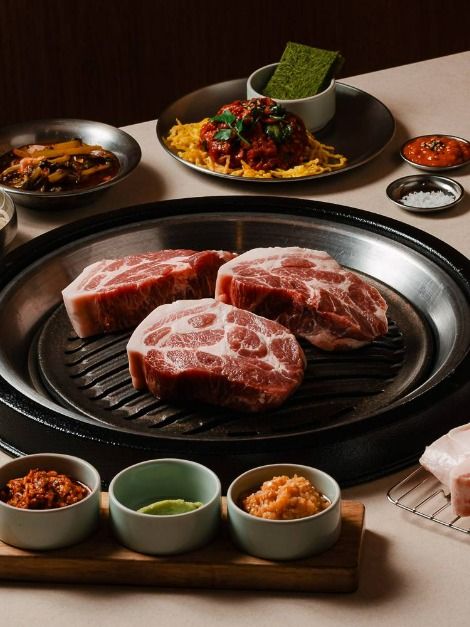
Let’s start with the undisputed king of Korean BBQ: Samgyeopsal. This isn’t just pork belly; it’s the pork belly. The name literally means “three layers of flesh,” referring to the beautiful alternating layers of meat and fat that make it so incredibly juicy and flavorful. There are usually two main styles:
- Thick-cut Samgyeopsal (두꺼운 삼겹살): This is the most common. Thick slabs of pork belly are grilled until the fat renders and the meat is perfectly crisp on the outside, tender on the inside. We usually cut it with scissors right on the grill into bite-sized pieces.
- Thin-cut Samgyeopsal (대패 삼겹살): These are paper-thin slices that cook in a flash, perfect if you’re impatient (like me sometimes!). They get wonderfully crispy.
No matter the thickness, samgyeopsal is typically unmarinated, allowing the pure, rich flavor of the pork to shine. We often dip it in a sesame oil and salt mixture (기름장, gireumjang) or a savory ssamjang (쌈장) paste, then wrap it in a fresh lettuce leaf with garlic and kimchi for the perfect ssam (쌈).
Price Context: In a Korean supermarket, fresh samgyeopsal typically ranges from 2,000-3,500 KRW per 100g. At a K-BBQ restaurant, a serving (usually 150-180g) might cost around 15,000-19,000 KRW (roughly $11-15 USD), but prices vary by location and quality.
Moksal (목살) – Pork Neck/Shoulder, Samgyeopsal’s Leaner Cousin
If you love pork but prefer a leaner option than samgyeopsal, then Moksal is your go-to. This cut comes from the pork neck or shoulder, and while it’s less fatty than samgyeopsal, it’s still incredibly tender and boasts a wonderful, meaty flavor. Many Koreans actually prefer moksal for its chewiness and less greasy profile.
Like samgyeopsal, moksal is usually grilled unmarinated, cut into thick, satisfying pieces. It’s fantastic for soaking up the flavors of accompanying sauces and banchan (side dishes). It’s a fantastic alternative that still gives you that classic K-BBQ pork experience without as much richness.
Price Context: Supermarket moksal is often slightly less expensive than samgyeopsal, ranging from 1,800-3,000 KRW per 100g. Restaurant prices are usually comparable to samgyeopsal, around 15,000-19,000 KRW per serving.
Galbi (갈비) – The Irresistibly Marinated Ribs
Galbi simply means “ribs” in Korean, and it can refer to either pork or beef. What makes galbi so special is its incredible marinade – a sweet and savory blend of soy sauce, garlic, sesame oil, sugar, and often fruit (like Asian pear or kiwi) that tenderizes the meat and infuses it with unforgettable flavor.
-
Dwaeji Galbi (돼지갈비) – Marinated Pork Ribs: This is a favorite among Koreans, especially for its affordability and deeply satisfying taste. Pork ribs are butterflied to create a wider surface area for grilling and soaking up the marinade. They’re grilled until beautifully caramelized and slightly charred, then cut off the bone.
-
Sogalbi (소갈비) / Wang Galbi (왕갈비) – Marinated Beef Ribs: Considered a more premium option, sogalbi (beef ribs) are larger and often pricier. “Wang Galbi” means “King Ribs,” indicating a particularly large and impressive cut. These are also marinated and grilled to perfection. The beef version often has an even richer flavor, perfect for special occasions.
-
LA Galbi (LA갈비): This is a specific style of beef short rib cut horizontally across the bone, making several small bone pieces visible in each slice. It’s believed to have originated in Los Angeles (hence “LA”), catering to an easier way to cut and eat beef ribs. It’s also marinated in the classic galbi sauce and is incredibly popular both in Korea and abroad.
Price Context: Unmarinated pork ribs in supermarkets are around 1,500-2,500 KRW per 100g, while pre-marinated dwaeji galbi can be 2,500-4,000 KRW per 100g. At a restaurant, dwaeji galbi usually costs 16,000-22,000 KRW per serving. Sogalbi (beef ribs) are significantly more expensive; LA Galbi might be 25,000-35,000 KRW per serving, and unmarinated prime sogalbi can easily go for 35,000-50,000+ KRW per serving.
Beyond the Basics: More Delicious Korean BBQ Cuts to Explore
Once you’ve mastered the mainstays, it’s time to broaden your K-BBQ horizons with these fantastic options!
Chadolbagi (차돌박이) – Paper-Thin Beef Brisket Point
If you love quick-cooking meat, Chadolbagi is a must-try. These are very thinly sliced pieces of beef brisket point, known for their beautiful marbling. Because they’re so thin, they cook in mere seconds on the grill, curling up as they crisp. They have a rich, beefy flavor and a delightful melt-in-your-mouth texture.
Chadolbagi is typically dipped in a special sauce, often a light soy sauce-based dressing with thinly sliced scallions or radish, which cuts through its richness. It’s a fantastic starter or a lighter option between heavier cuts.
Price Context: In supermarkets, chadolbagi usually costs 4,000-7,000 KRW per 100g. At restaurants, expect to pay around 25,000-35,000 KRW per serving.
Woosamgyeop (우삼겹) – Beef Belly
Think of Woosamgyeop as the beef equivalent of samgyeopsal. It’s thinly sliced beef belly, showcasing layers of lean meat and flavorful fat. It’s also often cut thinly like chadolbagi, but it comes from a different part of the brisket, offering a slightly different texture and flavor profile. It cooks quickly and offers a rich, juicy bite.
It’s often served with a similar light dipping sauce as chadolbagi and is another excellent option for those who enjoy the quick grill, rich flavor experience.
Price Context: Prices are generally similar to chadolbagi, ranging from 4,000-7,000 KRW per 100g in supermarkets, and similar restaurant prices as well.
Deungsim (등심) – Sirloin
For beef connoisseurs, Deungsim (sirloin) is a premium Korean BBQ cut. It’s known for its tenderness and exquisite marbling, offering a luxurious beef flavor. Often served in thick, steak-like cuts, it’s grilled quickly to medium-rare to preserve its juiciness and rich taste. This is often an unmarinated cut, sometimes just lightly seasoned with salt and pepper, to let the quality of the beef speak for itself.
If you’re looking to splurge on high-quality beef for your K-BBQ experience, deungsim is an excellent choice.
Price Context: Deungsim is one of the more expensive beef cuts. Supermarket prices can range from 8,000-15,000 KRW per 100g depending on grade. At a premium K-BBQ restaurant, a serving might cost 40,000-60,000 KRW or more.
Gopchang (곱창), Daechang (대창), Makchang (막창) – The Adventurous Offal
Okay, this might not be for everyone, but as a Korean, I can tell you that grilled offal is incredibly popular and truly delicious! These cuts offer unique textures and flavors that are deeply satisfying once you acquire a taste for them.
-
Gopchang (곱창): Beef small intestines. They are usually pre-boiled, seasoned, and then grilled until delightfully chewy and slightly crispy, with a burst of rich, fatty flavor inside. Often served with a savory dipping sauce and chives.
-
Daechang (대창): Beef large intestines. These are much fattier and larger than gopchang, often bulging with delicious rendered fat. When grilled, they become wonderfully crispy on the outside and incredibly juicy on the inside.
-
Makchang (막창): Beef abomasum (the fourth stomach) or pork large intestines. Makchang from beef is known for its distinct chewy texture and robust, slightly gamey flavor. Pork makchang is also popular, often having a stronger, more unique taste that some Koreans absolutely adore.
These are typically enjoyed at specialty restaurants dedicated to gopchang, daechang, or makchang, often with a side of strong soju! Don’t knock it ’til you try it!
Price Context: At specialty restaurants, a serving of gopchang, daechang, or makchang typically ranges from 18,000-28,000 KRW per serving. They can be a bit harder to find in regular supermarkets for grilling at home unless specifically packaged for it.
🎟️ Popular tours & experiences in Korea
Klook.comWhere to Buy Your Korean BBQ Cuts in Korea
If you’re living in or visiting Korea and want to enjoy K-BBQ at home or stock up on your favorite cuts, here’s where to go:
Local Supermarkets: Emart, Lotte Mart, Homeplus
These major supermarket chains are ubiquitous across Korea and are your easiest option for buying fresh meat. You’ll find a wide selection of pre-packaged Korean BBQ cuts, including samgyeopsal, moksal, and various types of galbi (both fresh and marinated).
- What to look for: Meat is usually labeled clearly with the cut name (in Korean and sometimes English), country of origin, and weight. Look for good marbling in beef and a healthy pink color in pork.
- Tips: Supermarkets often have sales on certain days or for specific cuts, so keep an eye out for discounts. You can also sign up for their loyalty programs for additional benefits.
Traditional Markets (전통시장 – Jeontong Sijang)
For the freshest cuts and a more authentic local experience, head to a traditional market and find a jeongyukjeom (정육점), a butcher shop. Butchers at these markets are experts and can often provide custom cuts if you ask. The quality can be exceptionally high, and prices are sometimes better than supermarkets.
- How to order: Don’t be shy! You can point to the meat you want or try a few Korean phrases. For example, “삼겹살 500그램 주세요” (Samgyeopsal obaek geuraem juseyo) means “Please give me 500 grams of samgyeopsal.”
- Benefits: You can often get specific thicknesses or preparations that aren’t available in pre-packaged supermarket trays. Plus, it’s a great way to practice your Korean and soak in the local culture!
Online Grocery Delivery: Coupang Fresh, Market Kurly
For ultimate convenience, particularly if you’re a long-term resident, online grocery services like Coupang Fresh and Market Kurly are a lifesaver. They offer a vast selection of fresh meats, often delivered right to your door within hours (for Coupang Fresh) or by dawn the next day (Market Kurly).
- Selection: You’ll find everything from everyday samgyeopsal to premium Hanwoo (Korean beef) cuts, often with detailed descriptions and even recipes.
- Accessibility: These platforms are usually in Korean, but many offer basic English interfaces or can be navigated with translation tools. They often require a local phone number and ARC (Alien Registration Card) for account setup.
Replicating the Korean BBQ Experience at Home
Even if you’re not in Korea, you can still bring the K-BBQ party to your home! Here’s how:
Essential Gear
- Grill: A portable gas grill, an electric indoor grill, or even a good quality cast-iron pan (like a griddle) will work perfectly.
- Scissors: Korean BBQ scissors are essential for cutting meat on the grill.
- Tongs: To flip and manage the meat.
Must-Have Sides (Banchan)
The meat is just one part of the K-BBQ puzzle! You’ll need:
- Ssamjang (쌈장): A savory, slightly spicy dipping sauce for wraps. You can buy this pre-made at any Korean grocery store or make your own.
- Gireumjang (기름장): Sesame oil with salt and pepper, great for unmarinated pork.
- Kimchi (김치): Grilled kimchi on the side of your meat is pure heaven!
- Garlic: Sliced raw garlic, or grilled whole cloves.
- Green Chili Peppers (고추 – gochu): Sliced or whole, for a spicy kick.
- Fresh Lettuce/Perilla Leaves (상추/깻잎 – sangchu/kkaennip): For making ssam (wraps).
- Other banchan: Radish wraps (무쌈 – mussam), seasoned bean sprouts (콩나물 무침 – kongnamul muchim), or pickled radish (치킨무 – chikinmu) are all great additions.
Cooking Tips for Each Cut
- Samgyeopsal/Moksal: Grill thick cuts over medium-high heat until golden brown and crispy on the outside, then cut with scissors into bite-sized pieces and continue cooking until done. For thin cuts, cook quickly until just done to avoid drying out.
- Galbi (Marinated Ribs): Grill over medium heat, flipping frequently to prevent burning due to the sugar in the marinade. Look for beautiful caramelization. Once cooked, cut the meat off the bone (for pork/beef ribs) or into individual pieces (for LA Galbi).
- Chadolbagi/Woosamgyeop: Cook these ultra-thin slices very quickly over high heat, just until they curl and change color. They cook in seconds!
The Art of the Ssam (쌈)
Making a ssam is the quintessential K-BBQ experience. Here’s how:
- Take a piece of lettuce or perilla leaf (or both!).
- Place a piece of freshly grilled meat on top.
- Add a dollop of ssamjang.
- Add a slice of garlic, a piece of grilled kimchi, or any other banchan you like.
- Carefully wrap it all up into a neat little package.
- Pop the whole thing into your mouth in one bite! Enjoy the explosion of flavors and textures!
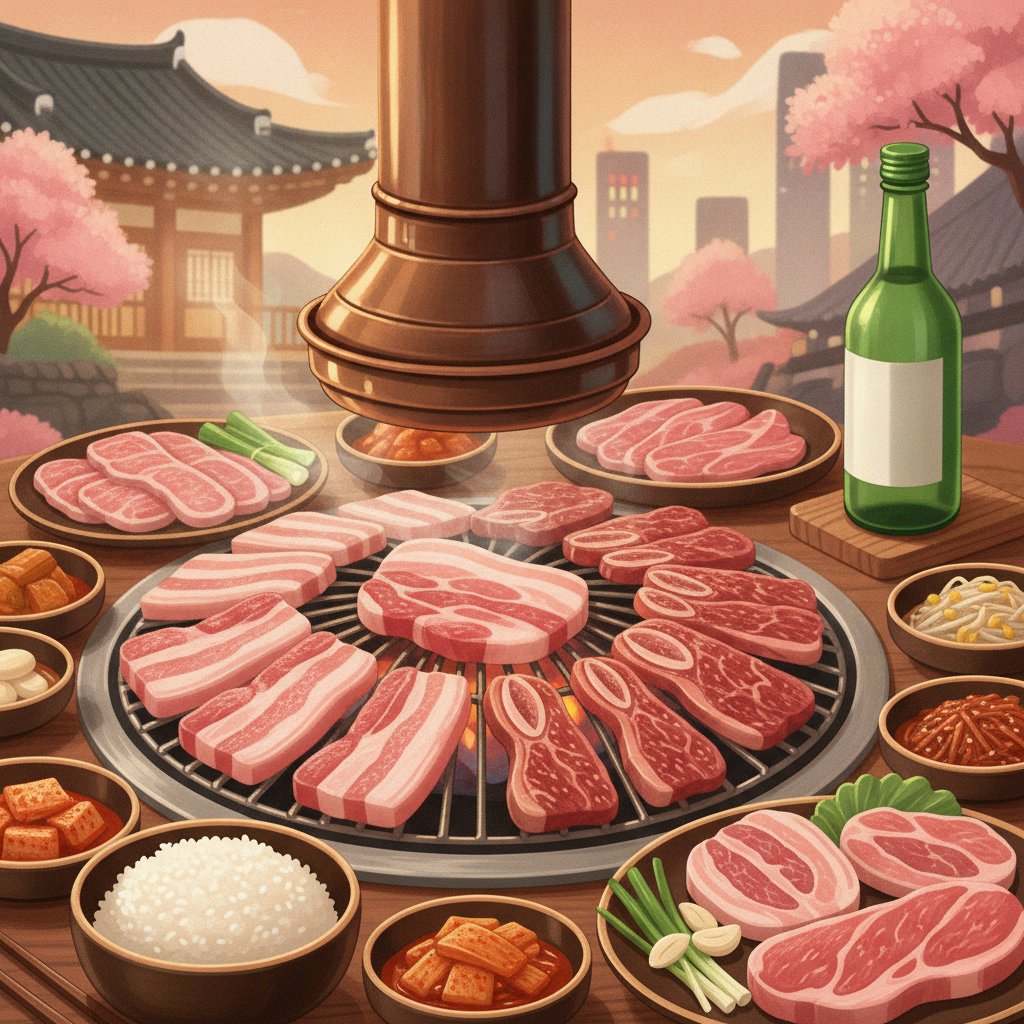
A Quick Reference: Korean BBQ Cuts
Here’s a handy table to help you remember the main Korean BBQ cuts:
| Cut Name | Type | Description |
|---|---|---|
| Samgyeopsal (삼겹살) | Pork | Pork belly, unmarinated, fatty and juicy. |
| Moksal (목살) | Pork | Pork neck/shoulder, unmarinated, leaner than samgyeopsal. |
| Dwaeji Galbi (돼지갈비) | Pork | Marinated pork ribs, sweet & savory. |
| Sogalbi (소갈비) | Beef | Marinated beef ribs, premium, rich flavor. |
| LA Galbi (LA갈비) | Beef | Marinated beef short ribs, cut across the bone. |
| Chadolbagi (차돌박이) | Beef | Paper-thin beef brisket point, cooks instantly. |
| Woosamgyeop (우삼겹) | Beef | Thinly sliced beef belly, similar to samgyeopsal. |
| Deungsim (등심) | Beef | Sirloin, premium unmarinated beef steak cut. |
| Gopchang (곱창) | Beef Offal | Beef small intestines, chewy and flavorful. |
As a Korean’s Final Tips for Your K-BBQ Journey
My biggest advice? Don’t be afraid to experiment! While samgyeopsal is a classic for a reason, exploring different Korean BBQ cuts like moksal, various galbi, or even adventurous offal can open up a whole new world of flavors. Each cut brings its own unique character to the grill.
Remember, Korean BBQ is as much about the food as it is about the communal experience. Sharing food, cooking together, and enjoying lively conversation around a sizzling grill truly captures the heart of Korean dining culture. So, gather your loved ones, choose your cuts, and get ready for a delicious adventure. I hope this guide helps you navigate the wonderful world of K-BBQ like a seasoned pro. Enjoy your meal, or as we say, 맛있게 드세요 (Masitge deuseyo)!
🎟️ Popular tours & experiences in Korea
Klook.comMore on Korean BBQ & Meats
- BBQ Yul: Aged Pork BBQ in Gangnam, SeoulA guide to BBQ Yul in Gangnam, featuring 336-hour aged domestic pork grilled over charcoal.
- Korean BBQ Guide for BeginnersA beginner's guide to navigating Korean BBQ menus, meat cuts, side dishes, and ordering rules.
- Korean Fried Chicken: Styles and Chains GuideExplores Korean fried chicken styles, top major chains, average prices, and popular menu offerings.
See every Korean BBQ & Meats post in our K-Food guide.
Handy toolsKorea travel essentials · Korea Guide Finder
Keep Reading
- ab Cafe At Bali: Gangnam Resort Vibe and Digital Art
- Kimchi Unpacked: A Korean Guide to the Many Varieties Beyond Cabbage
- Korean Bingsu & Dessert Cafes: Culture and Choices
- Soju and Korean Drinking Culture: What to Know
🎟️ Popular tours & experiences in Korea
Klook.com