Seoul Subway Guide for Tourists: Tips From a Local
At a glance
- In shortA complete guide to using Seoul's subway system, transit cards, apps, transfers, and etiquette.
- Best forFirst-time visitors and foreign travelers in Seoul
- WhereSeoul
- Key pointsGet a T-money card and top it up with Korean Won cash. · Use Naver Map or KakaoMetro rather than Google Maps. · Navigate easily using line colors, station codes, and exit numbers.
- Heads-upTransit card top-up machines do not accept foreign credit cards, so bring cash.
Navigating the Seoul Subway System
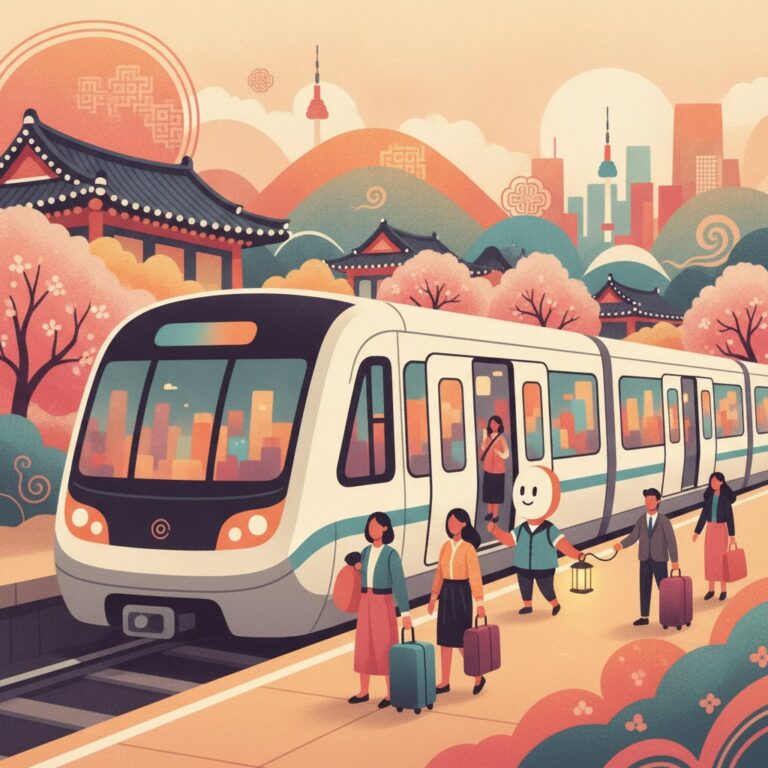
Standing at Express Bus Terminal station during morning rush hour, watching hundreds of commuters move in fast, silent unison toward Line 9, is enough to intimidate anyone visiting Seoul for the first time. I often see travelers frozen near the turnstiles, holding up their phones while trying to figure out which direction to walk. As a Korean who has ridden the Seoul metro almost daily for over fifteen years, I can tell you that while the network looks like a massive web of colorful spaghetti on a map, it is actually one of the most logical and efficient transit systems in the world once you understand its design language.
With more than 20 lines spanning across Seoul, Incheon, and Gyeonggi-do, the subway can take you to almost every major attraction, from the historic gates of Gyeongbokgung to the bustling shopping streets of Myeongdong. Here is everything you need to know to ride the Seoul subway confidently, avoid common rookie mistakes, and navigate the underground like a native resident.
✈️ Book your trip to Korea — hotels, flights & more
1. Getting Your Transportation Card
Before you step foot near a turnstile, you need the right payment method. While you can technically buy single-journey paper tickets at ticket vending machines inside stations, doing so for every trip wastes time and costs slightly more per ride.
T-Money Card: The Gold Standard
The T-money card is a reloadable smart transit card used across South Korea. You can tap it on subways, city buses, and even in taxis. You can also use it to pay for items at convenience stores, bakeries, and vending machines.
- Where to buy: You can purchase a blank T-money card at almost any convenience store inside Seoul stations or on the street, including GS25, CU, Seven-Eleven, and Emart24. Cards are also available at airport convenience stores upon arrival at Incheon or Gimpo.
- Card cost: A standard T-money card costs around 2,500 to 5,000 won (roughly $2 to $4 USD) just for the physical card. Specialized cards featuring K-pop idols or popular characters like Kakao Friends may cost slightly more, usually between 4,000 and 8,000 won.
- Loading money: Transit cards must be topped up using Korean Won cash. Machines inside subway stations and registers at convenience stores do not accept foreign credit cards for topping up transit balances. It is best to keep around 10,000 to 20,000 won in cash on hand specifically for top-ups.
Short-Term Options: Climate Card & Foreigner Passes
If you plan on taking public transit four or five times a day, you might consider the Climate Card (Gidongdae Pass) or foreign tourist transit passes. Seoul City offers short-term Climate Cards designed for visitors, available in 1-day, 2-day, 3-day, and 5-day passes ranging approximately from 5,000 won to 15,000 won (roughly $3.70 to $11.00 USD). These provide unlimited rides on Seoul subways and local buses, though they exclude certain suburban lines like the Shinbundang Line and airport express trains. Check current coverage rules before purchasing at station customer service centers or convenience stores inside Seoul.
2. The Essential Apps You Need on Your Phone
One of the biggest mistakes foreign travelers make in Korea is relying solely on Google Maps. Because of national spatial data regulations, Google Maps offers limited transit features and often lacks real-time walking or subway navigation details in South Korea.
To travel smoothly, download one or both of these free apps before your trip:
- Naver Map: The most widely used navigation app in Korea. Set the app language to English in the settings. It provides precise transit routes, platform numbers, real-time train arrival countdowns, and exact exit suggestions for your destination.
- KakaoMap or KakaoMetro: KakaoMetro is dedicated strictly to subway systems across Korea. It provides clean, visual line maps, transfer shortcuts, and clear indications of which side the train doors will open.
When searching for locations in these apps, typing the English name works for major landmarks, but typing the destination in Korean (Hangul) or searching by phone number often yields the most accurate result.
🎟️ Popular tours & experiences in Korea
Klook.com3. Understanding Station Codes, Colors, and Directions
Seoul’s subway map uses three primary visual cues: line colors, line numbers, and individual station numbers. As long as you know these three elements, you do not even need to read Korean to find your train.
| Subway Line | Line Color | Key Destination Highlights |
|---|---|---|
| Line 1 | Dark Blue | Seoul Station, Yongsan, Dongdaemun |
| Line 2 | Grass Green | Hongdae, Gangnam, Seongsu, Euljiro 1-ga |
| Line 3 | Orange | Gyeongbokgung, Insadong (Anguk), Express Bus Terminal |
| Line 4 | Light Blue | Myeongdong, Dongdaemun History & Culture Park |
| Line 9 | Gold / Brown | Gimpo Airport, Yeouido, Bongeunsa (COEX) |
How Station Numbers Save the Day
Every subway station in Korea is assigned a 3-digit or alphanumeric code. The first digit usually corresponds to the line number. For example:
- Myeongdong Station: Station 424 (Line 4)
- Hongik University (Hongdae) Station: Station 239 (Line 2)
- Anguk Station: Station 328 (Line 3)
If you are at Station 239 and want to reach Station 241, simply follow the overhead signs directing you toward the higher station numbers. This system eliminates confusion when reading Romanized station names that sound similar to foreign ears.
4. How to Transfer and Avoid Common Traps
Transferring between lines in Seoul is generally simple, but a few stations are infamous for long transfer corridors—locals affectionately call these “gem-kki-da” or long-haul walks. Hongik University, Express Bus Terminal, and Dongdaemun History & Culture Park require several minutes of walking through underground tunnels.
Follow the Overhead Arrows and Floor Tracks
When exiting a train to transfer, do not go up through the main exit turnstiles. Look for overhead signs that say “Transfer to Line X” accompanied by the target line’s specific color. Many busy stations also have thick, color-coded painted lines directly on the floor. Following the painted green line on the ground will lead you straight to Line 2 without needing to read a single sign.
Express Trains vs. All-Stop Trains
Be careful on Line 9 and the AREX (Airport Railroad Express). These lines run two types of trains on the same tracks:
- All-Stop Trains (일반 – Ilban): Stops at every single station along the route.
- Express Trains (급행 – Geuphaeng): Skips smaller stations and stops only at major hub stations.
If your destination is a smaller local station on Line 9, double-check that you are not boarding an Express train, or you will watch your station fly right past your window!
5. Navigating Underground Exits Like a Local
In Seoul, people rarely meet at street addresses; we meet at Subway Exit Numbers. Major stations can have anywhere from 6 to over 20 numbered exits spread out across multiple city blocks. For example, Gangnam Station has 12 main exits, plus connecting paths to underground shopping centers.
Before leaving the platform level, look at the neighborhood map boards posted near the stairs or check your Naver Map app. Find which exit number is closest to your target cafe, store, or hotel. Following the yellow exit signage underground saves you from having to cross massive 8-lane street intersections at ground level in the summer heat or winter cold.
6. Essential Subway Etiquette to Keep in Mind
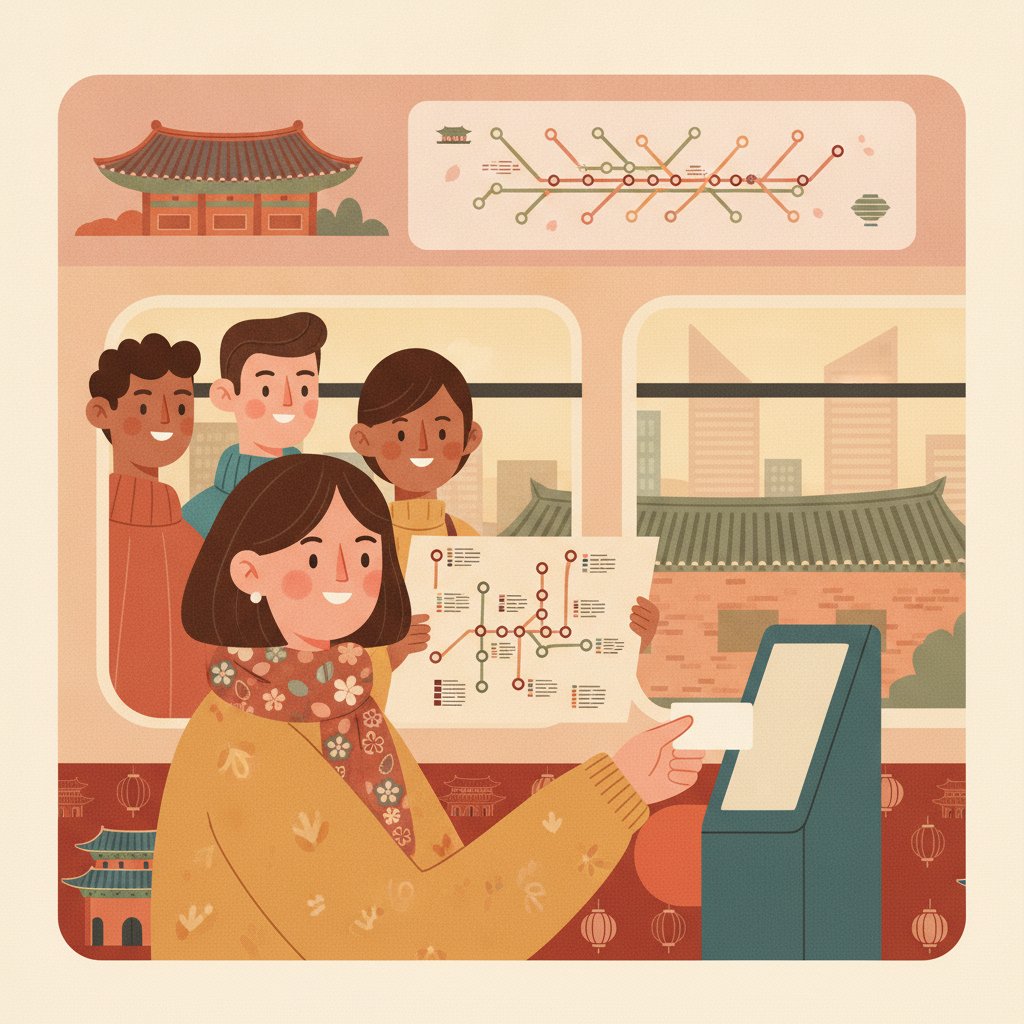
Koreans take subway courtesy seriously, especially during crowded commuting hours. Adhering to a few simple unspoken rules will help you travel comfortably and earn appreciative nods from locals.
- Mind the Priority Seats: At the ends of every subway car, you will find designated seats for the elderly, disabled, and injured. Even if the train is completely packed and these seats are empty, locals generally leave them vacant.
- Pink Seats for Pregnant Passengers: Located near the middle of cars, these pink-badged seats are reserved for expectant mothers. It is polite to keep them open.
- Keep Noise Levels Low: Loud phone conversations or listening to music without headphones is frowned upon. Most commuters read, play phone games, or nap quietly.
- Backpacks Down: When stepping into a crowded train, take off your backpack and hold it down near your feet or wear it on your front to avoid bumping into standing passengers.
- Stand to the Sides: When waiting on the platform, line up behind the painted line arrows on either side of the doors. Allow arriving passengers to exit completely before stepping inside.
🎟️ Popular tours & experiences in Korea
Klook.comFrequently Asked Questions
How much does a single subway ride cost in Seoul?
The base fare for an adult using a T-money card is 1,400 won (approximately $1.00 to $1.10 USD) for journeys up to 10 kilometers. Additional distance surcharges of around 100 to 300 won apply for every extra 5 kilometers traveled beyond that distance. Fares are slightly higher if paying with single-use paper tickets.
Can I use my foreign credit card at the subway turnstiles?
Standard foreign credit or debit cards equipped with contactless pay generally do not work directly at Seoul subway turnstiles. You must use a physical T-money card, an approved local Korean transit card, or a dedicated tourist card like WOWPASS or NAMANE that includes transit functionality.
What time does the Seoul subway stop operating at night?
Most Seoul subway lines start running around 5:30 AM and stop around midnight on weekdays. On weekends and public holidays, service usually ends a bit earlier, around 11:00 PM to 11:30 PM. It is advisable to check transit apps like Naver Map for exact last-train departure schedules, as final trains vary depending on the specific line and station direction.
More on Transit & Transportation
- Incheon Airport to Seoul Transport GuideA guide detailing travel options from Incheon Airport to Seoul, including AREX trains, buses, and T-Money cards.
- Buying & Using a T-Money Card in SeoulExplains where to buy, how to reload with cash, and how to use a T-Money card on Seoul transit.
- Booking and Riding Express Buses in KoreaExplains bus classes, ticket booking methods, terminal locations, and boarding in Korea.
See every Transit & Transportation post in our K-Travel guide.
Handy toolsKorea travel essentials · Trip budget calculator · Korea Guide Finder
Keep Reading
- Real Escape Challenge (리얼 이스케이프 챌린지): Seoul Review
- Euljiro Nogari Alley (을지로 노가리골목): A Local’s Guide
- Seongbuk-dong–Bukchon Hanok Village Course (성북동고택북촌산책길): A Local’s Guide
- Seoul Mountain Climbing & Culture Center (산악문화체험센터): A Local’s Guide
🎟️ Popular tours & experiences in Korea
Klook.com