Korean Bar Food Anju: Popular Dishes and Drink Pairings
This post contains affiliate links. As an Amazon Associate, we earn from qualifying purchases at no extra cost to you.
The Golden Rule of Drinking in Korea
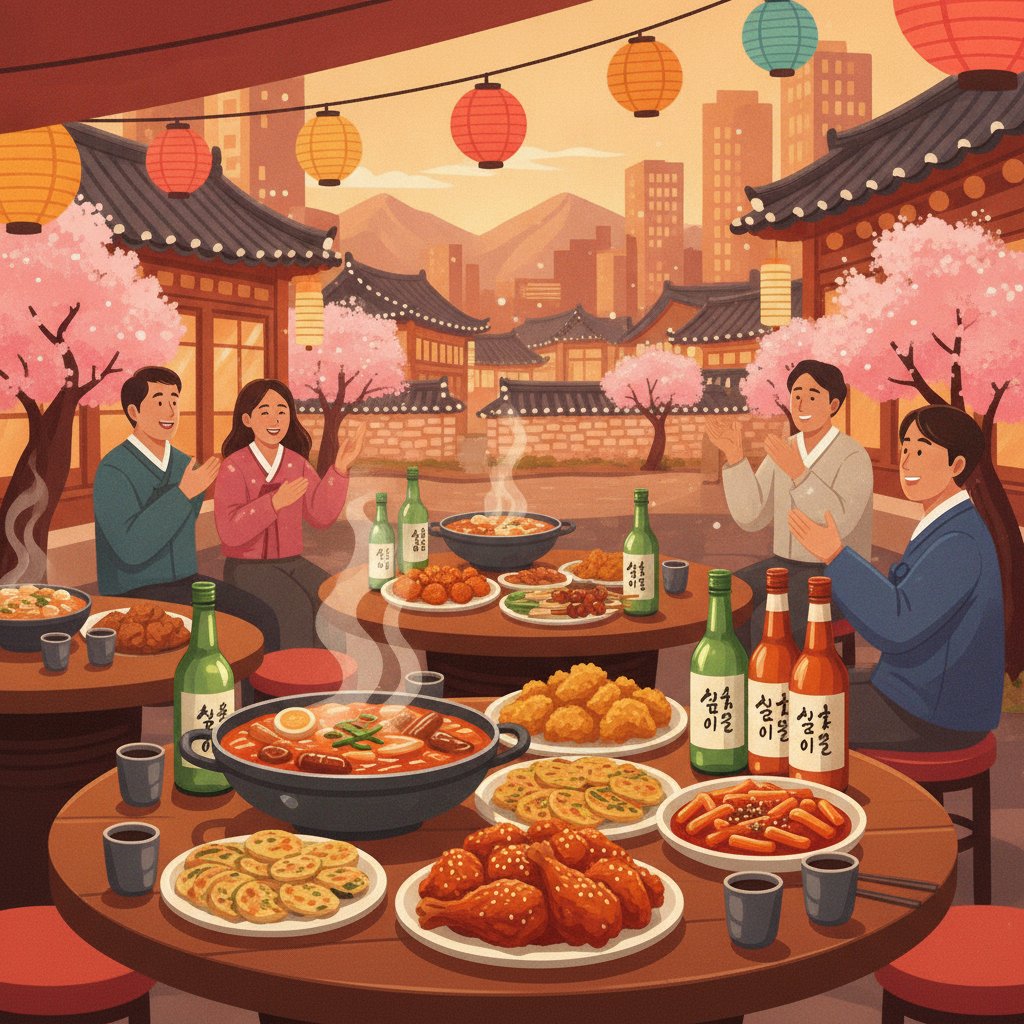
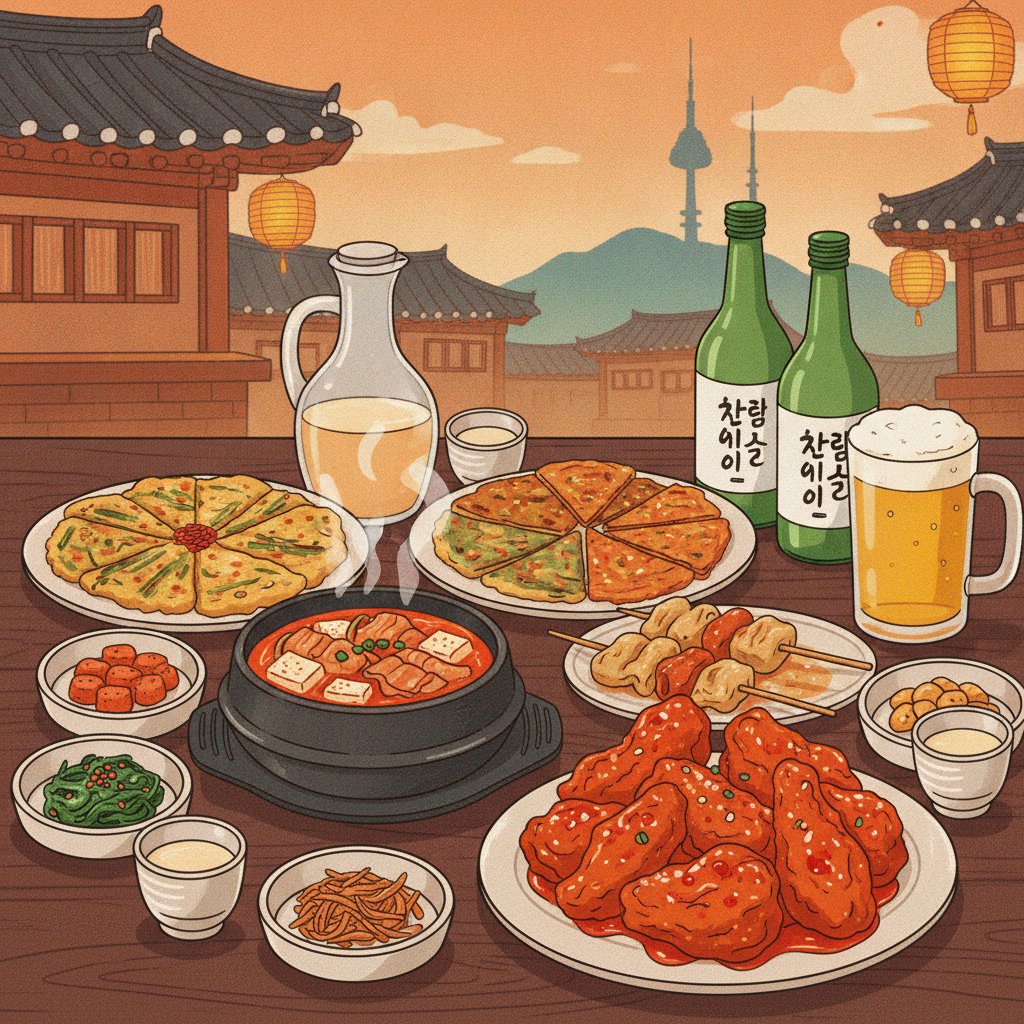
If you walk into a traditional pojangmacha tent bar in Euljiro on a chilly Friday night, the first thing you notice is not the green bottles of soju crowding the red plastic tables. It is the hiss of garlic chicken gizzards sizzling on a metal skillet, the fragrant steam rising from a boiling crock of anchovy broth fishcake soup, and the crisp crunch of pickled radish between rounds of cold beer. As a Korean, I can tell you that in our culture, alcohol and food are practically inseparable. We rarely drink without something to eat alongside it.
This food culture centers entirely around the concept of anju (안주), a broad term that covers any food served specifically to be consumed alongside alcoholic beverages. Choosing the right korean bar food anju is an art form driven by culinary chemistry, seasonal weather, and personal taste. Whether you are visiting a neighborhood pub, an upscale lounge, or a casual K-BBQ joint, understanding how to navigate an anju menu will transform your evening nights out in Seoul.
✈️ Book your trip to Korea — hotels, flights & more
Why Anju Matters: Chemistry and Culture
In English-speaking countries, people often head out specifically for drinks and might grab a basket of fries as an afterthought. In South Korea, the food frequently takes center stage, sometimes even dictating where a group decides to spend the evening. The practice comes from a practical mindset: eating substantial food while drinking protects your stomach from the harsh bite of spirits like soju and keeps you grounded through long nights of socializing.
We evaluate anju based on gunghap (궁합), which translates to harmony or compatibility. A high-proof, clean-tasting drink requires a warm, savory, or spicy pairing to balance its heat. A sweet, thick drink needs something crispy, acidic, or salty to cut through the richness. When you pair drinks and snacks correctly, each sip cleanses the palate for the next bite, and each bite prepares you for another round.
Must-Try Korean Bar Food Anju by Drink Pairing
1. Crisp Lager and Crunchy Fried Delights
Beer (maekju) in Korea is light, highly carbonated, and served ice-cold. To match its refreshing fizzy quality, fried foods are the absolute gold standard.
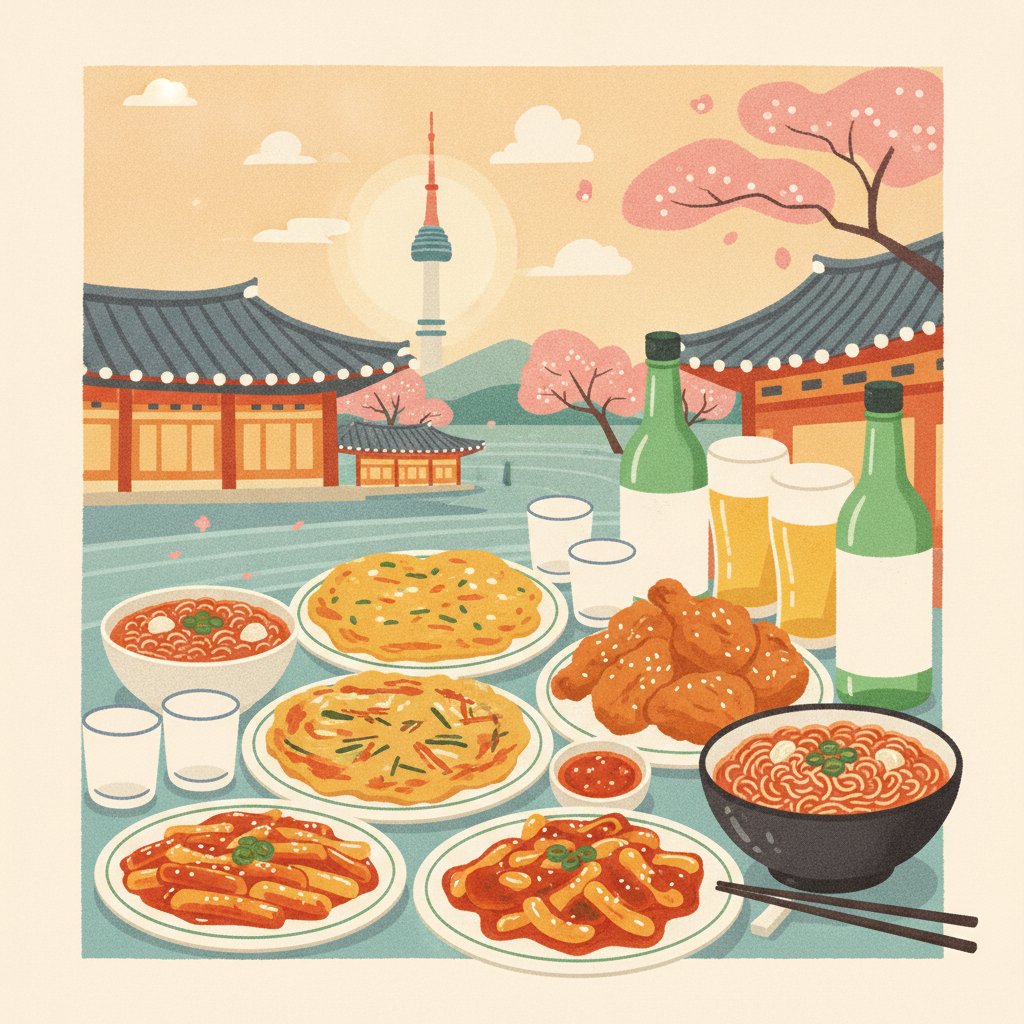
- Yangnyeom and Huraideu Chicken: The classic chimaek (chicken and beer) combination needs little introduction. Korean fried chicken features a delicate, crackly crust achieved through double-frying. Ordering half-and-half (ban-ban)—half original crispy fried, half slathered in a sweet and spicy garlic-gochujang sauce—gives you the ultimate contrast against cold draft beer.
- Mokktae and Dried Fish: If you visit a traditional Korean beer pub (often called a hof), you will see tables covered in shredded dried pollock (mokktae) or dried squid. The dried fish is gently toasted until fragrant and served with a dip made of mayonnaise, soy sauce, and chopped chili peppers. It is light, chewy, savory, and keeps your hands busy while chatting.
- Gamja-튀김 (Seasoned French Fries and Potato Wedges): Modern draft beer houses often serve fries dusted with sweet cheese powder or sour cream seasoning, offering an effortless snack alongside craft lagers.
2. Clear Soju with Boiling Stews and Grilled Meats
Soju is a clear, distilled liquor with a neutral taste and a sharp finish. Because soju can taste quite strong, native drinkers lean toward deep, bold, hot, and spicy flavors to offset the alcohol content.
- Eomuk-tang (Fishcake Soup): Thin skewer ribbons of fishcake simmers in a light, clear broth flavored with radish, kelp, and dried anchovies. Most bars will happily refill the soup broth for free if you ask politely (“Gukmul deo juseyo”). The warm broth soothes the throat after a cold shot of soju.
- Kimchi-jjigae and Budae-jjigae: Rich, bubbling stews packed with aged kimchi, tofu, pork, or army stew ingredients (spam, sausages, and ramen noodles) offer heavy savory flavors that blend perfectly with icy soju.
- Dubu Kimchi: Warm, silky blocks of sliced tofu surrounding a pile of stir-fried aged kimchi and pork belly. You stack a piece of pork and kimchi onto a slice of tofu for a complete bite that balances heat, acidity, and creaminess.
- Gopchang and Makchang: Grilled pork or beef intestines are wildly popular among locals. Crispy on the outside, chewy on the inside, and rich in natural fats, they pair seamlessly with the palate-cleansing bite of clear spirit drinks.
3. Sweet Makgeolli with Savory Pancakes
Makgeolli is Korea’s traditional unfiltered rice wine. It is slightly sweet, cloudy, tangily effervescent, and thick on the tongue. On rainy days in Seoul, makgeolli taverns fill up fast because locals naturally crave crispy, oily pancakes when it rains.
- Pajeon (Green Onion Pancake): Packed with long scallions and bound with a light batter, pajeon is fried on a hot griddle until the edges turn golden and crisp. Haemul pajeon adds squid, shrimp, and clams to the mix.
- Kimchijeon (Kimchi Pancake): Made with sour, well-fermented kimchi, this pancake offers a spicy, tangy bite that cuts through the creamy sweetness of fresh rice wine.
- Yukjeon (Pan-Fried Beef Slices): Thinly sliced strips of beef coated in flour and egg batter, quickly pan-fried and served with a side of seasoned sliced green onions.
🎟️ Popular tours & experiences in Korea
Klook.comAnju Quick Reference Guide
Here is a quick overview of classic pairings and what you can expect to pay at standard neighborhood establishments across South Korea. Keep in mind that prices vary depending on the district, venue style, and current market costs.
| Anju Category | Classic Pairing | Typical Price Range (KRW / USD) |
|---|---|---|
| Fried Chicken (Chimaek) | Draft Beer (Draft Maekju) | 18,000–26,000 KRW / ~$13–20 USD |
| Fishcake Soup (Eomuk-tang) | Soju | 15,000–22,000 KRW / ~$11–16 USD |
| Scallion Pancake (Pajeon) | Makgeolli Rice Wine | 14,000–22,000 KRW / ~$10–16 USD |
| Dried Fish (Mokktae/Squid) | Lager / Ale | 12,000–18,000 KRW / ~$9–13 USD |
Practical Tips for Ordering Anju Like a Local
Navigating Korean bar menus is straightforward once you understand a few local dining customs:
- Check for Mandatory Food Orders: At almost every Korean bar, pub, or pojangmacha, ordering at least one food item per table is standard practice. If you only order drinks, the server may gently remind you to pick an anju item.
- Look out for Service ( 서비스 ): If you order several rounds of drinks or stay for a few hours, the host might bring a small free dish to your table—such as a small plate of corn cheese, fried eggs, or fresh fruit. This complimentary treat is called service. Simply smile and say “Gamsahamdani!” (Thank you).
- Sharing is Expected: Anju portions are designed to be shared family-style. Plates usually arrive at the center of the table alongside small individual side plates (ap-접시 / ap-jeopsi) so everyone can sample a little of everything.
- Ordering Late-Night Delivery: If you prefer a quiet night at your hotel or accommodation, popular local delivery services like Coupang Eats make it easy to order anju packages direct to your door. Search for terms like “치킨” (chicken) or “전” (pancakes) to find local spots nearby.
FAQ
Can I order drinks without ordering food at a Korean bar?
At most traditional pubs, hofs, pojangmacha, and specialized bars, ordering at least one anju food item per table is expected. While craft beer taprooms or modern cocktail lounges might allow drink-only orders, standard Korean drinking spots rely on food sales alongside beverages.
What is the best anju for someone who cannot eat spicy food?
Great non-spicy options include haemul pajeon (seafood green onion pancake), eomuk-tang (mild fishcake soup—just ask for non-spicy broth), fried chicken in plain or honey-soy glaze, dubu kimchi (ask for un-spiced tofu with plain pork), or gyeran-mari (rolled savory omelet).
Where can tourists easily find authentic anju spots in Seoul?
Neighborhoods like Euljiro (famous for its outdoor beer alleys and dried fish spots), Jongno 3-ga (known for vibrant street tent bars), and Hongdae or Yeontnam-dong (trendy gastropubs and casual izakayas) are fantastic places to experience authentic local food and drink culture.
Keep Reading
- Korean Convenience Stores: GS25 & CU Food Picks
- Korean Street Food: Learning the Names
- Modern Nulang Central City (모던눌랑): Seoul’s Shanghai Chic
- Texas de Brazil Central City (텍사스 데 브라질): Churrasco in Seoul
🎟️ Popular tours & experiences in Korea
Klook.com