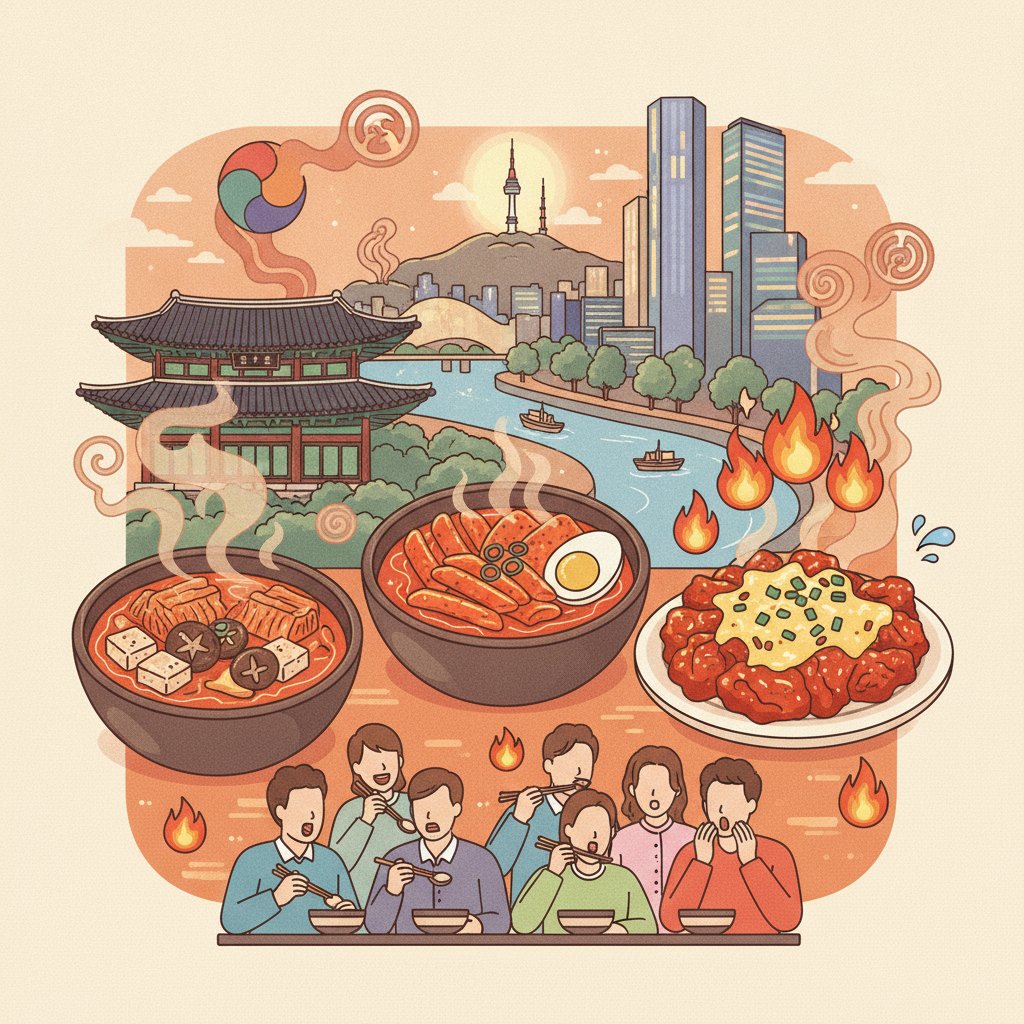
Korean Spicy Foods Ranked by Heat and How to Handle Them
This post contains affiliate links. As an Amazon Associate, we earn from qualifying purchases at no extra cost to you.
The Science Behind Korean Heat
My foreign friends usually arrive in Seoul claiming they can handle anything because they eat jalapeños at home. Ten minutes into a bowl of authentic neighborhood tteokbokki, their eyes start watering and they reach frantically for a carton of Kulpis. Korean spice hits your palate differently than Western hot sauces or South Asian curries. Instead of relying purely on vinegary acidity or intense chili oil, traditional Korean heat comes from a combination of gochugaru (sun-dried red pepper flakes) and gochujang (fermented chili paste).
Gochujang brings a heavy, deep, slightly sweet undertone because of fermented soybeans and rice syrup. It builds slowly in the back of your throat. Meanwhile, raw gochugaru offers a sharp, clean burn that warms your entire chest. Modern Korean ultra-spicy dishes often supplement these traditional ingredients with concentrated capsaicin extract, which produces an immediate, blistering burn. Building your Korean spicy food tolerance is not about raw endurance; it is about knowing which type of pepper base you are dealing with and ordering the right side dishes to protect your stomach.
✈️ Book your trip to Korea — hotels, flights & more
Level 1: Entry-Level Warmth for Beginners
If you are just starting out, these dishes provide classic Korean flavor profiles without overwhelming your taste buds. They feature heat as an accent rather than the main event.
Kimchi Jjigae (Kimchi Stew)
As a Korean, I consider Kimchi Jjigae the ultimate comfort meal. Well-aged sour kimchi is simmered with pork, tofu, and gochugaru broth. The acid from the fermented cabbage balances out the chili powder, making the broth savory and warming rather than painful. Most traditional restaurants serve this meal for roughly 8,000 to 11,000 KRW ($6 to $8 USD). It is an excellent baseline to test your initial tolerance.
Classic Street-Style Tteokbokki
Standard stall tteokbokki features chewy rice cakes cooked in a thick sauce of gochujang, sugar, and anchovy stock. The sugar content cuts through the chili paste, creating a sweet-and-spicy balance. You can find a generous plate at street food carts (pojangmacha) across Seoul for around 4,000 to 6,000 KRW ($3 to $5 USD).
Level 2: The Medium Kick
At this stage, you will notice visible sweating and a lingering tingle on your lips. These dishes represent the average everyday spice level that locals enjoy for lunch or evening drinks.
Shin Ramyun and Jin Ramyun (Spicy)
Instant noodles are deeply woven into daily life here. Standard red-label instant ramyun serves as the benchmark for medium spice in Korea. The broth uses beef bone stock mixed with fine red pepper powder. If you are buying these from a local convenience store like GS25 or CU, a single pack costs around 1,000 to 1,500 KRW ($0.75 to $1.15 USD).
Dakgalbi (Spicy Stir-Fried Chicken)
Dakgalbi combines marinated boneless chicken, cabbage, sweet potatoes, and rice cakes cooked on a large tabletop cast-iron skillet. The marinade relies on heavy gochujang and garlic. While noticeable, the fat from the chicken skin and the natural sweetness of cooked cabbage soften the blow. Expect to pay about 13,000 to 16,000 KRW ($10 to $12 USD) per portion at specialized restaurants.
🎟️ Popular tours & experiences in Korea
Klook.comLevel 3: Authentic Local Heat
This is where true Korean spicy food tolerance comes into play. You will need a side of rice, pickled radishes, and perhaps an extra drink to clear your throat between bites.
Bibim Naengmyeon (Spicy Cold Noodles)
Do not let the cold temperature fool you. Bibim naengmyeon features ice-cold chewy buckwheat noodles tossed in an intense raw chili, garlic, and vinegar paste. Because the noodles are served chilled, the burn sneaks up on you after a few bites. A bowl at a traditional noodle house usually costs between 10,000 and 14,000 KRW ($7.50 to $10.50 USD).
Nakji Bokkeum (Spicy Stir-Fried Octopus)
Small octopuses are flash-fried on high heat with heavy amounts of coarsely ground gochutgaru, minced garlic, and green onions. The dish delivers a fiery, smoky punch. It is almost always served alongside plain bean sprouts and sesame oil so diners can mix everything into a bowl of warm rice to dilute the heat. A standard serving ranges from 15,000 to 22,000 KRW ($11 to $17 USD).
Level 4: Fire Zone Challenge
At Level 4, restaurants intentional construct dishes to test their customers. Capsaicin extracts and concentrated chili oils dominate these recipes.
Maeun Galbijjim (Spicy Braised Short Ribs)
While traditional short rib stew is sweet and savory, the spicy version from specialized districts like Dongdaemun escalates heat quickly. Tender beef ribs soak in a thick, dark red gravy laden with crushed red peppers. Restaurants often ask you to choose a percentage level (30%, 50%, 70%, or 100%). Beginners should strictly stick to 30%. A shared pot runs approximately 18,000 to 25,000 KRW ($13.50 to $19 USD) per person.
Yeopki Tteokbokki (Yupdduk)
Unlike mild street tteokbokki, franchise chains like Yeopki Tteokbokki are notorious for severe heat. Served in massive communal bowls loaded with melted mozzarella, fish cakes, and sausages, this dish uses a specialized pepper blend that produces an intense, long-lasting tongue burn. A large bowl meant for three to four people costs around 14,000 to 18,000 KRW ($10.50 to $13.50 USD).
Level 5: Extreme Nuclear Heat
Level 5 dishes are extreme outliers in Korean cuisine. Most locals treat them as novelty dare challenges or severe stress-relief meals rather than routine nutrition.
Onjeong Tonkatsu (Donkatsu of Death)
Located in Gwanak-gu, Seoul, this humble cutlet shop serves the infamous “Maeundon-katsu.” The deep-fried pork cutlet is smothered in a jet-black sauce made from habanero peppers, Thai chili, and concentrated capsaicin. It delivers an overwhelming physical shock from the very first bite. The restaurant requires diners to sign a waiver before attempting their speed-eating challenge, though ordering a regular portion costs around 12,000 to 15,000 KRW ($9 to $11.50 USD).
Samyang 2x Spicy Buldak Chicken Ramyun
Globally famous due to online noodle challenges, this dry instant noodle relies on a thick capsaicin oil glaze. It coats your lips completely, maintaining severe heat for 15 to 20 minutes after eating. You can order multi-packs online via foreign import platforms or pick up single cups at Korean convenience stores for roughly 1,800 KRW ($1.35 USD).
Practical Local Tips to Survive Korean Spice
When dining in South Korea, you do not have to suffer in silence. We use specific culinary pairings and ordering vocabulary to keep meals enjoyable.
- Order Gyeran-찜 (Steamed Egg Pot): This fluffy, savory egg custard neutralizes active heat quickly through protein and warm moisture.
- Drink Kulpis or Milk: Avoid cold water; high capsaicin levels are fat-soluble. Kulpis (a popular Korean peach/plum flavored dairy drink) or regular whole milk dissolves chili oils faster than liquid water.
- Use Delivery App Customization Options: When using Korean food apps like Baemin or Coupang Eats, look for spice level drop-down menus. Common terms include Sunhan-mat (Mild), Botong-mat (Regular/Medium), Maeun-mat (Spicy), and Aju-maeun-mat (Very Spicy).
- Add Extra Cheese: Mozzarella toppings (chizu-chuga) coat the spice particles with fat, softening the burn on your stomach lining.
🎟️ Popular tours & experiences in Korea
Klook.comQuick Reference Spice Matrix
| Dish Name | Spice Level | Dominant Spice Source |
|---|---|---|
| Kimchi Jjigae | Level 1 (Mild) | Fermented Kimchi & Gochugaru |
| Shin Ramyun | Level 2 (Medium) | Beef & Chili Powder Broth |
| Nakji Bokkeum | Level 3 (Hot) | Coarse Gochugaru & Garlic |
| Yeopki Tteokbokki | Level 4 (Very Hot) | Concentrated Chili Powder & Capsaicin |
| Onjeong Death Tonkatsu | Level 5 (Extreme) | Habanero & Capsaicin Extract |
FAQ
How can I lower the spice level when ordering at a restaurant in Korea?
Tell your server “Less spicy, please” in Korean by saying “Deol-mae-uk-ge hae-ju-se-yo.” You can also ask for the spicy sauce on the side by saying “Yang-nyeom-eun ddae-ro ju-se-yo.”
What drink works best for soothing Korean spicy food burn?
Dairy products are most effective. Look for Kulpis (a sweet, milky fruit drink found at most spicy tteokbokki places), banana milk, or plain whole milk, as the fat content breaks down capsaicin oil far better than cold water or soda.
Is Samyang Buldak Ramyun representative of everyday Korean food?
No. Buldak instant noodles represent extreme niche heat heavily boosted by concentrated capsaicin extract. Average home meals and traditional restaurant dishes in Korea sit closer to Level 1 or Level 2 on the spice scale.
Keep Reading
- Korean Convenience Stores: GS25 & CU Food Picks
- Korean Street Food: Learning the Names
- Modern Nulang Central City (모던눌랑): Seoul’s Shanghai Chic
- Texas de Brazil Central City (텍사스 데 브라질): Churrasco in Seoul
🎟️ Popular tours & experiences in Korea
Klook.com