Korean BBQ for Beginners: A Local’s Guide to Ordering & Grilling Like a Pro
This post contains affiliate links. As an Amazon Associate, we earn from qualifying purchases at no extra cost to you.
At a glance
- In shortA beginner's guide to navigating Korean BBQ menus, meat cuts, side dishes, and ordering rules.
- Best forFirst-time visitors wanting to try Korean BBQ
- WhereNationwide
- Key pointsStart with unmarinated meats before moving on to marinated cuts · Restaurants typically require a minimum order of two servings to start · Banchan side dishes are included with your meal and usually refillable
- Heads-upMost restaurants require a minimum order of two servings for your first round of meat.
Sizzling, Succulent, and Simply Unforgettable: Your First Korean BBQ Experience
Annyeonghaseyo, fellow food adventurers! As a Korean local and your guide to “Seoul & Beyond,” I’m thrilled to introduce you to one of our nation’s most iconic and delicious culinary traditions: Korean BBQ (or Gogi-gui, meaning ‘meat roast’). If you’ve never tried it, you’re in for a treat – a feast for all your senses! The aroma of sizzling meat, the lively chatter, the vibrant array of side dishes – it’s an experience unlike any other.
I know what you might be thinking: it looks a little intimidating, right? All those meats, sauces, leaves, and a grill right on your table! But don’t worry, that’s exactly why I’m here. Consider me your personal Korean BBQ sensei. I’ll walk you through everything you need to know about korean bbq how to order, how to grill, and how to eat like you were born and raised right here in Seoul. Let’s dive in!
✈️ Book your trip to Korea — hotels, flights & more
What to Expect: The Sights, Sounds, and Smells of a Korean BBQ Restaurant
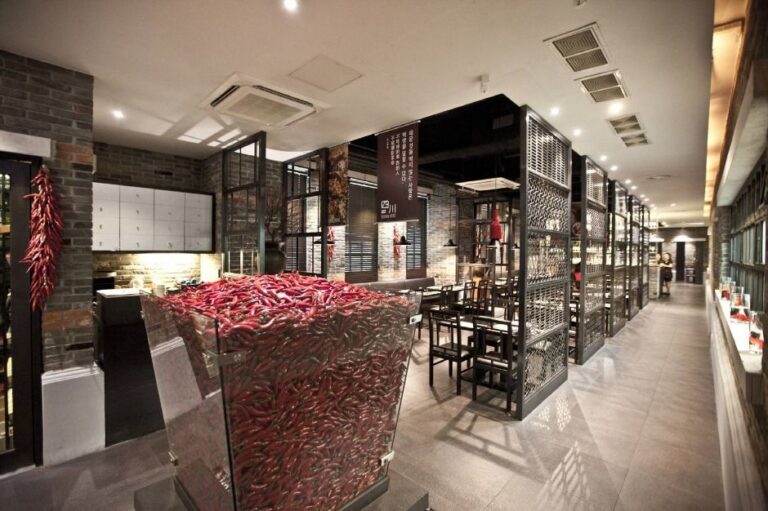
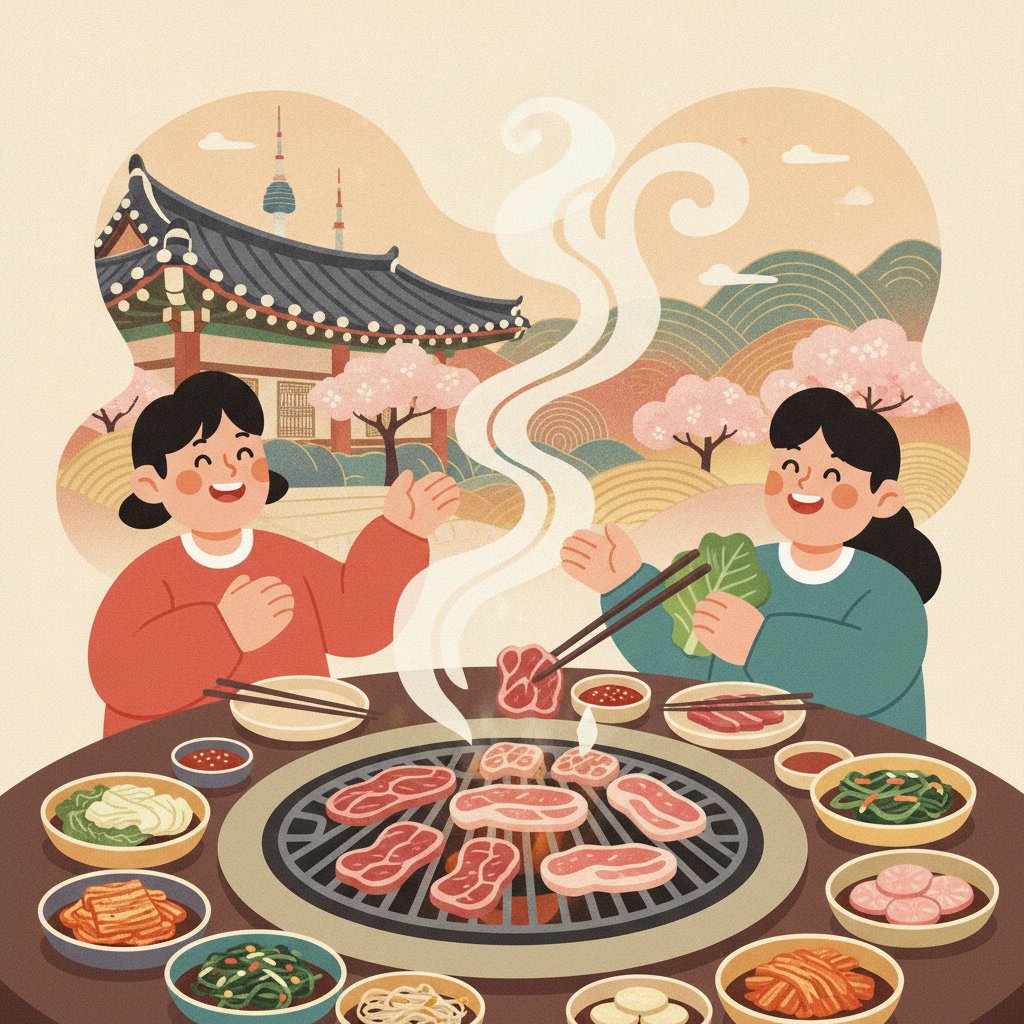
Stepping into a Korean BBQ restaurant is an experience in itself. Forget quiet, candlelit dinners; these places are bustling, lively, and full of energy! You’ll likely be greeted by a symphony of sounds: the sizzle of meat, the clinking of glasses, and happy chatter. The air will be thick with the delicious, smoky scent of grilling meat, a perfume I, as a Korean, find utterly irresistible.
Most tables come equipped with a built-in grill, either charcoal or gas, and a retractable exhaust vent hanging above to whisk away the smoke. It’s a communal dining experience, perfect for sharing with friends or family. Don’t be surprised if it gets a bit noisy and smoky – that’s all part of the authentic charm!
Getting There: Navigating Korean Public Transport (Generally)
Korean BBQ restaurants are everywhere, from bustling city centers to quiet neighborhood alleys. Luckily, getting around Korea, especially in big cities like Seoul, is incredibly easy thanks to our efficient public transportation system. I always recommend using the subway or bus.
- Subway: Our subway system is clean, fast, and covers almost everywhere you’d want to go. Look for the nearest subway station to your chosen BBQ spot.
- Bus: Buses are also very convenient, especially for shorter distances or if your destination isn’t directly on a subway line.
To navigate, download apps like KakaoMap or Naver Map. They are incredibly accurate and will give you real-time directions in English for both subway and bus. Just make sure to get a T-Money card (available at convenience stores) to tap and go!
Pro Tip: While I can’t give specific directions to a particular restaurant here, these apps are your best friends for getting around Korea! Always double-check operating hours and exact locations on your chosen mapping app before you head out.
🎟️ Popular tours & experiences in Korea
Klook.comMastering the Menu: Korean BBQ How to Order Like a Pro
Now for the main event: ordering! This is where many first-timers feel a bit lost, but I’m here to demystify it. Remember, most menus will have pictures and often English translations, so don’t fret too much.
The Main Event: Choosing Your Meat
Korean BBQ offers a fantastic variety of meats, primarily pork and beef. As a Korean, I usually start with unmarinated cuts to truly appreciate the meat’s natural flavor, then move on to marinated options.
Pork (돼지고기 – Dwaeji-gogi)
- Samgyeopsal (삼겹살): This is arguably the most famous Korean BBQ cut – thick slices of uncured pork belly. It’s fatty, rich, and absolutely delicious, especially when grilled until crispy. A must-try!
- Moksal (목살): Pork neck. It’s leaner than samgyeopsal but still very tender and flavorful. A great choice if you prefer less fat.
- Hangjeongsal (항정살): Pork jowl. Marbled and incredibly tender, almost melt-in-your-mouth. It’s a bit pricier but worth it for its unique texture.
- Ggupdegi (껍데기): Grilled pork rind. This might sound adventurous, but it’s a chewy, gelatinous treat, often marinated in a spicy sauce. It’s a popular collagen-rich snack among locals.
Beef (소고기 – So-gogi)
- Galbi (갈비): Marinated beef short ribs. This is another iconic dish, known for its sweet and savory marinade that caramelizes beautifully on the grill. Absolutely delicious and universally loved.
- Saeng Galbi (생갈비): Unmarinated beef short ribs. For those who want to savor the pure, rich taste of high-quality beef.
- Chadolbagi (차돌박이): Thinly sliced beef brisket. It cooks almost instantly due to its thinness and high fat content, making it incredibly tender and flavorful.
- Deungsim (등심): Ribeye. A classic steak cut, often grilled in thicker slices for a juicy, robust flavor.
How to Order: Meats are typically ordered by portion (인분 – in-bun), which is usually 150-200g per serving. Most restaurants require a minimum order of two servings for your first round (e.g., two servings of samgyeopsal). As a Korean, I’d suggest starting with 2-3 different types of meat for variety, especially if you’re dining with a group!
Price Range: Expect pork cuts to be usually 12,000–18,000 won per serving, and beef cuts from 20,000–40,000+ won per serving, depending on the cut and quality. These are general ranges, please check the menu for current prices.
Essential Side Dishes (Banchan)
One of the best parts of Korean dining is the generous spread of banchan (side dishes) that comes with your meal, usually free of charge! You’ll find a variety, and they are essential for creating the perfect bite.
- Kimchi (김치): Fermented spicy cabbage. Don’t just eat it cold; try grilling it on the side of the BBQ plate! It transforms into a smoky, softer, and incredibly addictive side.
- Kongnamul Muchim (콩나물 무침): Seasoned bean sprouts. Refreshing and crunchy.
- Pajeori (파절이): Spicy scallion salad. This is a must-have with fatty meats; its zesty kick cuts through the richness.
- Ssamjang (쌈장): A thick, savory, and slightly spicy dipping sauce (made from doenjang and gochujang). Your go-to for wrapping.
- Gireumjang (기름장): Sesame oil with salt and pepper. Perfect for dipping unmarinated meats.
- Garlic (마늘): Raw or grilled. Don’t be shy! Grilled garlic becomes sweet and mellow.
- Cheongyang Gochu (청양고추): Sliced green chilies. If you like heat, add a slice to your wrap. Be warned: they can be very spicy!
- Ssam-mu (쌈무): Pickled radish wraps. Thin, tangy slices of radish perfect for wrapping meat.
- Fresh Vegetables: Lettuce (상추 – sangchu) and perilla leaves (깻잎 – kkaetnip) for making ssam (wraps).
Remember: Most banchan are refillable! Just ask a server or head to the self-service counter if available.
Beyond the Grill: Must-Try Accompaniments
While the meat is the star, these dishes elevate the entire BBQ experience.
- Gyeran-jjim (계란찜): Steamed egg. A fluffy, savory, and often surprisingly large dish of steamed egg, perfect for soothing your palate from the spices and richness. It’s usually a side dish, sometimes complimentary, sometimes ordered separately.
- Doenjang-jjigae (된장찌개) or Kimchi-jjigae (김치찌개): Fermented soybean paste stew or kimchi stew. These hearty, bubbling stews are often ordered towards the end of the meal, served with rice, to round out the feast.
- Naengmyeon (냉면): Cold noodles. Available in two main types:
- Mul-naengmyeon (물냉면): Buckwheat noodles in a tangy, icy beef broth. Incredibly refreshing, especially after fatty meat.
- Bibim-naengmyeon (비빔냉면): Buckwheat noodles mixed with a spicy gochujang sauce, often with a little broth on the side. Spicy and satisfying!
- Bokkeumbap (볶음밥): Fried rice. This is often prepared *after* you’ve finished grilling most of your meat, right on the same grill! The server will mix rice, kimchi, seaweed, and sometimes leftover meat/sauces, frying it directly on the griddle. It’s a fantastic way to finish your meal and soak up all those delicious flavors. Don’t miss it!
What to Drink: Pairing Your BBQ
No Korean BBQ is complete without a drink to wash it all down.
- Soju (소주): Our national spirit! A clear, potent distilled liquor, often described as a milder vodka. It pairs perfectly with rich meats.
- Maekju (맥주): Beer. Local brands like Hite, Cass, or Terra are popular choices.
- Somaek (소맥): A beloved Korean concoction of soju and beer, mixed in a glass. It’s less potent than straight soju but still has a kick. Fun to try!
- Makgeolli (막걸리): A milky, slightly sweet, and tangy rice wine. Served chilled, it’s a delightful and milder alternative.
- Soft Drinks: Of course, sodas and juices are always available if you prefer non-alcoholic options.
Grilling Etiquette: Cooking Your Korean BBQ Like a Local
Here’s where the hands-on fun begins! Who does the grilling often depends on the restaurant and how busy it is.
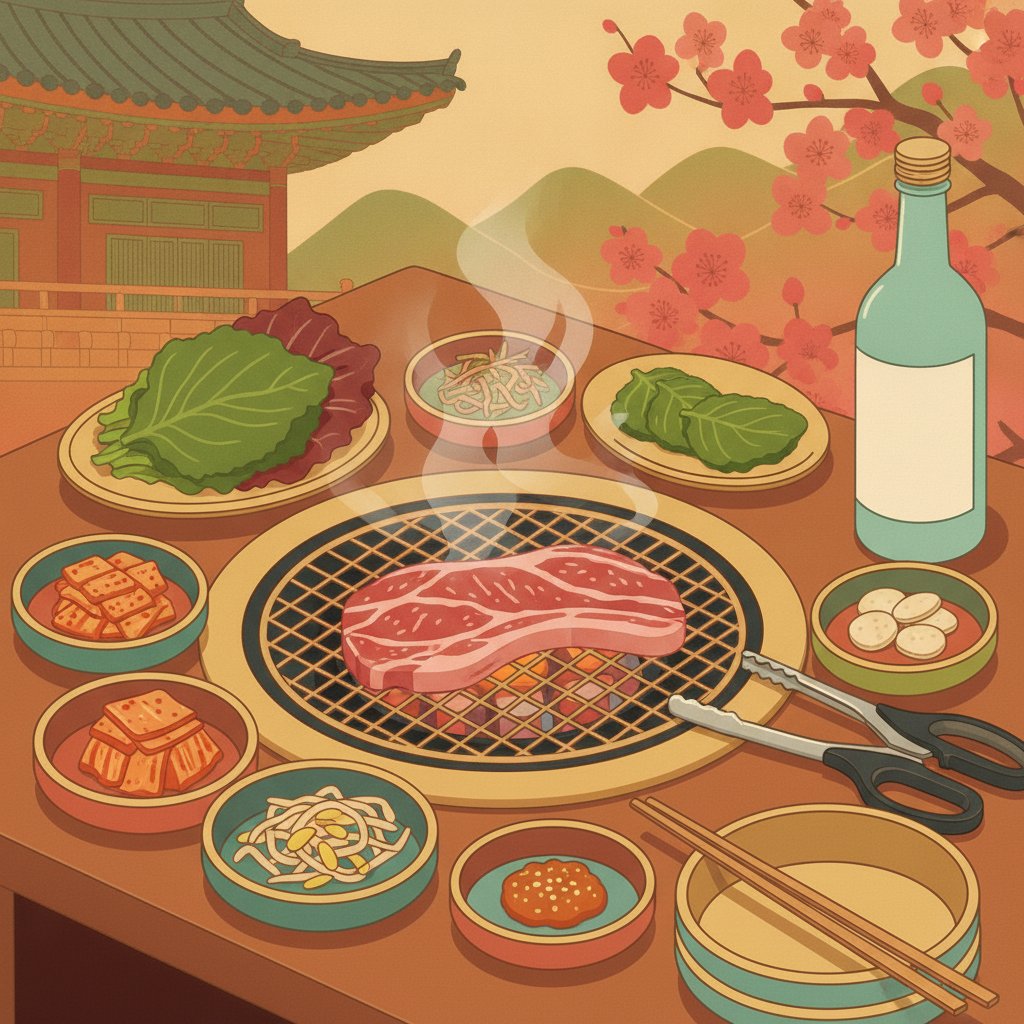
- Staff Assistance: In many popular spots, especially those specializing in high-quality meat, the staff will actually grill the meat for you! They’ll expertly cut it with scissors (yes, scissors are a standard BBQ utensil here!) and ensure it’s cooked to perfection. Feel free to watch and learn!
- DIY Grilling: In other places, or if the staff is very busy, you’re expected to grill the meat yourself. Don’t worry, it’s not complicated! Use the provided tongs and scissors.
- Cutting the Meat: Grill larger pieces of meat until almost cooked through, then use the scissors to cut them into bite-sized pieces for easier eating.
- Don’t Overcook: Koreans generally prefer their BBQ meat cooked through but still juicy, not burnt to a crisp. Keep an eye on it!
- Sharing is Caring: This is a communal meal. Grill in batches and share with everyone at the table.
- Changing Grills: If your grill gets too charred, just ask a server to change it out for a fresh one (판 갈아주세요 – pan garajuseyo).
The Art of the Ssam (Wrap): How to Eat Your Korean BBQ
This is my favorite part! Eating Korean BBQ isn’t just about the meat; it’s about creating the perfect bite, known as a ssam (쌈). Here’s how a local does it:
- Pick your Leaf: Grab a fresh piece of lettuce or a perilla leaf (or both!).
- Add Meat: Place a perfectly grilled piece of meat in the center.
- Layer on the Goodies: Add a dab of ssamjang, a slice of grilled garlic (or raw, if you’re brave!), some pajeori, and maybe a piece of grilled kimchi or kongnamul.
- Wrap it Up: Carefully fold the leaf into a neat little bundle.
- One Bite! The golden rule of ssam is to eat it in one glorious mouthful. It might be big, but trust me, the explosion of flavors and textures is worth it!
Paying the Bill (Gyesan Hada): No Split Bills, Please!
When you’re ready to pay, you usually head to the counter near the entrance, or you can signal a server by saying “Gyesan해주세요!” (계산해주세요! – Gyesan-hae-juseyo!, meaning “Please give me the bill”). You’ll often see a small number tag on your table which you bring to the counter.
Unlike some Western countries, splitting the bill at the restaurant itself is not customary in Korea. One person typically pays the entire bill, and then friends or family settle up amongst themselves outside. And remember, tipping is not customary in Korea, so no need to calculate an extra percentage!
🎟️ Popular tours & experiences in Korea
Klook.comA Korean’s Tips for a Perfect BBQ Experience
To truly embrace the local way, here are a few extra tips:
- Go with Friends: Korean BBQ is best enjoyed in a group. More people mean you can order a wider variety of meats and share the joy!
- Don’t Be Afraid to Ask: Most staff are used to helping foreigners. If you’re unsure about grilling or need a refill, don’t hesitate to ask (using a translation app like Papago or Google Translate can be very helpful!).
- Dress Comfortably: Your clothes might pick up a bit of that delicious smoky scent, so don’t wear your best outfit! Some restaurants even provide plastic bags to store your coats and bags to protect them.
- Be Open to New Tastes: Try everything! Even if a side dish looks unfamiliar, give it a go. You might discover a new favorite.
- Learn a Few Phrases: Saying “잘 먹겠습니다!” (Jal meokgesseumnida!) before eating (meaning “I will eat well” / “Enjoy the meal!”) and “잘 먹었습니다!” (Jal meogeosseumnida!) after (meaning “I have eaten well” / “Thank you for the meal!”) will earn you a warm smile from the staff.
Where to Find Great Korean BBQ (General Areas)
You can find fantastic BBQ spots all over Seoul. Some popular areas known for a high concentration of great restaurants include:
- Hongdae (홍대): Trendy, lively, and full of options, particularly good for younger crowds.
- Gangnam (강남): Upscale options, often with a more modern vibe.
- Myeongdong (명동): Tourist-friendly with many popular chains and smaller eateries.
- Jongno (종로) / Euljiro (을지로): Offers a mix of traditional and modern, often with a more local feel.
- Sinchon (신촌): Another university area with plenty of vibrant and affordable BBQ joints.
A good rule of thumb is to look for places with a crowd or a line out the door – it’s usually a sign of good food!
Ready to Grill?
See? It’s not so daunting after all! Korean BBQ is more than just a meal; it’s a social event, a culinary adventure, and an integral part of Korean culture. With these tips, you’re now equipped to confidently walk into any Korean BBQ restaurant, order like a local, grill like a pro, and savor every delicious bite.
So, gather your friends, prepare your appetite, and get ready for a memorable feast. Jal meokgesseumnida! (Enjoy your meal!)
More on Korean BBQ & Meats
- Korean Fried Chicken: Styles and Chains GuideExplores Korean fried chicken styles, top major chains, average prices, and popular menu offerings.
- Guide to Korean BBQ Meat CutsAn introduction to popular Korean BBQ cuts of pork, beef, and offal alongside restaurant and market prices.
- BBQ Yul: Aged Pork BBQ in Gangnam, SeoulA guide to BBQ Yul in Gangnam, featuring 336-hour aged domestic pork grilled over charcoal.
See every Korean BBQ & Meats post in our K-Food guide.
Handy toolsKorea travel essentials · Korea Guide Finder
Keep Reading
- BBQ Yul (고깃집열): A Local’s Guide to Seoul’s Aged Pork Perfection
- How to Order Food Delivery in Korea as a Foreign Tourist
- How Korean Banchan Works: A Local Look at Side Dishes
- Traditional Korean Tea Houses in Seoul: Where Locals Go
🎟️ Popular tours & experiences in Korea
Klook.com