How to Book and Ride KTX Trains in Korea
At a glance
- In shortA guide to booking KTX tickets, choosing seat options, and riding South Korea's high-speed trains.
- Best forFirst-time visitors and foreign tourists traveling in Korea
- WhereNationwide
- Key pointsKTX tickets open for reservation 30 days before travel at 7:00 AM KST. · Options include Let's Korail, Korail Talk app, travel platforms, and kiosks. · Korean stations use an open barrier system with no ticket turnstiles.
- Heads-upHoliday tickets sell out fast, and Korail Pass requires reserving seats before boarding.
Standing at Seoul Station on a Friday afternoon without a pre-booked ticket is a mistake almost every first-time visitor makes once. The departure hall hums with energy, the electronic displays flash with red sold-out warnings, and suddenly your planned weekend trip to Busan is hanging by a thread. As a Korean who relies on high-speed rail for work trips and weekend getaways, I always tell my foreign friends that understanding how the KTX train booking guide korea system works is the single best favor you can do for your itinerary.
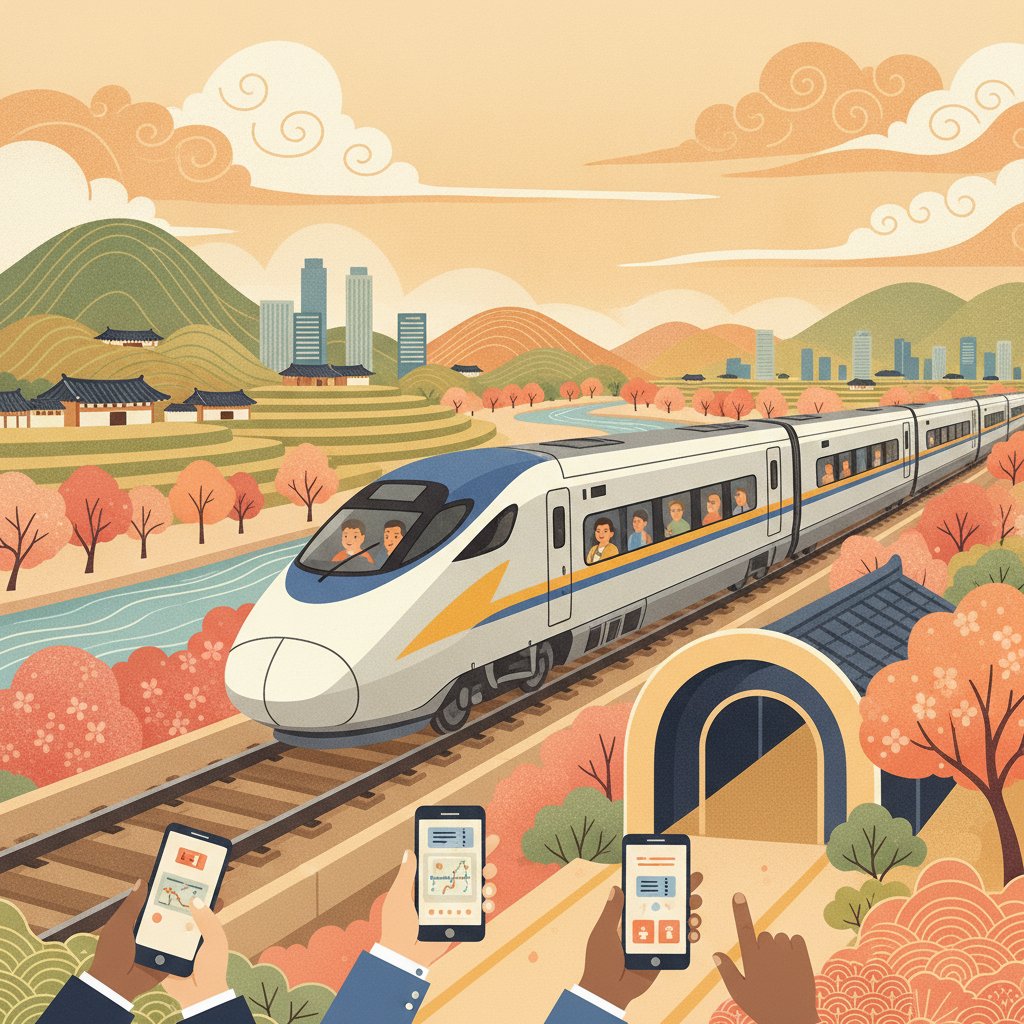
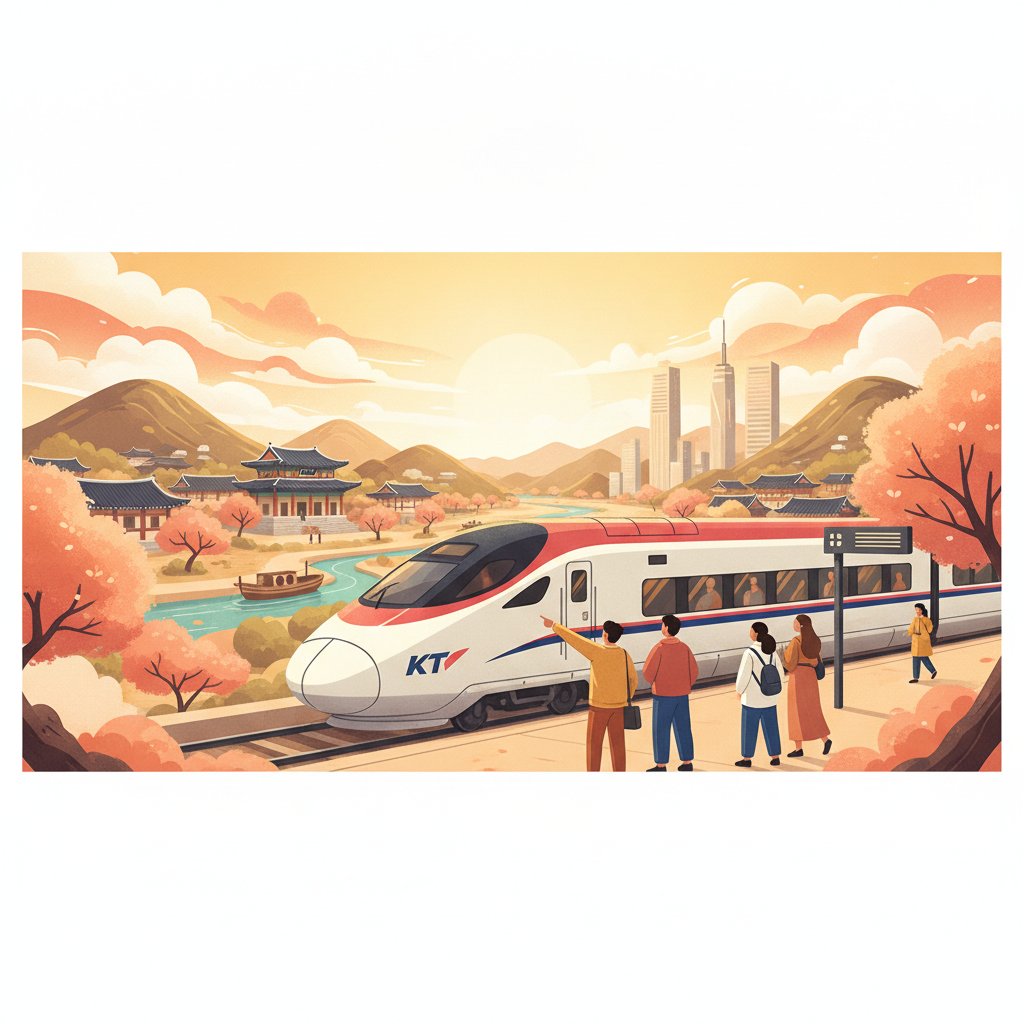
South Korea is remarkably compact, and the Korea Train eXpress (KTX) operates like the circulatory system of our nation. It glides across the country at speeds reaching 305 km/h (190 mph), linking major cultural hubs, coastal havens, and mountain towns. Booking and riding these bullet trains is straightforward once you know the local quirks and rules.
Why the KTX Is Your Best Option for Korean Travel
When traveling between Korean cities, you might consider long-distance buses or domestic flights, but the KTX almost always wins on convenience. Flying between Seoul and Busan might seem faster on paper, but when you factor in traveling out to Gimpo Airport, going through security checks, and riding another subway from Gimhae Airport into downtown Busan, you lose hours of actual vacation time.
The KTX drops you directly into city centers. Seoul Station, Yongsan Station, and Cheongnyangni Station are integrated directly into the Seoul subway network. When you step off the train at Busan Station or Dongdaegu Station, you are already surrounded by local transit, hotels, and restaurants. Trains run on remarkably precise schedules—delays longer than two minutes are rare enough to make the local news.
✈️ Book your trip to Korea — hotels, flights & more
When to Book Your KTX Tickets
In Korea, KTX train tickets open for reservation exactly 30 days before the travel date, usually launching at 7:00 AM Korean Standard Time (KST). If you are traveling during peak seasons or busy days, set a calendar reminder for this 30-day mark.
Certain times demand immediate booking as soon as the window opens:
- Friday afternoons and evenings: Locals head out of Seoul for weekend trips.
- Sunday afternoons and evenings: Everyone returns to Seoul for the work week.
- Korean holidays (Chuseok and Seollal): During the Lunar New Year and Korean Thanksgiving seasons, train tickets are almost impossible for tourists to buy because Korail hosts special pre-booking days for citizens. If you visit during these weeks, plan to use express buses or local flights instead.
- Cherry blossom season (April) and autumn leaf season (October): Routes to Gyeongju, Gangneung, and Jeonju fill up very fast.
Where to Buy KTX Tickets as an International Traveler
Navigating Korean booking interfaces used to be a headache for non-residents, but the situation has improved significantly. Here are the most reliable platforms you can use to secure your seat.
1. The Official Let’s Korail Website
Korail runs the official English-language website (Let’s Korail) designed specifically for international users. You do not need a Korean phone number or resident registration number to use it. You can select your journey, choose standard or first-class seats, and pay using foreign credit cards like Visa, Mastercard, or JCB.
2. The Korail Talk Mobile App
Korail offers an official mobile app called Korail Talk, available on iOS and Android. It features language settings for English, Chinese, and Japanese. While the app is convenient for storing digital tickets directly on your phone, foreign credit card processing can occasionally fail depending on your bank’s international 3D-Secure settings. If the app gives you payment errors, switching to the desktop browser site usually solves the problem.
3. Travel Platforms
If you prefer keeping all your travel vouchers in one place, verified international booking platforms like Klook or Trip.com sell real-time KTX seats. They process foreign credit cards seamlessly, offer customer service in multiple languages, and issue electronic tickets with QR codes that are accepted directly on board.
4. Station Ticket Windows and Automated Kiosks
You can purchase tickets on the day of travel at any major train station using ticket counters or touch-screen kiosks. Kiosks feature an English button on the home screen. However, relying on walk-up ticket purchases for popular routes like Seoul to Busan is risky, as trains frequently sell out hours before departure.
🎟️ Popular tours & experiences in Korea
Klook.comStep-by-Step Guide to Booking Online
To ensure a smooth booking experience, follow these practical steps when reserving your seat:
- Select your station carefully: Seoul has multiple KTX hubs. Main trains to Busan and Dongdaegu leave from Seoul Station. Trains heading toward Mokpo or Yeosu often depart from Yongsan Station. Trains heading east toward Gangneung use Cheongnyangni Station or Seoul Station.
- Input your passenger details: Ensure your name matches your passport, as payment validation checks this information.
- Pick your seat selection option: When available on the desktop site, click the seat map option. Forward-facing seats are marked clearly. A few older KTX-1 train models still feature fixed backward-facing seats, so double-check the directional arrows when picking your seat.
- Save your ticket confirmation: After completing payment, save the digital ticket PDF or take a screenshot of your boarding confirmation showing your car number (호차) and seat number (좌석).
Understanding KTX Ticket Options and Passes
When booking, you will choose between Standard Class and First Class. For travelers taking multiple long-distance trips, Korail also offers a special pass.
Standard Class vs. First Class
Standard Class features comfortable, padded seats in a 2+2 layout. You will find fold-down trays, overhead luggage racks, and power outlets located between the windows or under the seats. Legroom is generous compared to airline economy seating.
First Class uses a roomier 2+1 seating layout with extra legroom, reclining seats, and quieter cabins. First Class passengers receive a small complimentary service package containing bottled water, a cookie, and mixed nuts, which you can pick up from self-service vending areas between cars. The price difference is usually modest—typically around 30% to 40% more than standard fare.
The Korail Pass (KR Pass)
The Korail Pass is a travel pass reserved exclusively for foreign tourists. It allows unlimited travel on Korail-operated trains (including KTX) for a set period of consecutive or select days (e.g., 2, 3, 4, or 5 days).
Is it worth it? As a quick rule of thumb: if you are only taking a simple round-trip between Seoul and Busan, individual point-to-point tickets are usually cheaper. However, if your itinerary looks like Seoul → Gyeongju → Busan → Jeonju → Seoul over a few days, buying a Korail Pass will save you a considerable amount of money. Remember that holding a pass does not automatically guarantee you a seat; you must still log into the pass portal to reserve specific seat numbers free of charge before boarding.
How to Ride the KTX: Boarding and Onboard Etiquette
The first thing that surprises foreign tourists when entering a Korean train station is the complete absence of ticket turnstiles. Korea uses an open barrier system built on high social trust and digital monitoring.
Navigating the Station
You do not need to scan a QR code or insert a physical ticket to enter the platform area. Simply walk toward the track gates. Electronic overhead screens list upcoming train departures in Korean and English, showing the train number, destination, departure time, and assigned track number (승강장). Track numbers are usually displayed 10 to 15 minutes before the train arrives.
Boarding the Correct Train Car
Head down to the platform and look at the overhead signs or markings painted on the platform floor. They indicate the train car numbers (e.g., Car 1, Car 2, up to Car 18). Stand at the waiting line corresponding to the car number printed on your ticket. When the train arrives, let departing passengers step off completely before boarding.
Luggage Storage Rules
Large suitcases that exceed standard cabin size can be stored on the dedicated luggage racks located in the space between train cars. Backpacks, carry-on bags, and medium duffels easily fit on the overhead shelves above your seat. Never block the aisle with your luggage, as food carts and train personnel pass through regularly.
How Ticket Checking Works
You might wonder how ticket validation happens without turnstiles. KTX conductors carry handheld devices showing real-time seat inventory. They know exactly which seats are supposed to be occupied and which should be empty. As long as you are sitting in the exact seat assigned on your ticket, the conductor will simply walk past you without asking to see anything. If you sit in an unassigned or empty seat, the conductor’s device will highlight the discrepancy, and they will politely ask to check your ticket.
Onboard Culture and Rules
Korean train cars are remarkably quiet environments. To ensure a pleasant journey for everyone:
- Set your mobile phone to silent or vibrate mode immediately upon boarding.
- Take phone calls in the vestibule area between cars, never at your seat.
- Use headphones when watching videos or listening to music.
- Eating light snacks and drinking beverages is permitted, but avoid foods with strong odors that might bother neighboring passengers.
Popular Routes, Travel Times, and Fare Ranges
Prices vary slightly depending on peak hours, train models (KTX-I, KTX-Sancheon, or KTX-EUM), and booking dates. The table below outlines typical standard economy class fares for major routes from Seoul.
| Route | Approximate Travel Time | Typical Economy Fare Range |
|---|---|---|
| Seoul to Busan | 2 hrs 15 mins – 2 hrs 45 mins | 50,000 – 60,000 KRW ($38 – $45 USD) |
| Seoul to Gangneung | 1 hr 50 mins – 2 hrs | 26,000 – 30,000 KRW ($20 – $23 USD) |
| Seoul to Jeonju | 1 hr 30 mins – 1 hr 45 mins | 34,000 – 39,000 KRW ($26 – $30 USD) |
| Seoul to Dongdaegu | 1 hr 40 mins – 1 hr 55 mins | 42,000 – 48,000 KRW ($32 – $37 USD) |
| Yongsan to Mokpo | 2 hrs 15 mins – 2 hrs 30 mins | 48,000 – 55,000 KRW ($36 – $42 USD) |
Note: Fares listed above are broad estimates for standard adult single-way tickets. Actual prices vary based on exchange rates, train timing, and minor seasonal adjustments.
🎟️ Popular tours & experiences in Korea
Klook.comFAQ
Do I need to print my physical KTX ticket before boarding?
No, you do not need a printed paper ticket. Having a digital confirmation PDF, a mobile screenshot showing your car and seat details, or an in-app e-ticket on your smartphone is completely sufficient. Korean train conductors check seat occupancy digitally and rarely ask to see your screen unless there is a seating discrepancy.
Can I bring food and beverages on board the KTX train?
Yes, eating snacks and drinking beverages at your seat is allowed. Most KTX trains have small vending machines selling water and light snacks located in the entryways between cars. However, out of respect for fellow travelers, locals strongly prefer quiet snacks over hot meals with pungent smells.
What should I do if I miss my scheduled KTX train?
If you miss your train, go directly to the station ticket counter immediately. If your scheduled train has already departed, Korail staff can process a partial refund or help you buy a ticket for the next available train with a small penalty fee deducted, provided you report to the window shortly after the departure time.
More on Transit & Transportation
- Seoul Subway Tourist GuideA complete guide to using Seoul's subway system, transit cards, apps, transfers, and etiquette.
- Incheon Airport to Seoul Transport GuideA guide detailing travel options from Incheon Airport to Seoul, including AREX trains, buses, and T-Money cards.
- Buying & Using a T-Money Card in SeoulExplains where to buy, how to reload with cash, and how to use a T-Money card on Seoul transit.
See every Transit & Transportation post in our K-Travel guide.
Handy toolsKorea travel essentials · Trip budget calculator · Korea Guide Finder
Keep Reading
- KTX Train Travel: Korea’s High-Speed Rail Tips
- Seoul Subway Tips for First-Time Visitors
- Your Essential T-money Card Guide: A Local’s Tips for Buying and Charging
- Seoul Subway Tips for First Time Visitors
🎟️ Popular tours & experiences in Korea
Klook.com