Famous K Drama Foods to Try and How Locals Eat Them
At a glance
- In shortA guide to iconic K-drama dishes, how to order them, local etiquette, and estimated prices.
- Best forK-drama fans and travelers planning a trip to Korea
- WhereSeoul
- Key pointsChimaek features double-fried chicken paired with cold lager beer. · Street vendors offer free hot fish cake broth alongside tteokbokki. · Han River convenience stores feature automated cookers for instant ramyeon.
- Heads-upAlways ask your dining partners before pouring tangsuyuk sauce over the whole dish.
The Midnight Cravings That Made Korean Food Global
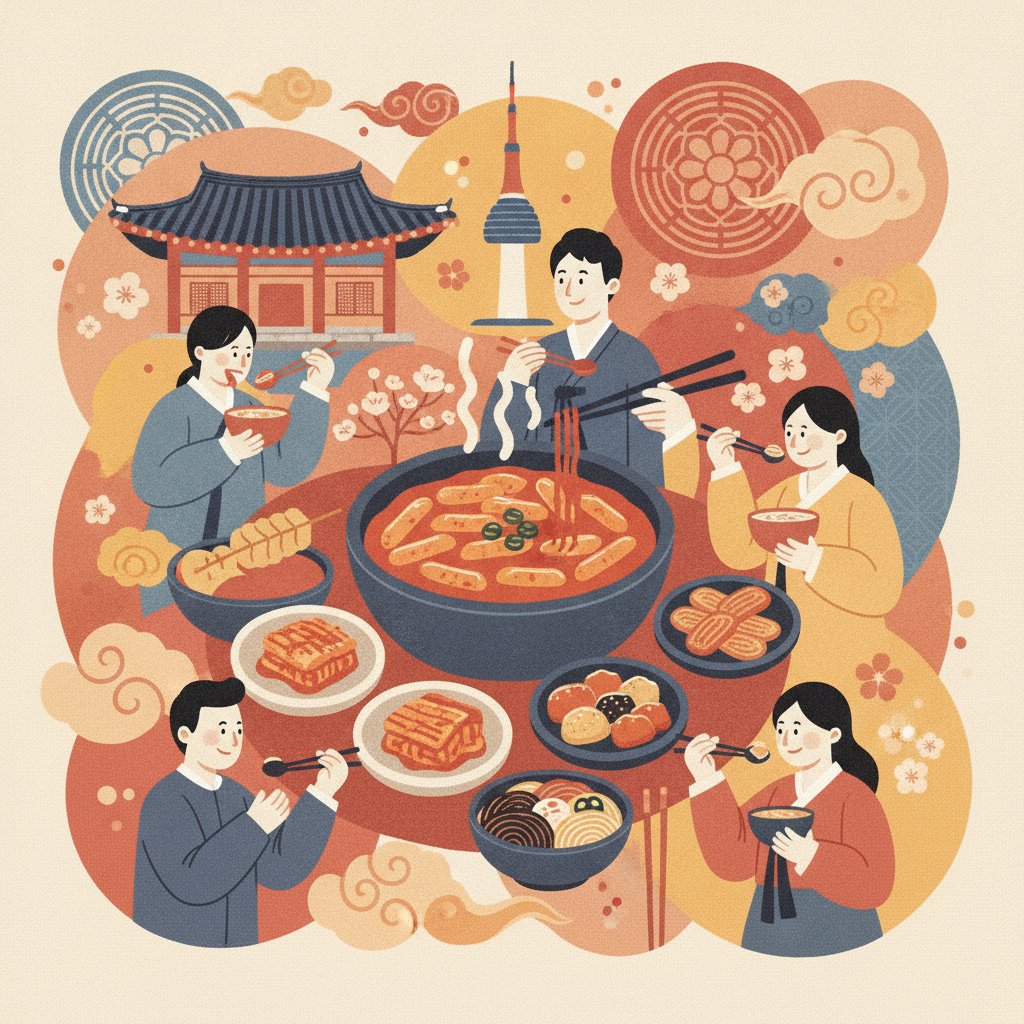
Walk down any neighborhood alley in Mapo-gu, Seoul around midnight, and you will smell it immediately: the unmistakable aroma of toasted sesame oil, crackling hot oil from a fried chicken shop, and spicy chili broth bubbling away behind steamy windows. As a Korean who grew up in Seoul, watching international fans react to these exact scenes in Korean dramas has been fascinating. What looks like a dramatic storytelling device on screen is actually our everyday comfort food.
K-dramas do not just tell stories; they act as late-night food commercials. When characters on platforms like Netflix or Viki sit down at a outdoor street cart or pull the lid off a steaming pot of noodles, they are partaking in real food traditions that millions of Koreans enjoy weekly. If you are planning a trip to South Korea or looking to recreate these dishes at home, here is a breakdown of the most famous k drama foods to try, along with practical local tips on how to order and enjoy them properly.
✈️ Book your trip to Korea — hotels, flights & more
1. Chimaek: Korean Fried Chicken and Draft Beer
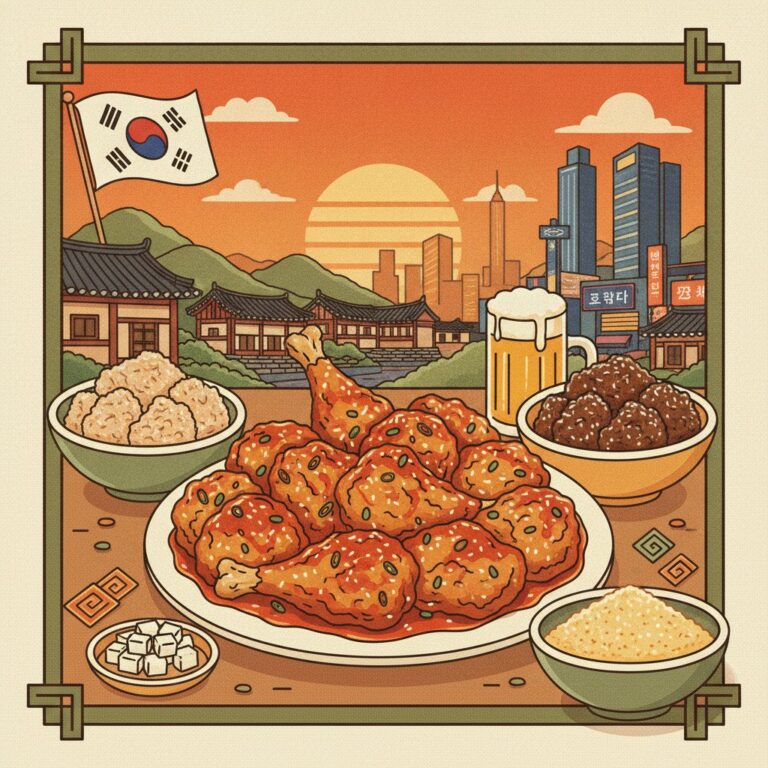
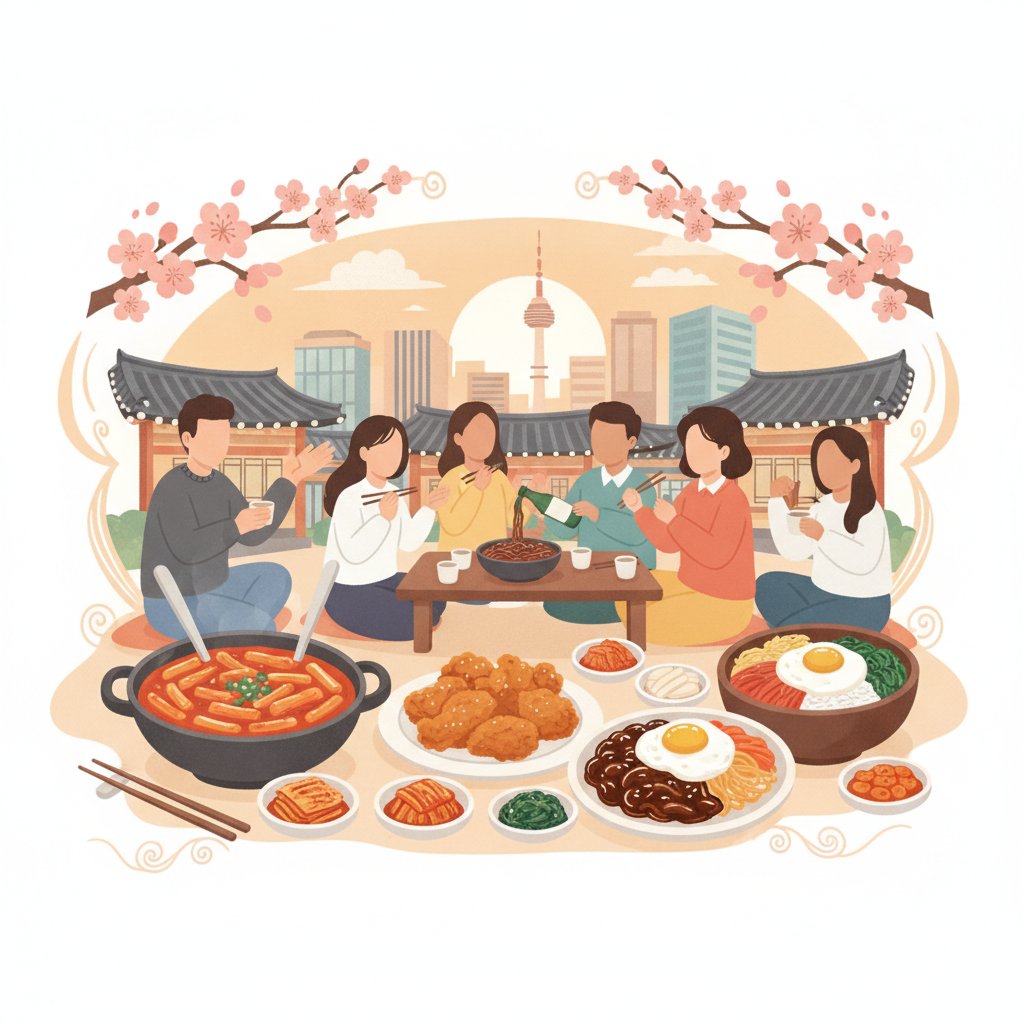
If you watched My Love from the Star or Crash Landing on You, you already know about chimaek—a blend of the words “chicken” and maekju (beer). On screen, characters gather over glistening plates of double-fried chicken with a cold glass of lager. In real life, fried chicken is practically a religion in Korea, with thousands of specialized chicken brands across the country.
Korean fried chicken differs from Western styles due to its frying technique. The chicken is fried twice, resulting in an ultra-thin, crackly skin that holds sweet and spicy sauces without becoming soggy. The two classic choices are huraideu (plain crispy fried chicken) and yangnyeom (coated in a sticky, sweet, and mild spicy garlic-chili sauce). When you cannot decide, ask for ban-ban, which translates to “half-and-half.”
How to Experience It Like a Local
In Seoul, you can sit down at popular chains like BBQ Chicken, Kyochon, or BHC, or enjoy delivery directly to your hotel. Delivery culture in Korea is extraordinarily efficient. While local delivery apps like Baemin usually require a Korean phone number and domestic payment card, international travelers can ask their hotel concierge for help ordering, or book picnic packages through platforms like Klook that arrange fried chicken deliveries straight to popular hangout spots like Yeouido Hangang Park.
Approximate Price: A whole chicken typically costs between 18,000 KRW and 25,000 KRW (roughly $13–19 USD), depending on the flavor and shop.
2. Street-Style Tteokbokki and Korean Corn Dogs
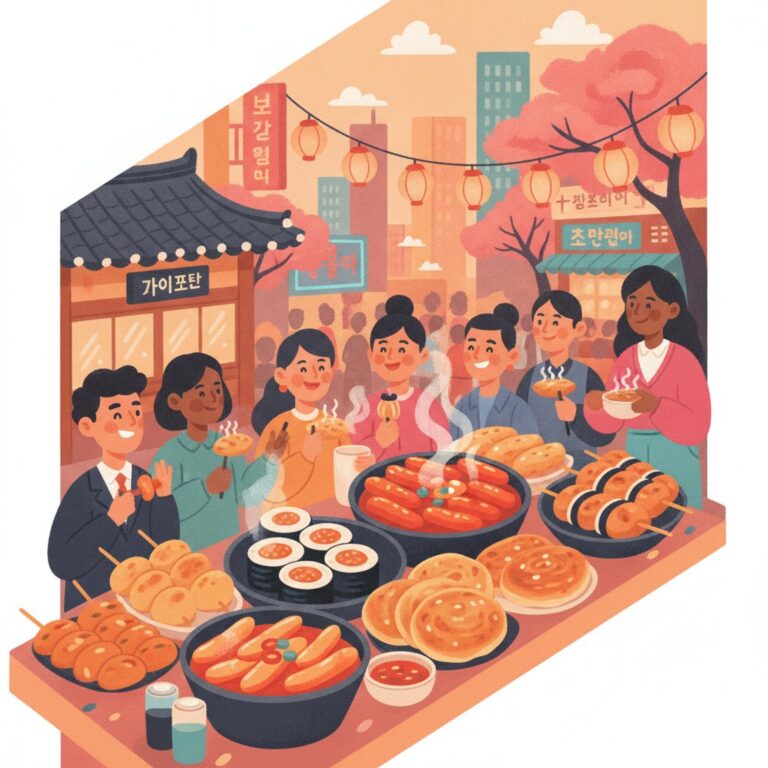
Few foods evoke immediate nostalgia for Koreans like tteokbokki (chewy rice cakes cooked in a sweet and spicy gochujang broth). Scene after scene in shows like Business Proposal features characters huddled under a red tent—a pojangmacha—dipping fried snacks into crimson sauce. Similarly, the hit drama Start-Up brought international fame to Korean-style corn dogs, which are encrusted in potato cubes and dusted with granulated sugar before being drizzled with ketchup and mustard.
p>
The texture of real Korean rice cake is extraordinarily satisfying—dense, springy, and thoroughly coated in sauce. It is almost always paired with eomuk (fish cake skewers served in clear broth) and twigim (deep-fried vegetables, squid, or glass noodle rolls). Local tip: always take a cup of hot fish cake broth, which street vendors offer for free alongside your food.
Where to Find Them
You can find street carts outside almost every major subway station in Seoul, particularly around busy university areas like Hongdae, Ewha, and Hyehwa. Famous street food streets like Myeongdong also feature countless stalls, though neighborhood stalls in local markets like Mangwon Market offer a slightly more authentic taste.
Approximate Price: A portion of tteokbokki costs around 3,500 KRW to 5,000 KRW (approx. $2.50–3.80 USD). Korean corn dogs range from 2,500 KRW to 4,500 KRW ($2–3.50 USD).
🎟️ Popular tours & experiences in Korea
Klook.com3. Sundubu Jjigae: Spicy Soft Tofu Stew
Remember the intense cooking scenes in Itaewon Class where Park Sae-ro-yi opens his pub, DanBam? The ultimate crowd-pleaser on his menu was sundubu jjigae, a bubbling red stew served in an earthen pot (ttukbaegi).
This dish features uncurdled soft tofu that melts in your mouth, cooked in a rich, spicy broth seasoned with chili powder, garlic, sesame oil, and usually clams, pork, or kimchi. The stew arrives at your table violently boiling, and it is customary to crack a raw egg directly into the pot so it cooks gently in the hot broth.
How to Eat It
Sundubu jjigae is eaten alongside a bowl of steamed white rice and various free side dishes (banchan). Scoop a bit of the molten tofu and soup over your rice, mix it lightly, and eat them together. It is particularly comforting on cold winter evenings or rainy days in Korea.
Approximate Price: A complete meal set with rice and side dishes usually runs between 8,000 KRW and 12,000 KRW ($6–9 USD) at standard neighborhood diners.
4. Han River Convenience Store Ramyeon
It is a running joke among K-drama fans that asking someone “Do you want to eat ramyeon?” is the Korean equivalent of asking them on a date. Shows like Boys Over Flowers and Extraordinary Attorney Woo regularly highlight the simple pleasure of slurping instant noodles out of a small metal pot or a paper tub.
While instant ramyeon is eaten at home, the absolute best place to try it in Seoul is along the Han River. Convenience store chains like GS25, CU, and Seven-Eleven located inside riverside parks feature automated induction cookers. You buy a paper bowl containing your choice of instant noodles, scan the barcode at the cooking machine, press start, and hot water pours out automatically while a hotplate cooks your noodles to perfection in exactly three minutes.
Local Etiquette and Hacks
- Add a fresh egg or a slice of processed American cheese from the refrigerated aisle to make the broth creamier.
- Grab a small pack of pouch kimchi from the convenience store to eat alongside your noodles.
- Dispose of left-over soup in the designated liquid waste bins near the trash stations—never pour soup into regular trash bins.
Approximate Price: Ramyeon packages with specialized cooking containers at Han River stores generally cost around 3,000 KRW to 4,500 KRW ($2.20–3.50 USD).
5. Jajangmyeon and Tangsuyuk
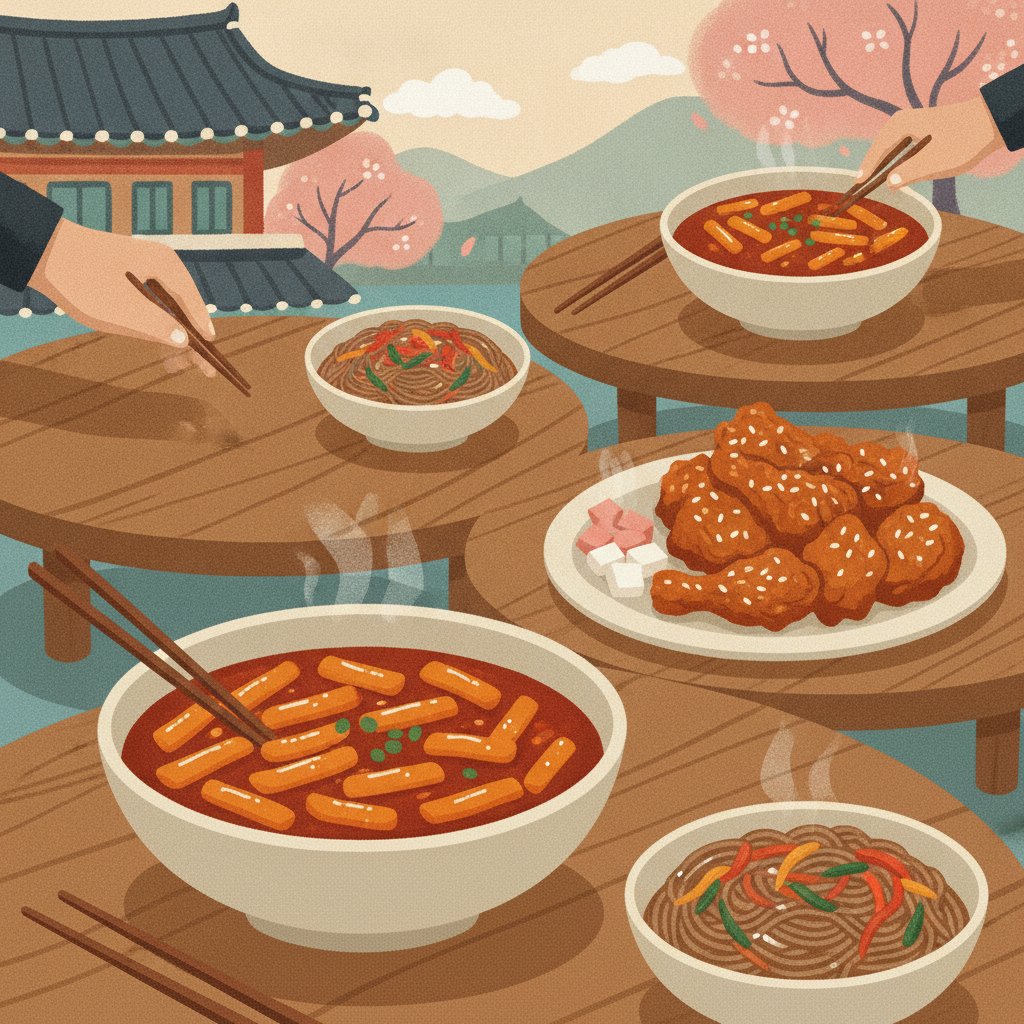
In dramas like Coffee Prince or Vincenzo, whenever characters move into a new house, pull an all-nighter, or celebrate a quick victory, plastic-wrapped bowls of black noodles appear almost instantly. This is jajangmyeon, a Korean-Chinese dish featuring thick wheat noodles topped with a rich, savory sauce made from sweet fermented black bean paste, diced pork, and onions.
It is almost always ordered together with tangsuyuk (crispy sweet and sour pork). The food arrives with small dishes of raw onion, yellow pickled radish (danmuji), and black bean paste for dipping.
The Great Tangsuyuk Debate
When eating tangsuyuk with Korean friends, you will quickly learn about the friendly national debate: bu-meok (pouring the sweet sauce over all the pork) versus jjik-meok (dipping each piece of pork into the sauce individually to preserve crispiness). Always ask your dining partners before pouring the sauce over the entire plate!
Approximate Price: A bowl of jajangmyeon costs approximately 7,000 KRW to 9,000 KRW ($5–7 USD), while a small sharing portion of tangsuyuk runs around 15,000 KRW to 22,000 KRW ($11–17 USD).
Comparing Top K-Drama Foods
| Food Name | Featured K-Dramas | Approx. Price (KRW) |
|---|---|---|
| Fried Chicken | Crash Landing on You | 18,000 – 25,000 |
| Tteokbokki | Business Proposal | 3,500 – 5,000 |
| Sundubu Jjigae | Itaewon Class | 8,000 – 12,000 |
| Han River Ramyeon | Boys Over Flowers | 3,000 – 4,500 |
| Jajangmyeon | Coffee Prince | 7,000 – 9,000 |
🎟️ Popular tours & experiences in Korea
Klook.comHow to Try These Foods Outside of Korea
If you cannot travel to Seoul right away, recreating these famous k drama foods to try at home is easier than ever. Major online platforms and Asian grocery suppliers carry authentic ingredients directly imported from Korea.
- Asian Supermarkets: Chains like H Mart or local Asian grocers stock fresh tteokbokki rice cakes, pre-made black bean paste, and authentic stew sauces.
- Online Retailers: Platforms such as Amazon carry popular instant ramyeon brands, tteokbokki kits, and Korean condiments globally.
- K-Beauty & Lifestyle Outlets: Sites like Olive Young Global occasionally stock healthy Korean snack alternatives, instant teas, and food-themed merchandise popular in dramas.
Frequently Asked Questions
Where can I find dietary information or vegetarian options for these foods?
Traditional Korean dishes often rely on fish stock (dashi), anchovy broth, or pork fat for flavor base, even in vegetable dishes like kimchi or tteokbokki. If you are vegetarian or vegan, look for designated plant-based restaurants in areas like Insadong or Itaewon in Seoul, or search for vegan-certified instant products online.
Do street food vendors in Seoul accept credit cards?
While South Korea is largely a cashless society, small outdoor street carts (pojangmacha) still prefer cash or local bank transfers. It is best to keep 10,000 to 20,000 KRW in cash when visiting street stalls, though established indoor market shops increasingly accept international credit cards.
Can foreigners use Korean food delivery apps without a local number?
Most native delivery apps require local phone authentication and Korean bank cards. However, international travelers can order via service desks at hotels, use international concierge apps, or utilize English-friendly tour booking platforms like Klook for specialized experiences like river picnic deliveries.
More on K-Dramas vs Real Life
- Korean Family Hierarchy in K-DramasExplains the real cultural rules and Confucian roots behind family dynamics in K-dramas.
- Korean Convenience Store Culture in K-DramasExplains why convenience stores feature in K-dramas, popular DIY recipes, major chains, and how to use them.
- Why Military Tropes Appear in K-DramasExplains how mandatory military service influences South Korean drama storylines and cultural tropes.
See every K-Dramas vs Real Life post in our K-DRAMA guide.
Handy toolsKorea travel essentials · Korea Guide Finder
Keep Reading
- Korean High School Culture vs K-Dramas: What Is Real?
- K-Drama Drinking Etiquette: Real Korean Rules Explained
- K-Drama Product Placement Explained: Why Brands Love PPL
- Korean Blind Dating and Mat-seon Explained by a Local
🎟️ Popular tours & experiences in Korea
Klook.com