Seoul Subway Tips for First-Time Visitors
At a glance
- In shortA guide covering T-Money cards, navigation apps, local etiquette, and tips for Seoul's subway system.
- Best forFirst-time visitors looking to navigate Seoul by subway
- WhereSeoul
- Key pointsT-Money cards offer minor fare discounts and free transfers within time limits. · Navigation apps like Naver Map help with routes, schedules, and exit numbers. · Priority seats should be kept free even when the train is crowded.
- Heads-upMost T-Money vending machines only accept cash, so always carry cash with you.
An Introduction to Seoul’s Lifeline: The Subway System
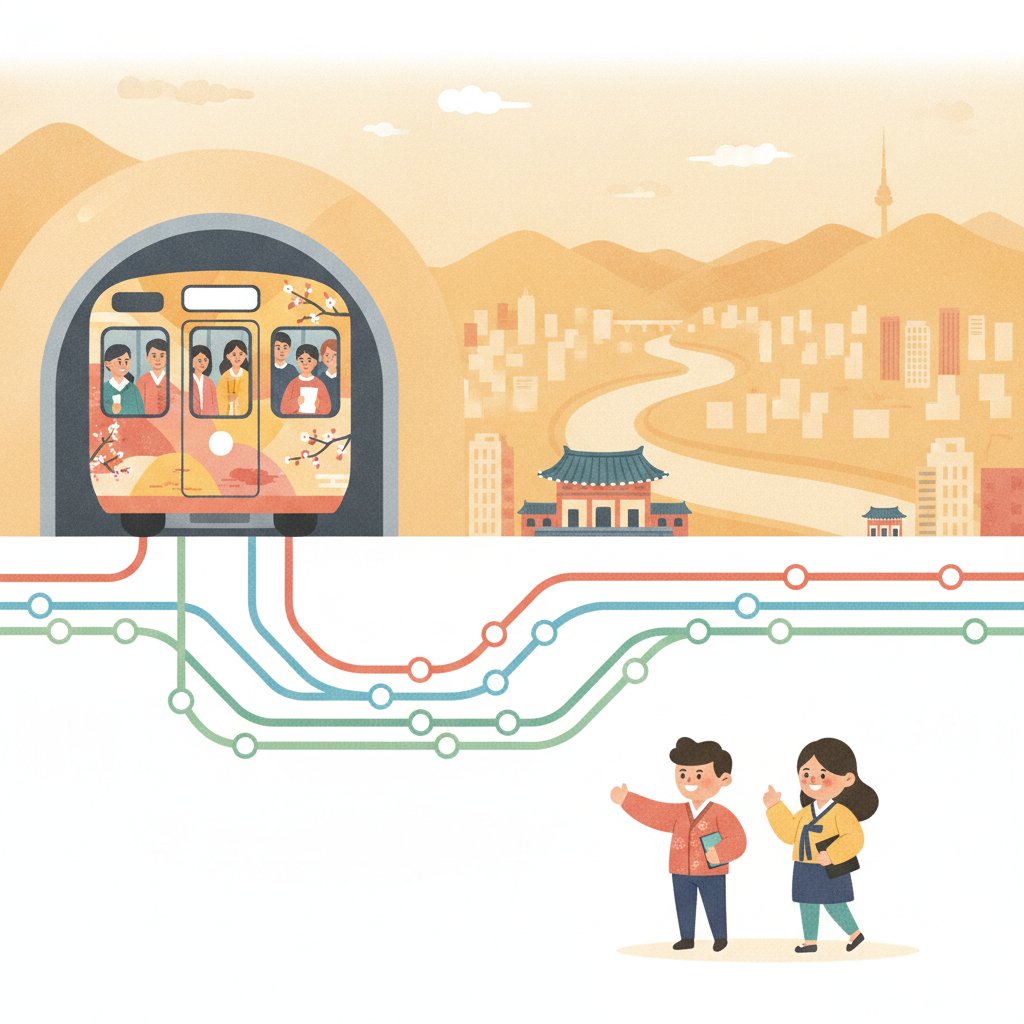
Annyeonghaseyo, future Seoul explorers! As a Korean local and your friend from “Seoul & Beyond,” I’m thrilled to share one of the greatest secrets to experiencing our vibrant capital like a true insider: the Seoul subway. Forget taxis stuck in traffic or deciphering complex bus routes – our subway system is renowned worldwide for its efficiency, cleanliness, and extensive reach. It’s truly the veins of our city, connecting every corner from historic palaces to bustling shopping districts and serene parks.
For first-time visitors, the sheer size of the Seoul subway map might look a little intimidating at first glance. Trust me, I understand! But don’t fret; with a few simple tips and a dash of local knowledge, you’ll be zipping around Seoul with the confidence of a seasoned commuter in no time. This comprehensive seoul subway guide is designed to equip you with everything you need to know, making your adventures seamless and stress-free.
✈️ Book your trip to Korea — hotels, flights & more
Getting Started: Your Essential Tools for the Seoul Subway
The All-Important T-Money Card
First things first, let’s talk about your golden ticket to convenience: the T-Money card. This isn’t just for the subway; it’s a rechargeable smart card that works across all public transport – subways, buses, and even some taxis and convenience stores! It saves you the hassle of buying single-journey tickets every time and even offers a slight discount on fares compared to cash.
- Where to Buy: You can easily purchase a T-Money card at any subway station’s ticket vending machine, convenience stores like GS25, CU, 7-Eleven, or Emart24, usually near the entrance. The card itself costs a small, one-time fee.
- How to Load: Once you have your card, you’ll need to load it with money. This can be done at the same places you buy it (vending machines, convenience stores). Simply place your T-Money card on the designated reader, select the amount you wish to add (anywhere from 1,000 to 90,000 won is usually accepted), and insert cash. Most machines only accept cash, so always have some on hand.
- Benefits: Besides convenience and minor fare discounts, using T-Money allows for free transfers between subway lines and between subways and buses within a certain time frame (usually 30 minutes, or an hour between 9 PM and 7 AM the next day). Just make sure to tap your card both when entering and exiting the station/bus!
Essential Apps to Download
While the physical map is useful, technology is your best friend when navigating our extensive subway network. These apps are indispensable for locals and visitors alike:
- Subway Korea / Seoul Subway (Android/iOS): These apps are specifically designed for the subway. They provide real-time train schedules, estimated travel times, transfer information, and even show you the fastest route to your destination. They are often available in multiple languages, including English.
- Naver Map / KakaoMap (Android/iOS): These are Korea’s dominant mapping services, superior to international alternatives for local navigation. They offer incredibly detailed public transport directions, including subway and bus routes, real-time traffic, and even walking directions. They also show exit numbers, which are crucial for finding specific locations once you’re out of the station. Naver Map generally has stronger English support for tourists.
Mastering the Seoul Subway Map and Navigation
Understanding the Lines and Stations
The Seoul subway system is color-coded, making it surprisingly easy to understand. Each line has a distinct color and number (e.g., Line 1 is dark blue, Line 2 is green, Line 3 is orange). Stations are clearly marked with their name and a unique three-digit number, often combining the line number with the station’s sequence on that line (e.g., Gangnam Station on Line 2 is 222).
Most station signs, train announcements, and digital displays are in Korean, English, Japanese, and Chinese, so language barriers won’t be a major issue.
How to Plan Your Journey
Here’s a typical process for planning your trip using one of the apps:
- Enter Origin and Destination: Open your preferred app (e.g., Naver Map). Input your current location (or the nearest subway station) and your desired destination. You can search by station name, address, or even points of interest like “Gyeongbokgung Palace.”
- Review Routes: The app will display several route options, showing travel time, number of transfers, and fare. Select the one that best suits you.
- Follow Directions: The app will guide you step-by-step: which line to take, which direction, where to transfer, and even which exit to use. Pay attention to the ‘direction’ – usually indicated by the final station of the line (e.g., ‘towards Wangsimni’ or ‘towards Sadang’).
Inside the Station: Signs and Platforms
Once you’re in a station, follow the signs! They are very intuitive and consistently labeled in multiple languages. You’ll see signs indicating the line number and color, the direction of travel (usually by the next station and the final station on that line), and exit numbers. Platforms usually have screen doors for safety, and each door will have a small screen showing the approaching train’s destination and arrival time.
🎟️ Popular tours & experiences in Korea
Klook.comRiding the Rails: Local Etiquette and Tips
Mind Your Manners: Seating and Priority
As a Korean, I always appreciate when visitors observe our local customs. The subway is a great place to see these in action:
- Priority Seating: Look for designated ‘priority seats’ (often pink or yellow) near the ends of each car. These are strictly reserved for the elderly, pregnant women, disabled individuals, and those with infants. Even if the train is packed, these seats usually remain empty, so please keep them free.
- Quiet Carriages: While not officially designated ‘quiet cars,’ Koreans generally keep noise to a minimum on the subway. Avoid loud conversations, phone calls, or playing music without headphones.
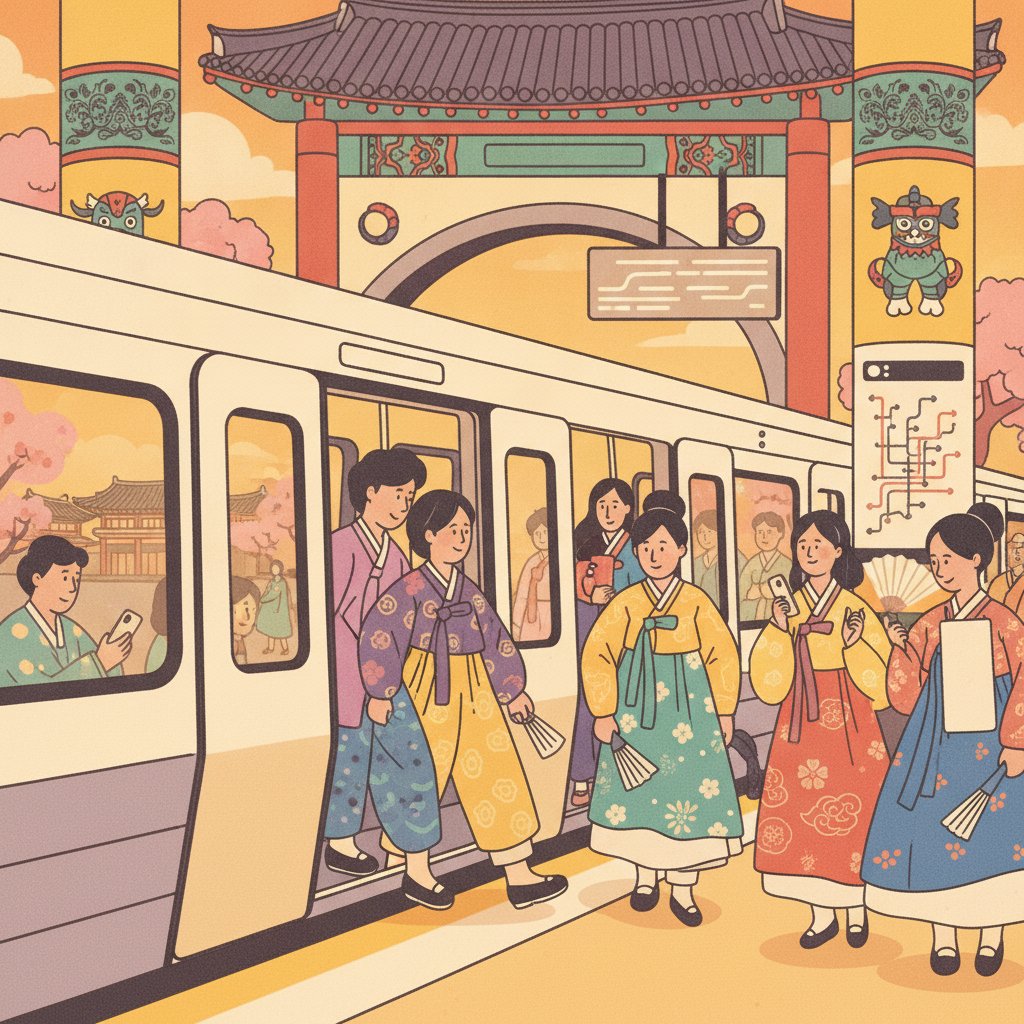
- Boarding and Alighting: Always allow passengers to exit the train completely before attempting to board. Stand to the sides of the doors to create a clear path for those getting off.
Escalator Etiquette
This can vary slightly, but generally, stand on the right side of the escalator if you’re not walking, allowing others to walk past on the left. However, some stations might have signs encouraging standing on both sides for safety during peak hours.
Eating and Drinking
While it’s generally frowned upon to eat strong-smelling food on the trains, a quick snack or a drink is usually fine if you’re discreet and clean up after yourself. Many stations have small convenience stores or vending machines where you can grab a drink or a light snack before or after your ride.
Using the WiFi
Most subway lines offer free public WiFi (often called ‘T-WiFi’ or ‘Public WiFi Free’). The connection can sometimes be spotty, especially when the train is moving at high speeds or underground, but it’s a great option for checking messages or light browsing.
Transferring Between Lines
Transfers are usually well-indicated within stations. Look for overhead signs that show the line number and color you’re transferring to, along with arrows pointing the way. Some transfers can involve a bit of a walk, but they are always clearly signposted.
Safety and Convenience Features
Emergency Buttons and Screen Doors
For your safety, all subway platforms are equipped with screen doors that open only when a train arrives. In case of emergency, there are emergency call buttons located on the platform and inside the train cars. Don’t hesitate to use them if you see or experience an urgent situation.
Information Booths and Help Points
Each station has an information booth (often called the ‘Station Office’ or ‘Customer Service Center’) where you can ask for directions, report issues, or get help. Many staff members speak basic English, and they are always ready to assist.
Public Toilets and Accessibility
Seoul subway stations are known for their clean and well-maintained public restrooms, often equipped with baby changing facilities. You’ll find them clearly marked within the stations. For those with mobility challenges, most stations are equipped with elevators and escalators, and accessible routes are clearly signed.
Luggage and Storage Lockers
Many larger stations, especially those connecting to major attractions or transport hubs, offer coin lockers (often operated via T-Money or credit card) where you can store your luggage for a few hours or even a day. These are incredibly convenient if you’re exploring before checking into your accommodation.
Beyond the Ride: Exploring Seoul with the Subway
Must-Visit Spots Accessible by Subway
The beauty of the Seoul subway is its ability to whisk you away to virtually any landmark or hotspot. Here are just a few examples of where our extensive seoul subway guide can take you:
- Gyeongbokgung Palace (Line 3): Alight at Gyeongbokgung Station (Exit 5) for direct access to Seoul’s grandest palace.
- Myeongdong (Line 4): Get off at Myeongdong Station (Exits 5, 6, 7, 8) for a shopping paradise and street food haven.
- Hongdae (Line 2 / Airport Railroad): Reach Hongik University Station (Exits 8, 9) for a youthful, artistic district with cafes, live music, and unique shops.
- Gangnam (Line 2): Head to Gangnam Station (Exits 9, 10, 11, 12) for trendy shops, upscale dining, and vibrant nightlife.
- Dongdaemun Design Plaza (DDP) & Market (Lines 2, 4, 5): Dongdaemun History & Culture Park Station is your gateway to this architectural marvel and massive fashion market.
Remember to always check the specific exit number for your destination using your mapping app, as some stations have many exits, and choosing the right one can save you a lot of walking!
Connecting to Buses
One of the best features of the T-Money card is the seamless transfer system between the subway and local buses. If you tap your T-Money card when exiting the subway and then tap it again when boarding a bus (or vice versa) within the transfer window, your second ride will be either free or significantly discounted. It’s an incredibly efficient way to reach places not directly on a subway line.
A Few Final Tips from Your Local Friend
- Always Tap Your Card: Make sure to tap your T-Money card both when entering and exiting the subway gates. If you forget to tap out, you might be charged the maximum fare for that line.
- Avoid Rush Hour: If possible, try to avoid the subway during peak rush hours (typically 7:30 AM – 9:30 AM and 5:30 PM – 7:30 PM on weekdays). Trains can get incredibly crowded, especially on major lines like Line 2.
- Stay Aware: While Seoul is incredibly safe, always be mindful of your belongings, especially in crowded areas.
- Check Operating Hours: The subway generally operates from around 5:30 AM until midnight or 1:00 AM, with slightly reduced service on weekends and holidays. Always double-check the first and last train times for your specific route using an app, especially if you have an early flight or a late night out.
- Don’t Be Afraid to Ask: Most Koreans are very friendly and willing to help. If you’re lost or confused, don’t hesitate to politely ask someone for directions, even with a simple “Excuse me, where is…?”
🎟️ Popular tours & experiences in Korea
Klook.comConclusion
And there you have it, your comprehensive seoul subway guide! I truly believe that once you master our subway, you’ll feel an unparalleled sense of freedom and discovery in Seoul. It’s more than just a mode of transport; it’s an experience, a window into the daily rhythm of our city. So grab your T-Money, download those apps, and get ready to dive into the heart of Seoul. Happy travels, and I hope to see you on the trains!
More on Transit & Transportation
- KTX High-Speed Rail Guide for Korea TravelA local guide to booking and taking KTX high-speed trains to explore South Korea.
- How to Book and Ride KTX Trains in KoreaA guide to booking KTX tickets, choosing seat options, and riding South Korea's high-speed trains.
- Seoul Subway Tourist GuideA complete guide to using Seoul's subway system, transit cards, apps, transfers, and etiquette.
See every Transit & Transportation post in our K-Travel guide.
Handy toolsKorea travel essentials · Trip budget calculator · Korea Guide Finder
Keep Reading
- Your Essential T-money Card Guide: A Local’s Tips for Buying and Charging
- Seoul Subway Tips for First Time Visitors
- How to Visit the DMZ From Seoul Step by Step
- Seoul Luggage Storage Guide: Lockers, Apps, and Delivery
🎟️ Popular tours & experiences in Korea
Klook.com