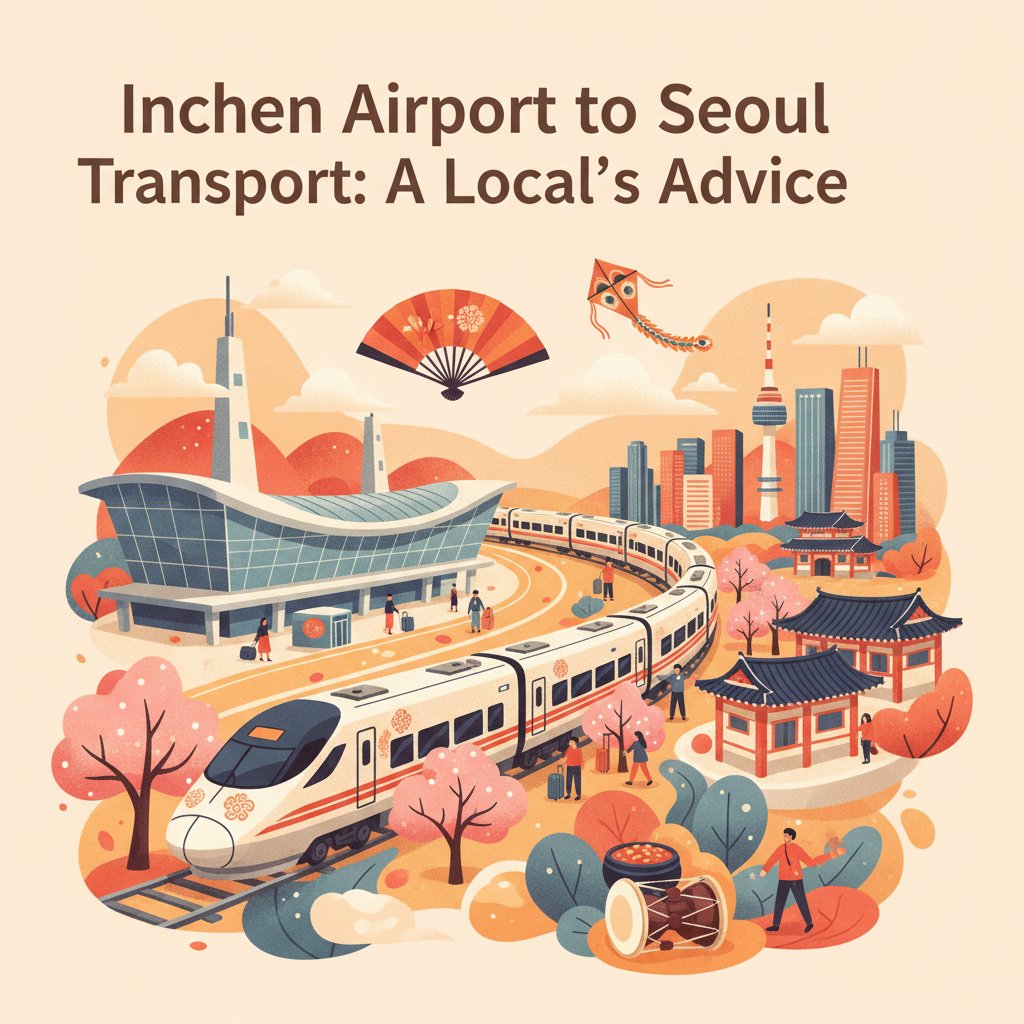
Incheon Airport to Seoul Transport: A Local’s Advice
At a glance
- In shortA guide detailing travel options from Incheon Airport to Seoul, including AREX trains, buses, and T-Money cards.
- Best forTravelers arriving at Incheon International Airport
- WhereSeoul
- Key pointsT-Money smart cards are essential for using public transit in Seoul. · AREX Express is the fastest non-stop rail option to Seoul Station. · AREX All-Stop train is budget-friendly and connects to areas like Hongdae.
- Heads-upCheck whether your flight arrives at Terminal 1 or Terminal 2 before planning transport.
Welcome to Korea! Your Gateway at Incheon International Airport
Annyeonghaseyo, future Seoul adventurers! As a Korean living in this vibrant country, I know that for many of you, your amazing journey truly begins the moment you land at Incheon International Airport (ICN). Consistently ranked among the best airports in the world, ICN is a marvel of efficiency and comfort. But once you’ve marveled at its modern architecture and perhaps grabbed a quick snack, the big question is: How do I get from here to the heart of Seoul?
Don’t worry, I’ve got you covered! Getting from Incheon Airport to Seoul is incredibly straightforward, thanks to Korea’s excellent public transportation system. Whether you’re looking for speed, budget-friendliness, door-to-door convenience, or ultimate luxury, there’s an option perfect for your travel style. Let’s break down every choice, from a local’s perspective, so you can start your Korean adventure smoothly!
First things first, Incheon Airport has two main terminals: Terminal 1 (T1) and Terminal 2 (T2). Most international flights arrive at T1, but some major carriers like Korean Air, Delta, Air France, and KLM operate out of T2. It’s always a good idea to double-check which terminal your flight will arrive at, as this might slightly influence where you head for your transport.

✈️ Book your trip to Korea — hotels, flights & more
Getting Around Seoul: The Essential T-Money Card
Before we dive into the transport options, let’s talk about your best friend for navigating Korea: the T-Money card. This rechargeable smart card is essential for using almost all public transportation in Seoul and other major cities – think subway, buses, and even some taxis. As a Korean, I practically carry mine everywhere!
- Where to buy: You can purchase a T-Money card at most convenience stores (like GS25, CU, 7-Eleven, E-Mart24) inside Incheon Airport or in any subway station. There are also T-Money vending machines at subway stations.
- How to load: You can load money onto your T-Money card at convenience stores, subway station vending machines, and charging kiosks. I recommend loading at least 20,000 to 30,000 KRW (roughly $15-23 USD) to start, depending on your stay, as you can always top it up later.
- How to use: Simply tap your T-Money card on the reader when entering and exiting subway stations or when boarding and alighting from buses. The fare will be automatically deducted.
Having a T-Money card will save you time and hassle, as you won’t need to buy single-use tickets for every ride. Plus, it often offers a small discount on transfer fares between subway and bus lines!
Option 1: AREX (Airport Railroad Express) – The Speedy Choice
If you’re looking for the quickest way to get into Seoul, AREX is often the answer. It’s an efficient rail line connecting Incheon Airport directly to Seoul Station, a major transportation hub.
AREX Express Train: Direct to Seoul Station
The AREX Express Train is the fastest and most premium option within the AREX system. It runs non-stop between Incheon Airport and Seoul Station.
- Overview: This train is designed for speed and comfort, taking you directly to Seoul Station without any intermediate stops. It’s perfect for travelers who prioritize time and prefer a more relaxed ride.
- Pros:
- Speed: It’s the quickest way to Seoul.
- No Traffic: Immune to Seoul’s notorious rush hour traffic.
- Comfort: Dedicated seating, ample luggage space, and a generally quiet environment.
- Cons:
- Limited Stops: Only goes to Seoul Station, meaning you’ll likely need to transfer to the subway or a taxi to reach your final destination.
- Slightly Higher Price: More expensive than the All-Stop train.
- How to use:
- Find the Station: Follow the clear ‘Airport Railroad’ signs within Incheon Airport (both T1 and T2). The station is typically located in the basement level.
- Buy Tickets: You can purchase tickets at dedicated AREX Express counters or automatic vending machines. Many travelers also pre-book their tickets through platforms like Klook, which can sometimes offer discounts.
- Boarding: Head to the Express train platform. You’ll have an assigned seat number, much like a regular train.
- Price Context: A typical adult fare for the Express train is in the range of ~9,000-10,000 KRW (roughly $7-8 USD). Prices can vary slightly, and discounts are sometimes available through official promotions or third-party booking sites like Klook.
- Travel Time: Approximately 43-51 minutes, depending on whether you depart from T1 or T2.
- Local Tip: If your accommodation is directly connected to Seoul Station (like some hotels or serviced apartments) or if you’re comfortable making a quick transfer to Seoul’s efficient subway lines, the Express train is an excellent choice.
AREX All-Stop Train: Budget-Friendly & Wider Coverage
The AREX All-Stop Train, as its name suggests, makes stops at all stations between Incheon Airport and Seoul Station, connecting you directly to Seoul’s extensive subway network at various points.
- Overview: This train offers a more budget-friendly option and provides access to more areas of Seoul directly from the airport line. It’s essentially another subway line that extends to the airport.
- Pros:
- Cheaper: Significantly more affordable than the Express train.
- More Stops: Connects to various Seoul subway lines at stations like Hongik University (Hongdae), Gongdeok, and Digital Media City, potentially getting you closer to your destination without needing to reach Seoul Station first.
- T-Money Friendly: You can use your T-Money card directly, just like a regular subway ride.
- Cons:
- Longer Travel Time: Due to multiple stops, it takes longer than the Express train.
- Can Get Crowded: During peak hours, it can feel like a regular commuter train, with standing room only.
- How to use:
- Find the Station: Same as the Express train – follow the ‘Airport Railroad’ signs.
- Buy Tickets/Use T-Money: You can purchase single-use tickets at vending machines or, more conveniently, simply tap your T-Money card at the gate, just like you would for any subway ride.
- Boarding: Head to the All-Stop train platform. Seating is first-come, first-served.
- Price Context: A typical adult fare to Seoul Station using a T-Money card is in the range of ~4,000-5,000 KRW (roughly $3-4 USD). The exact fare depends on your specific destination station.
- Travel Time: Approximately 58-66 minutes to Seoul Station, varying slightly by terminal.
- Local Tip: If your destination is in popular areas like Hongdae or Sinchon, the All-Stop train can be a fantastic choice as it drops you right there, saving you a transfer at Seoul Station. It’s what many Koreans use daily!
🎟️ Popular tours & experiences in Korea
Klook.comOption 2: Airport Limousine Bus – Door-to-Door Comfort
For those who prefer a more relaxed journey and often get dropped closer to their accommodation, the Airport Limousine Bus is a fantastic choice. These comfortable buses serve a wide range of routes across Seoul, stopping at major hotels and popular neighborhoods.
- Overview: These are not your average city buses! They are spacious, clean, and offer comfortable seating with ample luggage storage underneath. Think of them as premium shuttle services tailored for airport transfers.
- Pros:
- Convenience: Often drops you very close to your hotel or guesthouse, minimizing the need for further transfers.
- Comfortable: Spacious seats and a smooth ride.
- Scenic: A great way to catch your first glimpse of Seoul as you ride in.
- Luggage-Friendly: Ample space for large suitcases.
- Cons:
- Traffic Dependent: Travel time can vary significantly depending on Seoul’s traffic conditions.
- Fixed Schedule: While frequent, you might have a short wait for the next bus to your specific route.
- Slightly Slower: Generally slower than the AREX Express train.
- How to use:
- Find Bus Stops: Follow the ‘Airport Bus’ signs at Incheon Airport. Bus stops are clearly numbered and located outside the arrival halls (1F).
- Buy Tickets: Purchase tickets at the ticketing kiosks or counters located inside the arrival halls or at the bus stops themselves. You can also use your T-Money card to pay directly when boarding most buses.
- Identify Your Route: Look for the bus number and route that serves your destination. There are detailed route maps available at the ticket counters and bus stops.
- Boarding: Present your ticket (or tap your T-Money) to the driver. The driver will help you store your luggage in the compartment below.
- Price Context: A typical adult fare for an Airport Limousine Bus generally falls within the range of ~15,000-18,000 KRW (roughly $11-14 USD). Prices vary slightly depending on the route and bus company.
- Travel Time: Highly variable, typically ranging from 60 to 90+ minutes, depending on your destination in Seoul and traffic conditions.
- Local Tip: This is often my recommendation for first-time visitors, especially if they have a lot of luggage or want a hassle-free ride directly to their hotel area. Check your hotel’s website or booking confirmation – they often list the closest airport bus number and stop.
Option 3: Taxi – Direct & Convenient (But Can Be Pricey)
For ultimate privacy, directness, or if you’re arriving very late at night, a taxi can be a good option. However, it’s generally the most expensive public transport choice.
Standard Taxi (일반 택시)
These are the most common taxis you’ll see in Korea, typically orange, silver, or white.
- Overview: Metered taxis, readily available at designated stands outside the airport.
- Pros:
- Direct: Takes you straight to your destination.
- Private: Ideal for groups or families who want to stick together.
- Late Night: Available 24/7, making it a good choice for very late arrivals when other options might be less frequent.
- Cons:
- Most Expensive: Generally the priciest option.
- Traffic Dependent: Subject to traffic delays.
- Language Barrier: Some drivers might not speak English well, which can be tricky if you have a complex destination.
- How to use: Head to the designated taxi stands outside the arrival halls at ICN (follow signs). Taxis are queued, just take the next available one.
- Price Context: A typical fare to central Seoul (e.g., Myeongdong, Gangnam) is usually in the range of ~60,000-80,000 KRW (roughly $45-60 USD). This price excludes toll fees (usually a few thousand won) and a late-night surcharge (typically 20-30% between 10 PM and 4 AM). These ranges are approximate and can vary significantly based on your exact destination and traffic.
- Local Tip: Always have your destination address written in Korean to show the driver. Using a navigation app like Naver Map or Kakao Map on your phone can also help bridge any communication gaps.
International Taxi (인터내셔널 택시)
These taxis are specifically aimed at foreign visitors.
- Overview: Drivers are proficient in foreign languages (English, Japanese, Chinese), and they operate on a fixed fare system by zone.
- Pros:
- No Language Barrier: Drivers can communicate effectively.
- Fixed Fare: No surprises with the meter (though it can be more expensive than a standard taxi’s metered fare).
- Pre-booking: Can be booked in advance online.
- Cons: Still subject to traffic. More expensive than standard taxis.
- How to use: You can book an International Taxi online in advance or find their designated counter/stands at Incheon Airport.
- Price Context: Fares are fixed by zone, generally starting from around ~70,000-100,000 KRW (roughly $50-75 USD) for a standard sedan to central Seoul, depending on the zone.
Deluxe Taxi (모범 택시)
These are black taxis with a ‘Deluxe’ sign, offering a premium service.
- Overview: Larger, more luxurious vehicles with highly experienced drivers. They are known for their comfort and often provide extra amenities.
- Pros:
- Premium Service: Spacious, comfortable, and often equipped with extra features.
- Experienced Drivers: Generally known for their safe driving and knowledge.
- No Late-Night Surcharge: Unlike standard taxis, deluxe taxis do not impose a late-night surcharge.
- Cons: The most expensive taxi option.
- Price Context: Fares are significantly higher than standard taxis, typically starting from ~90,000 KRW and going upwards (roughly $68+ USD) to central Seoul.
Option 4: Private Transfer/Van Service – Ultimate Comfort for Groups
For families, groups, or those seeking maximum convenience and comfort after a long flight, a pre-booked private transfer is an excellent choice. This is the closest you’ll get to a seamless, door-to-door experience.
- Overview: You book a private car or van in advance, and a driver will meet you at the arrival gate (or a designated meeting point) and take you directly to your accommodation.
- Pros:
- Door-to-Door: No transfers, no navigating public transport.
- Fixed Price: You know the cost upfront, regardless of traffic.
- Comfort & Space: Especially great for groups with lots of luggage, often larger vehicles.
- Peace of Mind: No waiting for taxis or buses; your ride is ready when you are.
- Driver Meet & Greet: Your driver will often be holding a sign with your name.
- Cons: The most expensive transport option. Requires advance booking.
- How to use: Book through reputable online platforms like Klook or local Korean transfer services. Provide your flight details and destination when booking. Your driver will usually contact you or be waiting at the arrival gate.
- Price Context: Prices vary significantly based on the vehicle type (sedan, van, luxury car) and the number of passengers. For a standard sedan, prices typically start from around ~80,000 KRW (roughly $60 USD) to central Seoul and can go much higher for larger vans or premium services.
- Local Tip: If you’re traveling with elderly family members, young children, or a lot of luggage, this option is worth considering for the sheer convenience and reduced stress after a long flight.
Quick Comparison Table
Here’s a snapshot to help you decide:
| Option | Price Range (KRW) | Travel Time (approx.) | Best For |
|---|---|---|---|
| AREX Express | ~9,000-10,000 | 43-51 min | Speed, direct to Seoul Station, light luggage |
| AREX All-Stop | ~4,000-5,000 | 58-66 min | Budget, connecting subway, wider Seoul coverage |
| Airport Bus | ~15,000-18,000 | 60-90+ min | Door-to-door convenience, heavy luggage, first-timers |
| Standard Taxi | ~60,000-80,000 | 60-90+ min | Direct, private, late-night arrivals (can be pricey) |
| Private Transfer | ~80,000+ | 60-90+ min | Ultimate comfort, groups/families, lots of luggage |
🎟️ Popular tours & experiences in Korea
Klook.comMy Local’s Recommendations
- For First-Timers: I often recommend the Airport Limousine Bus. It’s comfortable, often drops you very close to your hotel, and provides a nice introduction to the city without the hassle of transfers.
- For Budget-Conscious Travelers: The AREX All-Stop Train is your best friend. It’s incredibly affordable and connects you seamlessly to Seoul’s subway system.
- For Speed Demons: If time is of the essence and your destination is near Seoul Station, the AREX Express Train is unbeatable.
- For Groups or Ultimate Luxury: A Private Transfer or an International Taxi will offer the most comfort and convenience, especially if you have a lot of luggage or want to ensure a smooth, worry-free start to your trip.

Final Tips for a Smooth Arrival
- Download Navigation Apps: While Google Maps works in Korea, local apps like Naver Map (네이버 지도) or Kakao Map (카카오 맵) are far superior for public transport directions, walking routes, and real-time traffic updates. As a Korean, these are my go-to apps!
- Have Your Address Ready: Always have your accommodation address written in Korean (and English) to show to bus drivers, taxi drivers, or information desk staff.
- Stay Connected: Consider getting an eSIM or renting a portable WiFi device (often available for pick-up at ICN) upon arrival. Having data access will be invaluable for navigation and communication.
- Don’t Be Afraid to Ask: Koreans are generally very helpful, and airport staff usually speak excellent English. If you’re unsure, just head to an information desk.
Conclusion
No matter which option you choose, getting from Incheon Airport to Seoul is a well-oiled machine designed to make your journey as pleasant as possible. From the lightning-fast AREX to the comfortable limousine buses and convenient taxis, you have a wealth of choices to suit your needs and budget. As a Korean, I genuinely hope this guide helps you feel confident and excited for your arrival!
Now that you know how to get to Seoul, all that’s left is to enjoy every moment of your amazing adventure in Korea. Safe travels, and I hope to see you around!
More on Transit & Transportation
- Buying & Using a T-Money Card in SeoulExplains where to buy, how to reload with cash, and how to use a T-Money card on Seoul transit.
- Booking and Riding Express Buses in KoreaExplains bus classes, ticket booking methods, terminal locations, and boarding in Korea.
- Kakao Taxi Guide for Foreign TouristsHow tourists can set up, book, and pay for Kakao Taxi in South Korea with an international phone number.
See every Transit & Transportation post in our K-Travel guide.
Handy toolsKorea travel essentials · Trip budget calculator · Korea Guide Finder
Keep Reading
- How to Book and Ride KTX Trains in Korea
- KTX Train Travel: Korea’s High-Speed Rail Tips
- Seoul Subway Tips for First-Time Visitors
- Your Essential T-money Card Guide: A Local’s Tips for Buying and Charging
🎟️ Popular tours & experiences in Korea
Klook.com