How Korean Acne Pimple Patches Work and How to Use Them
This post contains affiliate links. As an Amazon Associate, we earn from qualifying purchases at no extra cost to you.
The Local Secret Behind Korea’s Favorite Skincare Staple
Walk into any Olive Young store in Seoul on a Tuesday evening, and you will almost certainly spot people walking through the aisles with tiny, translucent circular stickers on their faces. In Korea, wearing an acne patch in public is as normal as wearing an umbrella on a rainy afternoon. There is zero stigma attached to it. Whether you are riding the subway, studying at a neighborhood cafe, or working in an office, seeing someone with a hydrocolloid sticker on their cheek or chin is simply part of daily life here.
Korean acne pimple patches have taken the international skincare world by storm over the last few years. However, many global beauty fans still wonder how these tiny stickers actually work and whether they live up to the hype. Are they just cosmetic covers, or is there genuine skin-healing science backing them up?

✈️ Book your trip to Korea — hotels, flights & more
The Science Behind the Patch: Hydrocolloid Technology
At their core, standard korean acne pimple patches are made from hydrocolloid material. Hydrocolloid was originally developed in the medical field for high-grade wound care, designed to speed up healing for surgical incisions, burn injuries, and chronic ulcers. The material functions by absorbing fluids—such as pus, oil, and exudate—from a open wound while maintaining a moist, protected healing environment.
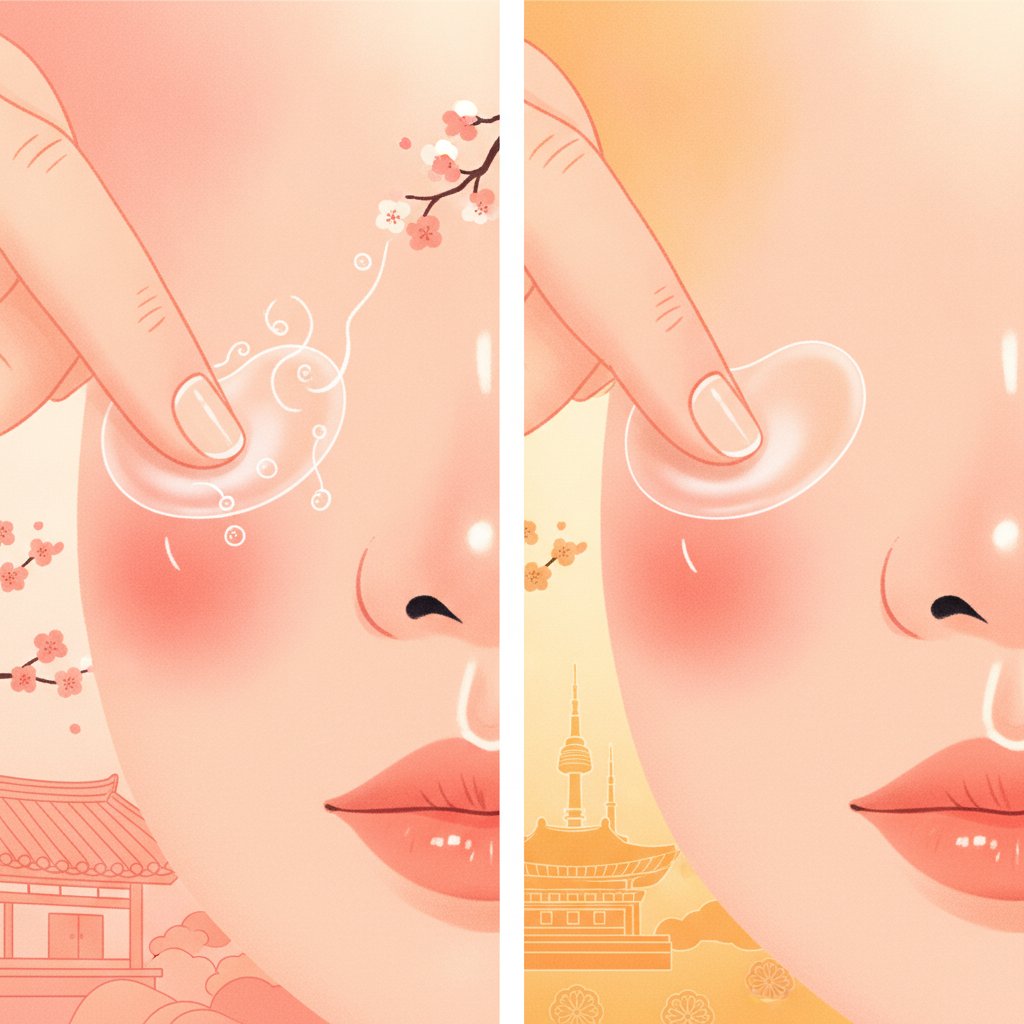
When you place a hydrocolloid patch over a pimple that has come to a head, the sticker reacts with the fluid inside the blemish. As it draws out the trapped moisture, the transparent sticker slowly turns opaque and milky white. That white bump you see on the patch after a few hours is not dead skin or dried cream; it is the extracted fluid suspended safely inside the hydrocolloid gel matrix.
Beyond fluid extraction, these patches serve a critical protective role. One of the main reasons pimples lead to long-term scarring or post-inflammatory hyperpigmentation is physical trauma—namely picking, popping, or touching your face with unclean hands. The patch forms a physical shield that keeps bacteria, environmental dirt, and idle fingers away from delicate, inflamed skin.
The Main Types of Korean Acne Patches
If you visit a Korean beauty shop or browse online stores, you will quickly realize that not all patches are created equal. They generally fall into three distinct categories based on their target problem:
1. Standard Hydrocolloid Patches (Day vs. Night)
These are the workhorses of Korean acne care. Daytime patches are engineered to be extremely thin—often under 0.2 millimeters—with tapered bevel edges that blend into the skin tone. They usually have a matte finish so you can apply sunscreen or makeup directly over them. Nighttime versions are thicker and offer higher fluid absorption capacity to work uninterrupted while you sleep.
2. Microneedle and Microdart Patches
Designed specifically for early-stage, deep-underground blemishes (the painful, blind bumps that have not formed a whitehead yet), microneedle patches feature micro-structures made of crystallized active ingredients. When pressed onto the bump, these tiny microdarts dissolve gently over several hours, delivering ingredients like salicylic acid, hyaluronic acid, tea tree oil, or niacinamide directly into the deeper epidermal layers.
3. Soothing and Calming Patches
Some thin daily stickers are infused with soothing botanical extracts such as Centella Asiatica (Cica), Madecassoside, or Tea Tree Extract. These are aimed at calming red, irritated spots before they turn into full-blown surface pimples.
🎟️ Popular tours & experiences in Korea
Klook.comStep-by-Step Guide: How to Apply Korean Acne Patches Correctly
Applying a patch seems intuitive, but a surprising number of people do not get the expected results simply because they apply them at the wrong stage in their skincare routine. Here is the exact step-by-step method recommended by K-beauty experts:
Step 1: Cleanse Thoroughly
Wash your face with a gentle cleanser to strip away makeup, dirt, and built-up oil. Ensure your skin is completely clean before moving on.
Step 2: Dry the Skin Completely
This is the most critical step that many people skip. Hydrocolloid material requires a completely dry surface to create an airtight seal. If there is lingering tap water, toner, or serum on the spot, the adhesive will slip and fail to absorb fluid effectively.
Step 3: Stick the Patch BEFORE Other Skincare Products
Apply your patch onto bare, bone-dry skin immediately after cleansing. Do not apply your hydrating toners, essences, or heavy cream products first. Press the patch firmly onto the spot for 3 to 5 seconds. Once the edges are firmly sealed, you can proceed with your usual skincare routine over the rest of your face, avoiding the patch itself.
Step 4: Leave It On for 6 to 8 Hours
Give the sticker enough time to perform its fluid extraction. Leaving it on overnight or throughout a full workday (around 6 to 8 hours) is ideal. When the center turns distinctly white and raised, it indicates the patch has absorbed all the exudate it can hold.
Step 5: Peel Gently and Follow Up
Peel the patch off slowly starting from the outer edge. Cleanse the area lightly with water or a soaked cotton pad, and follow up with a soothing serum or barrier cream to encourage skin recovery.
Common Mistakes That Ruin Your Results
- Applying over thick creams: If you put facial oils or thick night creams on the skin before sticking the patch, it will fall off during sleep and block the fluid absorption mechanism.
- Popping blemishes unhygienically: While hydrocolloid works fastest when a pimple has a tiny opening, popping spots with dirty hands or sharp objects introduces harmful bacteria into the follicle before you seal it.
- Leaving a single patch on for too long: Keeping the same patch on for more than 12 hours can trap saturated exudate and dead bacteria against your skin, causing localized irritation.
- Using standard hydrocolloid on non-inflammatory blackheads: Hydrocolloid draws out liquid exudate. It will not dissolve blackheads, oil plugs, or closed comedones that lack fluid.
Where to Buy Authentic Korean Acne Patches and Price Expectations
Finding genuine korean acne pimple patches outside of Korea is relatively easy thanks to established global retail channels:
- Olive Young Global: The official international shop for Korea’s largest health and beauty retailer. Excellent for discovering the newest, top-selling patch brands straight from Seoul.
- Amazon: Many popular Korean skincare brands operate official brand stores on Amazon. Always verify that the seller is the authorized brand distributor.
- YesAsia: A reliable global distributor offering a wide selection of authentic Korean beauty tools and cosmetics.
In terms of pricing, Korean acne patches are generally very affordable. In Korea, a basic pack containing 20 to 50 hydrocolloid patches typically costs between 3,000 KRW and 8,000 KRW (roughly $2.50 to $6.50 USD). Specialty microneedle patches require advanced production technology and run higher, usually between 10,000 KRW and 18,000 KRW (roughly $8.00 to $15.00 USD) for a box of 6 to 9 patches. Keep in mind that international prices vary depending on importer fees and promotional discounts.
Quick Comparison: Which Patch Do You Need?
| Patch Type | Best Used For | Approx. Price Range |
|---|---|---|
| Standard Hydrocolloid | Open whiteheads, extracted pimples | $3 – $7 USD / pack |
| Microneedle / Microdart | Deep, early stage blind bumps | $8 – $15 USD / pack |
| Soothing / Cica Infused | Red, inflamed, surface bumps | $4 – $9 USD / pack |
🎟️ Popular tours & experiences in Korea
Klook.comFAQ
Can you wear makeup over Korean acne pimple patches?
Yes, as long as you use ultrathin, matte daytime patches. Stick the patch onto clean, dry skin first, press it firmly down, and then gently apply your cushion foundation or concealer over it.
Should you pop a pimple before applying a hydrocolloid patch?
It is best not to forcibly pop pimples. However, if a whitehead has naturally come to the surface or opened on its own, a hydrocolloid patch will work very quickly to extract the remaining fluid cleanly.
How long should you leave a Korean acne patch on?
You should leave the patch on for roughly 6 to 8 hours, or until the central area turns fully opaque white. Do not leave a single patch on your skin for longer than 12 hours.
Keep Reading
- Korean Sunscreen: Finding Your K-Beauty Match
- Olive Young: K-Beauty Picks in Korea and Online
- K-Beauty Online: Finding Authentic Products from Korea
- A Beginner’s Korean Skincare Routine
🎟️ Popular tours & experiences in Korea
Klook.com