Korean Words K-Drama Fans Learn First
At a glance
- In shortExplains common Korean greetings, relationship terms, and phrases frequently heard in K-dramas.
- Best forK-drama fans and travelers interested in Korean vocabulary
- WhereNationwide
- Key pointsBasic greetings like Annyeonghaseyo show respect in daily interactions. · Terms like Oppa, Unnie, and Chingu reflect age dynamics and relationship status. · Practical phrases like Juseyo are useful when ordering food or shopping in Korea.
- Heads-upAvoid calling people under 40 Ajeossi or Ajumma as it might imply they look older.
Annyeonghaseyo, K-drama explorers! If you’ve been swept away by the heartwarming romances, thrilling mysteries, and mouth-watering food scenes in Korean dramas, you’ll know it’s not just the captivating storylines that stick with you. It’s also the irresistible charm of the Korean language, delivered by your favorite actors. As a Korean, I often hear international fans naturally dropping some key kdrama korean words into conversation, and it always makes me smile. It’s a sign of how deeply K-dramas immerse you in our culture!
It’s almost impossible to watch more than a few K-dramas without picking up certain phrases. They become ingrained, not just as definitions, but with the specific emotions and contexts in which they’re used. This isn’t just about learning vocabulary; it’s about understanding the nuances of Korean communication and social dynamics. So, get ready to enrich your K-drama viewing experience and maybe even impress your friends (and us Koreans!) with your newfound linguistic prowess. Let’s dive into the essential Korean words every K-drama fan eventually learns.
Basic Greetings & Politeness: The K-Drama Staples
These are the foundational phrases you hear constantly. They reflect the importance of respect and politeness in Korean society.
1. Annyeonghaseyo (안녕하세요)
- Meaning: Hello / Hi / Good day / How are you?
- In K-dramas: The universal greeting! Whether it’s two strangers bumping into each other, friends meeting up, or even a police officer greeting a suspect, “Annyeonghaseyo” is the go-to. You’ll also hear more informal versions like “Annyeong” (안녕) between close friends.
- As a Korean: This is our bread and butter. It’s polite, versatile, and suitable for almost any situation. When you visit Korea, a simple “Annyeonghaseyo” can open doors and warm hearts. It shows you’re making an effort to connect, and we truly appreciate it.
2. Gamsahamnida (감사합니다)
- Meaning: Thank you (formal)
- In K-dramas: You’ll hear this when a character is expressing gratitude to an elder, a superior, or anyone they want to show a high level of respect towards. Less formally, you might hear “Gomawoyo” (고마워요) or simply “Gomawo” (고마워) among friends.
- As a Korean: Saying “thank you” is fundamental. “Gamsahamnida” is always a safe bet in any public or formal setting. If you’re buying something in a shop or being served food, this is the phrase to use.
3. Mianhaeyo (미안해요) / Joesonghamnida (죄송합니다)
- Meaning: I’m sorry (Mianhaeyo is standard polite, Joesonghamnida is more formal/apologetic)
- In K-dramas: Characters often use “Mianhaeyo” for everyday apologies, like bumping into someone or being slightly late. “Joesonghamnida” is reserved for more serious apologies, showing deeper regret, especially to elders or in professional settings.
- As a Korean: We distinguish apologies carefully based on the situation and relationship. “Mianhaeyo” is perfectly fine for minor mistakes. But if you’ve genuinely inconvenienced someone, especially an elder, “Joesonghamnida” conveys sincere remorse.
4. Ne (네) / Aniyo (아니요)
- Meaning: Yes / No
- In K-dramas: Simple but essential! You’ll hear these constantly in dialogue. “Ne” is often used to acknowledge someone even if you don’t fully agree, or to show you’re listening. It can sometimes sound like “De” due to pronunciation.
- As a Korean: Pay attention to the subtle use of “Ne.” Sometimes it means “Yes,” but sometimes it just means “I hear you” or “I understand,” rather than direct agreement. Context is key!
5. Juseyo (주세요)
- Meaning: Please give me / Please do [something]
- In K-dramas: Extremely useful! Characters use it when ordering food (“Kimchi juseyo!” – Please give me kimchi!) or asking for a favor. It’s attached to the noun you want or the verb stem of an action you’re requesting.
- As a Korean: If you’re shopping or dining in Korea, this is one of your best friends. Want a coffee? “Keopi juseyo.” Want the bill? “Gyesanseo juseyo.” It’s polite and direct.
✈️ Book your trip to Korea — hotels, flights & more
Relationships & Affection: The Heart of K-Drama
K-dramas excel at portraying complex relationships, and these words are central to how characters address each other, conveying respect, intimacy, and social hierarchy.
6. Oppa (오빠) / Unnie (언니) / Hyung (형) / Noona (누나)
- Meaning:
- Oppa (오빠): Used by a female to an older male (brother, friend, boyfriend, or even a respected male senior).
- Unnie (언니): Used by a female to an older female (sister, friend, or respected female senior).
- Hyung (형): Used by a male to an older male (brother, friend, or respected male senior).
- Noona (누나): Used by a male to an older female (sister, friend, or respected female senior).
- In K-dramas: These are everywhere! The way a character uses these terms immediately tells you about their gender, relationship dynamic, and the age difference with the person they’re addressing. An “Oppa” can become a romantic lead, and an “Unnie” a supportive best friend.
- As a Korean: These terms are deeply embedded in our social fabric. They denote both familial and pseudo-familial relationships and respect for seniority. Don’t be surprised if your K-drama crush starts calling their love interest “Oppa” – it often signifies intimacy and affection, not just age!
7. Ajeossi (아저씨) / Ajumma (아줌마)
- Meaning:
- Ajeossi (아저씨): Middle-aged man (often a stranger, typically 30s-50s)
- Ajumma (아줌마): Middle-aged woman (often a stranger, typically 30s-50s), usually married
- In K-dramas: Often used for taxi drivers, restaurant owners, neighborhood watchmen, or the nosy but well-meaning neighbors. They play various roles, from comic relief to wise mentors. While “Ajumma” can sometimes carry a slightly negative connotation if used disrespectfully, it generally just denotes a married, middle-aged woman.
- As a Korean: These are common ways to address strangers respectfully when you don’t know their name or specific title. However, remember to use them judiciously. While it’s okay for an obvious taxi driver, try to avoid calling someone significantly younger than 40 “Ajeossi” or “Ajumma” if you’re not sure, as it might imply they look older than they are.
8. Saranghae (사랑해)
- Meaning: I love you
- In K-dramas: The ultimate confession of love! K-dramas often build up to this moment, making it incredibly impactful. You’ll hear it from lovers, but also between family members and close friends expressing deep affection.
- As a Korean: We don’t throw “Saranghae” around as casually as “I love you” might be used in some Western cultures. It’s a significant phrase, typically reserved for truly meaningful relationships. When you hear it in a K-drama, you know things are serious!
9. Chingu (친구)
- Meaning: Friend
- In K-dramas: The essential word for referring to friends. K-drama friendships are often as central and beloved as the romances, and “Chingu” is at the heart of those bonds. You might hear characters asking “Uri chingu halgeo-ya?” (Will we be friends?).
- As a Korean: “Chingu” usually implies friends of the same age. If there’s an age difference, even a small one, the honorifics (Oppa, Unnie, etc.) often come into play. But a true “Chingu” relationship is one of equality and deep trust.
10. Jagiya (자기야)
- Meaning: Honey / Darling / Baby
- In K-dramas: Once a couple has moved past the initial awkwardness and into a more intimate relationship, “Jagiya” becomes their affectionate term of endearment. It’s sweet, warm, and signifies a deep connection.
- As a Korean: This is a very common term of endearment between couples, and you’ll also hear it from married pairs. It’s an endearing way to call out to your significant other.
Expressions & Exclamations: Adding Drama to Dialogue
These are the interjections and reactions that give K-drama dialogue its distinctive flavor and emotional punch.
11. Aigoo (아이고)
- Meaning: Oh dear / Gosh / Oh my (Expresses surprise, pain, frustration, exasperation, or relief)
- In K-dramas: This single word is a master of versatility! A character might cry “Aigoo!” when they stub their toe, when they’re frustrated with a stubborn lead, or when they’re utterly shocked by a plot twist.
- As a Korean: You’ll hear “Aigoo” from grandmothers, exasperated office workers, and pretty much everyone in between. It’s a very natural and common exclamation in daily life, embodying a range of emotions.
12. Jinjja? (진짜?)
- Meaning: Really? / Seriously? / Is that true?
- In K-dramas: Often delivered with wide eyes and a shocked expression, “Jinjja?” is how characters react to surprising news, unbelievable gossip, or a sudden revelation. It can also be used rhetorically to express disbelief.
- As a Korean: This is a conversation filler and an actual question. It shows engagement and genuine curiosity. If someone tells you something amazing or shocking, “Jinjja?” is your go-to response.
13. Eotteokhae? (어떡해?)
- Meaning: What to do? / What should I do? / Oh no!
- In K-dramas: The panic word! Characters exclaim “Eotteokhae?!” when faced with an impossible dilemma, a sudden crisis, or when they’ve made a huge mistake. It perfectly captures that moment of helplessness.
- As a Korean: We use this all the time, from minor inconveniences (like forgetting your umbrella) to major predicaments. It’s an expression of anxiety or desperation when you’re unsure how to proceed.
14. Daebak! (대박!)
- Meaning: Awesome! / Jackpot! / Amazing! / Phenomenal!
- In K-dramas: When something incredibly good happens – a big success, a fantastic opportunity, or simply something impressive – “Daebak!” is the enthusiastic exclamation of choice.
- As a Korean: This is a trendy and very popular expression, especially among younger generations, but widely understood and used. It’s a fantastic way to express excitement and approval.
15. Hwaiting! (화이팅!)
- Meaning: You can do it! / Go for it! / Fighting! (An encouraging cheer)
- In K-dramas: A character gives a struggling friend a pep talk, an athlete trains hard, or a couple faces a challenge – “Hwaiting!” is there to inject energy and encouragement. Often accompanied by a fist pump!
- As a Korean: This word actually comes from the English word “Fighting!” but is used in a uniquely Korean way to mean “Good luck!” or “You can do it!”. We use it for everything from cheering on sports teams to encouraging students before exams.
16. Gwenchana (괜찮아)
- Meaning: It’s okay / I’m okay / Are you okay?
- In K-dramas: A character falls, gets hurt, or faces a setback, and the first question is usually “Gwenchana?” and the reply, “Gwenchana.” It’s a comforting and reassuring phrase. You’ll also hear the more formal “Gwenchanayo” (괜찮아요).
- As a Korean: This is a wonderfully reassuring word. It can be a question of concern or a declaration that everything is fine. It’s a cornerstone of everyday interactions when checking in on someone or brushing off minor issues.
🎟️ Popular tours & experiences in Korea
Klook.comFood & Daily Life: Experiencing Korea Through Words
These terms transport you straight into the heart of Korean dining culture and popular hangouts.
17. Jal meokgesseumnida (잘 먹겠습니다) / Jal meogeosseumnida (잘 먹었습니다)
- Meaning:
- Jal meokgesseumnida (잘 먹겠습니다): I will eat well (said before a meal)
- Jal meogeosseumnida (잘 먹었습니다): I have eaten well (said after a meal)
- In K-dramas: You’ll see characters devoutly saying “Jal meokgesseumnida” before digging into a delicious spread, especially when someone else has prepared or paid for the meal. Afterwards, “Jal meogeosseumnida” is the polite way to express thanks.
- As a Korean: These phrases are ingrained in our mealtime etiquette. They show appreciation for the food and the person who prepared/provided it. It’s a small gesture that goes a long way in showing respect.
18. Palli-palli (빨리 빨리)
- Meaning: Quickly, quickly! / Hurry up!
- In K-dramas: From a frantic chase scene to a character rushing to get somewhere, “Palli-palli!” embodies the urgency that sometimes defines K-drama moments. It’s often said with a sense of impatience but also a practical push.
- As a Korean: Korea is known for its speed and efficiency, and “Palli-palli” is an expression you’ll definitely encounter. It reflects our dynamic, fast-paced culture. But don’t worry, it’s usually not meant aggressively, just as a prompt!
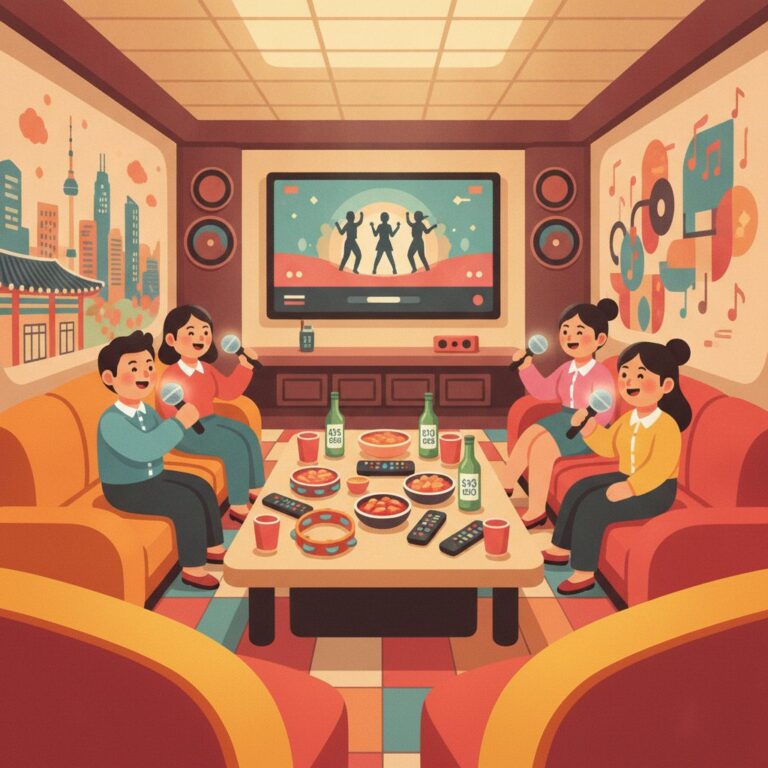
19. PC Bang (피씨방) / Noraebang (노래방) / Jjimjilbang (찜질방)
- Meaning:
- PC Bang (피씨방): PC Room / Internet Cafe (often used for gaming)
- Noraebang (노래방): Karaoke Room
- Jjimjilbang (찜질방): Korean Bathhouse / Spa
- In K-dramas: These are iconic settings for friend gatherings, dates, or even solo escapism. Characters might spend all night gaming at a PC Bang, belt out power ballads at a Noraebang, or relax and confess secrets in a Jjimjilbang.
- As a Korean: These are integral parts of Korean social life and leisure. You can rent a PC at a PC Bang for a few thousand won per hour, sing your heart out in a Noraebang with friends (prices vary based on time and location), or unwind at a Jjimjilbang for an entry fee that usually ranges from ₩10,000 to ₩15,000 for a typical visit. They’re fantastic places to experience local culture firsthand. Please remember to check official sources or local listings for current prices and operating hours when you visit!
Where to Immerse Yourself in K-Dramas and Korean Language
Now that you know some essential kdrama korean words, where can you put your learning to practice and discover even more? The world of K-dramas is just a click away!
Netflix
- How to use: Netflix offers a vast library of K-dramas with subtitles in multiple languages. It’s often the first stop for international fans due to its global accessibility and user-friendly interface.
- Learning tip: Watch with Korean audio and English subtitles first. Then, rewatch favorite scenes with Korean subtitles to connect the spoken word with the written Hangul. Some third-party browser extensions even offer dual-subtitle options, though Netflix itself doesn’t always support it natively.
Viki
- How to use: Viki specializes in Asian dramas and offers an impressive collection of K-dramas, often with faster subtitle releases. Many Viki shows offer a ‘Learn Mode’ feature for Viki Pass subscribers, which is a game-changer for language learners.
- Learning tip: Viki’s ‘Learn Mode’ displays both Korean and your chosen language subtitles simultaneously. You can click on individual Korean words to see their meaning and pronunciation. This interactive tool is incredibly helpful for building vocabulary and understanding grammar in context.
Language Learning Apps & Resources
- How to use: While dedicated apps aren’t strictly for K-dramas, many offer vocabulary builders and grammar lessons that complement your K-drama viewing. Combining structured learning with immersive viewing is incredibly effective.
- Learning tip: Use a translation app like Papago (available on iOS and Android) to quickly look up words you hear repeatedly in K-dramas but don’t quite understand. It’s incredibly accurate for Korean!
Experiencing Korea: Put Your Words to Use!
There’s nothing quite like using your newly learned Korean words in actual conversations. Planning a trip to Korea? Services like Klook can help you book flights, accommodations, and activities, making it easier to immerse yourself. Always remember to check official websites and local providers for the most current information.
- Practical use: Try saying “Annyeonghaseyo” to a shopkeeper, “Gamsahamnida” to your server, or “Juseyo” when ordering your favorite street food. We Koreans love it when visitors engage with our language!
- Cultural immersion: Visiting a real PC Bang, Noraebang, or Jjimjilbang, as mentioned earlier, will give you firsthand experience of these places you’ve only seen in dramas.
Keep Learning and Enjoying!
Learning these kdrama korean words isn’t just about understanding dialogue; it’s about deepening your connection to Korean culture and appreciating the subtle artistry of the shows you love. Each word opens a window into our customs, values, and humor.
So, next time you’re binge-watching your favorite K-drama, listen closely! You’ll be surprised how quickly you start recognizing these terms and understanding the unspoken layers of meaning they carry. Hwaiting, K-drama fans! Your journey into the heart of Korea has only just begun.
More on Streaming & Language Learning
- K-Drama Streaming: Netflix vs. VikiA comparison of Netflix and Viki to help international fans choose the best K-drama streaming platform.
- Learning Korean Through K-DramasA practical guide on using K-dramas and digital tools to actively learn Korean.
- Where to Watch K-dramas Legally OnlineA guide to legal K-drama streaming platforms like Netflix, Viki, Kocowa, and Disney+.
See every Streaming & Language Learning post in our K-DRAMA guide.
Handy toolsKorea travel essentials · Korea Guide Finder
🎟️ Popular tours & experiences in Korea
Klook.comKeep Reading
- Kdrama Release Dates, Seasons, Episodes, Streaming
- Step into Your Favorite K-Drama: Must-Visit Filming Locations Across Korea
- Where to Watch K-dramas Legally Online
- Sageuk K Drama Beginner Guide: Tropes, History, and Shows
🎟️ Popular tours & experiences in Korea
Klook.com