How to Find K-Pop Subway Ads in Seoul
At a glance
- In shortA guide to locating, tracking, and understanding fan-funded K-Pop subway ads in Seoul.
- Best forK-Pop fans visiting Seoul looking for idol subway ads
- WhereSeoul
- Key pointsAds are fan-funded and placed in popular stations like Hongdae and Gangnam. · Formats range from static lightboxes to digital poster panels and LED walls. · Use X with Korean keywords or fan apps to track down specific ad locations.
- Heads-upDigital video clips run in short loops, so you may need to wait for them to appear.
The Phenomenon of Fan-Funded Subway Advertisements
If you walk through Gangnam Station around early December, you will almost certainly pass glowing glass displays featuring members of top boy groups or rising rookie stars. As a Korean who commutes on Seoul Metro Line 2 every weekday, I watch these bright digital billboards change every single week. What started years ago as a niche gesture by dedicated fan masters has transformed into one of the most visible cultural phenomena in South Korea. For international fans visiting Seoul, hunting down a birthday display or comeback support screen for your favorite artist has become a highlight of any trip.
These advertisements are not purchased by entertainment agencies. Instead, they are organized, designed, and funded entirely by fans—often through global crowdfunding campaigns, fan unions, or voting apps. Understanding how to find kpop subway ads seoul stations host requires a bit of insider knowledge, as these displays move quickly and are scattered across hundreds of underground exits across the capital.
✈️ Book your trip to Korea — hotels, flights & more
Top Seoul Subway Stations for K-Pop Ads
While almost any subway station in the Seoul Metropolitan area can host advertisements, fan bases heavily favor specific stations based on foot traffic, proximity to agency headquarters, or overall youth culture appeal. If you want the highest concentration of displays in a single location, these are the primary stations to target.
1. Hongik University Station (Hongdae) – Line 2, AREX, Gyeongui-Jungang Line
Hongdae is the heart of Seoul’s youth and indie culture. Because of the heavy daily foot traffic of teenagers and young adults, fan clubs prioritize the long transfer corridors between Line 2 and the Airport Railroad (AREX) line. The wide glass lightboxes here are almost constantly filled with birthday wishes for popular idols.
2. Gangnam Station & Samseong Station – Line 2
Gangnam and Samseong stations sit in the commercial hubs of southern Seoul. Samseong Station connects directly to Starfield COEX Mall and features massive digital media walls. Fan bases often book large electronic screens at Samseong to guarantee maximum visibility during major award seasons or milestones.
3. Hapjeong Station – Line 2 and Line 6
Hapjeong is located right next to Hongdae and serves as a major transfer point. Historically, it was famous among fans for hosting numerous displays near the former locations of major management companies. It remains a quiet favorite for smaller, highly detailed lightboxes.
4. Express Bus Terminal & Myeongdong Stations
Express Bus Terminal (Lines 3, 7, and 9) is one of the busiest transit hubs in South Korea, offering expansive wall corridors lined with digital poster panels. Myeongdong (Line 4) attracts heavy tourist traffic, making it a primary spot for global star support projects.
| Subway Station | Primary Line | Common Ad Format |
|---|---|---|
| Hongik Univ. | Line 2 / AREX | Lightboxes & Transfer Posters |
| Samseong | Line 2 | Large LED Media Pillars |
| Gangnam | Line 2 | Digital DID Video Panels |
Types of K-Pop Subway Ads You Will Encounter
When searching for displays underground, it helps to know what format you are looking for. Seoul Metro offers several distinct advertising layouts, each varying in size, brightness, and price range.
Wide Color Lightboxes
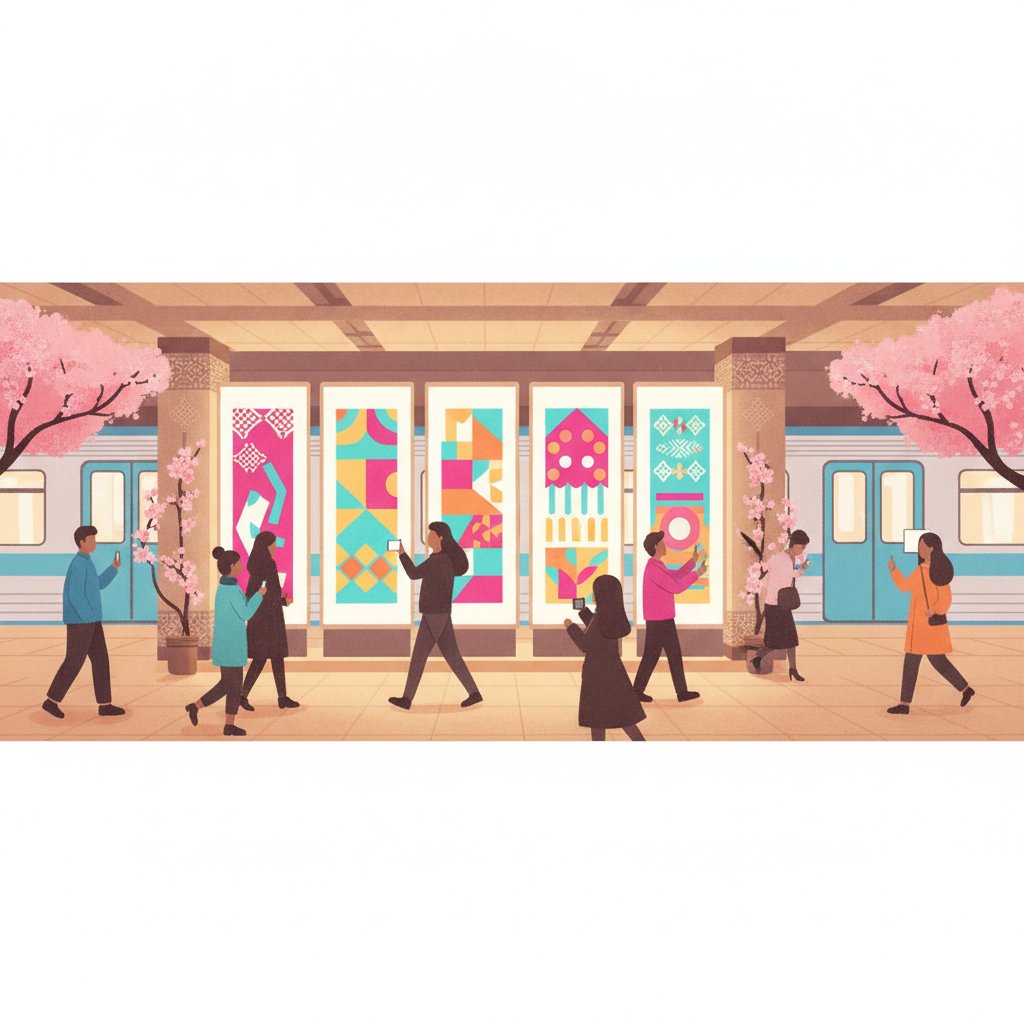
These are traditional static poster displays backlit with bright LED fluorescent lighting. They are usually situated along long walkways or near ticket gates. Because they remain fixed for an entire month, fans love taking slow, clear photos with them without worrying about a video loop fading away.
Digital Poster Panels (DID Columns)
Digital Information Displays (DID) are vertical electronic screens mounted on pillars or lined up in rows along station corridors. These panels display high-definition video clips or rotating slideshows. A single screen typically cycles through multiple advertisers every few minutes, so you may need to stand in front of the panel for a short wait until your idol’s 10-to-15-second clip appears.
Super-Size LED Media Walls
Found primarily in high-density transfer stations like Gangnam, Samseong, and Hongdae, these massive dynamic screens stretch across entire walls or encase square structural pillars. They play high-definition videos with sound in select areas, creating an immersive experience for commuters walking through the station.
Ad Format Decision Guide
| Ad Format | Best For | Display Duration |
|---|---|---|
| Lightbox | Clear, unhurried photos | 30 Days (Static) |
| DID Columns | Dynamic video clips | 7–14 Days (Loop) |
| LED Media Wall | High-impact immersive visuals | 7–14 Days (Loop) |
🎟️ Popular tours & experiences in Korea
Klook.comHow to Track Down Specific K-Pop Subway Ads
Finding a specific ad without prior research can feel like looking for a needle in a haystack. Fortunately, local and international fan unions leave clear digital trails. Here is the step-by-step process we locals recommend using to locate exact displays.
Step 1: Search X (Twitter) with Korean Keywords
X is the primary platform where fan organizers publish exact ad locations. Most fan master accounts post official support announcements roughly one to two weeks before an idol’s birthday or album release. To find these posts, type your idol’s name in Hangul alongside specific Korean search terms in the search bar:
- [Idol Name in Korean] + 생일전광판 (Birthday Billboard)
- [Idol Name in Korean] + 지하철광고 (Subway Ad)
- [Idol Name in Korean] + 응원광고 (Support Ad)
Organizers routinely post graphic maps showing the exact station exit number, pole number, or lightbox coordinate (such as “Spot B-12”). Save these image maps directly to your phone before heading underground.
Step 2: Check Fan Voting Apps
Many advertisements are funded through global fan voting apps such as CHOEAEDOL, FanPlus, Idol Champ, or Higher. When a fan group wins a monthly banner contest on these platforms, the platform publicly releases a notice detailing the exact dates and station locations where the winning ad will run. Check the “Announcements” or “Events” tab within these mobile apps for current event schedules.
Step 3: Utilize Fan-Made Map Directories
During peak idol birth months or major anniversary events, dedicated fans often construct interactive custom Google Maps or Korean web directories aggregating all active ads, birthday cafes, and street banners across Seoul. Searching for “[Idol Name] birthday map” on X will often lead you to these crowdsourced resources.
Understanding Ad Timelines and Typical Cost Ranges
Subway advertisements in Seoul are almost always booked in standardized monthly or weekly increments. Static lightboxes are generally leased for 30 consecutive days, making them the easiest to plan a trip around. Digital media columns and dynamic screen loops are typically booked for shorter periods, ranging from 7 to 14 days.
While prices vary based on station tier and foot traffic, knowing the general scale gives useful context into the effort fans put into these projects:
- Small Digital Poster Loops: Roughly 500,000 to 1,500,000 KRW (~$370 to $1,100 USD) per month depending on station level.
- Standard Wide Color Lightboxes: Typically range from 1,500,000 to 3,500,000 KRW (~$1,100 to $2,600 USD) per month.
- Prime Station LED Walls (Samseong/Gangnam): Premium placements can reach between 4,000,000 and 10,000,000 KRW (~$3,000 to $7,500 USD) or more for multi-screen takeovers.
Real Cost Example
Suppose a fan group plans a project on Line 2. A standard wide color lightbox at Hapjeong Station might cost approximately 2,000,000 to 2,500,000 KRW for a full month. Alternatively, running a 7-day loop on a digital DID column at Gangnam Station could run around 800,000 to 1,200,000 KRW. Keep in mind that prices drift over time depending on advertising agency contracts and station traffic tiers, so verify current figures with ad brokers before relying on them.
Practical Tips for Taking Photos at Subway Ads
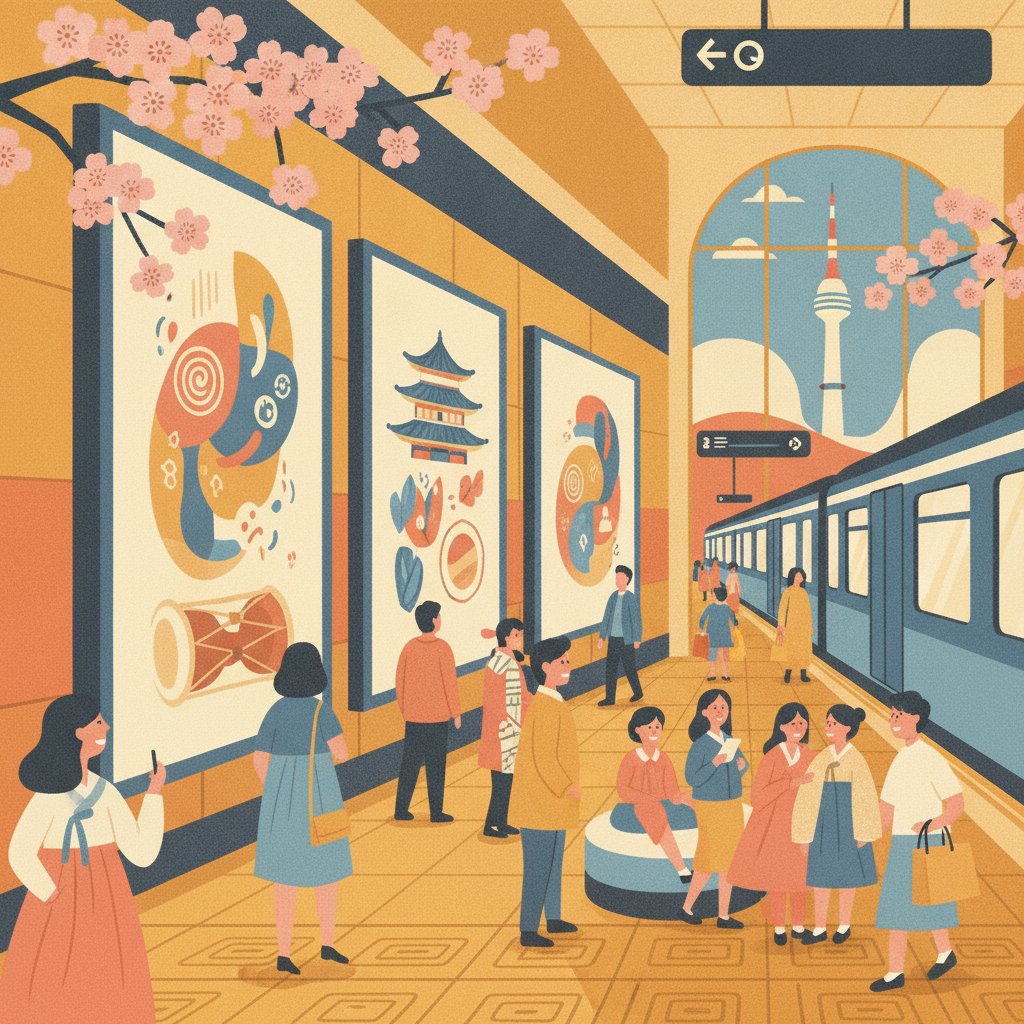
Seoul’s subway system is remarkably efficient, but it gets extremely crowded. To ensure a comfortable experience while taking photos or recording video clips, keep these practical tips in mind:
- Avoid Rush Hours: Do not try to take photos during morning rush hour (7:30 AM – 9:00 AM) or evening rush hour (6:00 PM – 7:30 PM). Corridors fill completely, and stopping in the middle of a walkway can disrupt commuting crowds.
- Watch out for Screen Reflections: Backlit lightboxes and glass panels reflect strong overhead station fluorescent lighting, so angle your camera slightly off-center to capture clean images.
Key Takeaways
- Prioritize Line 2 hubs (Hongdae, Gangnam, Hapjeong, Samseong) for the highest concentration of fan-funded displays.
- Search X (Twitter) using Korean Hangul terms (e.g., idol name + 생일전광판) to obtain location maps with exact exit numbers and pillar coordinates.
- Differentiate between static 30-day lightboxes and 7-to-14-day digital video loops when planning your travel itinerary.
- Visit displays outside rush hours (7:30–9:00 AM and 6:00–7:30 PM) to avoid crowding and commuters.
🎟️ Popular tours & experiences in Korea
Klook.comMore on Seoul K-Pop Hotspots
- Idol-Owned Cafes and Restaurants in SeoulA guide to visiting permanent idol-owned cafes and restaurants in Seoul with practical visitor tips.
- Booking a K-Pop Idol Makeup Salon in SeoulA guide on booking options, costs, and what to expect at K-pop idol makeup salons in Seoul.
- K-pop MV Filming Locations in SeoulA guide to visiting famous K-pop music video filming locations across Seoul using public transit.
See every Seoul K-Pop Hotspots post in our K-POP guide.
Handy toolsKorea travel essentials · Korea Guide Finder
Keep Reading
- Visiting Seoul K-pop Agency Buildings: HYBE, SM, JYP and YG
- K-pop Generations: From 1st Gen to Today
- Seoul K-Pop Dance Classes for Tourists
- A Korean Local’s Noraebang Guide: Your First Time in a Korean Karaoke Room
🎟️ Popular tours & experiences in Korea
Klook.com