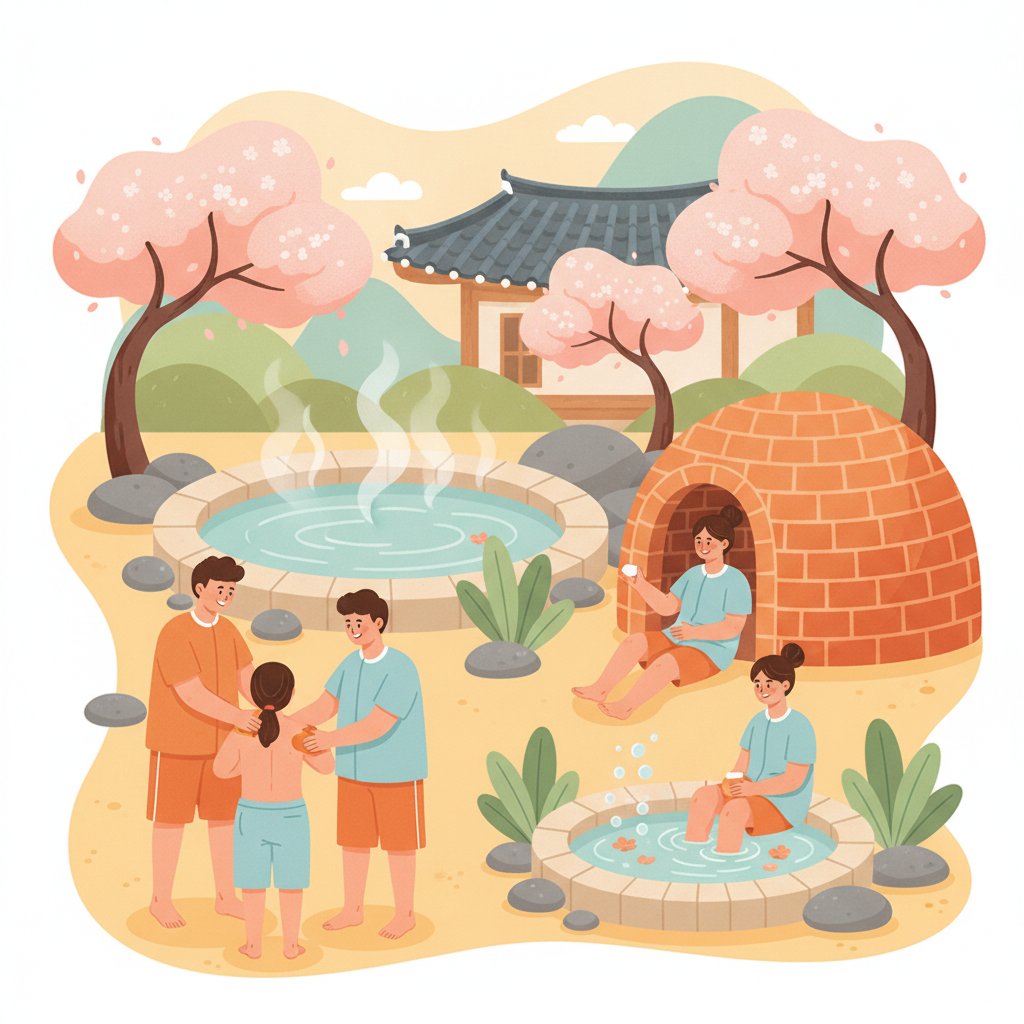
Visiting a Korean Spa: Etiquette Rules for First-Timers
At a glance
- In shortA guide explaining entry steps, bathing rules, and etiquette for first-time visitors to Korean spas.
- Best forFirst-time foreign visitors to Korean spas and bathhouses
- WhereNationwide
- Key pointsThoroughly shower before entering shared bath tubs · Swimwear is strictly prohibited in the sex-segregated baths · Use your wristband key to pay for snacks, services, and lockers
- Heads-upDo not wear swimsuits in the bath area and do not let towels touch pool water.
Overcoming the Initial Naked Shock
The first time I took my American friend to a traditional jjimjilbang near Hongdae, he stood completely frozen at the shoe locker. He was terrified he was going to walk into the wrong area while completely undressed, or accidentally break a unspoken cultural rule within two minutes of stepping inside. His anxiety was understandable. For non-Koreans, entering a Korean bathhouse means walking into an environment that combines communal nudity, specific hygiene customs, and relaxing social spaces into one big complex.
As a Korean who grew up visiting neighborhood baths with my family every winter, I can assure you that local bathhouses are incredibly welcoming once you understand the flow. Korean spa etiquette for foreigners might feel intimidating at first glance, but the rules are straightforward and mostly built around hygiene, shared respect, and collective relaxation. Whether you are planning a visit to a massive modern facility like Spa Land in Busan or a classic multi-story neighborhood jjimjilbang in Seoul, here is everything you need to know to navigate your first visit like a local.
✈️ Book your trip to Korea — hotels, flights & more
Step 1: Check-in, Shoes, and the Wristband Key
When you walk through the front entrance, you will approach the reception desk (counter). Entry fees generally range from 12,000 to 25,000 won (roughly $9 to $20 USD), depending on the location, time of day, and whether you plan to stay overnight. Premium luxury thermal spas like Aquafield or Spa Land usually cost around 20,000 to 30,000 won ($15 to $23 USD) for a four-hour pass, and tickets for these higher-end spots can often be booked in advance on platforms like Klook.
At the front desk, the receptionist will hand you a few items:
- A key wristband (or electronic key tag) carrying a specific number.
- A clean set of lightweight cotton pajamas (known as jjimjilbang-bok).
- Two small hand towels (note: women receive two small hand towels at check-in, while men usually find unlimited small towels stacked inside the men’s locker room).
Your very first action inside the building is to take off your outdoor footwear and store it in a small shoe locker matching the number on your key wristband. Once you lock your shoes, you keep that wristband on your wrist or ankle at all times. This key operates your main clothing locker upstairs and also acts as a digital charge card for buying snacks, booking body scrubs, or using massage chairs inside the venue. You simply pay your accumulated tab at the reception counter when you check out.
Step 2: Entering the Sex-Segregated Baths (Mokgyang-tang)
After shoe storage, you will head to your respective gender area: Nam-tang for men and Yeo-tang for women. This is where you remove your clothes and enter the locker room area. Find the locker that corresponds to your wristband number, store your clothes, personal items, and phone inside, and lock it tight.
Here comes the golden rule of Korean bathhouse culture: swimwear is strictly prohibited in the bathing area. You must be completely naked when entering the hot tubs and saunas in the segregated bath section. Wearing a swimsuit, underwear, or gym clothes into the bath area is considered unhygienic by local standards.
If nudity makes you feel self-conscious, remember that nobody inside is paying attention to you. Korean people view the bathhouse as a space for physical cleansing and mental stress relief. People of all ages and body types are simply focusing on their own relaxation.
🎟️ Popular tours & experiences in Korea
Klook.comStep 3: Crucial Shower and Bathing Etiquette
Before you even think about stepping your foot into a warm tub, you must take a thorough shower. This is the single most important rule of Korean spa etiquette for foreigners. Stepping into a shared tub without washing yourself first is considered a major breach of bathhouse manners.
Here is the proper shower routine to follow:
- Walk over to the shower stalls or the low sitting shower stations equipped with plastic stools and basins.
- Sit on a stool and wash your entire body and hair thoroughly using soap and shampoo. (Basic bar soap is almost always provided free, but you should bring your own travel-sized shampoo, conditioner, and body wash, or buy small pouch samples at the front desk for about 1,000 won / $0.75 each).
- Rinse off all soap suds completely before walking toward the pools.
- If you have long hair, tie it up neatly so it does not touch or float in the bath water.
When you are ready to soak, enter the tubs slowly. You will notice temperatures listed on boards above each pool, ranging from cool plunge pools around 18°C (64°F) to steaming medicinal tubs hovering around 42°C (107°F). Take your small hand towel with you, but do not let your towel touch the bath water. Locals usually fold their small towel and balance it gracefully on top of their head while soaking, or place it on the ledge beside the tub.
Getting a Seshin: The Famous Korean Body Scrub
If you want the full Korean spa experience, treat yourself to a professional body scrub, known locally as seshin. You will see professional scrubbers working on padded tables in a corner of the bath area (wearing black underwear for women scrubbers, or shorts for men scrubbers).
To get a scrub, you can sign your name or locker number on the clipboard list near the scrubbing area. A basic full-body scrub typically costs between 30,000 and 60,000 won (approximately $23 to $45 USD) for a 30-to-40-minute treatment, paid via your wristband key.
Before your scrub, you must soak in warm water for at least 20 to 30 minutes to soften your skin. When your number is called, you lie down on the vinyl table, and the scrub professional will use textured green Italian towels to vigorously exfoliate your entire body. You will see rolls of gray dead skin come off—which can be shocking if you have never seen it before—but your skin will feel amazingly smooth afterward.
Step 4: Dressing Up for the Co-Ed Jjimjilbang Floor
Once you are finished soaking, scrubbing, and rinsing off in the bath section, dry yourself completely with your hand towels in the locker room. Put on the provided cotton uniform (t-shirt and shorts). Now you are ready to head to the common area known as the jjimjilbang floor.
This co-ed floor is open to everyone—families, couples, friends, and solo visitors. It functions as a public lounge filled with specialized heated rooms, food counters, entertainment areas, and resting zones.
Step 5: Heated Rooms, Iconic Snacks, and Relaxation
On the co-ed floor, you will find various themed sauna rooms lined with traditional materials like yellow clay (hwangto), Himalayan salt crystals, jade, or charcoal. Room temperatures range from mild warming rooms (35°C / 95°F) to intense kiln rooms (hanjeongmak) that exceed 80°C (176°F).
Slip off your slippers before entering any heated room. Lie down on the woven floor mats, rest your head on a wooden pillow, and let the heat relax your muscles. When you get too hot, step into the ice room (eoreum-bang) to cool down your body temperature.
🎟️ Popular tours & experiences in Korea
Klook.comMust-Try Jjimjilbang Food and Drinks
Sweating in heated saunas will naturally make you hungry and thirsty. Head over to the snack bar (maesh점) on the common floor. To order, scan your wristband key at the counter.
- Sikhye (Sweet Rice Drink): A cold, naturally sweet fermented rice beverage served in a giant plastic jug filled with ice. It usually costs around 3,000 to 5,000 won ($2.20 to $3.80) and is the ultimate refresher after a hot sauna session.
- Maekbanseok Gyeran (Baked Eggs): Slow-baked eggs with a light brownish color and a slightly nutty, savory flavor. They are usually sold in sets of three for about 2,000 to 3,500 won ($1.50 to $2.70). Local tradition dictates gently cracking the eggshell on your friend’s head—though tapping it on a wooden table works just as well!
- Korean Comfort Meals: If you want a full meal, head to the restaurant section for classic dishes like miyeok-guk (seaweed soup), sundubu-jjigae (soft tofu stew), or tonkatsu (pork cutlet), which typically cost 8,000 to 14,000 won ($6 to $11 USD). Seaweed soup is especially popular at bathhouses because it is light, nutrient-dense, and deeply hydrating.
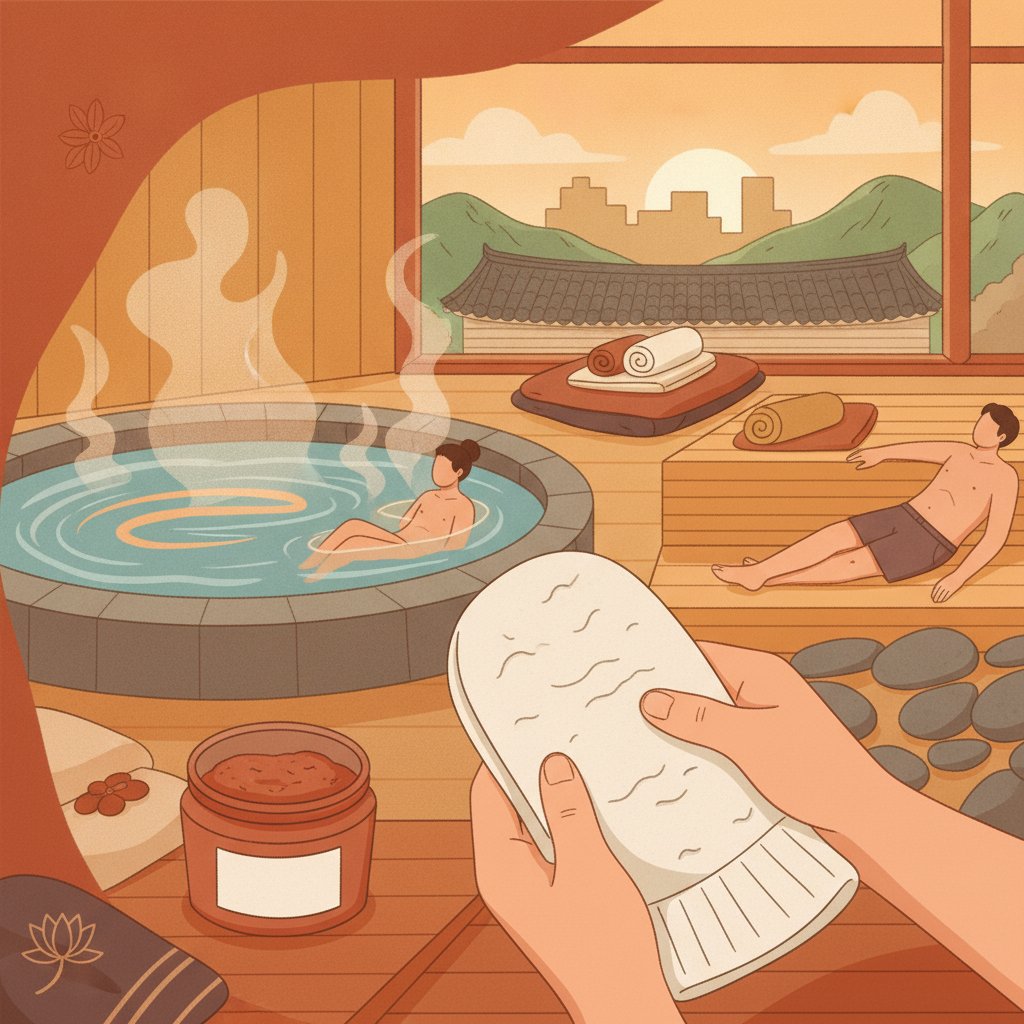
Quick Summary of Essential Etiquette Rules
| Action | Etiquette Rule | Why It Matters |
|---|---|---|
| Showering | Wash thoroughly before tub entry | Keeps shared bath water clean for everyone |
| Swimwear | No swimsuits in gender baths | Standard hygiene and local custom |
| Towel Use | Keep small towel out of bath water | Prevents soap residue from entering pools |
| Footwear | Remove shoes at entry/sauna doors | Maintains clean, comfortable floor surfaces |
| Noise Level | Keep voices low in sleeping zones | Respects shared rest and quiet hours |
FAQ
Can I wear a swimsuit inside a Korean bathhouse?
No, swimsuits are not allowed inside the sex-segregated bathing areas (Mokgyang-tang). You must be completely naked to enter the hot and cold pools. However, in the co-ed relaxation areas and heated sauna rooms, everyone wears the matching cotton uniform (t-shirt and shorts) provided at check-in.
Are tattoos allowed inside Korean jjimjilbangs?
Yes, most modern jjimjilbangs and public bathhouses in South Korea allow visitors with tattoos. Unlike Japan, where tattoos are often banned in public baths, Korean spas generally do not restrict entry for tattooed guests. If you have very large or full-body tattoos, you might occasionally get curious glances from older patrons, but it is rarely an issue.
How do I pay for food, scrubs, and amenities inside?
You do not need to carry physical cash or credit cards inside the spa. All purchases—including snacks, beverages, body scrubs, massage chairs, and meals—are charged by scanning your wristband locker key. You settle your final bill at the reception desk when leaving the building.
More on Practical Travel Tips
- How to Eat Alone in SeoulA practical guide to navigating solo dining, K-BBQ hacks, and local restaurant rules in Seoul.
- Tipping and Haggling in South KoreaExplains tipping customs, free 'service' gestures, and where haggling is allowed in South Korea.
- Korean Convenience Store Snack GuideA guide to popular snacks, price estimates, DIY food hacks, and amenities at Korean convenience stores.
See every Practical Travel Tips post in our K-Travel guide.
Handy toolsKorea travel essentials · Trip budget calculator · Korea Guide Finder
Keep Reading
- Nemamdaero Hongdae (내맘대로폰케이스): Design Your Own Case
- Han River Instant Ramyeon Guide: Picnic Steps and Tips
- Gilsang Ceramics: Clay Crafting and BTS Memories in Seoul
- How to Buy a T-Money Card in Seoul and Ride Public Transit
🎟️ Popular tours & experiences in Korea
Klook.com