Korean Dining Etiquette in Seoul & Beyond
This post contains affiliate links. As an Amazon Associate, we earn from qualifying purchases at no extra cost to you.
At a glance
- In shortA guide to seating, utensils, communal dining, and showing respect to elders in Korean restaurants.
- Best forTravelers and foreigners dining out in Korea
- WhereNationwide
- Key pointsUse spoons for rice and soup, and chopsticks for side dishes and mains. · Wait for elders to eat first and pour or receive drinks with both hands. · Share communal dishes using provided serving utensils rather than personal ones.
- Heads-upNever stick chopsticks upright in rice, as it resembles funeral incense rites.
Annyeonghaseyo, Food Explorers! Let’s Talk Korean Dining Etiquette
As a Korean, there’s nothing I love more than sharing our incredible food culture with visitors. From sizzling Korean BBQ to comforting bowls of bibimbap and spicy tteokbokki, our cuisine is a feast for the senses. But beyond the delicious flavors, there’s a beautiful, often unspoken, language that governs how we eat together: Korean dining etiquette. Understanding these nuances isn’t just about avoiding a faux pas; it’s about showing respect, connecting with locals, and truly immersing yourself in the Korean way of life. Trust me, we notice the small things, and when you make an effort, it truly warms our hearts!
This guide is designed to equip you with the knowledge to confidently dine in any Korean eatery, whether it’s a bustling market stall or a cozy neighborhood restaurant. You won’t find specific restaurant names, prices, or opening hours here, as these can change rapidly. Instead, you’ll gain the general knowledge needed to navigate various dining scenarios. So, let’s dive in and learn how to eat like a true local!
✈️ Book your trip to Korea — hotels, flights & more
Before You Even Sit Down: The First Impressions
Finding Your Spot and Getting Seated
- Waiting for Seating: Unlike some Western countries where you might always wait to be seated by a host, in many casual Korean restaurants, especially during busy times, you might just find an open table and sit down. If it’s a popular spot with a queue, look for a waiting list near the entrance or ask a staff member, "여기 기다려야 해요?" (yeogi gidaryeoya haeyo? – Do I need to wait here?). Don’t be afraid to point to an empty table and politely ask "앉아도 돼요?" (anjado dwaeyo? – Can I sit here?).
- Shoes Off, Please! Some traditional Korean restaurants, particularly those with floor seating (좌식, jwaseok), will require you to remove your shoes before entering. This is done to keep the floor clean, as people sit directly on it, and it’s a sign of respect for the space. Look for a shoe rack or a designated area near the entrance. If you see others taking off their shoes, follow suit. Your shoes will be safe in the designated area.
- Calling for Service: Once seated, you might find a call button on your table or wall (often a small black or white button). Press it once to summon a server. If there’s no button, a simple "여기요!" (yeogiyo! – literally "here!" or "excuse me!") with a raised hand will do the trick. A polite "저기요!" (jeogiyo!) also works.
Ordering Like a Pro: What to Know About Korean Menus
- Communal Dining is Key: Many Korean dishes are designed to be shared. When ordering, it’s common to choose one or two main dishes for the entire table rather than each person ordering an individual plate. For example, for Korean BBQ (삼겹살, samgyeopsal) or stews like budaejjigae (부대찌개), you usually order per portion for the table. Don’t be surprised if the menu lists quantities like "2 servings minimum" for certain dishes. This approach fosters togetherness and allows everyone to sample a variety of flavors.
- Understanding Banchan (Side Dishes): When you order your main dish, a colorful array of small side dishes called banchan (반찬) will automatically appear. These are usually refillable and free of charge! They’re meant to complement your meal, offering a balance of flavors and textures. So feel free to dig in! If you want more, simply ask for "리필 해주세요" (ripil haejuseyo – Please refill).
- Don’t Forget the Soju or Makgeolli: In many dining situations, especially with savory main dishes, alcoholic beverages like soju (소주) or makgeolli (막걸리) are an integral part of the experience. It’s very common to order these with your meal. Soft drinks and water are also readily available.
At the Table: The Heart of Korean Dining Etiquette
This is where the magic happens, and also where a little knowledge goes a long way. These gestures show respect and appreciation for your dining companions and the meal itself.
Mastering Your Utensils: Spoon and Chopstick Rules
Koreans typically use metal chopsticks (젓가락, jeotgarak) and a metal spoon (숟가락, sutgarak). Unlike some other East Asian cultures, the spoon plays a very prominent role here.
- Spoon for Rice and Soup: Always use your spoon for rice (밥, bap) and any liquid dishes like soup (국, guk) or stew (찌개, jjigae). You won’t typically lift your rice bowl to your mouth; instead, scoop the rice with your spoon. This is a key difference from how rice is eaten in some other Asian countries.
- Chopsticks for Sides and Main Dishes: Use your chopsticks for banchan (side dishes) and solid main dishes. This clear distinction between spoon and chopstick usage is quite ingrained.
- Don’t Hold Both Simultaneously: As a Korean, I was taught never to hold both the spoon and chopsticks in the same hand at the same time. Use one, then put it down and pick up the other as needed.
- No Sticking Chopsticks Upright: This is perhaps one of the most crucial rules. Never, ever, stick your chopsticks upright into your bowl of rice. This practice resembles incense offered at ancestral rites and is deeply associated with funerals. It’s considered extremely bad luck and disrespectful. Lay them flat on your bowl or on a chopstick rest provided.
- No Pointing with Chopsticks: Just like with your fingers, it’s impolite to point at people or dishes with your chopsticks. Always use your hand to gesture if necessary.
Sharing is Caring: Communal Eating Practices
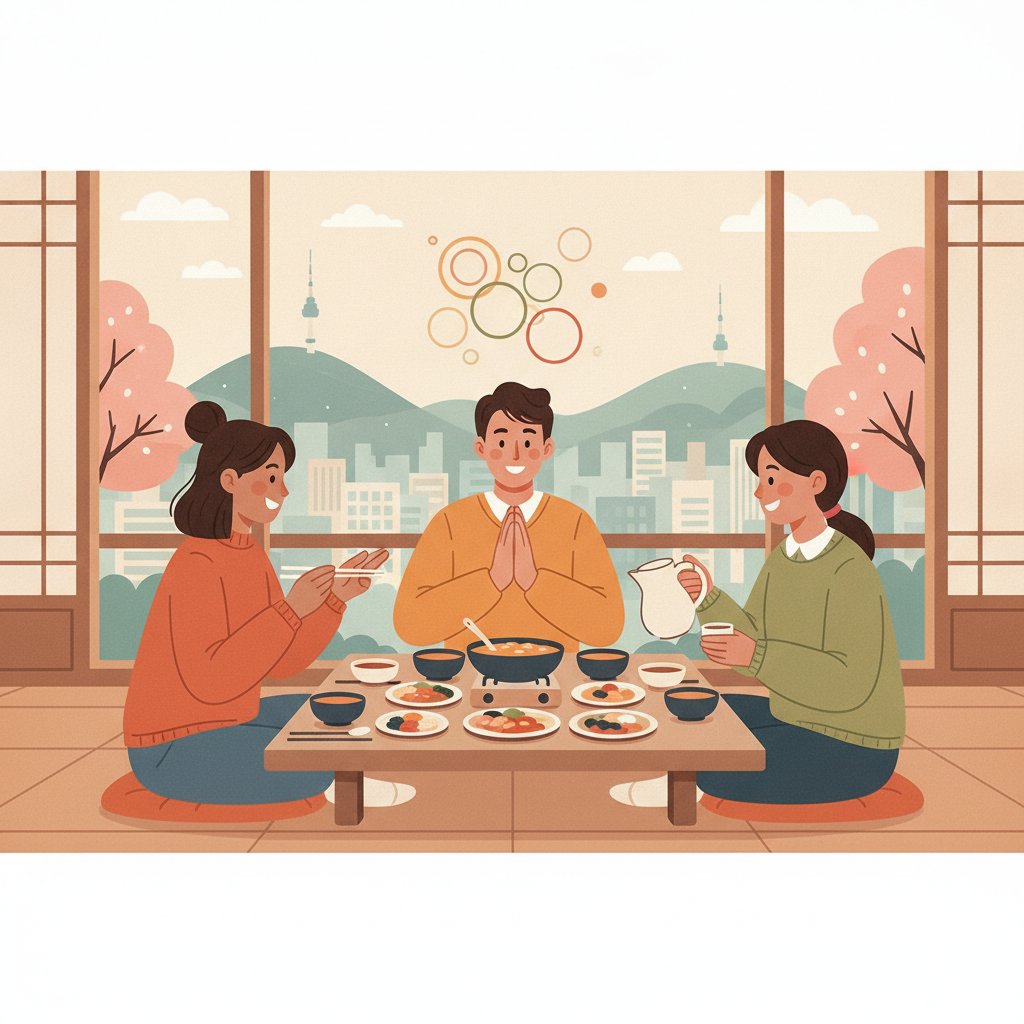
Korean dining is a deeply communal experience. Most dishes are placed in the center of the table for everyone to share, fostering a sense of community and generosity.
- Banchan are for Everyone: Those delicious side dishes? They’re for the whole table. Help yourself freely! You don’t need to ask permission each time.
- Communal Main Dishes: For things like large stews or hot pots, always use the serving spoon or tongs provided to put a portion into your own bowl. Do not eat directly from the communal pot with your personal utensils. If serving utensils aren’t readily available (less common now), you can use your own spoon, but try to be discreet and hygienic. When sharing BBQ, tongs are usually provided to cook and cut the meat, and then everyone takes pieces directly to their plate.
- Don’t Be Shy: It’s perfectly fine to reach across the table for a dish, as long as you’re not inconveniencing others or reaching over someone’s face. However, if a dish is far away, you can politely ask someone closer to pass it to you: "이거 좀 건네주세요" (igeo jom geonne juseyo – Please pass this).
Respect for Elders: A Cornerstone of Korean Culture
Age hierarchy is very important in Korea, and this is clearly reflected at the dining table. Observing these customs shows immense respect.
- Waiting for Elders to Eat: Always wait for the oldest person at the table to pick up their spoon or chopsticks and begin eating before you start your meal. This is a fundamental sign of respect.
- Serving Elders First: If you’re pouring drinks or serving a dish, always offer to the eldest person first, then move down in age order. This applies to refilling their glass or offering the first portion of a new dish.
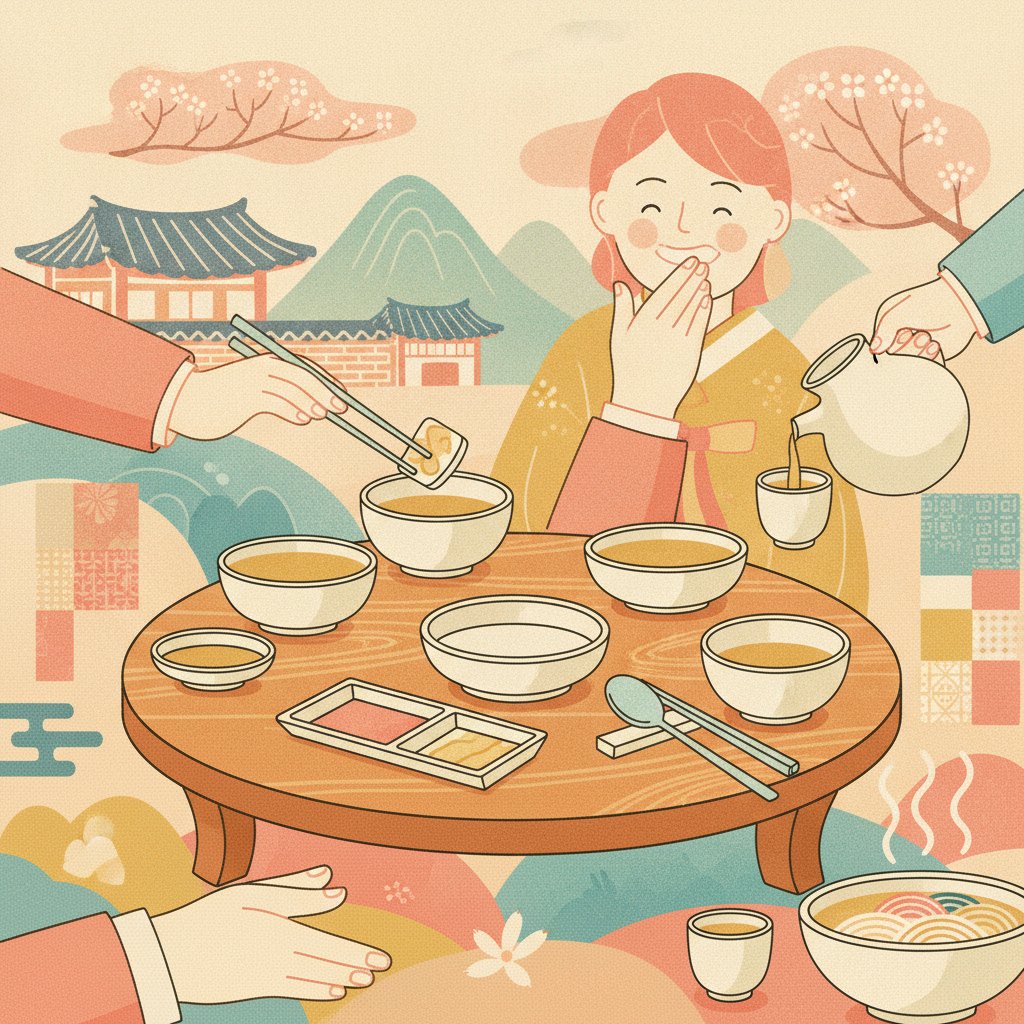
- Receiving Drinks: If an elder offers you a drink, especially alcohol, accept it with both hands. When receiving a cup, hold it with both hands. When an elder pours for you, it’s polite to slightly turn your head away and cover your mouth with your free hand while taking a sip, especially if it’s your first time drinking with them or in a more formal setting.
- Pouring Drinks for Elders: When you pour a drink for an elder, hold the bottle with both hands as a sign of respect. Ensure their glass is never empty.
General Table Manners: The Little Things That Matter
- Eating Speed: Try to match the pace of your dining companions. It’s generally not polite to eat too quickly or too slowly compared to others, especially if it’s a shared meal.
- Slurping is (Sometimes) Okay: While loud slurping might be frowned upon in some Western cultures, a moderate slurp when enjoying noodles or soup can actually signify enjoyment in Korea! However, don’t go overboard; it’s more about appreciating the food than making excessive noise.
- Chewing with Your Mouth Closed: This is a universal good manner and applies in Korea as well.
- Minimize Phone Use: Try to keep your phone use to a minimum during meals. Engage with your dining companions. If you absolutely need to take a call, excuse yourself from the table.
- Don’t Clear Your Plate Completely (Traditionally): While it’s good to eat what you take, traditionally, leaving a tiny bit of rice or a piece of banchan could subtly indicate that you were satisfied and the host provided more than enough. However, this is becoming less strictly observed, especially among younger generations, and cleaning your plate entirely is also perfectly fine. Don’t feel pressured to finish everything if you’re truly full.
- Table Noise: Keep conversations at a reasonable volume. Most Korean restaurants can be lively and bustling, but avoid shouting.
🎟️ Popular tours & experiences in Korea
Klook.comThe End of the Meal: Wrapping Things Up
Getting the Bill and Paying
- Calling for the Bill: When you’re ready to pay, press the call button (if available) or politely say "계산해주세요" (gyesan haejuseyo – Please bring the bill) or "여기 계산이요" (yeogi gyesaniyo – Bill here, please). The staff will usually bring the bill to your table or instruct you to pay at the counter near the exit.
- Tipping is Not Customary: This is a big one for many foreign visitors! Tipping is generally not expected or practiced in Korean restaurants. The service charge is usually included in the prices, or simply not part of the culture. Attempting to leave a tip might even cause confusion or awkwardness, as it’s not understood as gratitude in the same way. So, just pay the listed price!
- Who Pays? In Korea, it’s quite common for one person to treat the entire group, especially if there’s an elder present or someone wants to show generosity. Don’t always expect to split the bill evenly like you might in some other countries. If someone insists on paying, it’s polite to offer to pay next time or treat them to coffee afterwards. Sometimes people will engage in a good-natured "fight" over who gets to pay the bill – it’s a cultural dance!
Leaving the Restaurant
- Saying Goodbye: A simple nod or a quick "잘 먹었습니다" (jal meogeosseumnida – I ate well/thank you for the meal) to the staff on your way out is always appreciated, though not strictly required.
A Quick Note on Specific Situations
Korean BBQ Etiquette
Dining at a Korean BBQ joint (고깃집, gogitjip) is a quintessential experience, and it comes with its own set of fun norms:
- Cooking Your Own Meat: Often, you’ll cook the meat yourself on a grill embedded in your table. Don’t be shy! Use the tongs and scissors provided to flip and cut the meat into bite-sized pieces. Sometimes, particularly at more upscale places or if you look a bit lost, staff might help you.
- Sharing Tongs: Use the communal tongs to handle raw meat on the grill, but then swap to your personal chopsticks to pick up the cooked meat to eat. It’s a good practice not to use the raw-meat tongs for cooked meat for hygiene reasons.
- Ssam (Wraps): It’s common to make a "ssam" (쌈), a wrap with lettuce or perilla leaves, grilled meat, garlic, ssamjang (spicy dipping paste), and other additions. Make it bite-sized enough to eat in one go. You can also just eat the meat by itself!
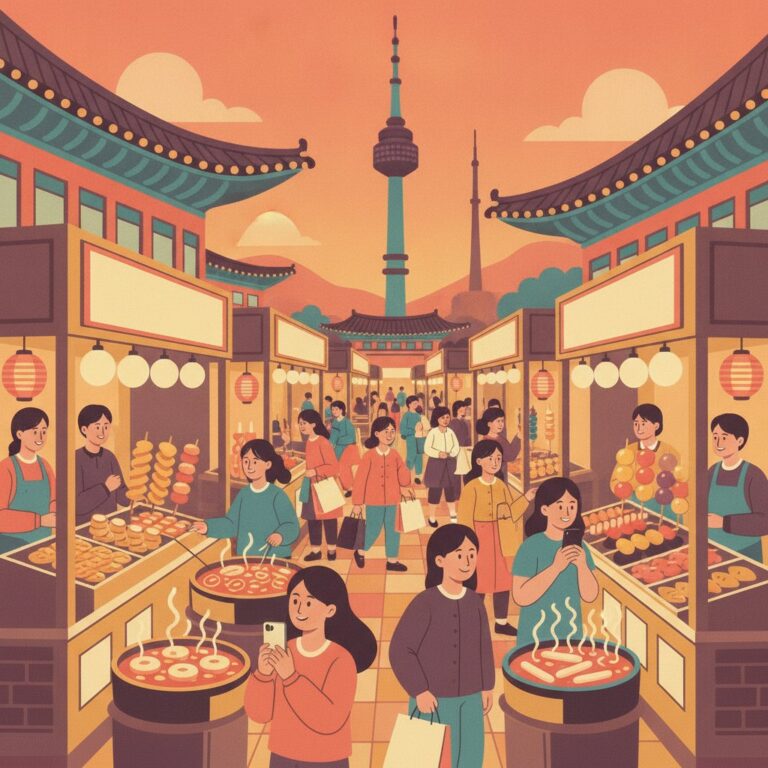
Street Food (포장마차, Pojangmacha & 길거리 음식, Gilgeori Eumsik)
Street food offers a more relaxed vibe, but still a few things to keep in mind:
- Pay as You Go or After: At some street food stalls (like a tteokbokki stall), you might order and pay immediately. At others, especially pojangmacha (tent restaurants), you might order several items and pay at the end. Just observe what others are doing.
- Stand-Up or Bench Seating: Most street food is meant to be eaten quickly, often standing up or on small stools. Don’t linger too long if others are waiting, especially in popular spots.
- Bring Cash: While many places accept cards, smaller street vendors often prefer or only accept cash. It’s always a good idea to have some Korean won (₩) on hand for these delicious spontaneous encounters.
Embrace the Korean Dining Experience!
Ultimately, while these guidelines are helpful, remember that Koreans are incredibly welcoming and understanding. No one expects you to be perfect, and a sincere effort to understand our customs goes a long way. The most important "rule" is to enjoy the food, the company, and the vibrant atmosphere.
So, go forth, explore Seoul and beyond’s culinary delights, and dine with confidence and respect. You’ll not only savor incredible meals but also create lasting memories and deeper connections. Happy eating, or as we say, 맛있게 드세요 (masitge deuseyo – Enjoy your meal)!
More on Dining Etiquette & Culture
- GS25 & CU Korean Convenience Store Food GuideA practical guide to popular food picks, payment options, and store facilities at GS25 and CU in Korea.
- Guide to Korean Kimchi Varieties Beyond CabbageAn introduction to popular Korean kimchi types beyond napa cabbage, including their flavor profiles and pairings.
- Korean Spicy Foods Ranked by Spice LevelA guide ranking Korean spicy dishes from mild to extreme with tips to survive the heat.
See every Dining Etiquette & Culture post in our K-Food guide.
Handy toolsKorea travel essentials · Korea Guide Finder
🎟️ Popular tours & experiences in Korea
Klook.comKeep Reading
- Pyunkang Yul Flagship & Tea house (편강 율 플래그십&티하우스): A Local’s Guide
- Banchan: Understanding Korea’s Delicious Side Dishes
- Korean BBQ for Beginners: A Local’s Guide to Ordering & Grilling Like a Pro
- BBQ Yul (고깃집열): A Local’s Guide to Seoul’s Aged Pork Perfection
🎟️ Popular tours & experiences in Korea
Klook.com