Types of Korean Tteokbokki From Classic Street Food to Rose
This post contains affiliate links. As an Amazon Associate, we earn from qualifying purchases at no extra cost to you.
The Sensory Memory of Korean Comfort Food
On damp, chilly autumn afternoons growing up in Seoul, my schoolmates and I would rush straight to the stainless-steel street cart parked right outside our school gate. The stall owner stirred a massive rectangular tray filled with bubbling crimson sauce, thick cylindrical rice cakes, and folded fish cakes glistening under bright light bulbs. That humble paper cup of chewy rice cakes drenched in sweet, fiery sauce cost only a pocketful of coins, but it carried enough heat to power us through hours of evening study sessions. As a Korean, tteokbokki is far more than popular street food—it is the ultimate culinary backdrop of our childhood, adolescence, and late-night cravings.
While international fans often recognize the iconic glossy red street-style dish seen in K-dramas, Korea offers an astonishing variety of this classic dish. Exploring the different types of korean tteokbokki reveals a rich landscape of regional traditions, historical adaptations, and modern food trends that reflect how Korean palates have evolved over decades.
✈️ Book your trip to Korea — hotels, flights & more
The Great Texture Debate: Wheat vs. Rice Cakes
Before examining sauces and toppings, every local knows that any conversation about tteokbokki begins with the rice cake itself. The foundational ingredient determines how sauce clings to the dish and alters every bite’s chewiness.
- Mil-tteok (Wheat Rice Cakes): Made primarily from wheat flour, mil-tteok was popularized during the mid-20th century when wheat flour was widely available through foreign aid. These cakes are slender, pale, and exceptionally springy. Wheat cakes absorb flavor rapidly while simmered, making them the preferred choice for soupy tteokbokki and long-simmered street food stalls.
- Ssal-tteok (Rice Cakes): Crafted from glutinous or non-glutinous rice flour, ssal-tteok is denser, thicker, and deeply satisfying to chew. They hold a subtle, natural rice sweetness and retain their structural integrity in heavy, reduced sauces. Many traditionalists insist that pure rice cakes represent the most authentic texture.
When you visit a local snack shop (bunsikjip), you will often see locals specifying their preference, as texture plays just as important a role as spice level in defining the dish.
Classic Street Stalls and Soupy Favorites
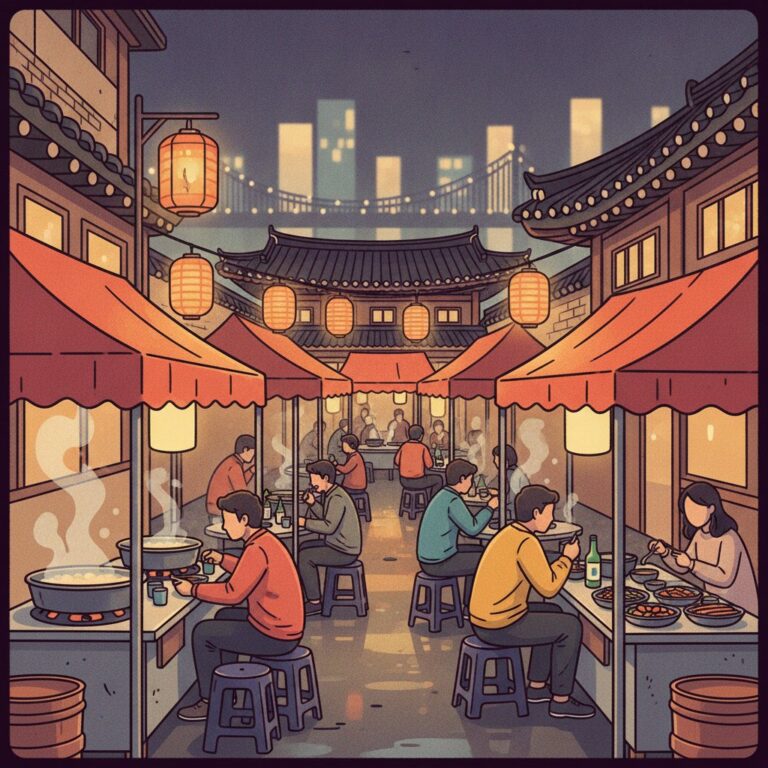
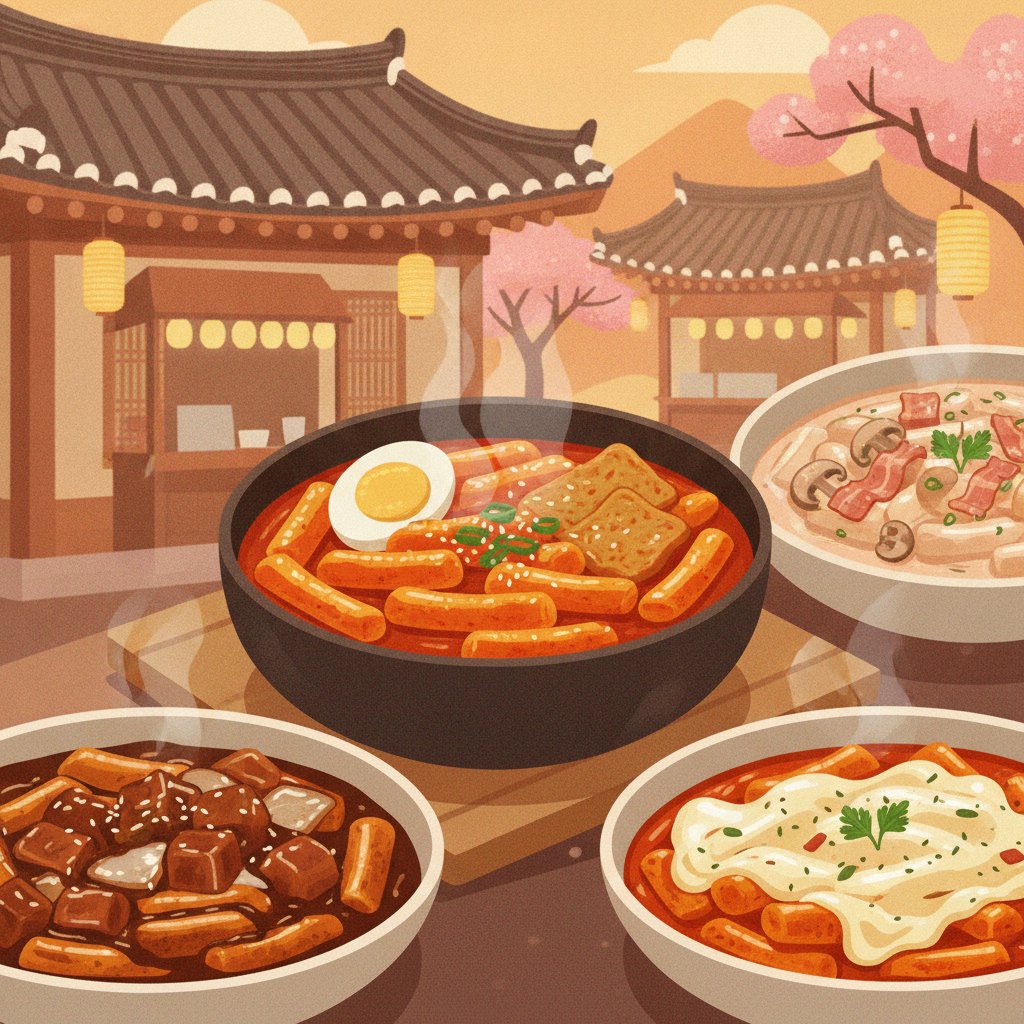
The standard street-style variation remains the baseline against which all other styles are measured. Prepared in large batch pans at pojangmacha (tented street stalls) or neighborhood eateries, classic tteokbokki features a balance of gochujang (fermented red chili paste), gochutgaru (chili powder), corn syrup, and dashi stock brewed from dried anchovies and kelp.
Bunsikjip Style
This traditional neighborhood version relies on a rich, reduced gravy. The sauce simmers for hours alongside triangular pieces of eomuk (fish cake) and scallions. As the sauce thickens throughout the afternoon, it becomes intensely glossy, coating each rice cake in a sweet and medium-spicy glaze.
Gukmul Tteokbokki (Soup Tteokbokki)
Unlike reduced street sauces, gukmul tteokbokki features a generous broth that resembles a light spicy soup. Served in wide bowls, it is designed to be eaten with a spoon so you can sip the broth and rice cakes simultaneously. This style routinely includes extra toppings such as hard-boiled eggs, fried dumplings, and crispy fried seaweed rolls (gimmari), which soak up the flavorful broth without becoming mushy.
🎟️ Popular tours & experiences in Korea
Klook.comExploring Regional Tteokbokki Styles Across Korea
Traveling across the South Korean peninsula reveals distinct local interpretations shaped by regional produce, historical markets, and regional flavor preferences.
Busan Style: Thick Garaetteok and Giant Fish Cakes
In the southern port city of Busan, tteokbokki takes on a bold, hearty form. Rather than slender bite-sized pieces, Busan-style tteokbokki utilizes full-length, freshly extruded garaetteok directly from neighborhood rice mills. These thick logs are simmered whole alongside oversized fish cake skewers in a dark, rich sauce flavored with sweetened radish strips and concentrated kelp broth. Vendors slice the large rice cakes into chunks using kitchen shears right before serving.
Daegu Style: Black Pepper and Curry Fire
Daegu is famous throughout Korea for its love of extreme spice. Local tteokbokki variations here often bypass heavy amounts of sugar or corn syrup in favor of coarse black pepper, pungent red chili powder, and subtle curry powder. The result is a sharp, aromatic heat that hits the back of the throat instantly, often served alongside crispy fried fish cakes for dipping.
Seoul Sindang-dong Style: Tabletop Jeolgol
In central Seoul, the Sindang-dong neighborhood has been renowned since the 1950s for pioneering tabletop tteokbokki (jeolgol tteokbokki). Guests sit around gas burners holding shallow stainless pots filled with uncooked rice cakes, thin wheat noodles (ramyeon and jjolmyeon), fried dumplings, fish cakes, and boiled eggs. The signature element is the broth base, which mixes traditional red chili paste with chunjang (black bean paste), creating a deep, savory, mahogany sauce that thickens as it boils at your table.
Tongin Market Style: Gireum Tteokbokki (Oil Tteokbokki)
Tucked away near Gyeongbokgung Palace in Seoul, Tongin Market preserves an older mid-century style that eliminates soup entirely. Mil-tteok is tossed with chili flakes, sesame oil, and garlic, then flash-fried on a flat iron griddle. The exterior crisps up into a crackling, smoky crust while the interior stays tender and chewy. A non-spicy soy sauce variation is also available for visitors who prefer savory garlic notes over chili heat.
Royal Origins: Gungjung Tteokbokki
Long before chili peppers were introduced to the Korean peninsula during the late Joseon Dynasty, tteokbokki existed as an elegant court dish served exclusively to royalty. Known as gungjung tteokbokki or ganjang tteokbokki, this historical recipe features no spice whatsoever.
Thick rice cakes are stir-fried with thinly sliced beef, shiitake mushrooms, carrots, bell peppers, and onions in a delicate sauce made from artisanal soy sauce, toasted sesame oil, garlic, and a touch of honey. Topped with toasted pine nuts and thin egg strips (jidan), it provides a sophisticated, savory flavor profile that highlights high-quality ingredients rather than chili heat.
Modern Variations and Viral Culinary Trends
In recent years, Korean food culture has experienced a dramatic expansion of creative variations, heavily driven by social media, delivery culture, and modern taste preferences.
Rosé Tteokbokki
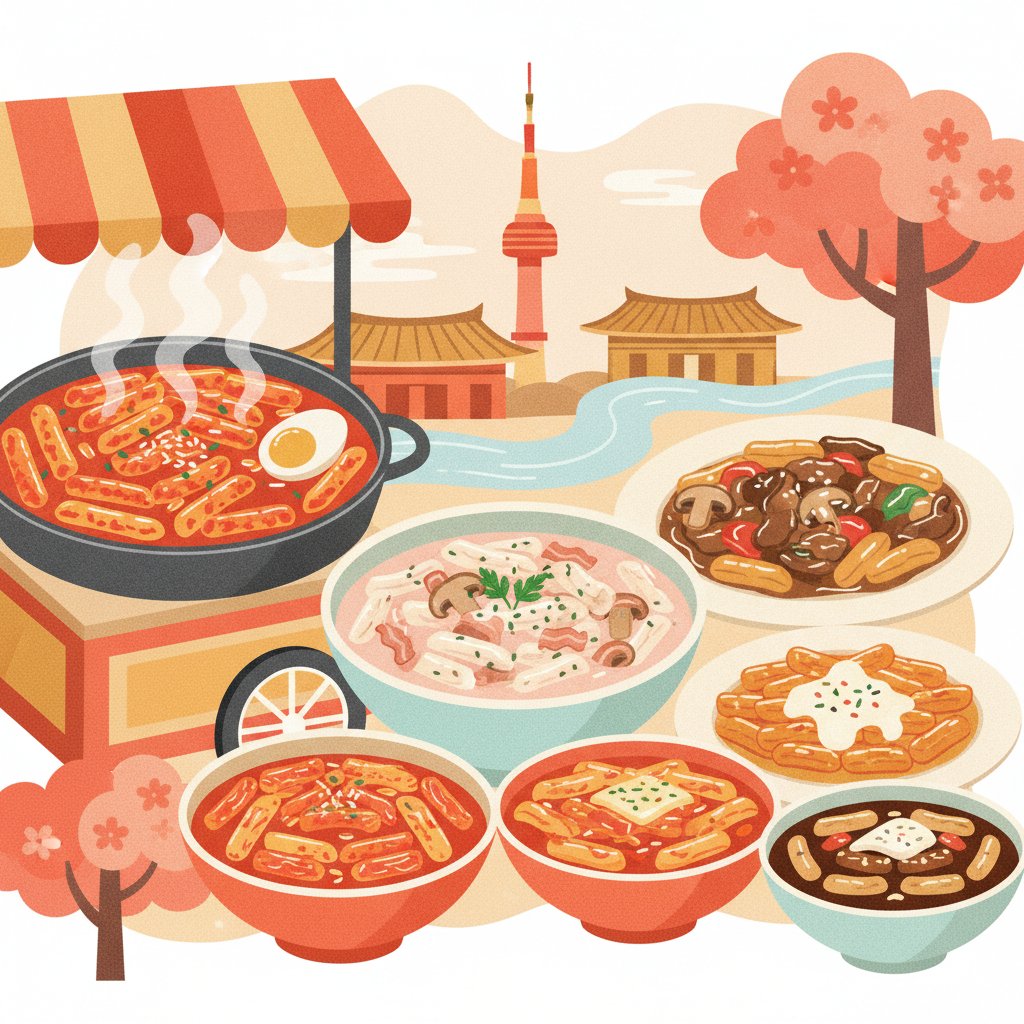
Combining classic Korean spice with Western cream sauce elements, Rosé tteokbokki has become a permanent staple across Korea. Gochujang and red chili powder are blended with heavy cream, milk, or garlic-infused cream sauce, resulting in a smooth, pastel-orange dish with a velvety texture. The dairy softens the sharp bite of the chili while adding richness, making it an ideal choice for spice-sensitive diners.
Mala Tteokbokki
Reflecting the massive influence of Chinese Sichuan flavors in modern Korean dining, Mala tteokbokki incorporates Sichuan peppercorns, chili oil, and spicy mala sauce. This variation frequently includes wide glass noodles, tofu skin sheets, beef slices, and oyster mushrooms alongside traditional rice cakes, delivering a signature numbing-and-spicy sensation.
Hyper-Spicy Chain Styles
Brands like Dongdaemun Yeopgi Tteokbokki popularized massive, multi-person portions served in wide bowls covered in melted mozzarella cheese, cocktail sausages, and cabbage. Known for blistering heat levels, these dishes are designed for social sharing and challenge eating among friends.
How to Order and Enjoy Like a Local
When dining at local snack shops or ordering via delivery apps in Korea, tteokbokki is rarely eaten alone. Locals almost always order what is known as the classic bunsik trio: Tteok-Twigim-Sundae.
- Tteokbokki: Serves as the central dish and dipping sauce base.
- Twigim (Assorted Tempura): Deep-fried sweet potatoes, squid, dumplings, and seaweed rolls intended to be dipped directly into the leftover red sauce.
- Sundae (Korean Blood Sausage): Steamed glass-noodles sausage served sliced with liver and offal, dipped in seasoned salt or tteokbokki gravy.
- Eomuk-guk (Fish Cake Broth): Stalls typically provide complimentary cups of hot fish cake broth, perfect for cleansing the palate between spicy bites.
Street stall portions typically run around 3,000 to 5,000 won (roughly $2 to $4 USD) for a generous single serving. Delivery options or large-format group bowls usually range from 14,000 to 19,000 won ($10 to $15 USD), depending on added toppings like cheese, bacon, or extra noodles. For international fans cooking at home, ready-to-cook meal kits are widely available through global Korean grocery platforms and international retailers like Amazon or local Asian markets.
🎟️ Popular tours & experiences in Korea
Klook.comSummary Comparison of Popular Tteokbokki Types
| Tteokbokki Type | Flavor Profile | Key Ingredients |
|---|---|---|
| Classic Bunsik | Sweet, savory, medium spice | Rice/wheat cakes, gochujang, fish cakes |
| Gungjung (Royal) | Savory, aromatic, non-spicy | Rice cakes, beef, soy sauce, vegetables |
| Gireum (Oil) | Smoky, crisp, mild or spicy | Pan-fried cakes, chili oil or soy sauce |
| Rosé | Creamy, mildly spicy, rich | Gochojang, heavy cream, milk, garlic |
| Busan Style | Deep savory, sweet, hearty | Thick garaetteok, radish broth, fish cakes |
Frequently Asked Questions
Is tteokbokki always extremely spicy?
No, tteokbokki comes in several completely non-spicy variations. Royal Gungjung tteokbokki uses a savory soy sauce base with beef and vegetables, while modern Rosé variations use cream to significantly tone down chili heat. Many restaurants also allow customers to select mild spice levels when ordering.
What is the texture difference between wheat and rice cakes?
Wheat cakes (mil-tteok) are softer, springier, and absorb liquids quickly, keeping them plump in soupy sauces. Pure rice cakes (ssal-tteok) are denser, chewier, and have a rich rice flavor that pair exceptionally well with thick, sticky sauces.
Can I make tteokbokki vegan or vegetarian?
Yes, classic recipes can easily be adapted by replacing the traditional anchovy-kelp stock with a pure vegetable or mushroom broth, and omitting the fish cakes in favor of fried tofu skins, mushrooms, cabbage, and onions.
Keep Reading
- Korean Convenience Stores: GS25 & CU Food Picks
- Korean Street Food: Learning the Names
- Modern Nulang Central City (모던눌랑): Seoul’s Shanghai Chic
- Texas de Brazil Central City (텍사스 데 브라질): Churrasco in Seoul
🎟️ Popular tours & experiences in Korea
Klook.com