Noryangjin Fish Market Guide: How to Buy, Bargain, and Eat
Stepping into Seoul’s Seafood Hub
Standing on the pedestrian bridge connecting Noryangjin Station to the glass market building, the cold smell of salty ocean air hits you before you even see a single stall. As a Korean who grew up coming here with my family every winter for peak-season yellowtail, I still get a little rush of excitement watching the neon signs flicker against rows of icy displays. Operating since 1927, Noryangjin Fisheries Wholesale Market moved into its sleek, modernized multi-story facility in 2016. While the old wooden sheds are gone, the buzzing energy remains entirely unchanged.
For international visitors, entering a massive market filled with live octopus, squawking king crabs, and dozens of vocal vendors can feel intimidating. However, with a few practical tips and a clear understanding of how the system works, dining here is one of the most rewarding culinary experiences Seoul has to offer. This practical noryangjin fish market guide breaks down everything from getting there to ordering like a local.

✈️ Book your trip to Korea — hotels, flights & more
How to Get to Noryangjin Fish Market
Noryangjin Market is situated in central Seoul, making it remarkably easy to access via public transit. Taking the subway is by far the simplest option.
- Subway Line 1 or Line 9: Take the train to Noryangjin Station.
- Exit Strategy: Use Exit 7 or Exit 9. Exit 7 leads directly to an underground walkway that opens up near the market main entrance. Exit 9 puts you right near the modern bridge connected directly to the second floor of the new building.
- Walking Distance: From either exit, the walk takes less than three minutes.
If you take a taxi, show the driver the Korean name: 노량진수산시장. Most Seoul taxi drivers will drop you right at the ground-floor drop-off zone or near the main parking structure entrance.
Understanding the Floor Layout
The modern market building is structured logically across multiple floors. Knowing where to go saves time and helps you navigate the space with confidence.
First Floor: Retail Stalls and Live Tanks
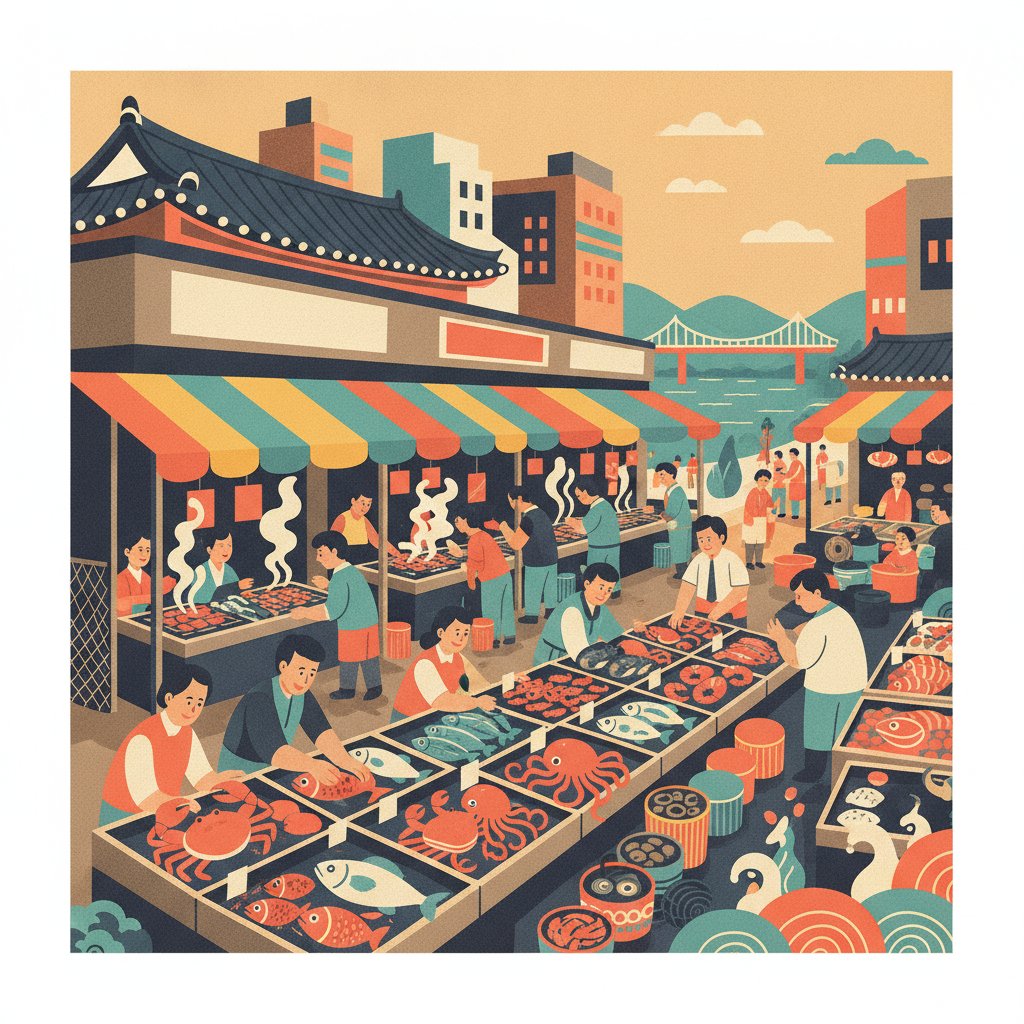
This is where the action happens. The entire ground level consists of grid-like aisles packed with hundreds of independent vendors. Stalls are categorized by the type of seafood they sell: live fish for raw consumption, crustaceans like king crab and snow crab, shellfish, and frozen or dried items. Large tank displays showcase everything from flatfish and sea bream to sea squirts and live sea cucumbers.
Second Floor: Restaurants, Salted Seafood, and Dried Goods
The second floor houses the sikdang (connected dining restaurants) where you take your freshly purchased raw catch to be prepared and served. You will also find stalls selling jeotgal (salted fermented seafood), dried fish, seaweed, and snacks. A few specialty retail stalls also operate on this level.
Upper Floors: Parking and Amenities
Floors three through five house parking decks, market administrative offices, bank ATMs, and a public outdoor sky garden on the fifth floor offering a pleasant view of the Han River and 63 Building.
🎟️ Popular tours & experiences in Korea
Klook.comHow to Buy Seafood Like a Local: Step-by-Step
The purchasing process at Noryangjin differs from standard restaurants. You buy your raw ingredients directly from floor vendors first, then take them upstairs to be cooked and served. Follow this step-by-step process for a smooth visit.
1. Take a Walk Before Buying
Do not buy at the very first stall you encounter near the entrance. Walk down a couple of aisles to check prices, inspect tank cleanliness, and see what looks freshest. Vendors will call out to you gently with “Eoseo oseyo!” (Welcome!), but a polite head nod or smile is enough if you are still just browsing.
2. Check Prices Online First
As a local secret, many Koreans use popular mobile apps like Ineo Gyoju Haejeokdan (인어교주해적단) to check daily wholesale market prices before arriving. While the app is primarily in Korean, browsing its market page gives a realistic benchmark for current per-kilogram rates on popular items like flatfish, yellowtail, or king crab so you know what to expect.
3. Select Your Fish and Agree on the Weight
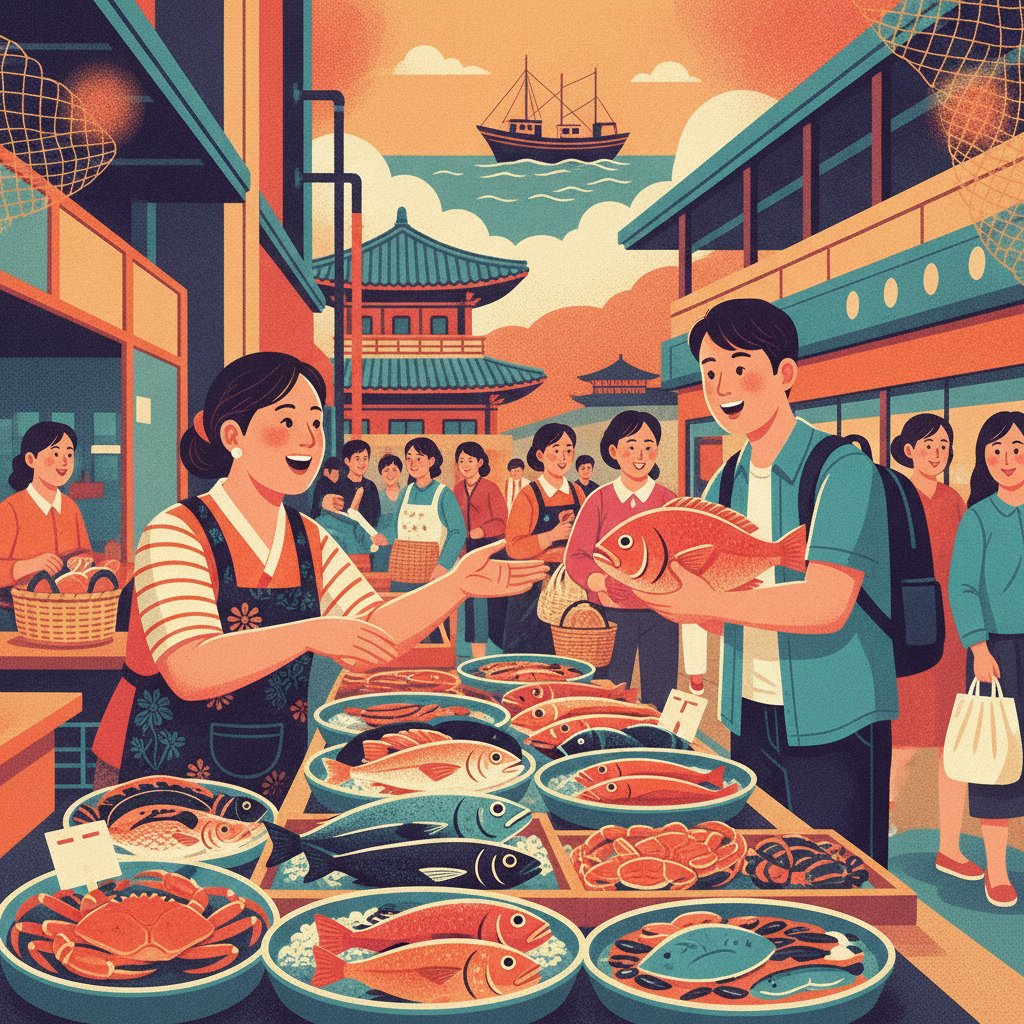
Once you choose a stall, point out what you want. The vendor will net the live fish or crab, place it in a plastic basket, and weigh it on a digital scale in front of you. Always ensure the scale is zeroed out before the basket goes on. For fish intended as raw sashimi (hoe), the vendor will weigh it whole, clean it, and slice it onto a platter right at their stall.
4. Ask for “Serviseu” (Service)
In Korean market culture, serviseu (서비스) refers to free complimentary additions thrown in by the vendor to close a deal. If you buy a substantial item like a large fish or king crab, politely ask, “Serviseu ju-seyo?” Vendors will often toss in a handful of live clams, sea squirts, or small prawns into your bag at no extra charge.
5. Head Upstairs to a Partner Restaurant
After paying the fish vendor, they will either call a restaurant representative to escort you upstairs or hand you your bag of raw seafood with instructions to go to a specific restaurant on the second floor. If you bought raw sliced fish, it comes arranged neatly on a plastic platter ready to eat.
Understanding the Restaurant Charges
When you sit down at an upstairs restaurant, you pay for preparation, table service, drinks, and side dishes. Understanding the fee structure prevents surprises when the final bill arrives.
Table Setup Fee (Sangcharim-bi)
Every guest pays a basic table service fee, known as sangcharim-bi (상차림비). This covers your seat, basic side dishes, garlic, fresh chili peppers, dip sauces (soy sauce, wasabi, and spicy chogochujang paste), and wrapping greens like lettuce and perilla leaves. Expect this fee to run approximately 4,000 to 6,000 KRW per person (around $3–$5 USD).
Preparation and Cooking Fees
If you brought items that require cooking—such as live crab, shrimp, or abalone—the restaurant charges a cooking fee based on weight or preparation method:
- Steaming (Crabs/Shellfish): Usually around 5,000 to 8,000 KRW per kilogram.
- Grilling (Shrimp/Fish): Typically 5,000 to 10,000 KRW per portion or kilogram.
- Maeuntang (Spicy Fish Stew): When you order sashimi downstairs, save the remaining fish head and skeleton. Give the bag to the restaurant staff, and they will brew it into a rich, spicy, bubbling table stew for roughly 10,000 to 15,000 KRW total for the pot.
Typical Cost Breakdown at Noryangjin Market
Market prices fluctuate depending on season, catch volume, and seller. However, the following guide outlines typical price ranges to help you budget your meal accurately.
| Service / Item | Approximate Price Range (KRW) | Notes |
|---|---|---|
| Table Setup Fee | 4,000 – 6,000 KRW / person | Includes sauces, wraps, basic side dishes |
| Steaming / Grilling Fee | 5,000 – 10,000 KRW / kg | Applies to live crab, shrimp, or shellfish |
| Spicy Stew (Maeuntang) | 10,000 – 15,000 KRW / pot | Made using fish bones from your sashimi order |
| Live Flatfish (Gwang-eo) | 30,000 – 45,000 KRW / kg | Standard raw fish option, clean mild flavor |
| King Crab / Snow Crab | 60,000 – 90,000+ KRW / kg | Varies significantly by season and origin |
Eating Fresh Seafood seasonally
Seafood tastes best when consumed during its peak local season. Planning your order around Korean harvest calendars guarantees peak flavor and optimal pricing.
- Winter (November to February): The absolute best time for bangeo (large yellowtail). The meat is fatty, tender, and rich. Winter is also peak season for king crab and fresh ocean oysters.
- Spring (March to May): Flounder, webfoot octopus (jukkumi), and red sea bream are at their sweet, delicate best.
- Summer (June to August): Sea eel and freshwater eel dishes are popular energy boosters during humid months.
- Autumn (September to November): Fresh blue crab (kkotge) and live jumbo prawns (daeha) grilled over coarse salt are autumn highlights across Korea.
🎟️ Popular tours & experiences in Korea
Klook.comPractical Tips for First-Time Visitors
Keep these sensible, local-tested recommendations in mind to make your visit hassle-free:
- Wear Practical Shoes: Floor spaces near live tanks can be wet and slippery. Avoid open-toed sandals or high heels.
- Payment Methods: Almost all stalls and upper floor restaurants accept major international credit cards, though carrying a bit of Korean cash is helpful for smaller shellfish vendors.
- Timing Your Visit: Floor markets operate 24 hours for wholesale, but retail dining hours run primarily from 10:00 AM to 10:00 PM. Arrive around 5:30 PM for dinner to beat the evening rush of local office workers.
- Navigating Language: Many stall owners have electronic calculators to show prices clearly, and many speak basic functional English or Chinese for seafood transactions. Pointing and using simple phrases works perfectly well.
Frequently Asked Questions
Do I need to haggle over prices at Noryangjin Market?
Aggressive haggling is not standard practice at modern Noryangjin. Most vendors offer fairly consistent per-kilogram rates based on daily wholesale market values. Instead of asking for large price discounts, it is more customary to ask politely for small extra complimentary items (serviseu), such as additional clams, shrimp, or sea squirts thrown into your purchase.
Can I visit Noryangjin Market if I only want to eat sashimi?
Yes, absolutely. Raw fish (hoe) is one of the most popular choices at the market. You can purchase a pre-set platter of sliced mixed raw fish directly from a first-floor vendor starting around 35,000 to 50,000 KRW, then take it upstairs to enjoy with table service and a steaming pot of spicy fish soup.
Is Noryangjin Fish Market suitable for solo travelers?
Solo travelers can certainly visit, but seafood market dining in Korea is culturally geared toward small groups. Portions and whole fish tend to be large. If traveling alone, look for vendors offering smaller pre-portioned sashimi platters, or order simple single dishes like grilled fish or seafood noodle soup (kalguksu) directly from the second-floor restaurants.
Keep Reading
- Korean Convenience Stores: GS25 & CU Food Picks
- Korean Street Food: Learning the Names
- Modern Nulang Central City (모던눌랑): Seoul’s Shanghai Chic
- Texas de Brazil Central City (텍사스 데 브라질): Churrasco in Seoul
🎟️ Popular tours & experiences in Korea
Klook.com