Real Korean Dating Rules vs What You See in K-Dramas
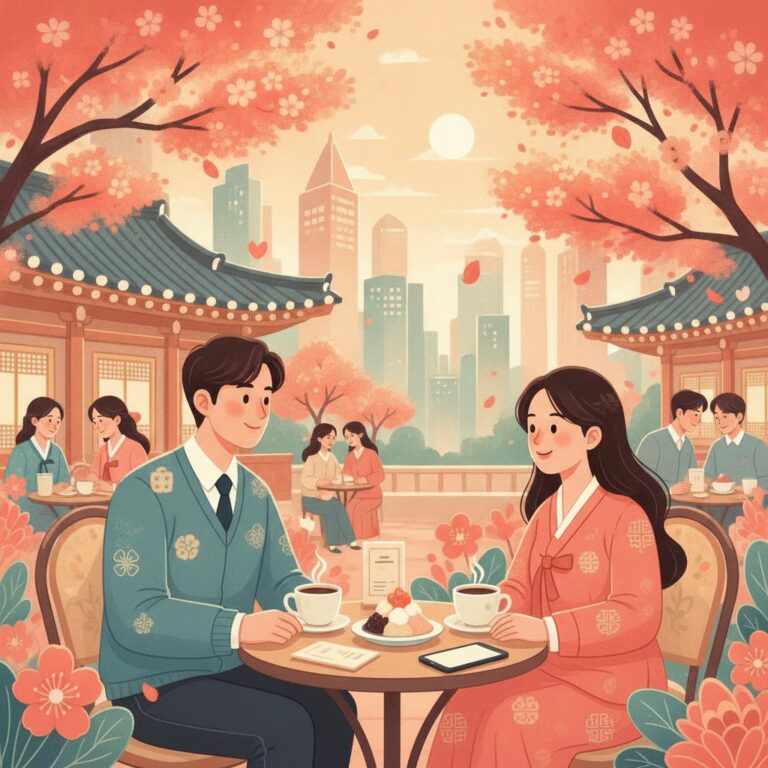
Last Friday evening, while waiting for a friend at a cafe near Gangnam Station, I counted four separate couples wearing identical cream-colored knit sweaters. Nobody in the cafe batted an eye. As someone born and raised in Seoul, this sight is completely ordinary to me, but international friends visiting Korea always react with a mix of fascination and confusion. They often ask if real life here mirrors the romantic scenes they stream on Netflix or Viki.
Understanding Korean dating culture kdrama fans see on screen requires separating cinematic romanticism from everyday social habits. While screenwriters definitely amplify dramatic confessions and rainy umbrella moments, many core mechanics—like texting frequency, relationship milestones, and official confessions—are rooted in genuine local customs. Here is how real courtship unfolds in Korea, step by step.
The ‘Some’ Stage: Navigating the Pre-Relationship Gray Zone
Before two people officially become a couple in Korea, they enter a phase known as Some (썸), derived from the English word “something.” This is a unique social category that sits between casual friendship and exclusive dating. When Koreans say they are “some-taking” (썸타는 중) with someone, it means mutual interest exists, feelings are being tested, but no official commitment has been declared.
In Western dating, people might casually go on dates for weeks or months without labeling the relationship. In Korea, staying in the Some stage too long is seen as a major red flag. Most people expect the transition from Some to an official couple to happen within two to four weeks, usually after three to five proper dates.
How the Confession (Gobaek) Works
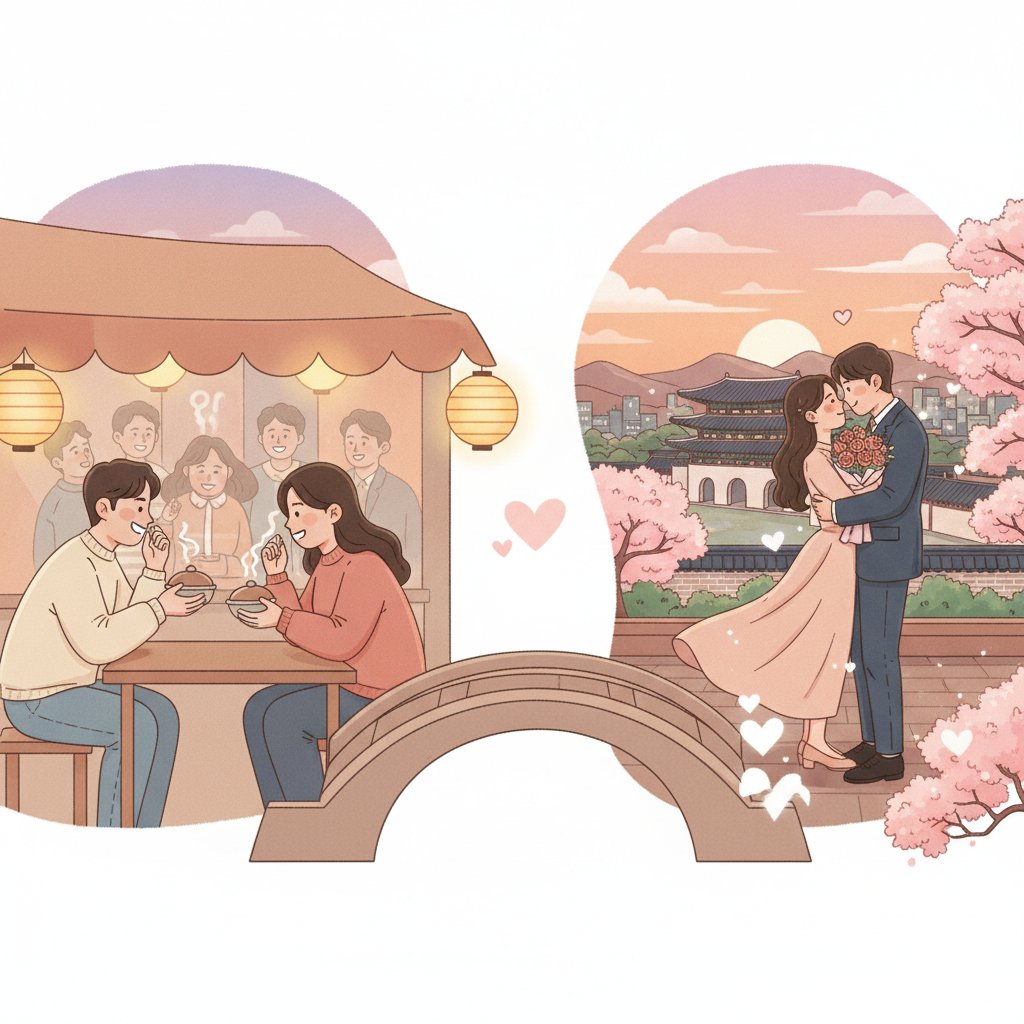
In K-dramas, a confession (고백, gobaek) often involves fireworks, elaborate grand gestures, or dramatic speeches. In reality, while grand gestures do happen occasionally, a real-life confession is usually a clear, direct verbal statement made at the end of a nice date. Someone will explicitly ask, “Do you want to go out with me starting today?” or “Will you be my girlfriend/boyfriend?”
This explicit verbal agreement is critical because Korean dating is binary: you are either just friends, in the Some phase, or in an exclusive relationship. The concept of “casually seeing each other” while dating other people once dates have begun does not exist in standard Korean dating etiquette.
✈️ Book your trip to Korea — hotels, flights & more
KakaoTalk Etiquette and Daily Communication
Communication expectations in Korean relationships are fast and constant. While Western couples might text a few times throughout the day, Korean couples maintain an ongoing digital dialogue from the moment they wake up until they go to sleep.
The primary platform for all communication in South Korea is KakaoTalk. Understanding how messaging works on KakaoTalk is essential to understanding modern Korean dating dynamics.
- Good Morning & Good Night Messages: These are considered basic baseline manners. Missing a morning greeting without a valid reason can trigger immediate anxiety or worry from your partner.
- Meal Updates: Sending photos of what you are eating for lunch or dinner is standard practice. Asking “Have you eaten?” (밥 먹었어요?) is a classic Korean expression of care and affection.
- The Dreaded Unread ‘1’: KakaoTalk shows a small yellow number “1” next to sent messages, which disappears once the recipient opens the chat. Leaving a partner on “read” (the 1 disappears without a reply) or ignoring a message for hours without explanation is a frequent source of relationship friction.
If you are dating a Korean person, expect to share routine updates about your location, your work schedule, and your daily activities. It is not generally viewed as controlling; rather, it is interpreted as a sign that you are thinking about your partner throughout the day.
The Timeline of Couple Milestones and Celebrations
One aspect of Korean dating culture kdrama viewers frequently notice is the emphasis on anniversaries. While many Western cultures celebrate annual milestones, Korean couple culture tracks time in 100-day increments.
| Milestone | What Happens | Typical Cost Range |
|---|---|---|
| 100 Days | First major landmark; dinner, small gifts, or couple rings. | ₩50,000–₩150,000 ($40–$115) |
| 200 / 300 Days | Slightly more low-key; romantic dinner or short weekend trip. | ₩50,000–₩200,000 ($40–$150) |
| 1 Year | Major celebration; fine dining, personalized gifts, short travel. | ₩150,000–₩500,000+ ($115–$380+) |
The 100-Day Anniversary (Baek-il)
The 100th day of a relationship (백일, baek-il) is a significant benchmark. Reaching 100 days signifies that the relationship has survived the initial adjustment phase and is becoming serious. Couples often exchange small customized gifts, visit a nice restaurant, or buy matching items. There are even specialized smartphone apps, such as Between or LoveDay, that count down exact days so neither partner forgets.
Couple Rings and Matching Outfits
Exchanging couple rings (커플링) does not imply engagement or marriage in Korea. Instead, simple silver or gold band rings are commonly exchanged around the 100-day or 1-year mark as a visible symbol of commitment. You will see young university students and adults alike wearing matching bands on their ring fingers.
Similarly, Couple Look (커플룩) culture remains vibrant. Rather than wearing completely identical outfits from head to toe—which is now seen as slightly old-fashioned by younger Gen Z Koreans—modern couples favor subtle color coordination (tone-on-tone dressing) or matching footwear and outerwear.
🎟️ Popular tours & experiences in Korea
Klook.comPaying the Bill: Dutch Pay vs. The Round System
In older K-dramas, male leads almost always pay for every meal and activity. Modern Korean dating, however, follows a much more balanced set of unwritten financial rules, particularly among university students and young professionals in their twenties and thirties.
While split billing (“Dutch pay”) is increasingly common on first dates, the traditional and still widely preferred method for subsequent dates is paying in alternating rounds (차, cha).
- Round 1 (1차): Person A pays for dinner at a restaurant (typically ₩30,000–₩60,000 total for two).
- Round 2 (2차): Person B pays for drinks, dessert, or coffee at a cafe (typically ₩15,000–₩25,000 total).
- Round 3 (3차): If the date continues to a second bar, craft beer spot, or late-night snack house, Person A might cover it again, balancing things out on the next date.
This rotation eliminates awkward bill-calculating at the table while keeping financial contribution roughly equal over time.
How Koreans Actually Meet: Sogaeting vs. Dating Apps
Chance encounters on street corners or dramatic accidental meetings in rainstorms are favorite drama tropes, but in reality, Koreans rely heavily on structured social introductions.
Sogaeting (1-on-1 Blind Dates)
The most respectable and common way to meet a potential partner in Korea is through Sogaeting (소개팅). A mutual friend or colleague acts as a matchmaker, sharing basic details (age, occupation, height, photos) with both parties. If both agree, contact information is exchanged via KakaoTalk, a meeting place is decided, and the pair meets for dinner or coffee.
Because a mutual friend’s reputation is tied to the match, people usually display their best manners on a sogaeting. If the date goes well, a second date is arranged before the end of the evening.
Miting (Group Blind Dates)
Popular among university students, Miting (미팅) involves a group of male friends meeting an equal group of female friends (usually 3v3 or 4v4) for drinks and icebreaker games. It is a casual, social atmosphere where potential couples can naturalize interest before branching off into individual contact.
Dating Apps
While global apps like Tinder are used in Korea, local apps such as Amanda, Glam, and Wippy are widely popular. However, app-based dating still carries a slight social stigma compared to personal introductions through sogaeting, as people often view mutual-friend introductions as safer and more reliable.
Realistic Skinship Progression
K-dramas are notorious for delaying a first kiss until episode eight or nine, treating physical contact with extreme weight. While real Korean life moves faster than television dramas, physical intimacy—referred to locally as “skinship” (스킨십)—still generally follows a clear hierarchy compared to Western norms.
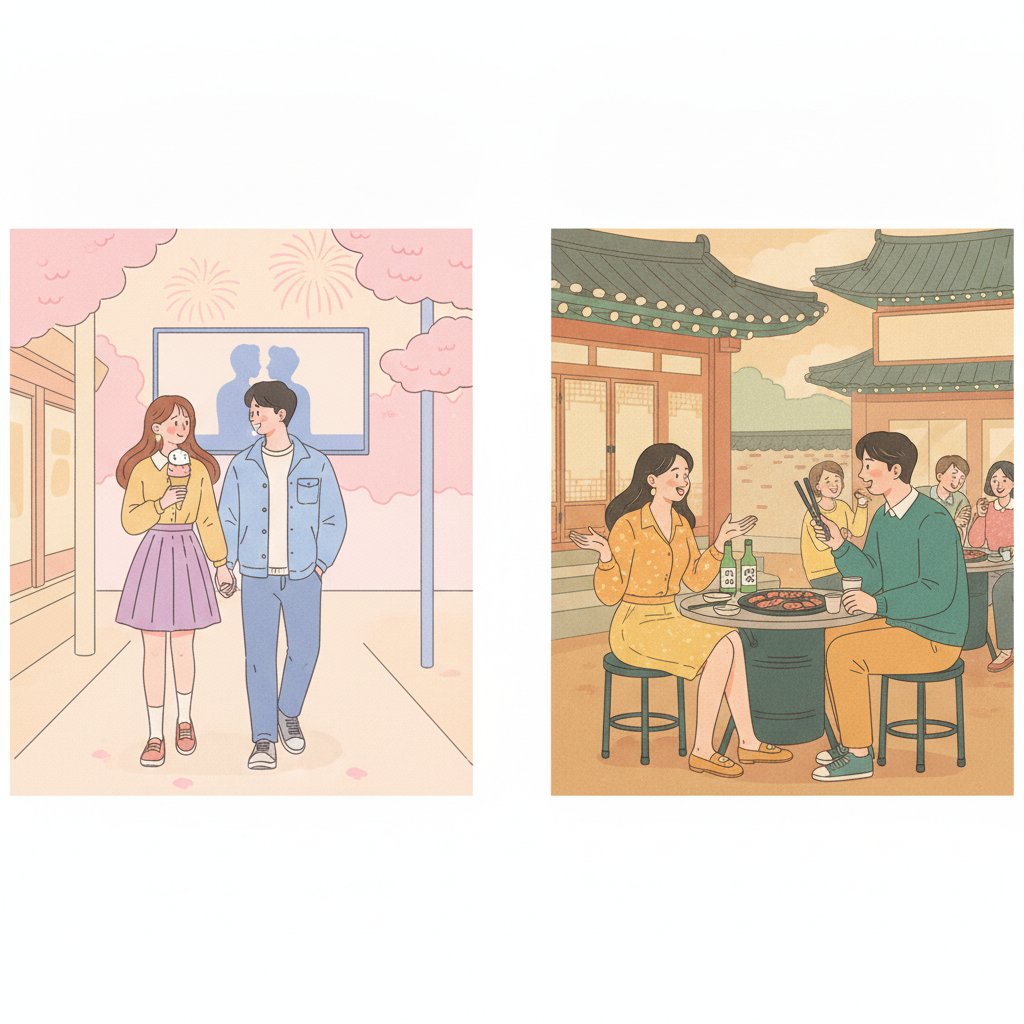
Holding hands usually happens right around the time the couple becomes official. Hugging and light kissing follow shortly after. However, public displays of affection (PDA) remain relatively restrained across South Korea. While holding hands, walking arm-in-arm, and brief kisses are completely fine in public spaces like Hongdae or Seongsu-dong, passionate kissing in public is generally looked down upon, particularly by older generations.
Final Thoughts from a Seoul Native
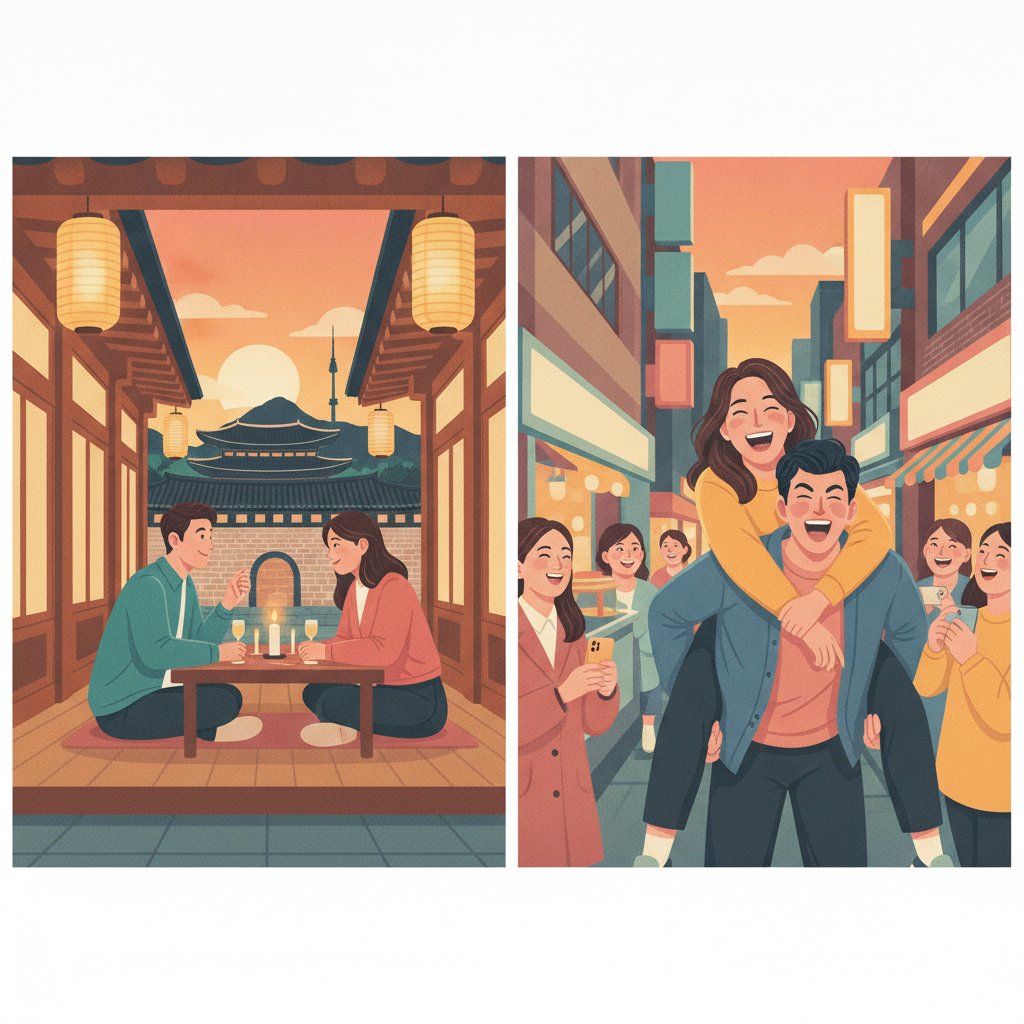
Korean courtship culture is a mix of traditional social respect, modern technology, and highly structured romantic rituals. The next time you watch a realistic scene unfold in a television drama, you will recognize the real-life framework behind it—from the KakaoTalk notification sound to the careful arrangement of who pays for coffee after dinner.
🎟️ Popular tours & experiences in Korea
Klook.comFrequently Asked Questions
Do real Korean guys do dramatic confessions like in K-dramas?
While grand public gestures do happen occasionally, real-life confessions are usually private, sincere conversations held at the end of a nice date. The key element is clarity: a guy or girl will explicitly ask if you want to make the relationship official before moving forward.
Why is the 100-day anniversary so important in Korea?
Historically, infant mortality rates made reaching 100 days a major milestone in traditional Korean history. In modern dating, reaching 100 days symbolizes that a couple has successfully built a solid foundation past the initial awkward phase, making it a natural milestone to celebrate commitment and exchange couple items.
Do couples in Korea really wear matching outfits?
Yes, couple matching is a very common practice in South Korea. While full identical outfits are less popular now among Gen Z, subtle color coordination, matching jackets, matching shoes, and couple rings remain everyday sights in popular dating spots across Seoul.
Keep Reading
- Level Up Your Korean: A Realistic Guide to Learning Through K-Dramas
- Beyond the Screen: Essential Korean Variety Shows K-Drama Fans Will Adore
- Webtoon K-Drama Adaptations: Picks and Watching
- K-Drama Cafes & Filming Spots in Seoul: Local Finds
🎟️ Popular tours & experiences in Korea
Klook.com