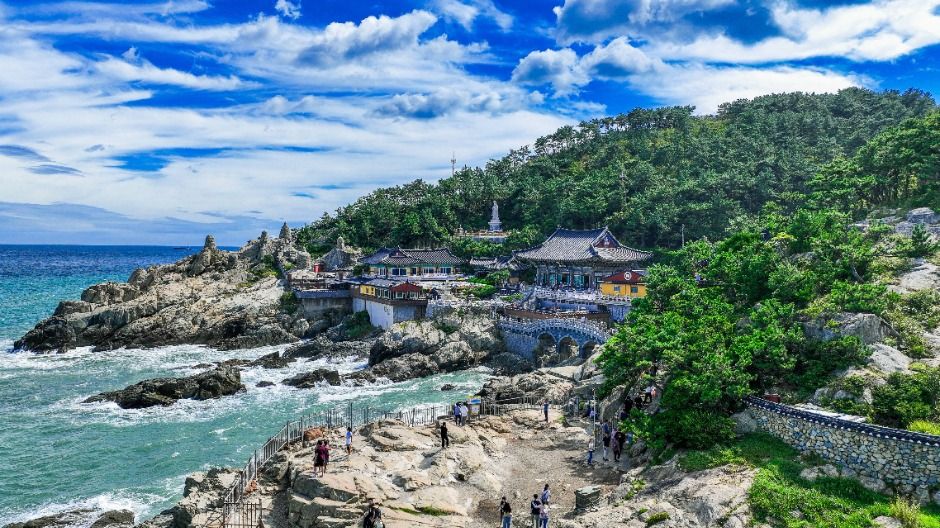
Visiting Busan’s Seaside Haedong Yonggungsa Temple
At a glance
- In shortA guide to visiting Haedong Yonggungsa, a rare seaside Buddhist temple along the coastal rocks of Busan.
- Best forTravelers looking to explore unique coastal sites in Busan
- WhereBusan
- Key pointsUnlike mountain temples, it sits dramatically on granite coastal rocks. · Admission is completely free, and the sanctuary is open year-round. · Daily hours run from 04:30 to 19:20, offering famous sunrise views.
- Heads-upLast admission is strictly at 18:50; comfortable, non-slip shoes are recommended.
A Unique Coastal Sanctuary in South Korea
When you picture a traditional Korean Buddhist temple, your mind almost certainly wanders into a quiet mountain forest. You imagine towering oak and pine trees, winding stone paths up a secluded valley, and the gentle rhythm of wooden fish drums echoing through the mist. That is because the vast majority of historic temples across the Korean Peninsula were deliberately built deep within mountain ranges, providing monastics with a secluded environment for meditation and spiritual focus away from urban centers.
Haedong Yonggungsa Temple (해동 용궁사(부산)) breaks that pattern entirely. Perched dramatically on the jagged granite rocks along the shoreline of northeastern Busan, this rare attraction offers visitors a captivating union of ocean scenery and ancient Buddhist heritage. Instead of mountain winds whispering through pine needles, visitors to Haedong Yonggungsa Temple are met with the majestic sound of ocean waves rolling against the rocks below the main sanctuary grounds. It is widely celebrated as a true rarity among Korean temples, making it an essential destination for travelers visiting the coastal city of Busan.
✈️ Book your trip to Korea — hotels, flights & more
The Multi-Century History of the Dragon Palace Temple
The origins of Haedong Yonggungsa Temple stretch back over six centuries into the history of the Korean Peninsula. The temple was first established in the year 1376 during the Goryeo dynasty. Its founder was the revered Buddhist teacher known as Naong, a great master whose spiritual legacy left a profound impact on Korean Buddhist traditions. During this early era, the site was chosen for its inspiring coastal cliffs, where the vastness of the ocean served as a living contemplation of infinity and compassion.
Like many significant cultural and religious landmarks across Korea, the temple faced destruction during the late sixteenth century. During the Imjin War, the original monastery buildings were completely burned down during foreign invasions. For hundreds of years, the historic site lay quiet, remaining primarily as a cherished memory within local religious traditions and historical texts.
Rebuilding and the Miraculous Dream
The restoration of this coastal site began in earnest in the early 1930s. Monk Ungang, a distinguished teacher from the nearby Tongdosa Temple, spearheaded the effort to rebuild the sanctuary on its original shoreline grounds. Through his devotion and leadership, temple halls were raised once more beside the pounding surf, establishing a renewed presence for Buddhist monastic life on the Gijang coast.
The temple underwent a major spiritual and physical evolution in 1974 when Monk Jeongam was appointed as the abbot of the monastery. Tasked with the sacred duty of fully restoring the complex to its historical grandness, Monk Jeongam embarked on an intensive 100-day prayer devotion. Local religious accounts record that during this extended period of intense prayer and meditation, Monk Jeongam experienced a vivid and powerful dream. In his vision, Avalokitesvara Bodhisattva—the Bodhisattva of Compassion—appeared and ascended directly into the heavens while riding upon the back of a grand dragon.
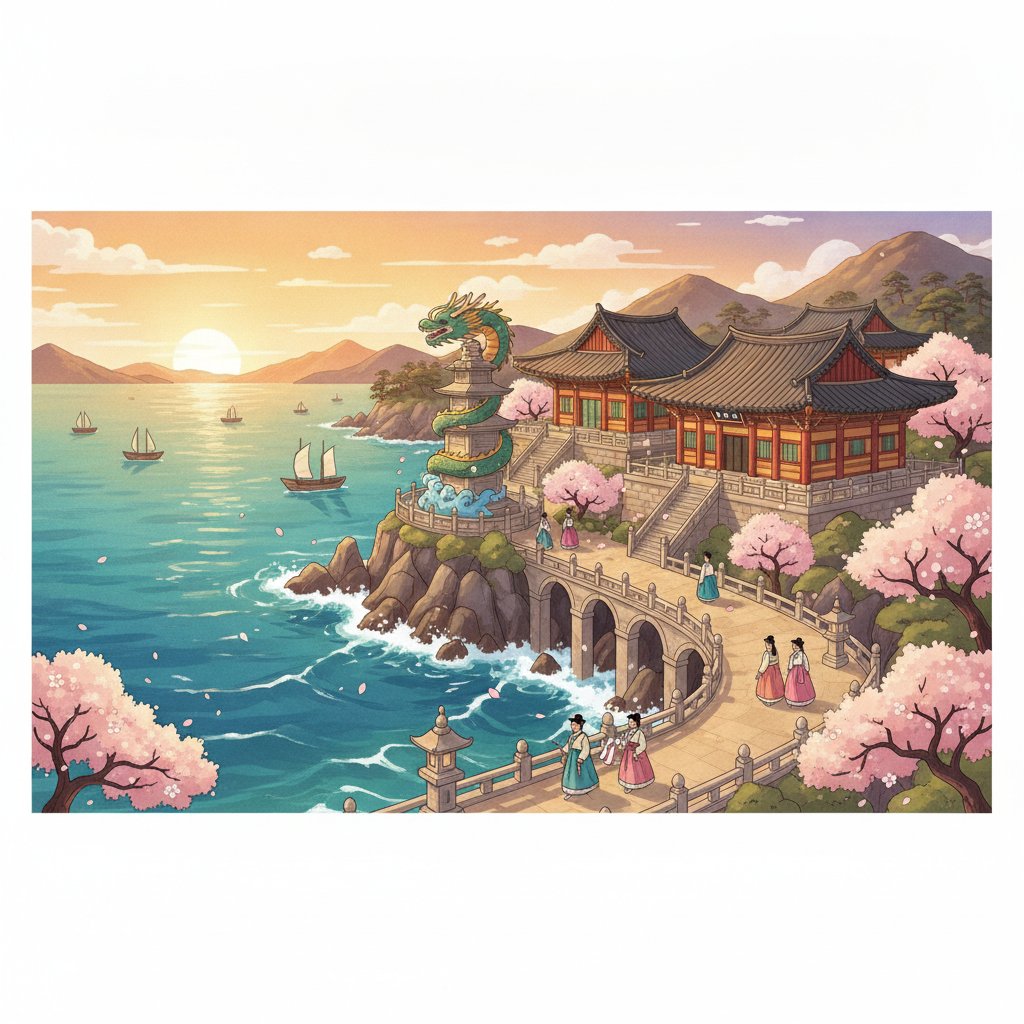
This striking spiritual revelation provided the foundation for the temple’s modern identity. To honor the image of Avalokitesvara Bodhisattva and the dragon ascending over the sea, the sanctuary was officially given the name Haedong Yonggungsa Temple, which translates in English to the “Korean Dragon Palace Temple.” To this day, the dragon motif remains deeply embedded throughout the complex, symbolizing protection, strength, and marine devotion.
What to Expect When Visiting the Complex
Visiting Haedong Yonggungsa Temple offers a sensory experience unlike any inland monastery. The temple grounds are thoughtfully arranged along the natural contours of the coastal rock formations. Visitors can cross stone bridges, admire statues looking out over the open ocean, and listen to Buddhist chants mingling with the sound of the surf.
Planning a visit is straightforward thanks to its welcoming access policy. Admission to Haedong Yonggungsa Temple is completely free for all guests, requiring no entrance tickets or reservation fees. The temple is open all year round with no seasonal rest days, ensuring that you can include it in your travel itinerary no matter what month you arrive in Busan.
The temple operates long daily hours, opening early in the morning at 04:30 and remaining open until 19:20 in the evening. However, visitors should note that the last admission of the day is strictly at 18:50. Arriving early in the morning allows you to witness the sky light up over the ocean, an experience that has long made this east-facing coastal spot famous for sunrise views.
For practical comfort during your stay, standard visitor facilities are available directly on site. The temple complex features public restrooms for visitors, and dedicated parking is available nearby for those arriving by personal car, tour bus, or rental vehicle. If you wish to reach the temple administration directly for specific visitor inquiries, you can contact them by phone at +82-51-722-7744.
🎟️ Popular tours & experiences in Korea
Klook.comHow to Get There
Haedong Yonggungsa Temple is located at 86 Yonggung-gil, Gijang-gun, Busan. Situated in the northeastern county of Gijang-gun, the area is renowned for its fresh coastal breeze, marine landscapes, and scenic seaside drives.
If you are staying in central Busan or along popular beach districts like Haeundae, reaching Gijang-gun is convenient using the city’s extensive transit network. Most travelers take the Busan Subway line toward eastern Busan—transferring toward the Donghae Line or traveling to major transit hubs near Haeundae—and then continue to Yonggung-gil via a short local city bus ride or taxi ride. Navigating toward Gijang-gun takes you past peaceful coastal suburbs, offering pleasant views as you approach the oceanfront temple entrance.
Tips Before You Go
To make the absolute most of your trip to Haedong Yonggungsa Temple, keep these practical travel tips in mind before setting off:
- Check Current Operating Hours: While the temple maintains daily operating hours from 04:30 to 19:20 (with last admission at 18:50) and is open all year round, it is always good practice to double-check operating hours prior to your visit, especially during severe coastal weather or national holidays.
- Wear Practical Walking Shoes: Navigating the temple involves walking across stone pathways, flight steps, and bridges over rocky coastal terrain. Comfortable, non-slip footwear is highly recommended.
- Respect the Sacred Environment: Remember that Haedong Yonggungsa Temple is an active place of religious devotion for monks and local worshippers. Maintain a polite volume near prayer halls and observe temple signage regarding quiet zones.
- Combine with a Coastal Itinerary: Located in Gijang-gun, the temple is situated in a region rich with seaside charm. Consider planning your visit in the morning or early afternoon to take full advantage of the coastal daylight.
Good to Know
| Hours | 04:30-19:20 (Last admission 18:50) |
|---|---|
| Closed | N/A (Open all year round) |
| Parking | Available |
| Contact | +82-51-722-7744 |
| Restrooms | Available |
| Admission Fees | Free |
Details above are from the Korea Tourism Organization and may change — double-check before you visit.
Location & Map
📍 86 Yonggung-gil, Gijang-gun, Busan
🎟️ Popular tours & experiences in Korea
Klook.comUseful Links
More on Busan Travel Guides
- Haeundae Blueline Park Coastal TrainsA guide to Busan's Haeundae Blueline Park coastal train options, pricing, and routes.
- Mangmidangil Street in BusanA guide to Mangmidangil Street's local cafes, indie shops, and nearby Busan spots.
- Busan 2-Day Itinerary for First-TimersA practical two-day travel itinerary and guide for first-time visitors exploring Busan.
See every Busan Travel Guides post in our K-Travel guide.
Handy toolsKorea travel essentials · Trip budget calculator · Korea Guide Finder
Keep Reading
- Yeongsil Trail (Hallasan National Park) (한라산 영실): A Local’s Guide
- Busan Cinema Center (부산 영화의 전당): A Local’s Guide
- Anbandegi Village (안반데기 마을): Korea’s Mountain Cabbage Farm
- Baengnokdam Lake (한라산 백록담): A Local’s Guide to Jeju’s Crown Jewel
🎟️ Popular tours & experiences in Korea
Klook.com