Beginner Korean Cold Noodles Guide: Types and How to Eat
This post contains affiliate links. As an Amazon Associate, we earn from qualifying purchases at no extra cost to you.
At a glance
- In shortA beginner guide to Korean cold noodle styles, menu options, eating tips, and pairings.
- Best forTravelers and foreign fans trying Korean cold noodles
- WhereSeoul
- Key pointsPyongyang style is mild and buckwheat-based; Hamheung is spicy and chewy. · Mul Naengmyeon features icy broth, while Bibim is served with spicy sauce. · Eat the hard-boiled egg first to protect your stomach lining.
- Heads-upPour vinegar directly onto the noodles rather than into broth to keep the soup depth.
The heatwave in Seoul hits differently in mid-July. Concrete sidewalks radiate intense heat, the humidity hangs heavy in the air, and a hot bowl of rice or soup is the last thing on anyone’s mind. On days like this, office workers and families across the city turn toward the ultimate summer comfort: a heavy stainless steel bowl filled with icy broth, chewy buckwheat noodles, crisp pickled radish, and a floating slice of sweet Korean pear. This is naengmyeon, Korea’s iconic cold noodle dish.
For international fans visiting Korea or exploring a local H Mart back home, looking at a naengmyeon menu can feel surprisingly intimidating. There are different regions, noodle textures, broth bases, and a set of unspoken dining rules that locals follow naturally. As a Korean who grew up eating cold noodles year-round, I created this beginner Korean cold noodles guide to help you navigate your very first bowl with complete confidence.
2 What Exactly Are Korean Cold Noodles?
The word naengmyeon (냉면) literally translates to “cold noodles.” While Western dining cultures rarely serve savory starch noodles in frozen broth, naengmyeon is a deeply cherished Korean staple with centuries of tradition behind it.
Historically, naengmyeon was actually a winter dish eaten in northern regions of the Korean peninsula. During long winter months, villagers would harvest buckwheat, process it into noodles, and mix them with broth chilled by natural ice outdoors or tart brine from winter radish kimchi (dongchimi). Over time, as refrigeration technology developed, naengmyeon transitioned into Korea’s most popular summer refresher.
The foundation of any good naengmyeon bowl comes down to two components: the broth (or sauce) and the noodle composition. Buckwheat noodles are traditional, offering an earthy flavor and a soft, easy-to-bite texture. However, depending on the regional style, noodles may also blend sweet potato starch, potato starch, or arrowroot, creating an exceptionally springy and chewy texture that catches many first-timers by surprise.
Pyongyang vs. Hamheung: The Two Major Styles
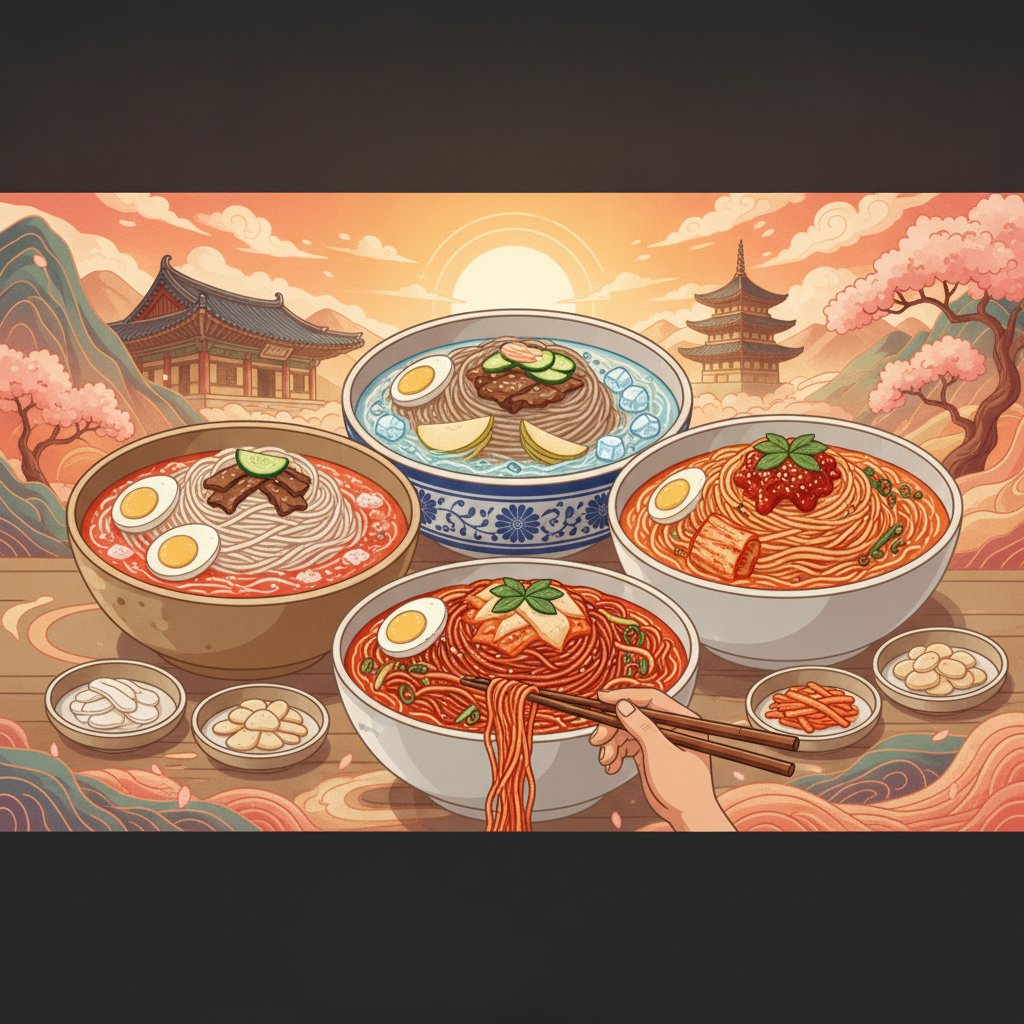
When you walk into a traditional cold noodle restaurant in Korea, you will almost always encounter two historical Northern traditions: Pyongyang style and Hamheung style. Understanding the difference between them makes ordering much easier.
Pyongyang Naengmyeon (Mild and Buckwheat-Based)
Hailing from the capital of North Korea, Pyongyang-style cold noodles are famous for their subtle, delicate flavor profile. The noodles feature a high proportion of buckwheat, making them softer and less chewy than other varieties. The broth is usually a clear combination of simmered beef or pheasant stock blended with icy radish dongchimi water.
For beginners, Pyongyang naengmyeon can taste surprisingly plain on the very first sip. In Korea, we often say that you have to eat Pyongyang naengmyeon three times before you truly fall in love with its rich, savory depth. It is understated, highly aromatic, and considered a delicacy among noodle purists.
Hamheung Naengmyeon (Chewy and Spicy)
Originating from the eastern port town of Hamheung, this style is built for bold flavor lovers. Hamheung noodles are made primarily from potato or sweet potato starch, giving them a springy, almost elastic stretch that requires a bit of effort to chew. Instead of sitting in icy broth, Hamheung style is typically served with a vibrant red, spicy-sweet gochujang sauce and topped with marinated raw skate or flounder (called hoe naengmyeon).
✈️ Book your trip to Korea — hotels, flights & more
Mul vs. Bibim: Choosing Your Bowl
Regardless of whether a restaurant specializes in Pyongyang or Hamheung styles, almost every menu offers two primary serving variations: Mul Naengmyeon and Bibim Naengmyeon.
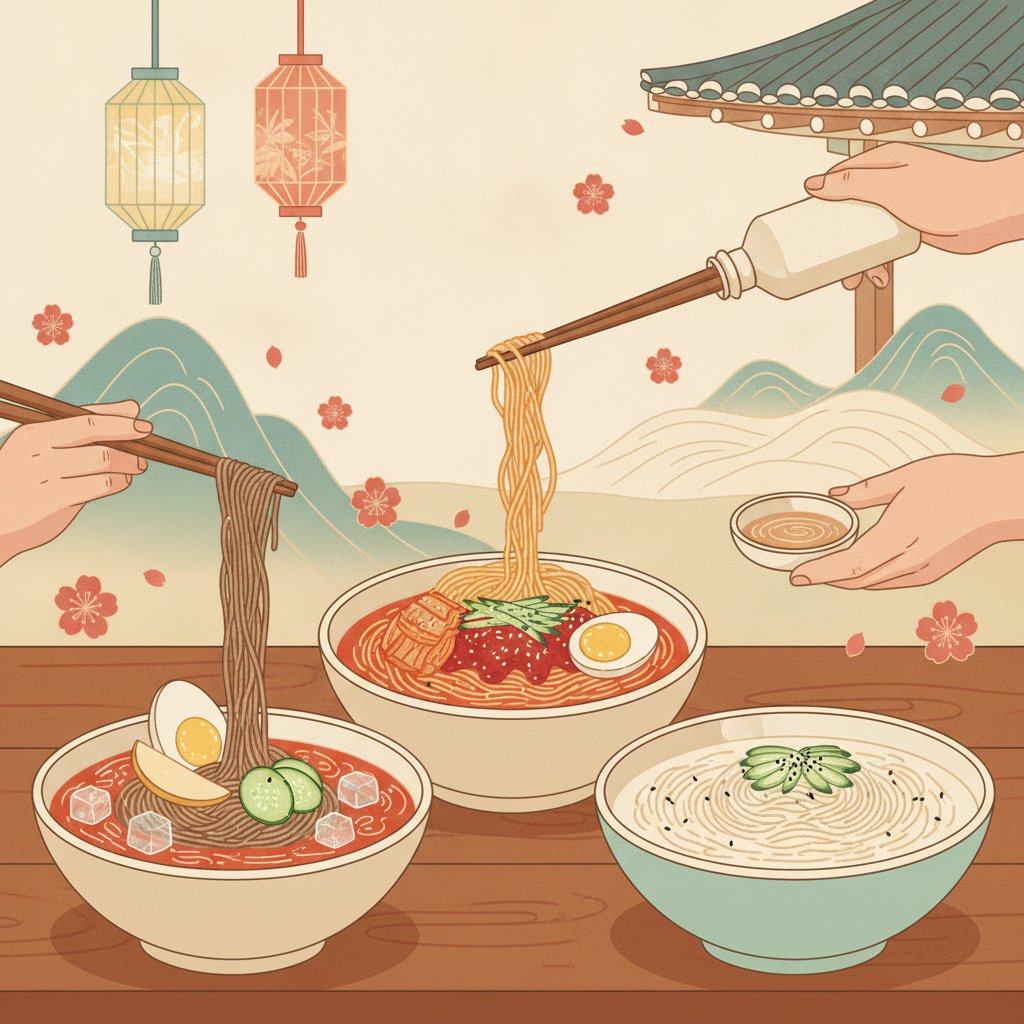
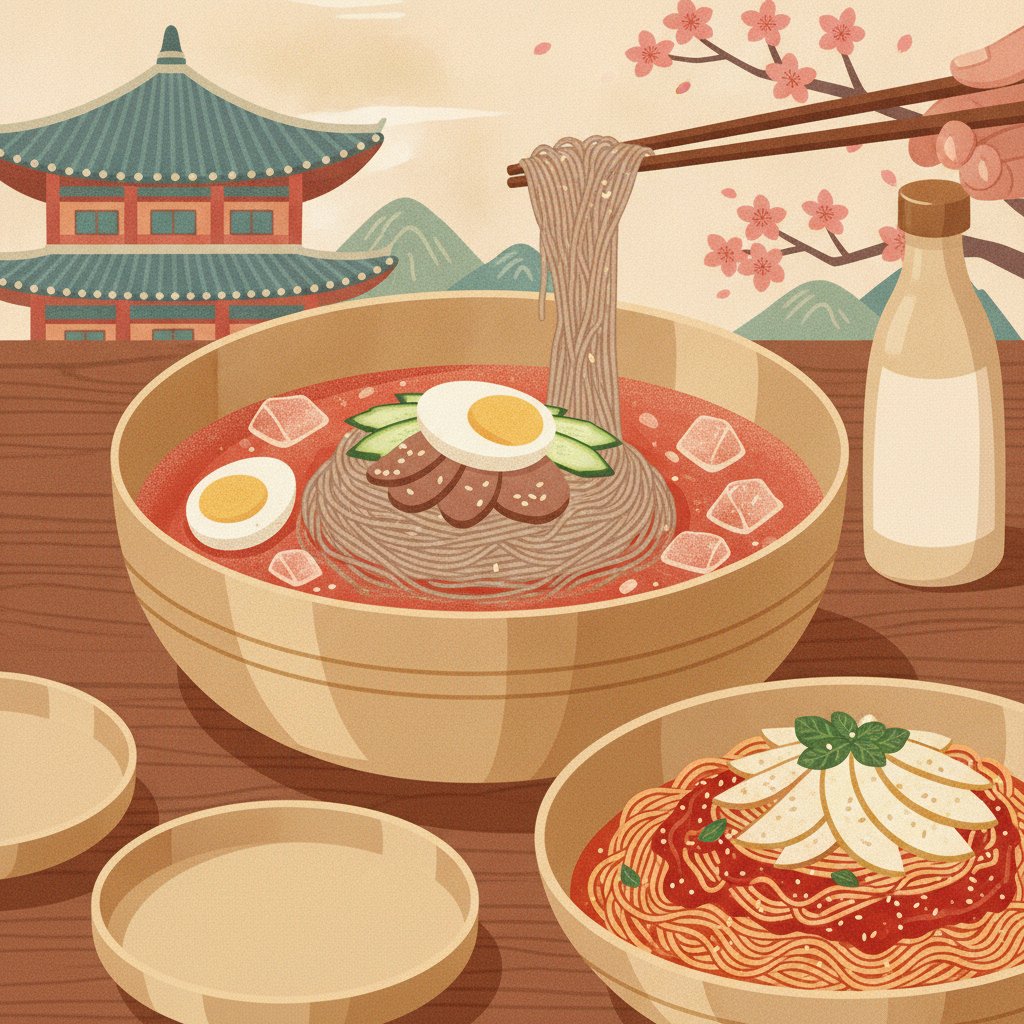
- Mul Naengmyeon (Soup Cold Noodles): Noodles served submerged in a chilled, clear broth topped with icy slush. It is crisp, savory, slightly tangy, and deeply soothing on a hot day.
- Bibim Naengmyeon (Mixed Spicy Cold Noodles): Noodles tossed in a concentrated spicy chili paste sauce with dynamic garlic, sesame, and vinegar accents. It usually comes with a tiny ladle of chilled broth or a side cup of warm beef broth to sip on.
| Feature | Mul Naengmyeon | Bibim Naengmyeon |
|---|---|---|
| Base | Chilled beef stock & radish brine broth | Thick red pepper seasoning paste |
| Flavor Profile | Clean, tangy, refreshing, mild | Spicy, sweet, savory, punchy |
| Noodle Texture | Softer in cold liquid | Chewier without liquid broth |
How to Eat Naengmyeon Like a Korean Local
When your bowl arrives at the table, you might notice small condiment jars containing yellow mustard and brown vinegar, alongside a pair of heavy kitchen scissors. Eating cold noodles is an interactive experience, but following a few traditional steps will help you get the best flavor balance.
Step 1: Sip the Plain Broth First
Before adding condiments or cutting the noodles, pick up the brass bowl with both hands and take a direct sip of the broth. This allows you to judge the underlying flavor of the kitchen’s house stock. Good naengmyeon broth takes hours to clarify and simmer, so appreciate its pure form first.
Step 2: Eat the Hard-Boiled Egg First
Almost every bowl of naengmyeon comes topped with half a hard-boiled egg. As a Korean habit passed down through generations, we always eat the egg first. The egg yolk coats the lining of your stomach, protecting it from the cold temperature and acidic vinegar you are about to enjoy.
Step 3: Season with Mustard and Vinegar
If you want extra zing, squirt a small ring of yellow mustard (gyeo-ja) into the bowl and add a quick splash of white or apple vinegar (sik-cho). A local insider tip: pour the vinegar directly onto the noodles rather than floating it in the soup broth. This keeps the acidity crisp on every bite while retaining the rich depth of the soup base.
Step 4: To Cut or Not to Cut?
Your server will often ask if you would like them to cut your noodles with kitchen shears. Long noodles traditionally symbolize long life and good health, so traditionalists avoid cutting them at all. However, because starch-based noodles (like Hamheung style) are extremely chewy, making one quick cross-cut (one vertical snip, one horizontal snip) with scissors makes chewing far easier for beginners.
🎟️ Popular tours & experiences in Korea
Klook.comClassic Pairings: What to Order on the Side
Naengmyeon is wonderful on its own, but pairing it with warm side dishes creates a satisfying contrast in temperatures and textures.
- Mandu (Korean Dumplings): Large steamed pork and vegetable dumplings (gogi-mandu) are the classic side dish. Alternating between hot, savory dumplings and cold, tangy noodles is pure perfection.
- Galbi or Samgyeopsal (Grilled Meat): In many K-BBQ spots, ordering cold noodles at the end of a meat feast is mandatory. Wrapping a cold slice of noodle around a hot piece of grilled pork belly or marinated short rib—a bite known as ssam-myeon—is one of the absolute best bites in Korean cuisine.
Where to Buy and How to Make Naengmyeon at Home
If you are traveling in Seoul, classic naengmyeon establishments generally price a bowl between 10,000 to 16,000 won (approximately $8 to $13 USD), depending on whether it is a neighborhood shop or a famous historic Pyongyang house like Woo Lae Oak or Eulji Myeonok. Prices vary by location and seller.
For international fans outside Korea, you do not have to wait for a trip to East Asia to taste cold noodles. Excellent instant and restaurant-quality meal kits are sold globally.
Finding Ingredients Abroad
You can easily purchase packaged naengmyeon meal kits at Asian grocery stores like H Mart or online through platforms like Amazon. Popular brand names like Pulmuone, CJ Bibigo, or Paldo offer refrigerated or frozen kits that include noodle bundles, concentrated broth packets, and spicy sauce packets. These kits typically cost around $6 to $12 USD for a two-serving pack.
Step-by-Step Home Preparation
- Chill the Broth: Place the liquid broth packet from your kit into the freezer for about 30 to 45 minutes before cooking so it forms slushy ice crystals.
- Boil the Noodles Quickly: Naengmyeon noodles cook fast! Drop the noodles into boiling water for just 40 to 90 seconds (check package directions). Do not overcook them, or they will lose their signature bounce.
- Rinse in Ice Water (Crucial Step): Drain the cooked noodles immediately and wash them aggressively under cold running water, massaging them with your hands to scrub off excess surface starch. Finish by shocking them in an ice-water bath and squeezing out all water.
- Assemble: Place the tightly wound noodle mound into a wide bowl, pour the slushy broth over top (or toss with spicy sauce), and top with sliced cucumber, pickled radish, a slice of fresh pear, and a halved boiled egg.
FAQ
Are Korean cold noodles supposed to have real ice in the soup?
Yes! Authentic Mul Naengmyeon broth is intentionally served near freezing, often featuring slushy, crushed broth ice floating on top. This keeps the noodles extremely firm and refreshing down to the last bite.
Is Naengmyeon suitable for gluten-free diets?
It depends on the noodles. Pure buckwheat noodles (100% buckwheat) are naturally gluten-free, but many commercial brands mix buckwheat flour with wheat flour or wheat starch for elasticity. Always inspect the ingredient label on packaged kits or ask the restaurant staff if wheat flour is mixed into the noodle dough.
Why are the noodles so hard to pull apart when eating?
Naengmyeon noodles contain high levels of plant starch (potato, sweet potato, or tapioca) to create their signature elastic, slippery chew. If you find them too tough to bite through easily, it is completely acceptable to use kitchen shears to cut the noodle bundle once or twice before mixing.
More on Classic Dishes & Vegan
- Vegetarian & Vegan Eating in Korea GuideA survival guide covering hidden non-vegan ingredients, useful phrases, and safe food options in Korea.
- Fresh Daily Bean Curd at Hwanggeum KongbatA guide to Hwanggeum Kongbat, a Mapo restaurant serving fresh handmade bean curd and wholesome Korean dishes.
- Guide to Korean Stews and SoupsA beginner's guide to understanding, ordering, eating, and cooking classic Korean stews and soups.
See every Classic Dishes & Vegan post in our K-Food guide.
Handy toolsKorea travel essentials · Korea Guide Finder
🎟️ Popular tours & experiences in Korea
Klook.comKeep Reading
- Gwangjang Market Food Guide from a Seoul Local
- Korean Dining Etiquette Rules: How to Eat Like a Local
- Essential Korean Bakery Items to Try in Seoul
- Types of Korean Tteokbokki From Classic Street Food to Rose
🎟️ Popular tours & experiences in Korea
Klook.com