Hanbok Rental in Seoul: Where, How Much & Photo Tips
At a glance
- In shortCovers where to rent a Hanbok in Seoul, typical prices, booking options, included items, and key benefits.
- Best forForeign travelers looking to rent a Hanbok in Seoul
- WhereSeoul
- Key pointsWearing a Hanbok gives free entry to Seoul's grand palaces and Jongmyo Shrine. · Rentals are concentrated around Anguk, Gyeongbokgung Station, and Insadong. · Basic rentals start around 15,000 KRW for 2-4 hours and can be booked on Klook.
- Heads-upPremium designs and elaborate hair accessories cost extra beyond basic rental packages.
Embrace the Past: Your Ultimate Hanbok Rental Guide in Seoul
Annyeonghaseyo, international Korea lovers! As a local Korean, few things warm my heart more than seeing visitors truly immerse themselves in our beautiful culture. And what better way to do that than by donning a gorgeous Hanbok, our traditional attire? Walking through the grand palaces and historic alleyways of Seoul in a Hanbok isn’t just a photo opportunity – it’s a journey back in time, a chance to feel like royalty or a scholar from centuries past.
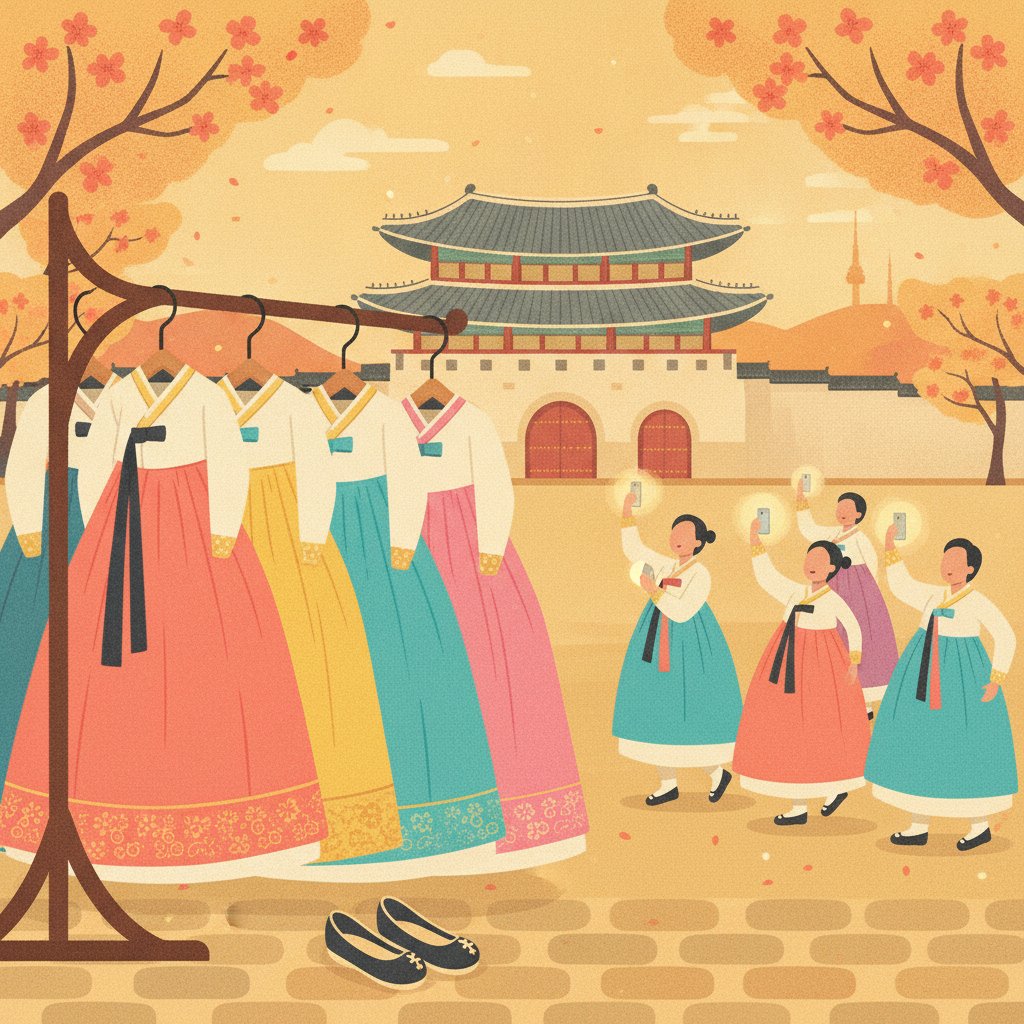
It’s incredibly popular now, and for good reason! Every time I visit Gyeongbokgung Palace, I see countless visitors, both local and foreign, dressed in vibrant Hanboks, laughing and posing. It’s truly a sight to behold, and something I wholeheartedly recommend for anyone visiting Seoul. So, if you’re dreaming of that perfect Hanbok experience, you’ve come to the right place. This guide will walk you through everything you need to know about hanbok rental in Seoul: where to find the best spots, what to expect regarding prices, and my top tips for capturing those unforgettable photos.
Why Rent a Hanbok in Seoul? It’s More Than Just a Costume!
You might be thinking, “Is it really worth it?” And my answer, as a Korean who cherishes our heritage, is a resounding YES! Here’s why I believe renting a Hanbok is an absolute must-do during your Seoul adventure:
- Cultural Immersion: Wearing a Hanbok connects you directly to Korea’s rich history. You’ll feel a deeper appreciation for the architecture, traditions, and stories of the past as you wander through places like Gyeongbokgung or Bukchon Hanok Village.
- Unforgettable Photos: Let’s be honest, everyone loves a good photo op! A Hanbok transforms your pictures from simple vacation snaps into stunning, unique souvenirs. Imagine yourself in a vibrant Hanbok, standing against the backdrop of an ancient palace – pure magic for your social media feed and personal memories.
- Free Palace Entry: This is a fantastic bonus! Visitors wearing a Hanbok are granted free entry to the five grand palaces in Seoul (Gyeongbokgung, Changdeokgung, Changgyeonggung, Deoksugung, and Gyeonghuigung) and Jongmyo Shrine. It’s a significant saving and an extra incentive to experience our history.
- A Unique Experience: How often do you get to dress up in traditional attire from another culture? It’s a fun, memorable activity that stands out from typical sightseeing.
Where to Rent Your Hanbok in Seoul: Top Locations & Platforms
Most Hanbok rental shops are conveniently located near Seoul’s major historical sites. This means you can pick up your Hanbok and immediately start your cultural exploration!
The Palace Precinct: Gyeongbokgung & Changdeokgung Areas
This is undoubtedly the most popular area for Hanbok rentals, and for good reason! Many shops are clustered around Anguk Station (Line 3) and Gyeongbokgung Station (Line 3), making it incredibly convenient. You can step out of the shop, cross the street, and immediately be at the gates of Gyeongbokgung Palace. Shops here offer a vast selection, catering specifically to the palace experience.
- Benefits: Closest proximity to the main palaces, abundant choices, competitive prices due to high concentration of shops.
- Examples: You’ll find numerous independent shops and well-known chains like Hanboknam (often recommended for their wide selection and professional service) in this area.
Insadong: A Cultural Hub
Just a short walk from Gyeongbokgung and Anguk, Insadong is another fantastic area. While not as concentrated as the palace front, you’ll still find several charming Hanbok rental shops amidst the traditional tea houses, art galleries, and craft shops. It’s a great option if you plan to explore the traditional side of Seoul beyond just the palaces.
- Benefits: Combine your Hanbok experience with exploring Insadong’s unique cultural street, perhaps enjoying a traditional tea ceremony after your palace visit.
How to Book: Online Platforms vs. Walk-ins
You have a couple of options for securing your Hanbok, each with its own advantages:
- Klook: The Go-To for Convenience
As a Korean, I often recommend Klook to my foreign friends because it’s incredibly user-friendly and reliable. Many Hanbok rental shops, including popular ones like Hanboknam, have official storefronts on Klook. Booking in advance through Klook offers several benefits:- Guaranteed Availability: Especially during peak season or weekends, popular shops can get very busy. Booking ahead secures your spot.
- Transparent Pricing: You see the prices and package details upfront, allowing you to compare options easily.
- Exclusive Deals: Klook often has promotions or discounts not available for walk-ins.
- Language Support: The platform is in English, making the booking process smooth and stress-free.
- Easy Redemption: Just show your Klook voucher at the shop.
How to use Klook: Simply search for “Hanbok Rental Seoul,” browse the various shops and packages, select your preferred date and time, and complete the payment. You’ll receive an e-voucher.
- Direct from Shops: Flexibility for Explorers
If you prefer spontaneity, you can absolutely walk into any Hanbok rental shop. This gives you the flexibility to choose a shop on the spot and see their full collection immediately. However, be prepared for potential wait times during busy periods, and some shops might have more limited English-speaking staff than those catering heavily to online bookings. Prices might also vary slightly compared to online deals.
How Much Does Hanbok Rental in Seoul Cost? Understanding the Price Ranges
One of the first questions people ask is, “How much does it cost?” While I can’t give exact prices that constantly fluctuate, I can offer you reliable typical price ranges, so you can budget accordingly. Please remember that these are approximations, and actual prices vary by shop, Hanbok style (basic vs. premium), and rental duration.
Basic vs. Premium Hanbok
Hanbok rental shops typically offer two main categories:
- Traditional/Basic Hanbok: These are usually simpler designs, often solid colors or with classic patterns. They’re still beautiful and perfectly suitable for experiencing the culture.
- Theme/Premium Hanbok: These often feature more intricate designs, luxurious fabrics, embroidery, and bolder colors. They might be inspired by specific historical periods or K-drama styles. Naturally, these cost a bit more.
Typical Price Ranges for Hanbok Rental (Seoul)
Here’s a general idea of what you might expect, including the approximate USD conversion for your convenience. Keep in mind that 1,000 KRW is roughly 0.75-0.80 USD, but exchange rates fluctuate.
| Rental Duration | Typical Price Range (KRW) | Approx. USD Equivalent |
|---|---|---|
| 2-4 Hours | 15,000 – 30,000 | $11 – $23 |
| Full Day (Up to 8 hours) | 30,000 – 60,000 | $23 – $46 |
| 24 Hours | 40,000 – 80,000+ | $30 – $60+ |
Please note: These prices are for the Hanbok itself. Premium Hanboks will generally be at the higher end of these ranges, or even exceed them for very elaborate designs. Always check the specific shop’s pricing list or Klook package details.
What’s Included & What’s Extra?
Most rental packages typically include:
- The Hanbok: The main top (jeogori) and skirt (chima) for women, or top and pants (baji) for men.
- Inner Skirt (Petticoat): Essential for women’s Hanboks to give the skirt its beautiful, voluminous shape. Don’t skip this!
- Basic Hair Styling: Often, staff will help you tie your hair in a simple braid or bun, sometimes with a basic ribbon or hair tie.
- Basic Hair Accessories: Simple hairpins, ribbons, or small decorative clips.
What often costs extra:
- Premium Hair Accessories: More elaborate binyeo (ornamental hairpin), norigae (traditional ornament), elaborate headpieces, or floral wreaths. These can range from 5,000 KRW to 15,000+ KRW ($4-$12+).
- Professional Hair Styling: If you want an intricate updo, elaborate braids, or specific K-drama-inspired hairstyles, many shops offer this for an additional fee, typically 10,000 KRW to 20,000 KRW ($8-$15).
- Special Shoes: While most people wear their own comfortable walking shoes, some shops offer traditional Hanbok shoes for an extra charge (around 5,000-10,000 KRW / $4-$8).
- Bags/Props: Small traditional pouches (bokjumeoni) or fans for photos might also be available for rent or purchase.
Your Step-by-Step Guide to Renting a Hanbok
Renting a Hanbok is straightforward, but knowing the process can make it even smoother. Here’s how it usually goes:
- Research and Book (or Plan Your Walk-in):
Decide if you want to book online via Klook for convenience and potential discounts, or if you prefer to visit a shop directly. If booking online, select your preferred shop, time slot, and package. - Arrival and Check-in:
Head to the rental shop at your scheduled time (or just walk in if you haven’t booked). Present your Klook voucher or simply inform the staff you’d like to rent a Hanbok. You’ll usually need to provide a form of ID (passport is best for foreigners) and sometimes a small deposit or leave a personal item as collateral. - Choose Your Style:
This is the fun part! Browse the vast selection of Hanboks. Don’t be shy to ask for recommendations. Staff can guide you based on your preferred color, style (traditional, modern, themed), and size. As a Korean, I find it fascinating how many modern twists designers put on Hanboks now, while still respecting the traditional form! - Fitting and Styling Assistance:
Once you’ve chosen, staff will help you try on the Hanbok, ensuring it fits correctly. They’ll also provide the essential inner skirt for women. This is when they’ll do your basic hair styling and help you pick out simple accessories. If you want premium styling or accessories, this is the time to ask and pay for them. - Payment and Deposit:
Finalize payment for the rental and any add-ons. If you left collateral, confirm its safe keeping. - Enjoy Your Hanbok Experience!
Step out and explore! Don’t forget to take advantage of the free palace entry. - Returning Your Hanbok:
Return to the shop before your rental period ends. Staff will check the Hanbok for any damage and return your ID/deposit. It’s crucial to return it on time to avoid late fees!
Capturing the Moment: Hanbok Photo Tips for Stunning Souvenirs
Now that you’re dressed to impress, let’s talk about how to get those perfect, Instagram-worthy shots! As a local, I’ve seen countless people struggle or shine, so here are my best tips.
Best Photo Locations in Seoul
- Gyeongbokgung Palace: The most iconic choice! With its grand gates, colorful buildings, and spacious courtyards, every corner offers a majestic backdrop. Don’t miss the Geunjeongjeon Hall, Gyeonghoeru Pavilion, and the colorful Gangnyeongjeon Hall.
- Changdeokgung Palace & Huwon (Secret Garden): A UNESCO World Heritage site known for its exquisite natural landscaping and harmony with nature. The Secret Garden, in particular, offers serene and picturesque spots, especially beautiful during autumn foliage. (Note: Huwon requires a separate, timed ticket and sometimes has restrictions on where you can pose or set up tripods).
- Bukchon Hanok Village: A traditional Korean village with narrow alleys and charming Hanok houses. It provides a more intimate, traditional neighborhood feel for your photos. Be mindful that people live here, so keep noise levels down and respect private property.
- Namsan Hanok Village: Another fantastic option for traditional village vibes, often less crowded than Bukchon. It features five restored traditional Korean houses from different social classes of the Joseon Dynasty.
- Other Scenic Spots: Don’t overlook smaller, quieter corners within the palaces or even nearby cafes with traditional aesthetics. Sometimes the most unexpected spots yield the best photos!
Posing Like a K-Drama Star
A Hanbok isn’t just clothing; it’s designed for elegant movement. Embrace it!
- Elegant Walking Shots: Capture photos while gracefully walking, letting the skirt flow. A slightly turned head or a gentle smile adds to the charm.
- Graceful Sitting Poses: Find a bench or steps. Sit with your hands gently clasped in your lap, or gracefully hold a fan. The Hanbok’s voluminous skirt looks beautiful when spread out around you.
- Admiring the Scenery: Pose looking out over a palace courtyard or towards a beautiful gate, as if lost in thought or admiration. A slightly lowered gaze often adds an air of elegance.
- Playful & Candid Moments: Don’t be afraid to laugh, twirl (gently!), or interact with your companions. Some of the best photos are the natural, unposed ones.
- Hands Together: A classic pose is to gently bring your hands together in front of your chest or stomach, especially if you have a traditional pouch (bokjumeoni) to hold.
Timing is Everything: Best Light & Fewer Crowds
- Morning Glory: Arrive shortly after the palaces open. The light is soft and beautiful, perfect for photography, and there are significantly fewer crowds. You’ll have more space to move and fewer people in your background.
- Golden Hour: The late afternoon, about an hour or two before sunset, offers that magical, warm light that makes everything glow. However, crowds might still be present.
- Weekdays vs. Weekends: If your schedule allows, always choose a weekday over a weekend. Weekends are bustling with both locals and tourists.
Props & Accessories
Don’t underestimate the power of props! A beautiful bucha (fan), a traditional pouch (bokjumeoni), or even a small flower can enhance your photos and add authenticity to your look. Many rental shops offer these for an extra fee, so consider adding one to your ensemble.
Insider Tips for a Seamless Hanbok Experience
As a Korean, I want you to have the most comfortable and enjoyable Hanbok experience possible. Here are a few extra tips:
- Wear Light Layers Underneath: Hanboks can be quite voluminous. Wear thin, comfortable clothing underneath, like a T-shirt and leggings. This makes it easier to change and more comfortable to wear the Hanbok for hours.
- Mind Your Steps: The long skirts, especially on women’s Hanboks, can be tricky if you’re not used to them. Be mindful of stairs and uneven surfaces to avoid tripping. Take smaller, graceful steps.
- Check the Weather: A beautiful Hanbok photo shoot can be ruined by unexpected rain or extreme heat. Check the forecast! On colder days, some shops offer additional vests or cloaks, but otherwise, consider planning your rental on a mild day.
- Don’t Forget Your ID: Most shops require a valid ID (passport for foreigners) or a small deposit as collateral. Have it ready to avoid any delays.
- Enjoy Free Palace Entry! I mentioned this already, but it’s worth reiterating! Flash your Hanbok and walk into the major palaces for free. It’s a fantastic perk!
✈️ Book your trip to Korea — hotels, flights & more
Ready to Step Back in Time?
Renting a Hanbok in Seoul is more than just dressing up; it’s an opportunity to connect with Korea’s vibrant past, create stunning memories, and truly feel like a part of our history. As a Korean, I truly hope you take this chance to experience a unique slice of our culture. From the grand gates of Gyeongbokgung to the quaint alleys of Bukchon, your Hanbok adventure awaits. So go on, pick out your favorite colors, strike a pose, and let the magic of Korea envelop you!
If you have any questions or need more tips, feel free to drop a comment below. Happy Hanbok-ing!
More on Seoul Neighborhoods & Attractions
- Gilsang Ceramics Pottery Workshop in SeoulCovers visiting Gilsang Ceramics in Seoul, its BTS connection, pottery techniques, and studio details.
- Han River Instant Ramyeon & Picnic GuideA guide to choosing a Han River park, operating automated noodle cookers, and renting gear in Seoul.
- Nemamdaero Hongdae DIY Case StudioA guide to Nemamdaero Hongdae, a DIY studio for custom phone cases, top loaders, and slime.
See every Seoul Neighborhoods & Attractions post in our K-Travel guide.
Handy toolsKorea travel essentials · Trip budget calculator · Korea Guide Finder
🎟️ Popular tours & experiences in Korea
Klook.comKeep Reading
- Navigating Korea: Why Naver Map is Your Essential Guide Over Google Maps
- Korea Internet: eSIM, SIM Card, Pocket WiFi Choices
- Incheon Airport to Seoul Transport: A Local’s Advice
- How to Book and Ride KTX Trains in Korea
🎟️ Popular tours & experiences in Korea
Klook.com