Korean Funeral Scenes in K-Dramas Explained by a Local
Understanding Funeral Settings in K-Dramas
If you have spent any time watching Korean television, you have likely encountered a pivotal Korean funeral scene kdrama moment. A grieving family sits in a sterile hospital basement room, wearing black attire, receiving endless streams of guests who bow deeply before a floral altar. For viewers raised in Western cultures, where funerals usually take place in churches or funeral homes days after a passing, the setting and rituals shown in Korean dramas can feel surprisingly unique.
As a Korean, I often get questions from foreign friends asking why our funeral scenes look so intense, fast-paced, and centered around hospital basements. In Korea, modern funerals are almost exclusively held inside specialized facilities attached to major hospitals, known as jangrye-sikjang (funeral halls). Instead of taking weeks to plan, the entire process takes place over three days. This tradition is called sam-il-jang (three-day funeral), and understanding its rhythm makes watching emotional K-drama storylines far more meaningful.
✈️ Book your trip to Korea — hotels, flights & more
The Three-Day Funeral Timeline Breakdown
The fast rhythm of Korean funerals surprises many international viewers. When a death occurs in a drama, everything moves at lightning speed because the clock starts ticking immediately.
- Day 1: Setup and Announcement. The family secures a funeral room at a hospital, arranges the portrait frame with fresh flowers, and sends out formal notification texts to family, colleagues, and acquaintances.
- Day 2: Receiving Guests. This is the day you see most frequently on screen. Friends, distant relatives, coworkers, and neighbors visit the hall from morning until late at night to offer condolences, bow, eat, and drink.
- Day 3: The Procession (Balin). Early in the morning, the casket is moved to the hearse. The family holds a brief farewell ceremony before heading to the crematorium or burial site.
Because the second day is dedicated to hosting dozens or even hundreds of visitors, funeral halls operate 24 hours a day. It is entirely normal for Koreans to visit a colleague’s funeral after finishing a night shift at 11:00 PM.
Decoding the Visual Cues: Armbands, Ribbons, and Attire
When you watch a Korean funeral scene kdrama episode, pay close attention to what the characters are wearing. Costume designers use traditional mourning accessories to communicate family hierarchy and emotional burden without saying a word.
Male family members wear black suit attire paired with hemp armbands called dudae on their left arm. Female mourners wear simple black dresses or black modern hanbok (traditional attire), often with a small white ribbon hairpin placed in their hair.
| Accessory | Who Wears It | Cultural Meaning |
|---|---|---|
| Two-Stripe Armband | Chief Mourner (Sangju) | Direct lineal descendant, usually the eldest son or husband |
| One-Stripe Armband | Close Male Relatives | Brothers, grandsons, or close family members assisting |
| White Ribbon Hairpin | Female Family Members | Worn on the left side for male deceased, right side for female |
As a local tip, if you see a character wearing the armband with two black lines in a drama, that person is the sangju (chief mourner). They bear the legal and financial responsibility for the service, as well as the duty of bowing to every guest who enters the room.
🎟️ Popular tours & experiences in Korea
Klook.comStep-by-Step Guest Etiquette: Bowing and Condolences
In dramas like My Mister or Queen of Tears, characters go through a distinct set of physical gestures when entering the memorial room. If you ever attend a funeral in Korea, or simply want to follow along with a Korean funeral scene kdrama storyline, here is the exact step-by-step sequence of events.
1. Writing Your Name and Giving Bu-ui-geum
At the entrance of the specific room, there is a desk with a guestbook. Visitors write their names and hand over a sealed white envelope containing bu-ui-geum (condolence money). This monetary gift helps the family offset the substantial costs of renting the hall and feeding guests.
In Korea, typical condolence amounts follow specific social norms based on odd numbers or multiples of ten (considered lucky or balanced):
- Casual acquaintances or coworkers: 50,000 KRW (roughly $35–$40 USD)
- Close friends or close colleagues: 100,000 KRW (roughly $70–$80 USD)
- Extremely close relatives or long-time friends: 150,000–300,000+ KRW (roughly $110–$225+ USD)
Prices and expectations vary depending on age, income, and relationship closeness, but 50,000 to 100,000 KRW remains the standard baseline across Seoul today.
2. Incense or Flower Offering
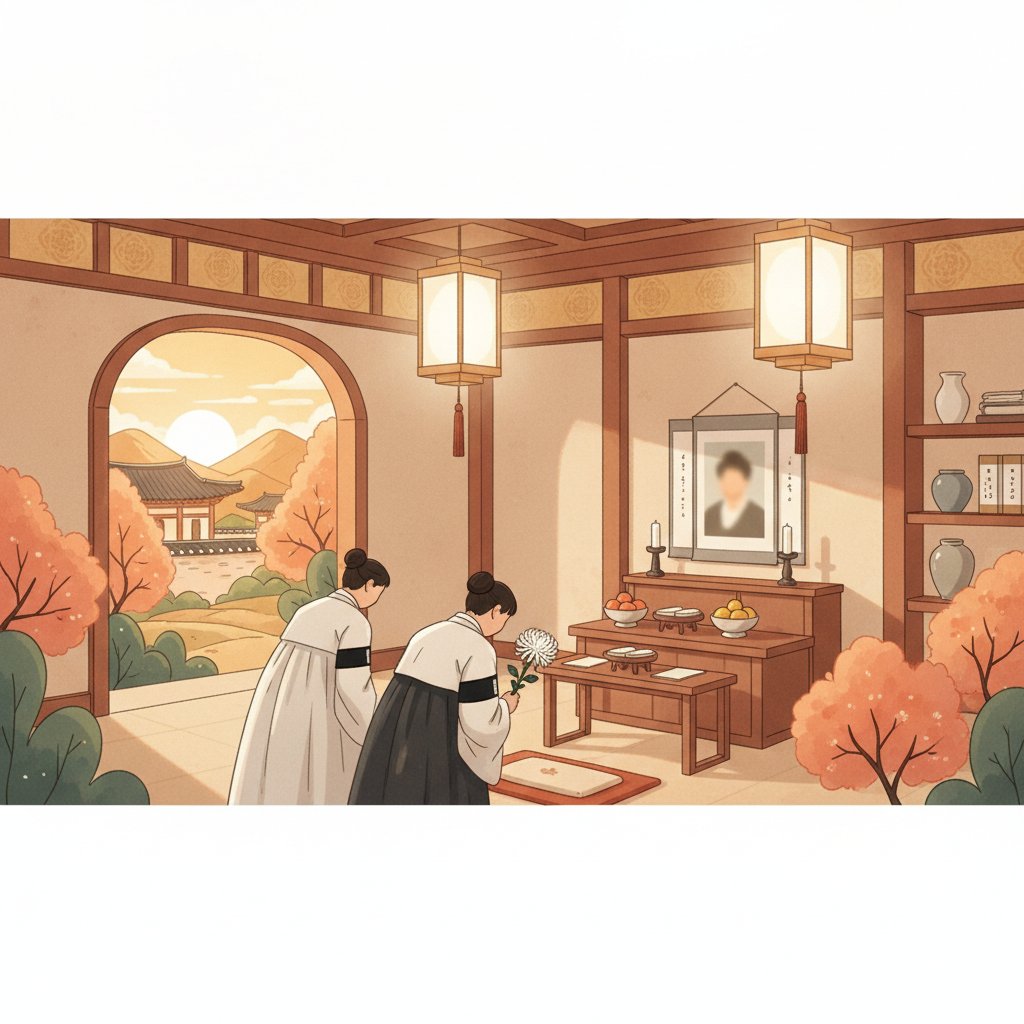
After stepping toward the altar, the guest performs one of two actions depending on religious preference. For traditional or Buddhist services, you light a single stick of incense, wave your hand gently to extinguish the flame (never blow on it with your mouth), and place it in the burner. For Christian services, you pick up a single white chrysanthemum from the table and place it stem-facing the portrait of the deceased.
3. The Double Bow to the Deceased
This step is critical: guests perform two full deep bows all the way to the floor, followed by a slight standing head bow. In Korean culture, bowing twice to the floor is strictly reserved for the dead. Performing a double bow to a living person is considered a serious mistake or curse, which is why living elders only receive one bow during New Year celebrations!
4. Bowing to the Chief Mourner
After bowing to the portrait, the guest turns to face the sangju and remaining family members. You perform one single full bow to each other, followed by a brief word of comfort. Often, simply saying lower-toned condolences or nodding silently is preferred over long speeches, as the family is emotionally exhausted.
Why Everyone Eats Yukgaejang at Korean Funerals
One detail that frequently confuses international fans during a Korean funeral scene kdrama moment is the sudden transition from tears to dining. Immediately after bowing, guests are ushered into an adjacent dining hall full of long tables, where elderly helpers serve hot food and alcohol.
The signature dish served at almost every Korean funeral is yukgaejang, a spicy red beef soup loaded with scallions, fern bracken, and bean sprouts. This choice is rooted in deeply embedded cultural beliefs:
- Spiritual protection: Traditional folklore holds that dark, bad spirits are repelled by bright red colors and fiery chili spice. Serving deep red soup was believed to protect the grieving household from negative energy.
- Practical hospitality: Preparing large pots of spicy beef broth allows the kitchen to keep food piping hot continuously over 72 hours for unpredictable streams of guests.
- Comforting warmth: Mourning is exhausting. A rich, spicy broth paired with rice, sliced pork (pyeon-yeok), and cold soju gives weary travelers immediate energy.
In Korean culture, staying at the funeral hall late into the night to drink, eat, and talk loudly with other guests is not seen as disrespectful. In fact, it is considered an act of loyalty. A noisy, crowded funeral hall (called bukjeok-bukjeok) brings comfort to the family because it shows how widely loved and respected the deceased was during their lifetime.
Cremation Trends and Where to Stream Dramas
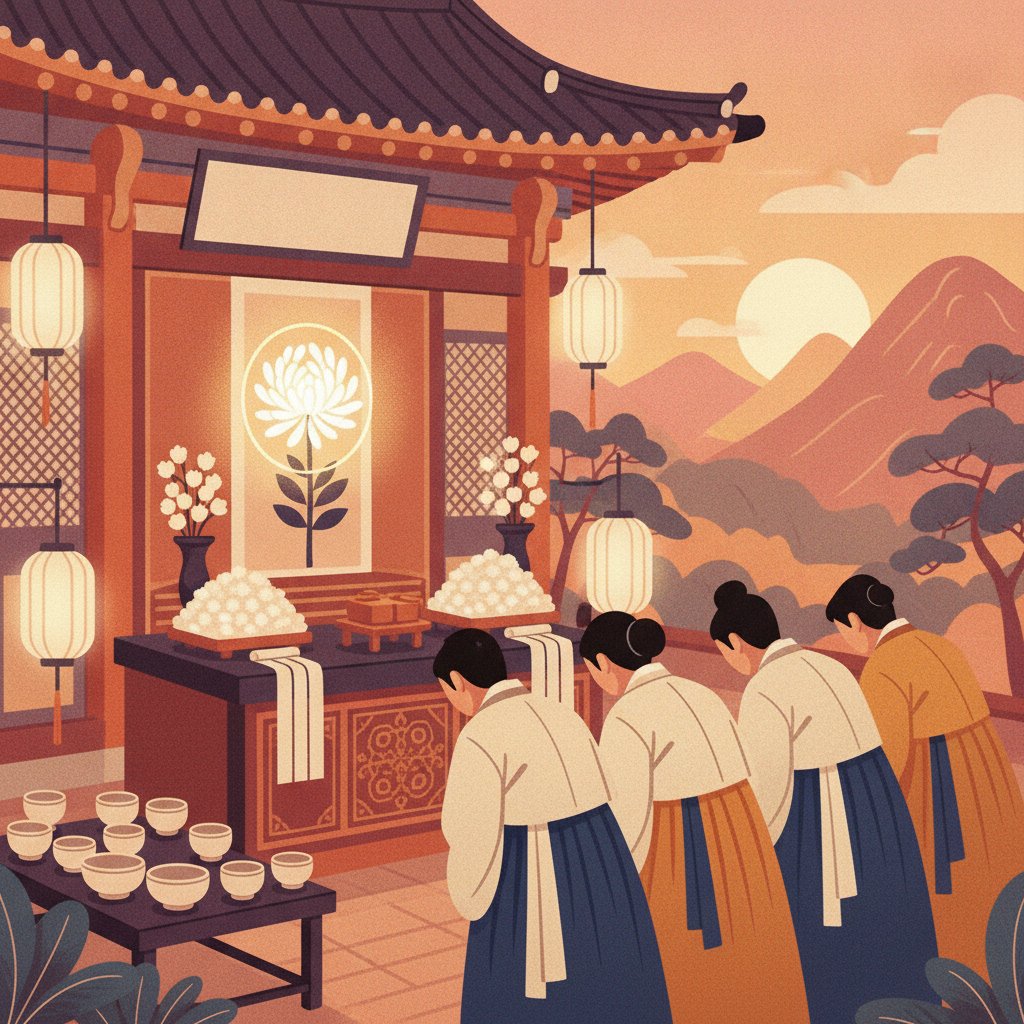
Historically, Koreans buried their loved ones on ancestral mountain plots. However, due to limited land in modern South Korea, cremation rates have skyrocketed past 90% in urban areas over the past two decades. Today, after the three-day hospital service, the body is cremated, and the ashes are placed in a modern indoor columbarium (nap-gol-dang) or scattered near a designated tree (su-mok-jang).
If you want to observe realistic funeral customs portrayed in K-dramas, you can find brilliant examples across major streaming services:
- Netflix: Shows like Queen of Tears, Tomorrow, and My Mister feature realistic depictions of hospital memorial halls, family bow lines, and the deep emotional weight of sam-il-jang.
- Rakuten Viki: Classic slice-of-life and family dramas showcase extended traditional mourning rituals, burial ground visits, and memorial anniversaries (jesa).
Seeing these customs portrayed on screen reflects how deeply Koreans value shared grief. We believe that sorrow divided among many friends becomes far lighter to bear—a philosophy that shines through every well-crafted Korean funeral scene kdrama creators share with the world.
Frequently Asked Questions
Why do characters wear armbands with lines at Korean funerals?
The striped armbands (dudae) identify male family members and their relationship to the deceased. Two black stripes indicate the chief mourner (usually the eldest son or spouse), while one stripe is worn by brothers, grandsons, or other close male relatives assisting with the service.
How many times do you bow at a Korean funeral?
You perform two full bows down to the floor for the deceased person’s portrait, followed by one half bow standing up. After that, you turn to the living family members (chief mourners) and perform one single full bow to exchange condolences.
Why is red spicy soup served at Korean funerals?
Spicy beef soup (yukgaejang) is traditionally served because its bright red chili broth was believed in folklore to ward off evil spirits and bad luck. Practically, it is easy to keep warm over a three-day service and offers hearty comfort to guests visiting late at night.
🎟️ Popular tours & experiences in Korea
Klook.comKeep Reading
- Level Up Your Korean: A Realistic Guide to Learning Through K-Dramas
- Beyond the Screen: Essential Korean Variety Shows K-Drama Fans Will Adore
- Webtoon K-Drama Adaptations: Picks and Watching
- K-Drama Cafes & Filming Spots in Seoul: Local Finds
🎟️ Popular tours & experiences in Korea
Klook.com