How to Ride Express Buses in South Korea as a Foreigner
Most foreign travelers in South Korea immediately head for the KTX high-speed train when planning trips outside Seoul. While trains are fast, taking an express bus in South Korea is often cheaper, more comfortable, and takes you directly to coastal towns and mountain regions that trains simply cannot reach. As a Korean who frequently travels across the country for weekend getaways, I usually prefer the bus when heading to destinations like Sokcho, Gangneung, or Jeonju.
Navigating bus terminals in a foreign language might feel intimidating at first, but the system is extremely punctual, safe, and modern. Here is everything you need to know about booking, boarding, and riding long-distance buses across the Korean peninsula.
Express vs. Intercity Buses: Understanding the Difference
In Korea, long-distance buses are divided into two main categories: Express Buses (Gosok Bus) and Intercity Buses (Siewae Bus). Understanding this distinction helps you head to the correct terminal building and use the right booking engine.
- Express Buses (고속버스): These run on major highways with minimal or no stops between big cities. They operate primarily through the official nationwide network called Kobus.
- Intercity Buses (시외버스): These cover a wider network, connecting smaller towns and regional hubs. They may make a few brief stops along local highways before reaching their final destination.
For most major tourist routes—such as Seoul to Busan, Daegu, Gwangju, or Gangneung—you will likely ride an express bus. However, both types of buses depart from high-tech terminals equipped with clear English signage and digital displays.
✈️ Book your trip to Korea — hotels, flights & more
Choosing Your Bus Class: Standard, Superior, and Premium
When booking an express bus in South Korea, you will choose from three distinct seat tiers. Ticket prices vary based on distance, time of travel, and class, but long-distance bus fares generally range from 15,000 KRW to 55,000 KRW (approximately $11 to $42 USD).
| Bus Class | Seating Layout | Key Features |
|---|---|---|
| Standard (Ilban) | 4 seats per row (2×2) | Basic recline, standard legroom, budget-friendly |
| Superior (Udeung) | 3 seats per row (2×1) | Wide seats, footrests, generous legroom |
| Premium | 3 seats per row (2×1) | Privacy curtains, lay-flat seats, personal screen, wireless charger |
As a local tip, if your journey is longer than two hours, paying a few extra thousand won for a Superior or Premium bus is well worth it. On a Premium bus from Seoul to Busan, which typically costs around 45,000 to 52,000 KRW ($34 to $39 USD), you get a fully reclining seat with built-in privacy curtains and USB charging ports—a level of comfort that rivals first-class air travel at a fraction of the cost.
Major Bus Terminals in Seoul
Seoul has several large bus terminals, so always double-check which terminal your route departs from before heading out.
1. Seoul Express Bus Terminal (Gangnam)
Located in southern Seoul (Express Bus Terminal Station, Subway Lines 3, 7, and 9), this massive complex is split into two main wings:
- Gyeongbu / Hanjin Line: Departs for eastern and southeastern destinations like Busan, Daegu, Gyeongju, and Gangneung.
- Central City (Honam Line): Departs for southwestern destinations like Jeonju, Gwangju, and Mokpo.
2. Dong Seoul Bus Terminal
Located near Kangbyeon Station (Subway Line 2), this terminal handles both express and intercity buses heading toward northeastern provinces like Gangwon-do (Sokcho, Yangyang) and parts of Gyeongsang-do.
3. Seoul Nambu Terminal
Located at Nambu Bus Terminal Station (Subway Line 3), this terminal focuses primarily on intercity routes to smaller towns in Chungcheong, Jeolla, and Gyeongsang provinces.
🎟️ Popular tours & experiences in Korea
Klook.comHow to Buy Express Bus Tickets in South Korea
Buying tickets as an international traveler can sometimes present challenges with online payment processing, but there are straightforward solutions available.
Option 1: Buying at the Terminal Kiosks or Counters (Recommended for Tourists)
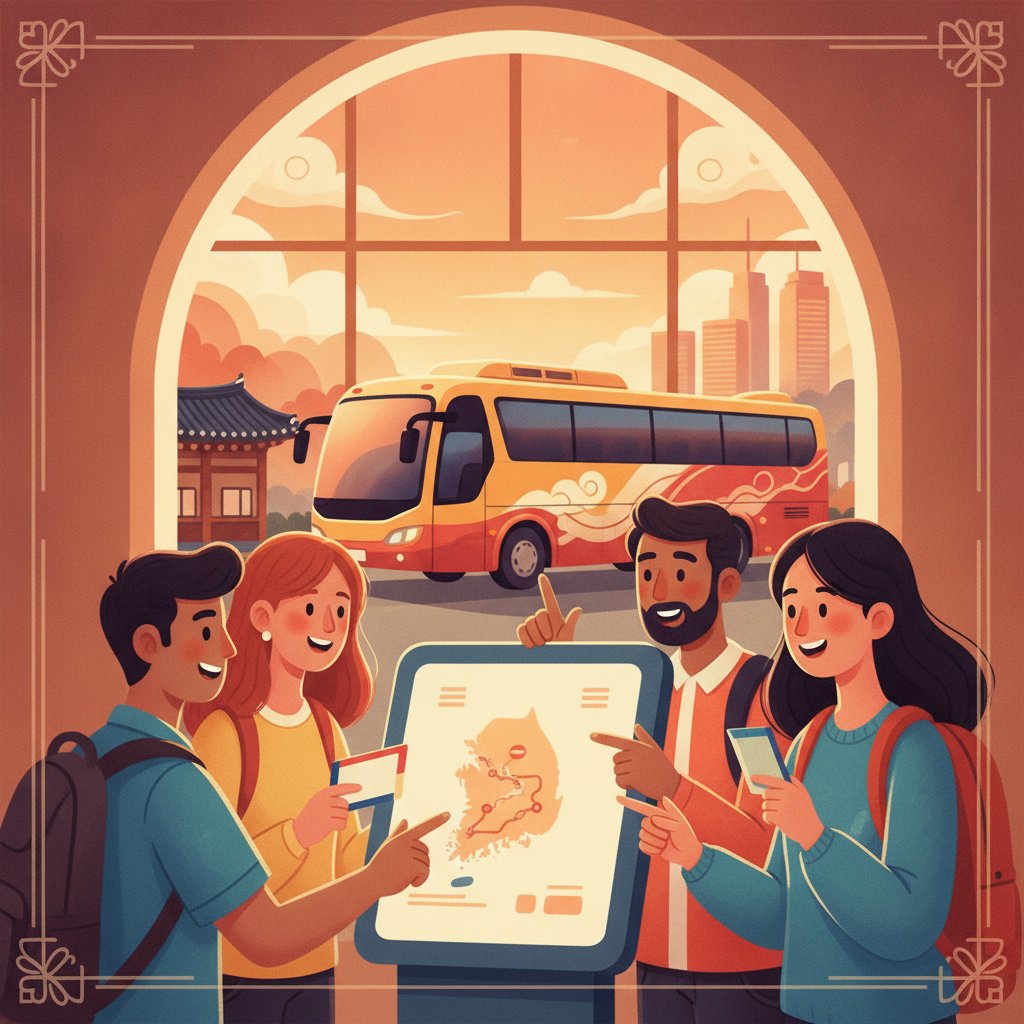
The easiest method for foreign tourists is buying tickets directly at the departure terminal. Automated ticket kiosks have an English language toggle in the top corner. They accept major international credit cards (Visa, Mastercard). If you run into technical issues, you can step up to the staffed ticket counter, show your destination on your phone screen, and pay in cash or with an international card.
Option 2: Online Booking via Official Websites
The official English website for express buses (kobus.co.kr) allows you to check schedules and purchase tickets. However, foreign credit card authentication on domestic mobile apps like T-money GO can sometimes fail without a Korean mobile number. If you want to reserve guaranteed seats in advance during peak holidays like Chuseok or Lunar New Year, travel platforms like Klook offer select intercity transport bookings, or you can ask your hotel concierge to assist with domestic booking apps.
Step-by-Step Guide to Boarding Your Bus
Once you have purchased your ticket, boarding is quick and efficient. Here is how the process works on travel day:
Step 1: Check Your Gate Number
Look at your paper or digital ticket for your departure gate number (표시 / 승차홈). Gates are numbered clearly throughout the terminal halls.
Step 2: Load Your Luggage
Head to your assigned gate 10 to 15 minutes before departure. Large suitcases go into the storage compartments under the bus belly. Driver attendants are usually present; simply pull open the luggage door or hand your bag over if requested.
Step 3: Scan Your Ticket
As you step onto the bus, hold the QR code or barcode from your ticket against the digital scanner located next to the driver. The terminal screen above the driver’s seat will highlight your seat number in green to confirm you have boarded the right bus.
Step 4: Enjoy the Highway Rest Stop Culture
On journeys lasting longer than two hours, your express bus south korea route will stop at a highway rest area (Hyu-ge-so) for 15 to 20 minutes. Do not miss this experience. Korean rest stops feature mini food courts serving local snacks such as walnut cakes (Hodu-gwaja), grilled butter squid, and sausage-rice cake skewers (So-tteok So-tteok).
Before stepping off the bus at a rest stop, take a picture of your bus plate number and take your wallet with you. The driver will sound the horn briefly before departing, so keep an eye on the time.
Local Tips for a Smooth Journey
- Weekend Traffic Delays: Express buses run on designated highway bus lanes, which bypass most commuter congestion. However, during peak holiday weekends, even bus lanes experience slowdowns. Plan extra cushion time if catching a flight back.
- Subway Connectivity: Major bus terminals connect directly to Seoul’s subway network, making transferring with luggage straightforward.
- Free Wi-Fi: Almost all express and intercity buses offer free public Wi-Fi onboard. Look for the network name matching the bus company or general T-money Wi-Fi.
Frequently Asked Questions
Can I use my T-money card to ride an express bus in South Korea?
No, you cannot tap a standard T-money transit card at the bus door for express bus routes as you would on a Seoul city bus or subway. You must purchase a dedicated paper ticket or digital QR ticket for your specific seat assignment beforehand.
What happens if I miss my bus departure time?
If you miss your bus, visit the ticket window immediately. Depending on how much time has passed after departure, you can usually receive a partial refund or pay a minor cancellation fee (typically between 10% and 30% depending on timing) to rebook on the next available bus.
Do express buses in South Korea have onboard restrooms?
Most long-distance express buses in Korea do not have built-in toilets. Instead, drivers schedule mandatory 15-to-20-minute breaks at modern highway rest areas equipped with large rest facilities every 90 to 120 minutes. If you experience an emergency, notify the driver immediately so they can stop at the nearest rest area.
🎟️ Popular tours & experiences in Korea
Klook.comKeep Reading
- Mogok Retreat Chapel (모곡 피정의 집): A Local’s Guide to Serenity in Gangwon
- Nexon Computer Museum (넥슨컴퓨터박물관): A Local’s Guide
- Lotte World Adventure Busan (롯데월드 어드벤처 부산): A Local’s Guide
- Cheongok Golden Bat Cave (천곡황금박쥐동굴): A Local’s Guide
🎟️ Popular tours & experiences in Korea
Klook.com