Pohang Travel Guide: Space Walk, Coastal Views, and K-Drama Spots
When you step onto the Space Walk at Hwanho Park, the first thing you notice isn’t just the swirling metallic curves above you—it is the faint rumble of the ocean breeze hitting the iron frame while your knees give a slight tremble. Located on the southeastern coast of South Korea, Pohang used to be known primarily as an industrial powerhouse driven by POSCO, the nation’s premier steel manufacturer. Today, as a Korean who has watched this city transform, I can tell you it has quietly become one of the most exciting coastal getaways in the country.
From dramatic ocean skywalks and vibrant fresh seafood markets to iconic filming locations from popular TV shows, Pohang offers a refreshing break from the concrete pace of Seoul. If you are planning a trip to the East Sea, this practical pohang travel guide covers everything you need to know about navigating the city like a local, visiting the famous Pohang Space Walk, and exploring its top coastal sights.
Getting to Pohang: Transport Options from Seoul and Busan
Pohang is surprisingly well-connected to major Korean transit hubs. Depending on your budget and schedule, you can choose between high-speed trains, express buses, or guided day tours.
Taking the KTX Train
The fastest and most comfortable way to reach Pohang from Seoul is by taking the KTX (Korea Train eXpress) directly from Seoul Station. The direct train ride takes roughly 2 hours and 30 minutes. A one-way adult economy ticket generally costs between 50,000 KRW and 60,000 KRW (approximately $38 to $46 USD), depending on the time of day and train type.
As a practical tip, KTX tickets open for reservation 30 days in advance on the official Korail website or mobile app (KorailTalk). Weekend trains sell out fast, especially during spring and autumn, so booking as early as possible is recommended. Overseas travellers can also book tickets through platforms like Klook for convenient digital pass management.
Express Buses and Local Connections
If you are travelling from Busan, taking an express bus from Busan Central Bus Terminal (Nopo Station) to Pohang Intercity Bus Terminal is the most direct route. The bus journey takes around 1 hour and 20 minutes, with tickets typically running between 9,000 KRW and 14,000 KRW ($7 to $11 USD). Buses run frequently throughout the day without requiring advance bookings during weekdays.
Getting Around Locally
Pohang is a sprawling city spread along a long coastline. While city buses cover major sights, route intervals can be longer than what you might be used to in Seoul. Here is how locals navigate the city:
- Kakao T App: Downloading the Kakao T app is essential for booking taxis easily without language barriers. Most taxi rides between central attractions (e.g., Pohang Station to Space Walk) cost around 10,000 KRW to 15,000 KRW ($8 to $12 USD).
- Transit Cards: Standard T-money or Cashbee cards work on all local Pohang city buses. Tap when boarding and tapping out when exiting.
- Rental Cars: If you hold an International Driving Permit (IDP), renting a car at Pohang Station offers maximum flexibility for reaching coastal spots further north or south.

✈️ Book your trip to Korea — hotels, flights & more
Walking the Sky at Pohang Space Walk
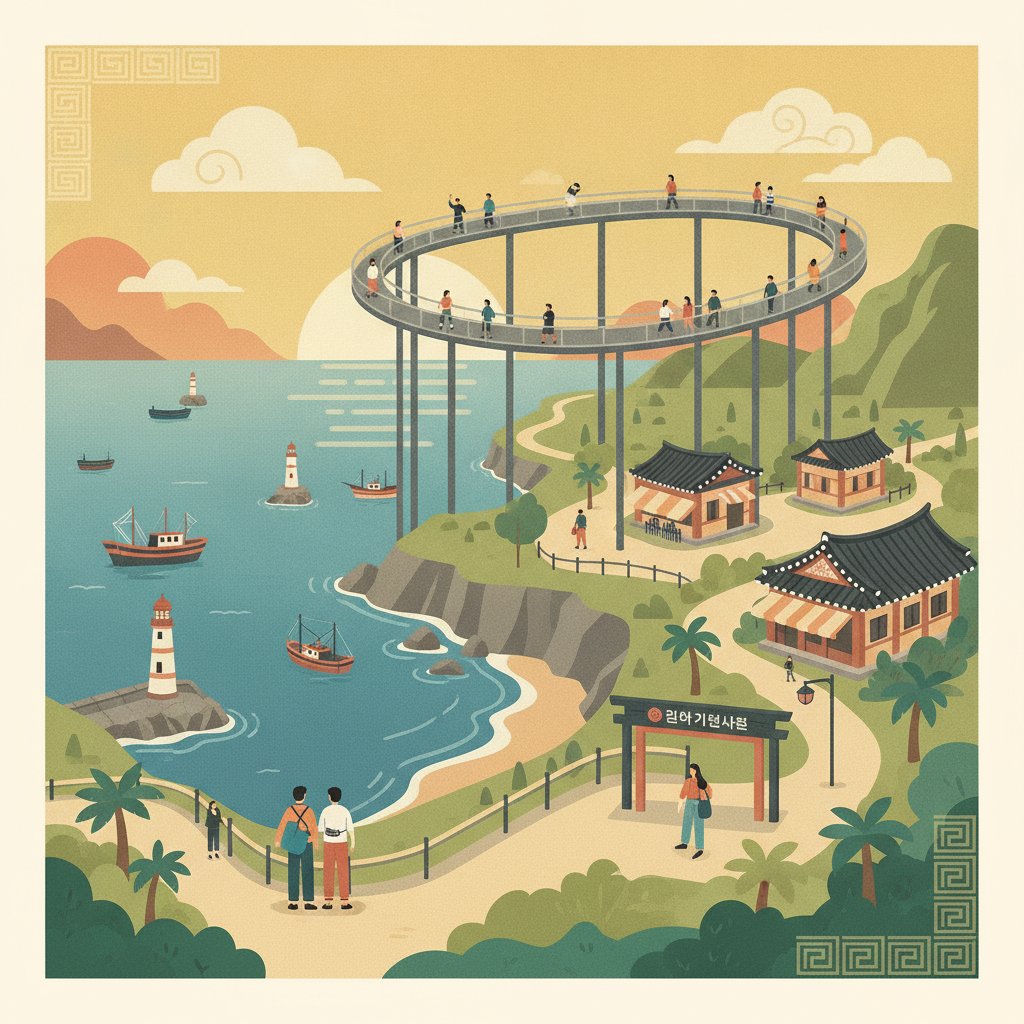
Perched atop a hill inside Hwanho Park, the Pohang Space Walk is South Korea’s largest walkable artwork. Designed by German artists Heike Mutter and Ulrich Genth and constructed using high-grade POSCO steel, this 333-metre-long winding track resembles a roller coaster frozen in mid-air. Walking along its curved stairways gives you a feeling of floating over the pine forests and Yeongil Bay.
Admission and Operating Rules
Admission to the Space Walk is free of charge. However, entry is strictly managed for visitor safety:
- Capacity Limits: Only a specific number of visitors are allowed on the structure simultaneously to manage weight and movement.
- Height Restrictions: Children under 110 cm in height are restricted from climbing the sculpture.
- Weather Closures: The structure closes automatically during high winds, heavy rainfall, or severe lightning. Always check the weather forecast before heading up.
Tips for an Enjoyable Visit
As someone who has walked up these steps on windy days, I strongly advise wearing flat, closed-toe walking shoes or sturdy sneakers. Avoid wearing high heels, loose slippers, or long skirts that might catch on the metallic mesh flooring. The stairs feature open grid plating, meaning you can see directly down to the ground beneath your feet, which can be thrilling or slightly terrifying depending on your comfort with heights!
For the best photo opportunities, try visiting during the late afternoon. You will catch the golden hour light hitting Yeongil Bay, and if you stay until sunset, you can watch the sculpture light up with gentle LED illumination against the night sky.
Essential Coastal Highlights in Pohang
While the Space Walk is the headline attraction, Pohang’s rugged coastline features several impressive natural and architectural landmarks worth adding to your itinerary.
1. Homigot Sunrise Square
Located on the easternmost tail of the Korean Peninsula, Homigot is famous as one of the very first places where the sun rises in South Korea every morning. The square is internationally recognized for the Hands of Harmony (Sangsaeng’s Hand)—a pair of massive bronze hand sculptures facing each other, one standing on land and the other rising out of the sea.
In Korean culture, these hands symbolize coexistence and mutual prosperity. Watching the morning sun rise between the fingers of the ocean hand is a iconic experience, especially on New Year’s Day when thousands gather for the annual sunrise festival.
2. Igari Anchor Observatory
Positioned along the northern coast of Pohang, Igari Anchor Observatory is a dramatic skywalk built 10 metres above the ocean waves. Looking down from above, the entire boardwalk is shaped like a ship’s anchor, pointing directly toward the Dokdo islets in the East Sea.
Surrounded by thick pine trees and striking turquoise waters, this spot has become hugely popular among local photographers. Entry is free, and the coastal trail connecting Igari to neighboring beaches makes for a pleasant seaside walk.
3. Yeongildae Beach and Pavilion
If you prefer an urban beach vibe, Yeongildae Beach is located close to the city centre. It houses the Yeongildae Pavilion, a traditional two-story wooden structure built over the water via a long seaside bridge. At night, the pavilion lights up, framing views of the distant POSCO industrial complex glowing on the horizon. The beach front is packed with local seafood restaurants, cafes, and street food stalls.
🎟️ Popular tours & experiences in Korea
Klook.comK-Drama Filming Spots and Local Food Culture
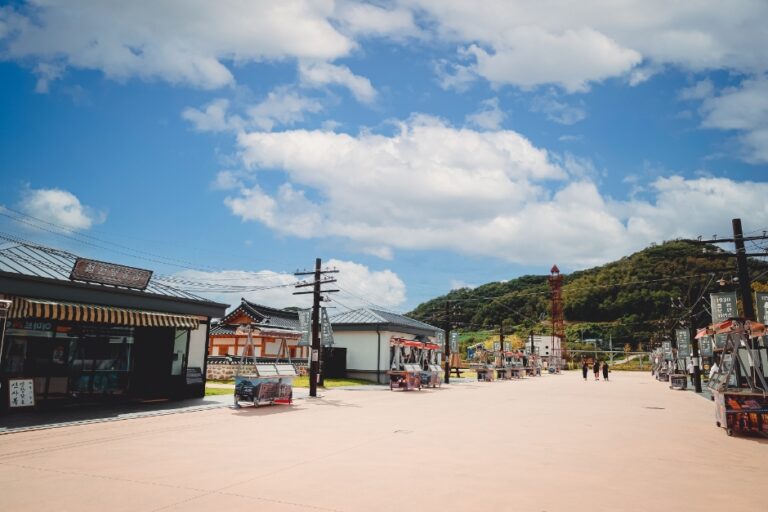
If you are a fan of K-dramas, you might recognize Pohang as the filming setting for popular series like Hometown Cha-Cha-Cha (which filmed extensively in the fictional village of Gongjin) and When the Camellia Blooms (filmed in the nearby Gury룡po Japanese House Street).
Visiting Hometown Cha-Cha-Cha Locations
Most of the iconic filming spots from Hometown Cha-Cha-Cha are located in northern Pohang around Cheongha Market and Sabang Memorial Park:
- Cheongha Market (Gongjin Market): Walk through the real-life market square where Chief Hong and Doctor Yoon ran into local market vendors. You will find recreated storefronts including the hardware store and the local cafe facade.
- Sabang Memorial Park: Climb Mugeunbong Hill inside the park to see the real wooden boat resting atop the grassy peak, overlooking the panoramic blue ocean.
Must-Try Pohang Seafood Dishes
You cannot leave Pohang without trying its local culinary specialties. Because of its busy fishing ports, the city serves some of the freshest seafood in Korea.
- Pohang Mulhoe (Cold Raw Fish Soup): Freshly sliced raw fish served over cabbage, cucumber, and Korean pear, topped with a spicy, ice-cold chili broth. Mix it all together for a refreshing summer meal. A generous bowl usually costs between 15,000 KRW and 22,000 KRW ($11 to $17 USD).
- Gwamegi (Winter Specialty): Dried Pacific saury or herring cured outdoors during the cold winter months. Locals wrap slices of Gwamegi in fresh seaweed, garlic, chili, and dried kelp dipped in spicy chogochujang (chili sauce with vinegar).
- Guryongpo Snow Crab: During late autumn and winter, Guryongpo Port serves steamed red snow crabs packed with sweet, tender meat.

Suggested One-Day Pohang Itinerary
To help you organize your trip efficiently, here is a practical one-day schedule covering the city’s key attractions without feeling overly rushed.
| Time | Location | Practical Details |
|---|---|---|
| 09:00 AM | Pohang KTX Station | Arrive via early KTX from Seoul or bus from Busan. |
| 10:00 AM | Homigot Sunrise Square | Take a taxi or bus to see the iconic Sangsaeng’s Hand sculpture. |
| 12:30 PM | Jukdo Market | Enjoy fresh Mulhoe or raw fish sets for lunch at Korea’s largest eastern seafood market. |
| 03:00 PM | Pohang Space Walk | Head to Hwanho Park to walk the steel sculpture track. |
| 05:30 PM | Yeongildae Beach | Walk along the boardwalk and watch the sunset from Yeongildae Pavilion. |
| 07:00 PM | Dinner near Beachfront | Dine at coastal restaurants overlooking illuminated harbor views. |
FAQ
How many days should I plan for a trip to Pohang?
A full one-day trip is sufficient to see the central highlights like the Space Walk, Jukdo Market, and Yeongildae Beach. However, if you plan to visit K-drama filming spots in northern Pohang or enjoy a relaxed coastal vacation, planning a 2-day, 1-night trip is recommended.
Is the Pohang Space Walk safe for children and elderly visitors?
Yes, the structure is engineered to withstand strong winds and earthquakes. However, entry is restricted for children under 110 cm tall. Visitors who experience severe vertigo or have mobility difficulties using steep stairs should exercise caution, as the walking path consists entirely of metal steps.
When is the best time of year to visit Pohang?
Spring (April to June) and autumn (September to November) offer the most pleasant weather with clear skies and mild temperatures. Winter (December to February) is ideal if you want to sample fresh Gwamegi and seasonal winter crabs, though coastal winds can be quite cold.
Keep Reading
- Mogok Retreat Chapel (모곡 피정의 집): A Local’s Guide to Serenity in Gangwon
- Nexon Computer Museum (넥슨컴퓨터박물관): A Local’s Guide
- Lotte World Adventure Busan (롯데월드 어드벤처 부산): A Local’s Guide
- Cheongok Golden Bat Cave (천곡황금박쥐동굴): A Local’s Guide
🎟️ Popular tours & experiences in Korea
Klook.com