What Actually Happens During a Head Spa in Seoul
Last autumn, when my cousin visited Korea from Canada, she had only one non-negotiable request on her itinerary. It was not visiting Namsan Tower, shopping in Seongsu-dong, or eating hotteok in Myeongdong. She wanted to try a traditional head spa in Seoul. As a Korean who grew up viewing monthly scalp scaling as a simple, practical routine to combat seasonal dryness, watching international visitors obsess over our local hair care routines has been fascinating. What used to be a routine visit to the neighborhood hair clinic has evolved into a full-blown bucket-list wellness destination for travelers from all over the world.
If you have spent any time on social media lately, you have probably seen videos of gentle water waterfalls pouring over someone’s forehead, deep acupressure massages, and macro-camera shots showing squeaky-clean hair follicles. But what actually goes into the appointment, how much does it cost, and how do you navigate booking one as an international visitor? Here is everything you need to know from a local’s perspective before you lay back in the treatment chair.
Why Scalp Care is a Core Part of K-Beauty
To understand why getting a head spa in Seoul is such a distinct experience, you have to understand the Korean approach to hair care. In Korea, we treat the scalp (called dupi or 두피) as an extension of our facial skin. Just as you wouldn’t expect smooth skin without proper cleansing and exfoliation, K-beauty philosophy teaches that healthy, glossy hair is impossible without a clean, balanced scalp environment.
Seoul’s climate puts a lot of stress on our hair. Between heavy urban micro-dust (fine dust) in the spring, severe humidity in the summer, and dry indoor heating during winter, fine particles and excess sebum constantly clog scalp pores. Korean scalp treatments were born out of a practical need to strip away this environmental buildup, stimulate blood circulation, and prevent premature hair thinning or irritation. When you get a scalp treatment here, you aren’t just getting a relaxing head massage; you are getting a deep, skin-first facial designed specifically for your head.
✈️ Book your trip to Korea — hotels, flights & more
Choosing the Right Type of Head Spa
Not every head spa in Seoul offers the exact same service. Depending on your goals—whether you want medical-grade scalp therapy or deep relaxation—you will want to choose between three primary categories of establishments.
1. Specialized Scalp Clinics (Dupi Clinics)
If you are suffering from severe dandruff, excessive hair loss, extreme oiliness, or psoriasis, a dedicated scalp clinic is your best choice. These facilities feel more like sleek, modern medical offices than day spas. They focus heavily on clinical scalp health, utilizing trichology cameras, galvanic current tools, and targeted hair growth ampoules. While relaxing, the primary goal here is therapeutic results rather than sensory pampering.
2. Luxury Hair Salons and Head Spa Boutiques
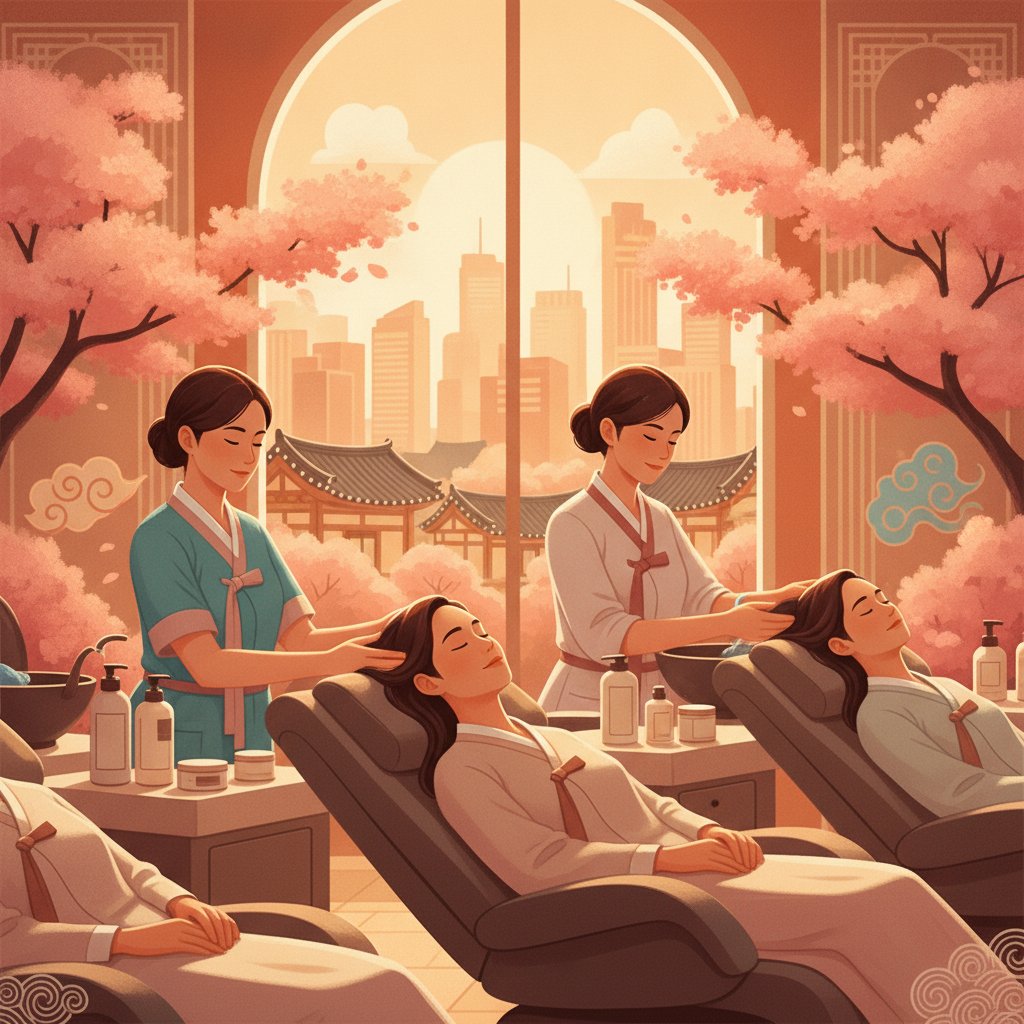
These are the aesthetic salons that go viral on social media. Destinations across Gangnam, Hongdae, and Myeongdong fall into this category. They combine intense scalp cleansing with sensory luxuries: heated eye masks, aromatic steam, full neck and shoulder acupressure, and the iconic halo water arch. These spots cater heavily to visitors looking for deep relaxation alongside scalp exfoliation.
3. Neighborhood Hair Salons with Express Scalp Care
If you cannot secure a reservation at a high-end specialized spa, don’t worry. Almost every neighborhood hair salon in Seoul offers an add-on service called dupi scaling (scalp scaling). While you won’t get two hours of ambient lighting and waterfall showers, you will get a thorough scalp exfoliation, steam treatment, and professional blow-dry at a fraction of the cost.
Step-by-Step: What Happens During Your Appointment
While minor details vary between clinics, a standard 60- to 90-minute full head spa in Seoul generally follows a structured, deeply satisfying process.
Step 1: The Initial Scalp Consultation and Micro-Analysis
Your treatment begins with an in-depth diagnosis. A technician will place a high-magnification diagnostic camera directly against your scalp to display your hair follicles on a tablet screen. As a Korean who gets this done periodically, I can tell you that this part is always a bit humbling! The camera reveals everything: dead skin buildup, oil accumulation around hair follicles, redness, and sensitivity. The technician uses these images to determine which exfoliating gels, soothing serums, and massage pressures suit your scalp condition best.
Step 2: Dry Acupressure and Scalp Scaling
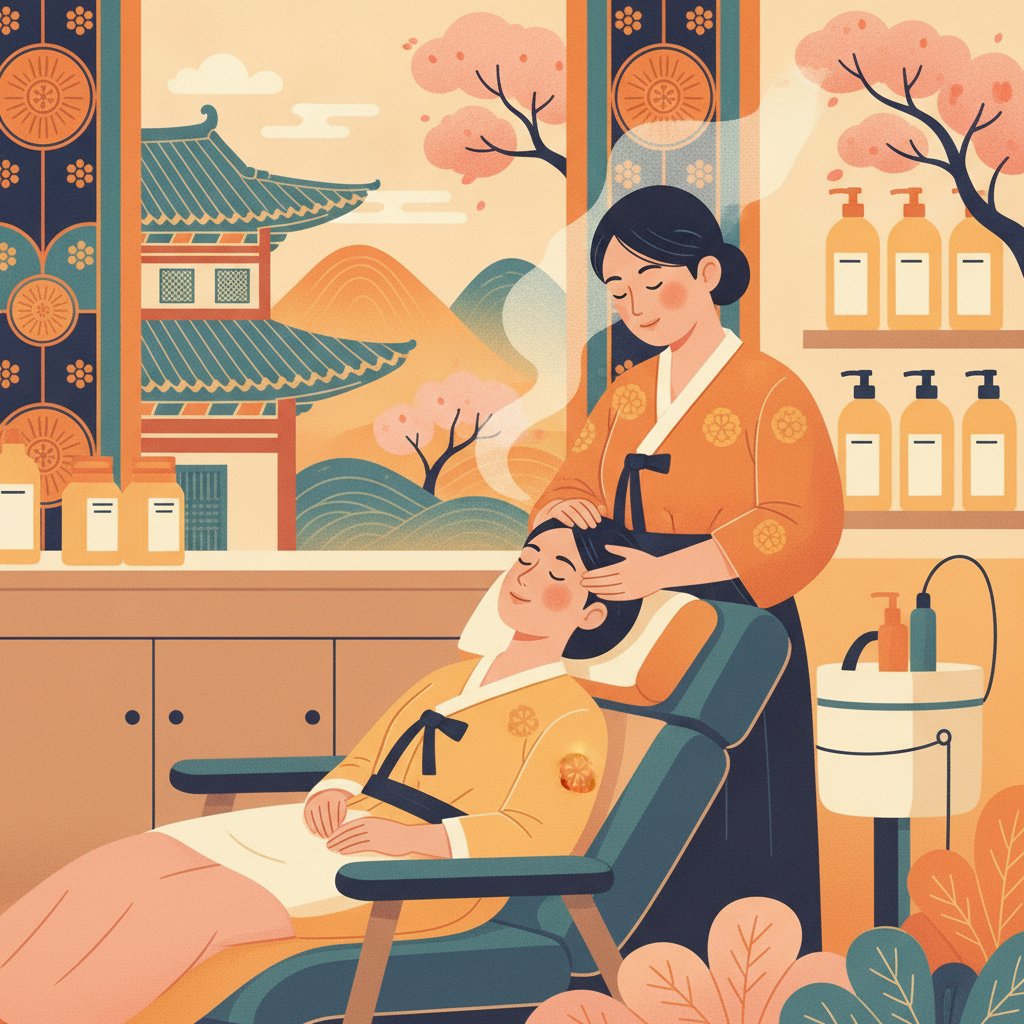
Once you are comfortably lying down in a private or semi-private treatment room, the practitioner begins with a dry massage along your neck, shoulders, and scalp to stimulate lymph drainage and loosen tightness. Next comes the scaling liquid. Using long cotton swabs or a specialized spray gun, they apply a cooling gel infused with gentle exfoliants like AHA, BHA, or tea tree oil directly to your parted hair. A soft scalp brush or massage tool is used to manually buff away dead skin and residue.
Step 3: Thermal Steaming
After applying the scaling product, a soft hood or steam dome is placed over your head for 10 to 15 minutes. Warm mist softens hardened sebum and opens up clogged hair follicles, allowing the active exfoliants to penetrate deeply while warming up your whole body.
Step 4: Deep Shampooing and the Water Waterfall
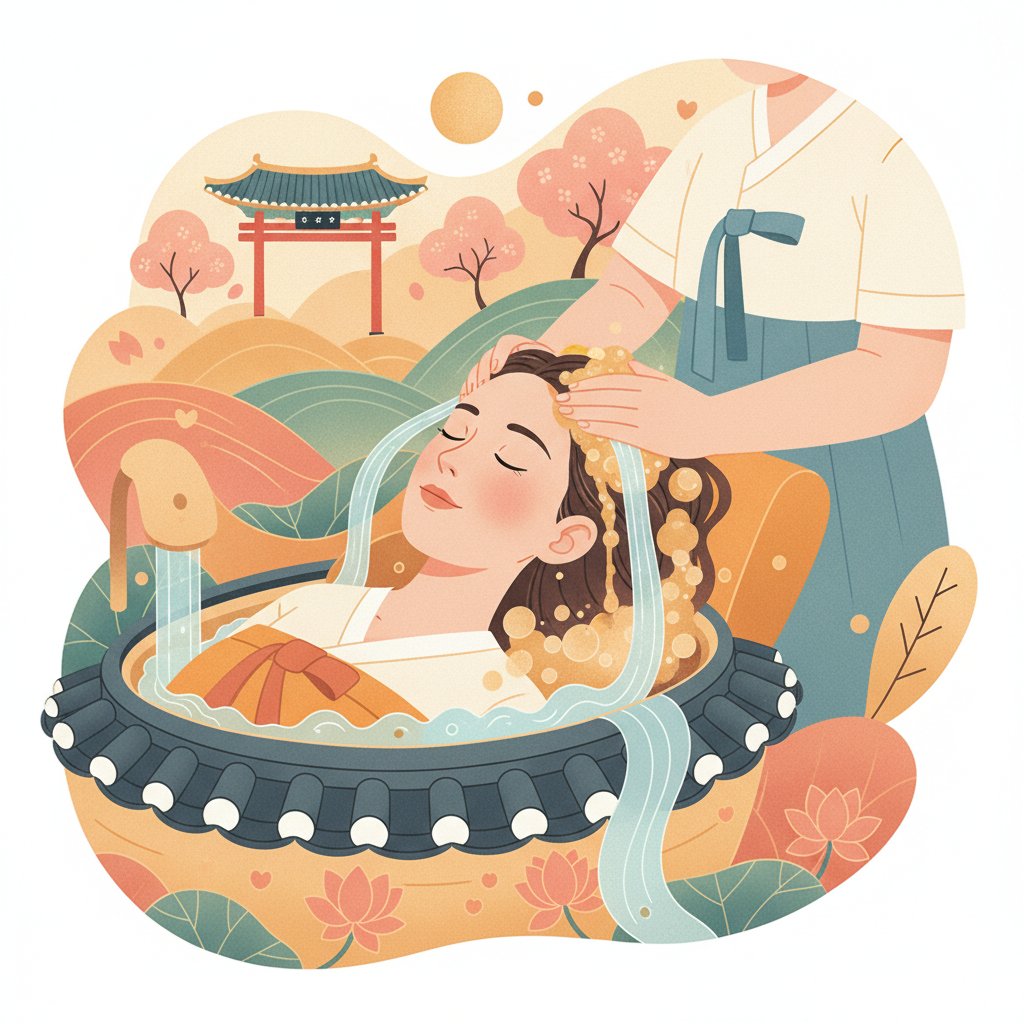
This is usually everyone’s favorite part. You move to a specialized reclining basin. The technician shampoos your hair using specialized brushes and deep rhythmic finger techniques that hit pressure points along your crown and occipital bone. Following the wash, a circular water ring (often referred to as a water waterfall or water halo) is placed over your hairline, pouring a continuous stream of warm water over your head. Combined with warm ear towels and ambient music, most people fall fast asleep during this stage.
Step 5: High-Tech Nourishment and Galvanic Therapy
With your scalp completely clean, it is time to restore moisture. A concentrated hair mask is applied to your strands, and a tonic suited to your scalp type (hydrating, anti-hair loss, or oil-balancing) is sprayed onto your skin using a cold airbrush. To ensure these ingredients penetrate deeply, clinics often use galvanic current devices, low-level laser therapy caps, or red LED light treatments.
Step 6: The Final Reveal and Styling
Before you leave, you will sit back down at the vanity to review the post-treatment camera shots. Seeing clean, pinkish, clear hair follicles compared to the clogged pores from an hour earlier is remarkably satisfying. Finally, the staff will dry and style your hair. Note that while some luxury spas include a full salon blow-dry, basic clinics may provide a quick dry or offer a self-styling station stocked with premium Korean hair products and styling tools.
🎟️ Popular tours & experiences in Korea
Klook.comHow Much Does a Head Spa Cost in Seoul?
Prices vary depending on the location, neighborhood, duration, and whether the venue caters specifically to tourists. Generally speaking, price ranges across Seoul fall into predictable tiers. Please keep in mind that these prices are approximate averages and can fluctuate based on exchange rates, seasonal promotions, and specific venue packages.
| Treatment Tier | Typical Duration | Estimated Price Range (KRW / USD) |
|---|---|---|
| Express Scalp Scaling (Add-on) | 30 – 40 mins | 40,000 – 70,000 KRW ($30 – $52 USD) |
| Standard Full Scalp Spa | 60 – 75 mins | 90,000 – 160,000 KRW ($68 – $120 USD) |
| Luxury / Intensive Scalp Therapy | 90 – 120 mins | 180,000 – 300,000+ KRW ($135 – $225+ USD) |
How to Book an Appointment as a Foreign Visitor
Due to huge demand on social media, popular head spa locations in Seoul book out weeks—and sometimes months—in advance. If you walk into a top-rated shop in Hongdae or Myeongdong without a reservation, you will likely be turned away.
- Travel Booking Platforms: The easiest hassle-free method for foreign tourists is using platforms like Klook. Many top English-friendly head spas list their packages directly on these services, allowing you to pay with international credit cards and select your preferred time slot without worrying about language barriers.
- Direct Social Media Inquiries: Many independent boutique spas operate English-language Instagram accounts or KakaoTalk channels where you can message them directly to check for last-minute cancellations or book private sessions.
- Hotel Concierge Assistance: If you are staying at a hotel in Seoul, the concierge staff can often phone local salons on your behalf to secure appointments or check real-time availability at neighborhood spots that do not have English websites.
Practical Local Tips for Your First Visit
To make sure your experience goes smoothly, keep a few insider tips in mind:
Skip washing your hair that morning. It might feel counterintuitive, but showing up with natural oil buildup actually helps the diagnostic camera get an accurate picture of your normal scalp health. It also allows the technician to evaluate how your oil glands behave.
Be careful if you have fresh hair color or extensions. Deep scaling, clarifying shampoo, and warm steam can pull out semi-permanent hair dye or weaken the bonds of hair extensions. Always notify your practitioner beforehand so they can adjust the products to color-safe formulas and skip harsh mechanical tools around bonded areas.
Dress comfortably. You will be lying down flat on a massage bed or shampoo basin for over an hour, and many clinics include neck and shoulder massages as part of the package. Wear loose-fitting tops or shirts with soft collars so you can relax fully without ruining nice clothing.
Frequently Asked Questions
How often should I get a head spa in Seoul?
For optimal scalp health, most local Koreans get a full scalp scaling or head spa treatment once every four to six weeks. This matches the natural cell turnover cycle of your skin. If you are visiting Seoul on vacation, getting one treatment during your trip is a great way to reset your scalp from travel stress.
Do I need to speak Korean to visit a head spa?
Not necessarily. While speaking basic Korean is helpful at smaller neighborhood salons, major head spas located in tourist-friendly hubs like Myeongdong, Gangnam, and Hongdae routinely host international guests. Their diagnostic camera software often includes English text, and staff members are accustomed to guiding non-Korean speakers using translation apps and simple visual cues.
Will my hair be fully styled before I leave?
This depends on the package you select. Luxury boutiques and full-service hair salons usually provide a complete, polished blow-dry as part of the session. However, clinical scalp spas focused strictly on medical treatments may only give you a quick rough-dry or direct you to a vanity stocked with hair dryers and styling products so you can dry your hair yourself. It is always wise to check the package inclusion details when booking.
🎟️ Popular tours & experiences in Korea
Klook.comKeep Reading
- Korean Sunscreen: Finding Your K-Beauty Match
- Olive Young: K-Beauty Picks in Korea and Online
- K-Beauty Online: Finding Authentic Products from Korea
- A Beginner’s Korean Skincare Routine
🎟️ Popular tours & experiences in Korea
Klook.com