How to Double Cleanse: The Korean Skincare Method
This post contains affiliate links. As an Amazon Associate, we earn from qualifying purchases at no extra cost to you.
The Local Secret Behind Clear Skin
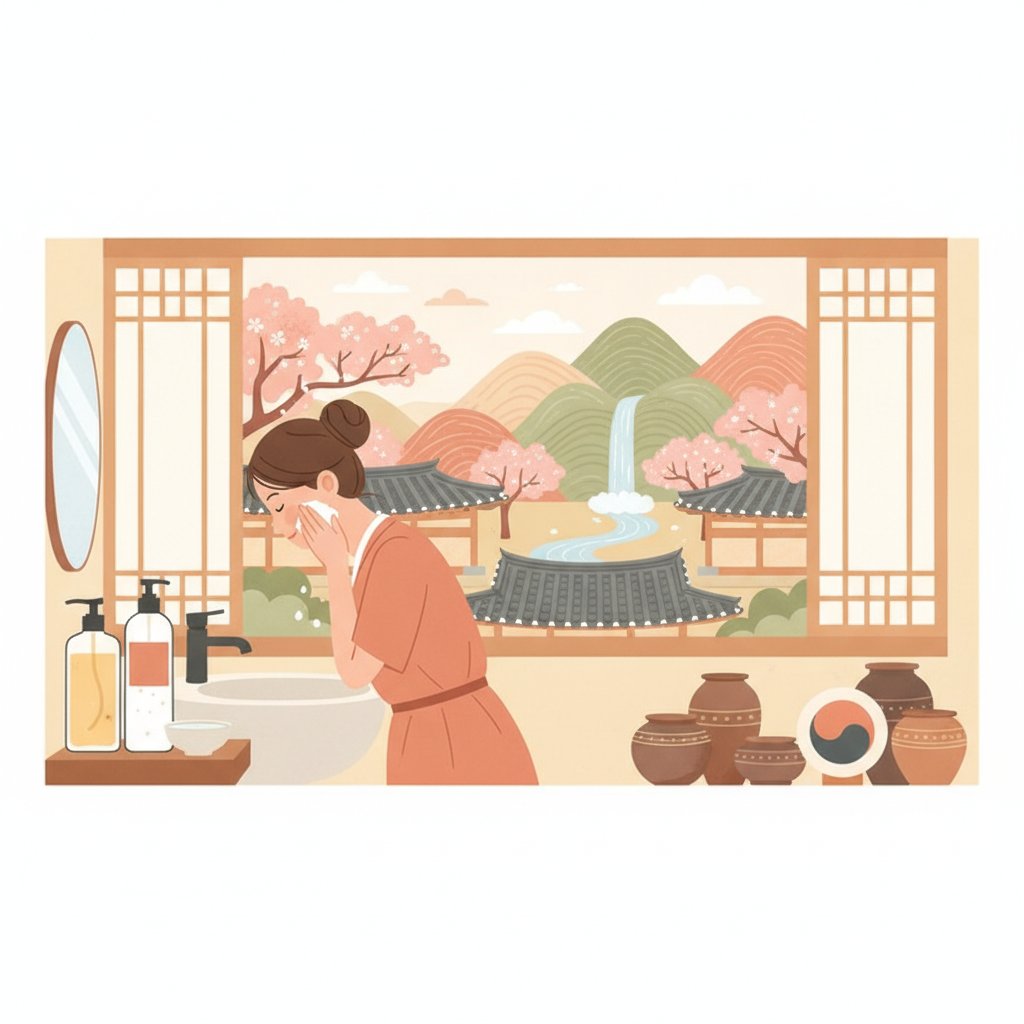
Growing up in Seoul, washing my face was never a one-step splash with a random bar of soap. I distinctly remember watching my older sister spend ten minutes at the bathroom sink every evening, massaging an oily liquid onto her completely dry face before letting a single drop of water touch her skin. Back then, I thought it was completely redundant. But when I hit my late teens and started dealing with Seoul’s notorious spring fine dust (misemundji) alongside heavy daily sunscreen, I finally understood why she did it.
As a Korean, double cleansing isn’t a trendy beauty hack or a luxury step reserved for spa days. It is the core foundation of daily personal care, taught by dermatologists, beauty shows like Get It Beauty, and parents across the country. If you want to understand how to double cleanse korean skincare style, you first need to understand that skin health in Korea begins with immaculate, non-stripping purification.
✈️ Book your trip to Korea — hotels, flights & more
What Is Double Cleansing and Why Does It Work?
At its core, double cleansing is a two-step washing method that uses two distinct types of cleansers back-to-back in the evening routine. The technique relies on a fundamental rule of science: like dissolves like.
The first step uses an oil-based cleanser—such as a lightweight cleansing oil, a rich cleansing balm, or a gentle cleansing milk. This breaks down oil-soluble impurities that gather on your face throughout the day, including sebum, air pollutants, silicone-heavy makeup, and water-resistant sunscreen formulas. A regular water-based wash simply glides over these oil-based barriers without breaking them down completely.
The second step uses a water-based cleanser—typically a mild foaming gel, gentle wash, or cream cleanser. This step cleanses away water-soluble debris like sweat, leftover dust, and environmental grime, while ensuring any residual cleanser from step one is thoroughly rinsed away.
Why Double Cleansing Is Essential in Korea
If you walk through the streets of Hongdae or Gangnam, you will notice people of all ages prioritizing clear, luminous skin. Environmental and lifestyle factors play a huge role in why this technique became standard practice here:
- High-Performance Sunscreens: In Korea, sunscreen application is considered mandatory every single day, rain or shine. Modern Korean sunscreens feature long-lasting, water-resistant formulas that cling tightly to the skin. A simple gel cleanser rarely removes them fully.
- Fine Dust and Urban Pollution: Microscopic atmospheric pollutants, known locally as fine dust, can penetrate deep into open pores. Oil cleansers are uniquely capable of binding to these particles so they can be washed away smoothly.
- Preventing Clogged Pores: Rather than using harsh physical scrubs or strong chemical peels every day, Koreans prefer gentle daily oil massages to keep pore congestion away before it turns into blackheads or breakouts.
🎟️ Popular tours & experiences in Korea
Klook.comStep-By-Step: How to Double Cleanse Like a Local
To get the full benefits without irritating your skin barrier, the execution matters just as much as the products you select. Here is the exact step-by-step process used in Korean evening routines.
Step 1: Apply Oil Cleanser to Dry Skin
Start with dry hands and a completely dry face. Pump a generous amount of cleansing oil (usually 2 to 3 full pumps) or scoop a dime-sized amount of cleansing balm onto your palms. Smooth it gently over your face using circular motions.
Take 30 to 60 seconds to massage your skin gently. Focus on areas where blackheads or excess oil tend to collect, such as the nose, chin, and middle of the forehead. The oil will start breaking down heavy eye makeup, foundation, and sunscreen seamlessly.
Step 2: The Crucial Emulsification Phase
This is the most critical step that many beginners accidentally skip. Before rinsing the oil off, wet your hands with a small amount of lukewarm water. Massage your face again for another 15 to 20 seconds.
You will notice the clear oil or balm instantly transform into a milky white liquid. This process is called emulsification. It allows the oil to mix with water so that it rinses off clean without leaving a greasy film or clogging your pores.
Step 3: Rinse Thoroughly with Lukewarm Water
Rinse your face thoroughly with comfortable, lukewarm water. Avoid hot water, as high temperatures strip natural lipidity and cause broken capillaries or redness over time.
Step 4: Follow with a Water-Based Cleanser
While your face is still damp, dispense a small amount of your water-based cleanser onto wet hands. Lather it between your palms first to create a gentle foam or lather before touching your face.
Massage the lather across your cheeks, forehead, and jawline using soft upward motions for roughly 30 seconds. Rinse clean with lukewarm water until no slickness or suds remain, then gently pat your face dry with a clean, soft microfiber towel or let it air-dry slightly before applying toner.
Choosing the Right Cleansers for Your Skin Type
Not every oil and water cleanser combination works for every skin type. Choosing formulas that complement your specific skin profile is key to keeping your moisture barrier intact.
| Skin Type | Recommended Step 1 | Recommended Step 2 |
|---|---|---|
| Oily / Acne-Prone | Lightweight oil with jojoba or tea tree | Low-pH salicylic acid or tea tree gel |
| Dry / Dehydrated | Nourishing cleansing balm or milk | Hydrating cream cleanser or rich foam |
| Sensitive / Reactive | Fragrance-free cleansing oil or micellar water | Soothing centella (Cica) foam |
For Oily and Acne-Prone Skin
It sounds counterintuitive to put oil on oily skin, but refined seed oils like jojoba, sunflower, and grape seed actually help dissolve hardened sebum plugs inside pores. Look for oil cleansers labeled as non-comedogenic, and pair them with a low-pH foaming gel containing gentle exfoliating acids like BHA (salicylic acid) or LHA.
For Dry or Sensitive Skin
If your skin feels tight after washing, opt for a solid cleansing balm infused with ceramides or plant butter, or a smooth cleansing milk. Follow up with a sulfate-free, non-foaming cream cleanser or a low-pH cleanser featuring soothing ingredients like Centella Asiatica (Cica), heartleaf, or green tea extract.
Where Locals Shop for Cleansers and Expected Costs
When you visit Korea, you will see Olive Young stores on virtually every block. It is the premier health and beauty retailer in the country, and it is where locals stock up on daily skincare necessities.
For international fans, popular products are easily available online through Olive Young Global or Amazon. You do not need to spend fortune to get reliable, clinically tested Korean cleansers.
- Oil Cleansers & Balms: Typically range between 18,000 to 28,000 KRW (roughly $14 to $22 USD) for a standard 150ml to 200ml bottle or jar.
- Water-Based Foams & Gels: Typically range between 12,000 to 22,000 KRW (roughly $9 to $17 USD) for a standard 150ml tube.
Locals frequently buy these in 1+1 (buy one, get one free) promotional bundles during major seasonal sales at Olive Young, which happen every March, June, September, and December.

Common Double Cleansing Mistakes to Avoid
If you notice new breakouts or irritation after starting to double cleanse, you might be falling into one of these common traps:
- Cleansing with Wet Hands Initially: Oil cleansers need direct contact with dry skin to dissolve sebum. If your hands or face are wet from the start, the oil emulsifies immediately and loses its cleaning efficiency.
- Skipping Double Cleansing in the Morning: Double cleansing is an evening-only routine. In the morning, your skin only has overnight sweat and natural sebum, so a single wash with water or a mild water-based cleanser is plenty. Over-cleansing twice a day can compromise your natural skin barrier.
- Rushing the Emulsification Step: Splashing water and immediately washing the oil off without massaging the milky emulsion first often leaves product residue behind, leading to clogged pores over time.
🎟️ Popular tours & experiences in Korea
Klook.comFrequently Asked Questions
Do I need to double cleanse if I don’t wear makeup?
Yes, especially if you wear sunscreen or live in an urban environment with air pollution. Modern daily sunscreens are designed to cling tightly to the skin, and an oil-based cleanser is the gentlest way to remove them completely without harsh scrubbing.
Can I double cleanse every single night?
For most skin types, double cleansing every evening is perfectly safe and beneficial. However, if you have extremely dry skin or compromised skin barrier issues, you can reserve double cleansing for days when you wear heavy sunscreen or full makeup.
Will cleansing oil cause breakouts on oily skin?
No, as long as you use a formula designed for face care and emulsify it properly with water before rinsing. High-quality facial cleansing oils bind to excess sebum and flush it out of your pores, which actually helps reduce acne over time.
Keep Reading
- Korean Sunscreen: Finding Your K-Beauty Match
- Olive Young: K-Beauty Picks in Korea and Online
- K-Beauty Online: Finding Authentic Products from Korea
- A Beginner’s Korean Skincare Routine
🎟️ Popular tours & experiences in Korea
Klook.com