How to Get from Seoul to Jeju: Flights and Ferries
Planning Your Journey from Seoul to Jeju Island
Gimpo to Jeju is officially the busiest domestic air route on planet Earth. Over ten million passengers fly between Seoul and Korea’s emerald southern island every single year, a statistic that usually catches foreign visitors off guard. As a Korean who has made this trip more times than I can count—for school trips, family holidays, and spontaneous long weekend getaways—I can tell you that traveling to Jeju is a rite of passage for anyone visiting Korea.
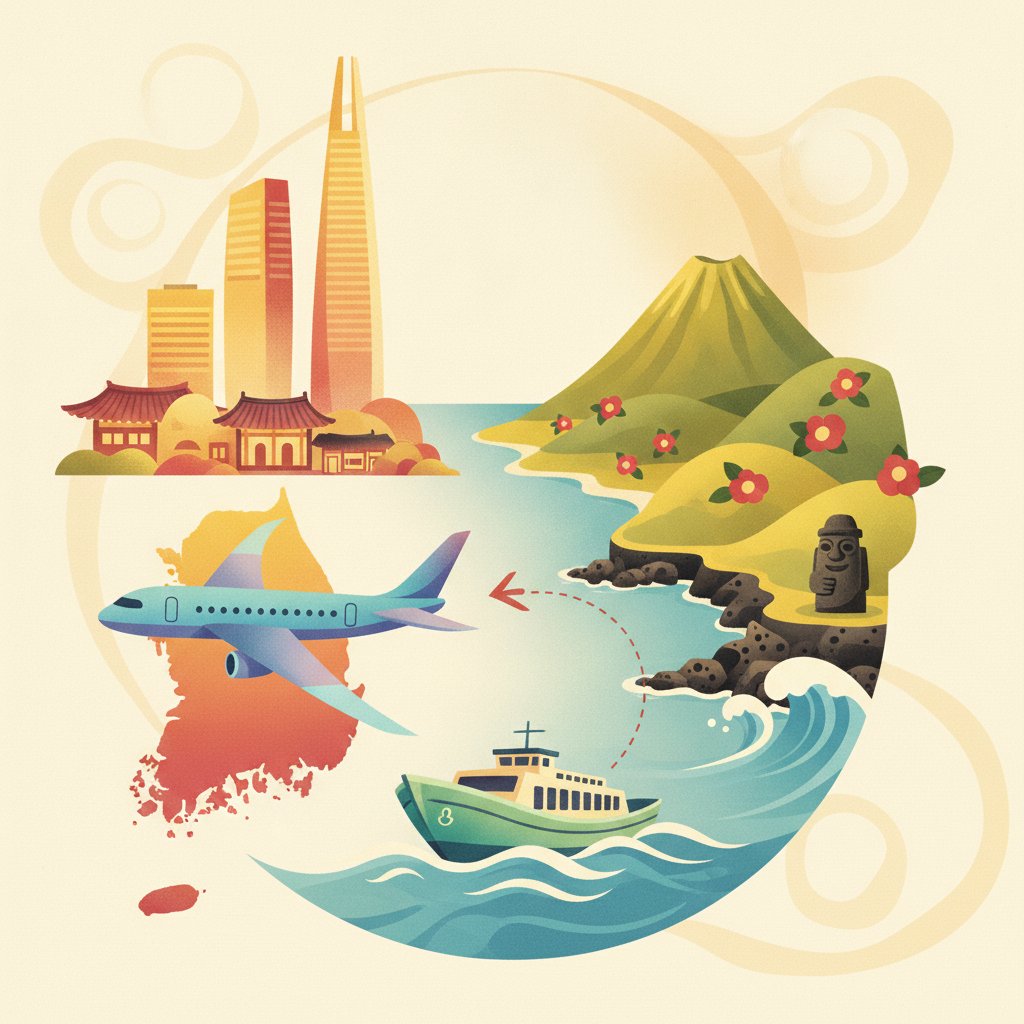
Because Jeju is an island sitting roughly 85 kilometers off the southernmost tip of the Korean peninsula, you cannot simply take a train or drive all the way there. You have two primary choices: taking a short domestic flight or embarking on a sea voyage via train and ferry. This seoul to jeju travel guide breaks down both transit options in detail so you can choose the best route for your itinerary, budget, and travel style.
✈️ Book your trip to Korea — hotels, flights & more
Option 1: Flying from Seoul to Jeju (The Fastest Route)
For roughly 95 percent of travelers, flying is the most sensible choice. A flight from Seoul to Jeju International Airport (CJU) takes only 1 hour and 10 minutes. By the time the flight attendants finish serving drinks, the captain is already announcing your approach over the sea.
Which Airport in Seoul Should You Use?
This is the most common point of confusion for foreign tourists. Almost all domestic flights to Jeju depart from Gimpo International Airport (GMP), not Incheon International Airport (ICN). While Incheon handles almost all long-haul international arrivals, Gimpo is Seoul’s primary domestic hub and sits much closer to the city center.
A very small number of international transit flights connect through Incheon to Jeju, but for a standard domestic leg starting inside Seoul, you will head to Gimpo Airport’s Domestic Terminal.
How to Get to Gimpo Airport from Downtown Seoul
Reaching Gimpo Airport from central Seoul is simple and inexpensive using public transportation:
- AREX (Airport Railroad Express): The all-stop train from Seoul Station reaches Gimpo Airport in about 22 minutes. A single ride costs around 1,500 to 2,000 won (roughly $1.15 to $1.50 USD).
- Subway Line 5 or Line 9: Line 9 Express trains connect major southern districts like Gangnam and Yeouido directly to Gimpo Airport in under 30 minutes. Line 5 runs through Gwanghwamun and Myeongdong areas.
- Airport Limousine Bus: Direct buses run from major hotel districts across Seoul. Fares typically range between 7,000 and 9,000 won ($5.20 to $6.80 USD).
Airlines and Typical Fares
Because competition on this route is fierce, ticket prices can be remarkably low outside of peak holiday periods. You can fly on full-service carriers like Korean Air and Asiana Airlines, or opt for one of Korea’s reliable low-cost carriers (LCCs) such as Jeju Air, T’way Air, Jin Air, Air Busan, or Air Seoul.
Ticket prices fluctuate based on season, day of the week, and departure time:
- Off-Peak One-Way Fares: Expect to pay anywhere from 25,000 to 50,000 won (roughly $19 to $38 USD) on budget airlines during weekday mornings or late evenings.
- Standard One-Way Fares: Mid-week daytime flights usually run between 50,000 and 90,000 won ($38 to $68 USD).
- Peak Season / Weekend Fares: Friday afternoons, Sunday evenings, summer holidays (July-August), and major Korean holidays like Chuseok or Lunar New Year can see one-way fares jump to 100,000–160,000 won ($75 to $120 USD) or sell out months in advance.
You can compare schedules and book directly through airline websites or platforms like Klook and Google Flights.
Domestic Flight Rules Every Foreigner Must Know
Navigating Gimpo Domestic Terminal is smooth, but keep these local tips in mind:
- Bring Your Physical Passport: Even though it is a domestic flight, non-Korean passport holders MUST present their physical passport at check-in and security screening. Foreign registration cards (ARCs) are also accepted if you reside in Korea, but a passport is always the safest bet. Digital photos on your phone will not be accepted.
- Baggage Allowances: Full-service carriers generally include 20kg of checked luggage. Low-cost carriers often include 15kg on standard fares, but the cheapest promotional tickets might not include checked bags at all. Always double-check baggage policies before completing your purchase.
- Arrival Time: Arriving at Gimpo Airport 60 to 75 minutes before your scheduled departure is plenty of time. Automated self-check-in kiosks and bag drop counters make the process fast.
Option 2: KTX Train + Ferry (The Overland & Sea Adventure)
If you have extra time, want to cut down your carbon footprint, or wish to see more of the Korean countryside, taking a train and ferry combination is a memorable alternative. There are no direct ferries sailing out of Seoul itself, as the Han River does not support long-distance passenger ferry routes to southern offshore islands.
Instead, you take a high-speed KTX train south from Seoul to a port city on the southern coast, then board a ferry bound for Jeju.
Route A: Seoul to Mokpo Port (Most Popular Ferry Route)
Mokpo sits at the southwestern corner of the Korean peninsula and offers the most frequent ferry sailings to Jeju.
- Step 1 (Train): Board a KTX train from Yongsan Station or Seoul Station to Mokpo Station. The journey takes about 2.5 hours. A standard KTX ticket costs around 53,000 won (roughly $40 USD).
- Step 2 (Transfer): Mokpo Station is only a 5-minute taxi ride or 15-minute walk from the Mokpo International Ferry Terminal.
- Step 3 (Ferry): Board the passenger ferry (such as the Queen Jenuavia operated by SeaWorld Express Ferry). The sea crossing takes approximately 4.5 to 5 hours. Standard economy tickets cost around 35,000 to 45,000 won ($26 to $34 USD) one-way, while private cabin upgrades cost more.
Route B: Seoul to Wando Port (Shortest Sea Crossing)
Wando is a smaller coastal town even further south than Mokpo, boasting the shortest ferry travel time to Jeju Island.
- Step 1 (Train/Bus): Take the KTX from Seoul to Gwangju or Mokpo, then take an intercity bus to Wando (or take an express bus directly from Central City Bus Terminal in Seoul to Wando, which takes about 5 hours).
- Step 2 (Ferry): High-speed car ferries operating out of Wando (like the Hanil Red Pearl or Silver Cloud) reach Jeju Port in just 2.5 to 3 hours. Ferry tickets generally run between 30,000 and 40,000 won ($23 to $30 USD).
Why Choose the Ferry Route?
While the total travel time ranges from 7 to 9 hours compared to a 1-hour flight, the ferry route offers distinct advantages for specific travelers:
- No Strict Weight Limits on Luggage: Ferries allow far more baggage allowance than budget airlines, making them ideal for long-term travelers or those moving heavy equipment.
- Scenic Coastal Views: You get to travel through the southern Korean countryside and sail past the islands of the Dadohaehaesang National Park.
- Relaxed Atmosphere: Passenger ferries in Korea are well-equipped with restaurants, convenience stores, bakeries, outdoor viewing decks, and sleeping lounges.
🎟️ Popular tours & experiences in Korea
Klook.comComparing Your Options
Here is a quick overview to help you decide between air and sea travel:
| Feature | Flying (Gimpo to Jeju) | KTX + Ferry (via Mokpo) |
|---|---|---|
| Total Transit Time | 1 hour 10 min flight (3 hrs total) | 7 to 8 hours total |
| Average One-Way Cost | 30,000–90,000 won ($23–$68) | 85,000–100,000 won ($64–$75) |
| Best For… | Speed, convenience, short trips | Slow travel, scenery, excess luggage |

Arriving in Jeju: How to Reach Your Final Destination
Whether you land at Jeju International Airport or dock at Jeju Port (located on the northern edge of Jeju City), you will need to choose how to get to your hotel. Jeju does not have a train system, so ground transport relies entirely on buses, taxis, and rental cars.
1. Airport Limousine Bus (Route 600)
If you are staying in Jungmun Tourist Complex or Seogwipo (the southern part of the island), Airport Bus 600 is the most popular option. It stops outside the arrival terminal every 15–20 minutes. The fare is roughly 4,500 to 5,500 won ($3.40 to $4.15 USD), payable with cash or a standard Korean transit card like T-money.
2. Local Public Buses
Jeju has an extensive bus network. Express buses (red lines) connect Jeju City to major towns across the island in under an hour for around 2,000 to 3,000 won ($1.50 to $2.30 USD). Local buses (blue and green lines) cost around 1,200 won ($0.90 USD).
3. Taxi and Car Rentals
Taxis are readily available outside the airport and ferry terminal exits. A ride within downtown Jeju City costs around 5,000 to 10,000 won ($3.80 to $7.50 USD), while a taxi trip across the island to Seogwipo will cost around 35,000 to 45,000 won ($26 to $34 USD).
For maximum flexibility, many travelers rent a car. Keep in mind that non-Korean residents MUST hold a valid International Driving Permit (IDP) issued in their home country along with a physical passport to pick up a rental car in South Korea. Digital IDs or home licenses without an IDP will be turned away at rental counters.
FAQ
Can I fly directly to Jeju from Incheon International Airport?
Generally, no. Almost all domestic flights to Jeju operate out of Gimpo Airport (GMP). A tiny handful of seasonal transit-only flights operate from Incheon (ICN) primarily for passengers connecting directly from international long-haul routes, but these are rare. If you land at Incheon Airport, you should take the AREX train or an airport bus to Gimpo Airport to catch your domestic flight to Jeju.
How far in advance should I book flights from Seoul to Jeju?
For standard travel during weekdays, booking 2 to 4 weeks in advance usually gives you access to the lowest budget airline rates. However, if you plan to travel during peak seasons—such as late April/May, summer vacation (July–August), or major Korean holidays like Chuseok—you should book at least 2 to 3 months in advance, as flights fill up completely.
Is taking the ferry to Jeju Island worth it for foreign tourists?
The ferry is worth it if you have a relaxed schedule, are traveling overland through southern coastal cities like Mokpo, Yeosu, or Busan first, or have significant amounts of heavy luggage. However, if your trip to South Korea is shorter than ten days, flying from Gimpo is significantly faster and often cheaper, allowing you to maximize your sight-seeing time on Jeju Island.
Keep Reading
- KTX Train Travel: Korea’s High-Speed Rail Tips
- Seoul Subway Tips for First-Time Visitors
- Your Essential T-money Card Guide: A Local’s Tips for Buying and Charging
- Seoul Subway Tips for First Time Visitors
🎟️ Popular tours & experiences in Korea
Klook.com