Korean Convenience Store Culture in K-Dramas Explained
Why K-Dramas Are Obsessed with Convenience Stores
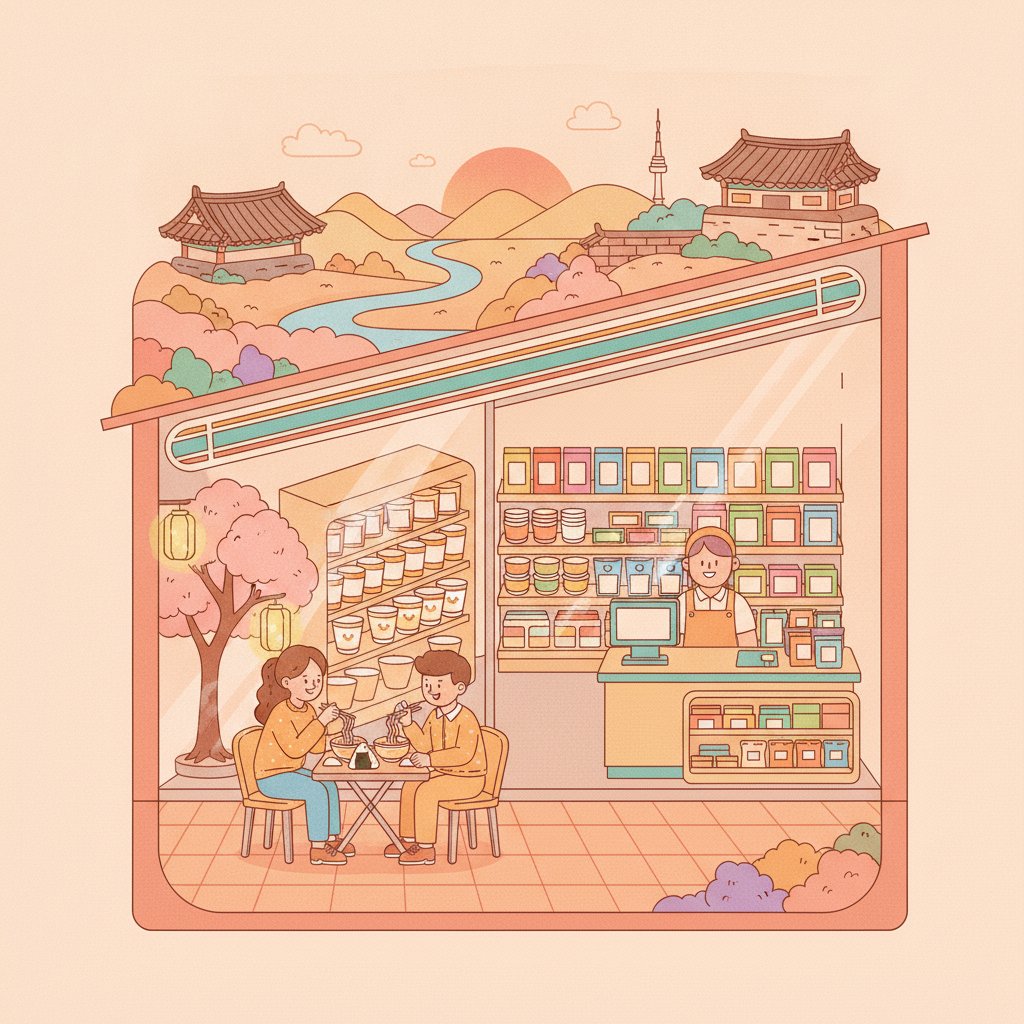
Late on a crisp autumn evening in Mapo-gu, after finishing a long overtime shift, I walked into the bright fluorescent glow of my neighborhood GS25. Outside, sitting on plastic blue chairs under a red umbrella, two college students were sharing a steaming bowl of instant ramen and an iced drink, laughing quietly under the streetlight. If this scene feels intimately familiar to you, it is probably because you have watched it unfold dozens of times on screen. As a Korean living in Seoul, I can tell you that what you see in your favorite shows is not an exaggeration created for television—it is a literal reflection of our daily life.
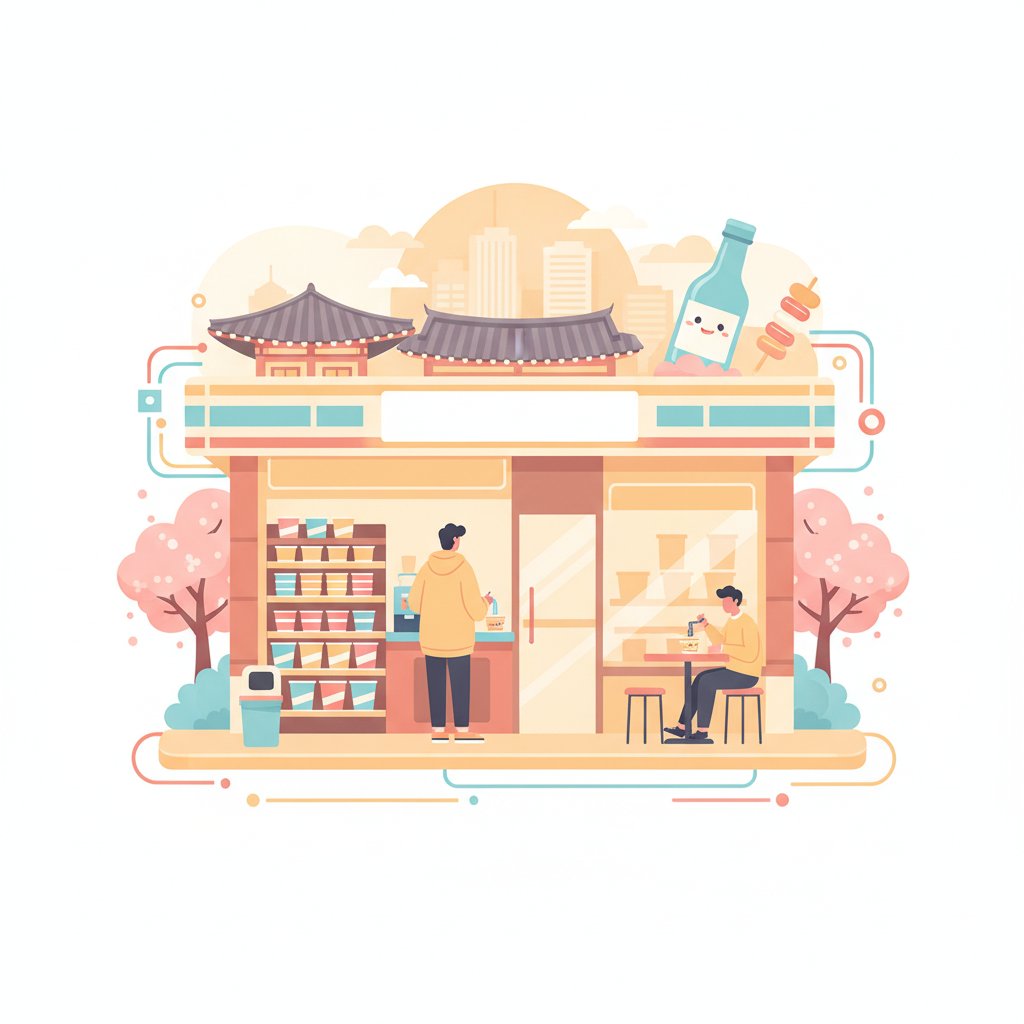
In the world of Korean television, the local neighborhood shop serves as far more than just a place to buy bottled water or a quick snack. In a typical Korean convenience store kdrama moment, these 24-hour spaces act as urban sanctuaries. They are where broken-hearted leads go to swallow their tears over a bottle of green-glass soju, where broke college students share budget-friendly meals while preparing for exams, and where unexpected romantic encounters begin over shared hot water dispensers.
Korea has one of the highest densities of convenience stores in the world, with over 50,000 branches operating across the country. Major brands like CU, GS25, Seven-Eleven, and Emart24 are practically on every corner. Because real estate in Seoul is tight and many young adults live in modest studio apartments (officetels or gowon), the local shop effectively acts as a extended communal living room, dining hall, and balcony.
✈️ Book your trip to Korea — hotels, flights & more
Iconic K-Drama Convenience Store Moments
If you have spent hours watching Korean dramas on streaming platforms like Netflix or Viki, you have undoubtedly noticed how central these stores are to character development and plotlines.
The Late-Night Comfort Food Scene
In shows like Crash Landing on You, Goblin, and Twenty-Five Twenty-One, characters frequently flock to convenience stores late at night. When life gets overwhelming, there is something deeply soothing about the simple process of opening a cup of hot instant noodles, peeling back the foil lid, adding boiling water, and waiting three minutes. It is an affordable luxury. In Korea, a complete convenience store snack or light meal generally costs between 2,000 and 7,000 won (roughly $1.50 to $5.30 USD), making it accessible to anyone at any hour.
The Romance Catalysts
Convenience stores are built into romantic storylines because they allow characters to interact in a casual, low-stakes setting. In Backstreet Rookie, the entire plot revolves around a CU convenience store, highlighting the quirky interactions between store owners, part-timers, and regular neighborhood customers. In One Spring Night and Extraordinary Attorney Woo, quiet late-night conversations over pouch drinks and warm canned tea build emotional intimacy far more naturally than an expensive dining environment ever could.
Famous Convenience Store DIY Combos You Must Try
One of the best aspects of Korean convenience store culture is the DIY culinary trend known as “modisumer” recipes—a blend of the words “modify” and “consumer.” Koreans love combining off-the-shelf ingredients to create restaurant-quality food directly inside the store. Here are three legendary combinations popularized by K-dramas, variety shows, and K-pop idols.
1. The Mark Meal (Mark-jeong Recipe)
Originally invented by a fan of the K-pop group GOT7 and featured heavily across Korean online media, this ultra-savory comfort food mashup is a cult classic.
- Ingredients needed: One cup of instant tteokbokki (spicy rice cakes), one cup of instant spaghetti noodles, one string cheese stick, mozzarella cheese, and one mini package of sausages or Vienna sausages.
- How to make it: Cook the tteokbokki and spaghetti noodles separately using the store’s hot water. Combine them into the larger tteokbokki container along with their sauces. Slice up the sausages and place them on top. Tear up the string cheese and sprinkle shredded mozzarella over the dish. Microwave the entire mixture for 60 to 90 seconds until the cheese melts into a gooey, spicy blanket.
- Approximate Cost: Around 7,000 to 9,000 won ($5.20 to $6.80 USD) for all ingredients.
2. Buldak Cheese Triangle Gimbap Stir-Fry
If you have seen characters in a Korean convenience store kdrama crushing up triangle gimbap inside a cup of noodles, they are likely making this delicious carb-heavy dish.
- Ingredients needed: One cup of Buldak Spicy Chicken Ramen, one tuna-mayo triangle gimbap (samgak gimbap), and one pack of string cheese.
- How to make it: Cook the spicy noodles according to package instructions, leaving just a small splash of hot liquid at the bottom. Unwrap the tuna-mayo triangle gimbap and drop it directly into the spicy noodles. Unwrap the string cheese, shred it on top, and microwave for 45 seconds. Mix everything together with your chopsticks until the seaweed, rice, mayo, spicy sauce, and melted cheese form a rich, risotto-like consistency.
- Approximate Cost: Around 4,500 to 6,000 won ($3.40 to $4.50 USD).
3. The Pouch Drink and Ice Cup Combination
Walk into any Korean store during spring or summer, and you will see a large freezer chest filled with clear plastic cups packed with solid ice cubes. Beside it, shelves display colorful liquid pouches containing iced Americano, peach ice tea, hazelnut coffee, or blue lemonade.
- How to enjoy: Pick your favorite pouch drink and grab an ice cup from the freezer. Take them to the register, pay, tear open the pouch, and pour the liquid directly over the ice. It is crisp, refreshing, and deeply satisfying.
- Approximate Cost: Ice cups generally run 700 to 1,000 won, while drink pouches cost around 1,000 to 2,000 won, making a full beverage about 1,700 to 3,000 won total ($1.30 to $2.30 USD).
🎟️ Popular tours & experiences in Korea
Klook.comThe Big Chains: Understanding Korea’s Top Stores
While all convenience stores in Korea share similar services, each major brand has its own personality, exclusive products, and charm. Here is a quick breakdown to help you spot them during your travels.
| Store Brand | Key Highlights & Exclusive Items | K-Drama Vibe |
|---|---|---|
| CU | Famous for gourmet bakery items, oversized sandwich lines, and Yonsei Cream Buns. | Homey, relatable daily life scenes (e.g., Backstreet Rookie). |
| GS25 | Known for Cafe25 brewed coffee, YouUs store-brand snacks, and viral dessert collaborations. | Sleek urban neighborhood feel; frequently featured in romance shows. |
| Seven-Eleven | Offers excellent packed bento boxes (dosirak) and unique Japanese import snacks. | Classic street-corner sanctuary with cozy seating setups. |
How to Use a Korean Convenience Store Like a Local
Visiting a convenience store in Korea for the first time can feel slightly intimidating if you do not speak the language, but the process is straightforward once you know the step-by-step etiquette.
Step 1: Selecting Your Meal and Accessories
Grab a shopping basket near the entrance. If you plan to eat soup or instant ramen, select your cup noodles. Pick up chopsticks (jeotgarak) or plastic spoons near the checkout or condiment station—in most stores, these are free when you buy instant meals, though some shops keep them behind the cashier counter.
Step 2: Payment and T-Money Cards
You can pay using standard foreign credit cards, cash, or a T-Money card (the public transit card used throughout South Korea). If you are traveling around Seoul, charging your T-Money card at convenience store counters is the easiest way to keep it topped up. If you need a transit card, you can easily pick one up via travel booking platforms like Klook prior to arrival or buy one directly at airport store counters.
Step 3: Preparing Your Food at the Prep Station
Near the store window or exit, you will find a self-service prep station equipped with modern appliances:
- Hot Water Dispensers: Press the red safety lock button (if applicable) and push the lever to dispense boiling water into your instant noodle cups. Do not fill past the indented line printed inside the cup.
- Microwaves: Most pre-packaged items, such as gimbap, bento boxes, or cheese, have microwave heating times printed on the package (usually 20 to 40 seconds). Insert your item, press the corresponding time button, and wait for the beep.
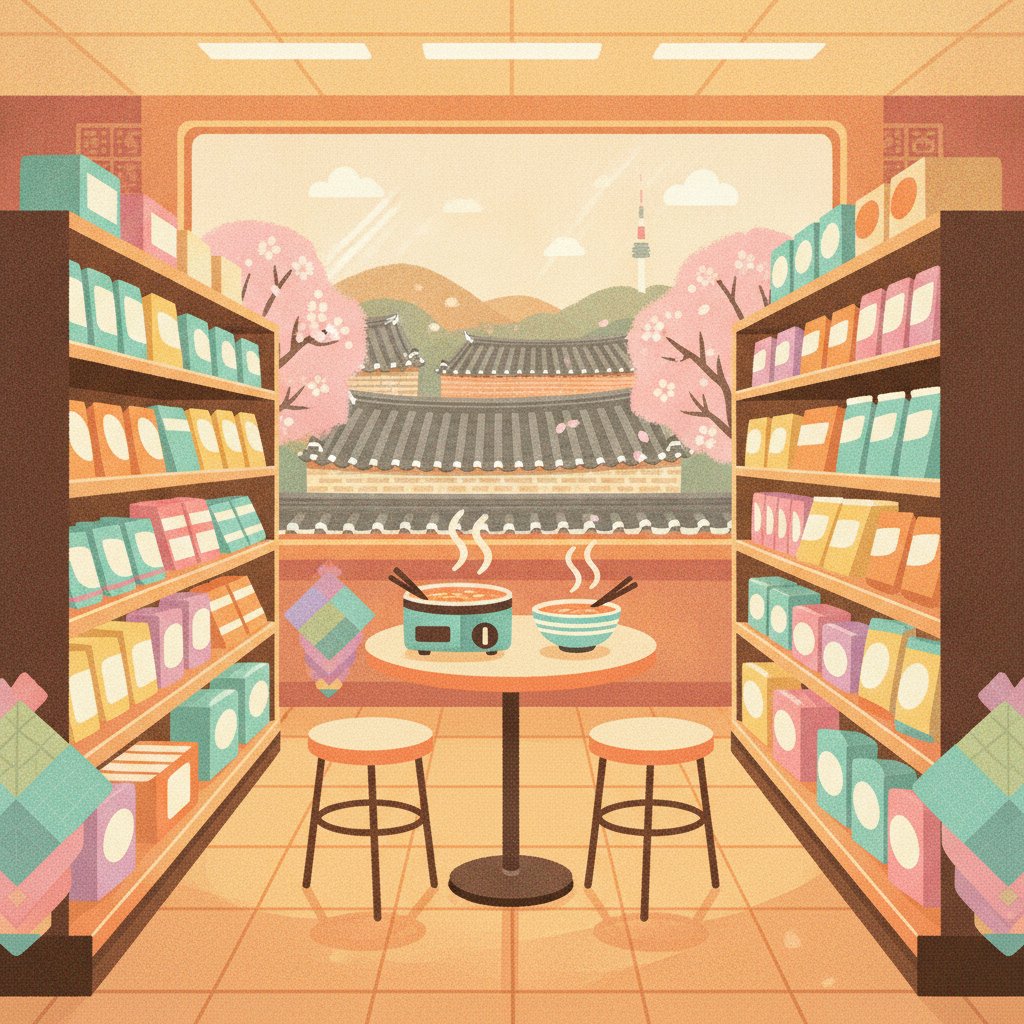
- Ramen Cooking Machines: Some specialized flagship stores near the Han River feature automated cookers for foil-pan ramen. Scan the barcode on your ramen container at the machine, place the aluminum pan on the hot plate, press start, and the machine automatically dispenses the exact amount of water and boils it for you.
Step 4: Table Etiquette and Waste Disposal (Bunri-Suggeo)
In Korea, trash sorting—known as bunri-suggeo—is taken very seriously. When you finish eating at the indoor counter or outdoor plastic tables, never leave your mess behind. Look for the designated waste bins inside the store, which are clearly split into sections:
- Liquid/Food Waste (Eom-sik-mul): Pour remaining noodle soup or food scraps into the dedicated bucket or sink basin provided at the station.
- Plastics (Peul-la-seu-tik): Throw rinsed plastic containers, ice cups, and cutlery into the plastic bin.
- General Trash (Il-ban Sseu-re-gi): Wooden chopsticks, dirty napkins, and foil sauce packets go into general waste.
Bring the K-Drama Experience to Life
As a Korean, I always tell visiting friends that you do not need to spend tens of thousands of won at fancy restaurants to experience real modern Seoul culture. Some of my fondest memories with friends involve sitting outside a GS25 or CU on a breezy summer midnight, sipping a cheap pouch drink over ice, and watching the city go by. Next time you catch a late-night food craving while watching a Korean convenience store kdrama, pop into your nearest Asian grocery shop or replicate these simple recipes at home. You will get a genuine bite of real Korean life.
FAQ
Can tourists eat inside Korean convenience stores?
Yes, most Korean convenience stores feature dedicated seating areas. These usually consist of a long counter along the front window with high stools or plastic tables with umbrellas placed outdoors during pleasant weather. Customers are free to sit and eat meals purchased in the store, provided they clean up their trash afterward.
How much does a full convenience store meal cost in Korea?
A full meal—consisting of cup ramen, a triangle gimbap, a string cheese stick, and an iced drink—typically costs between 4,500 and 8,000 won (roughly $3.40 to $6.00 USD). Prices vary slightly depending on the specific items and store promotions, such as 1+1 or 2+1 buy-one-get-one-free deals.
Where can I watch K-dramas with Korean convenience store scenes?
Popular K-dramas featuring convenience store scenes can be streamed globally on major authorized platforms such as Netflix and Rakuten Viki. Shows like Backstreet Rookie, Crash Landing on You, and Twenty-Five Twenty-One offer great glimpses of store culture.
🎟️ Popular tours & experiences in Korea
Klook.comKeep Reading
- Level Up Your Korean: A Realistic Guide to Learning Through K-Dramas
- Beyond the Screen: Essential Korean Variety Shows K-Drama Fans Will Adore
- Webtoon K-Drama Adaptations: Picks and Watching
- K-Drama Cafes & Filming Spots in Seoul: Local Finds
🎟️ Popular tours & experiences in Korea
Klook.com