Gangneung KDrama Day Trip: Goblin Pier to BTS Bus Stop
At a glance
- In shortA complete guide to a Gangneung day trip from Seoul, covering K-Media spots, cafes, and local eats.
- Best forTravelers planning a day trip from Seoul to Gangneung
- WhereGangwon
- Key pointsTake the KTX from Seoul to Gangneung in 90 to 120 minutes. · Visit famous photo spots from Goblin and the BTS album cover. · Explore Anmok Beach Coffee Street and local treats at Jungang Market.
- Heads-upUse Naver Map instead of Google Maps and book KTX train tickets well in advance.
Getting to Gangneung from Seoul via KTX
The KTX bullet train out of Seoul Station cuts through the deep mountain tunnels of Gangwon Province, and in under two hours, the concrete skyline disappears into the deep blue horizon of the East Sea. As a Korean who frequently escapes Seoul for weekend ocean air, this train route is one of my absolute favorites. Gangneung has transformed over the past decade from a quiet coastal city into a vibrant hub for culture, coffee, and screen tourism.
Taking a gangneung day trip is extremely straightforward thanks to the KTX-Eum high-speed train service on the Gyeonggang Line. Trains depart regularly from both Seoul Station and Cheongnyangni Station, delivering you directly to Gangneung Station in approximately 90 to 120 minutes. A standard one-way ticket usually ranges between 26,000 and 30,000 won (roughly $20–$24 USD), though prices vary slightly depending on your departure point and seat class.
To secure tickets during peak periods—especially weekends and autumn foliage season—you should book as early as possible. Tickets open 30 days in advance on the official Korail website (LetsKorail) or through global travel platforms like Klook. If you are traveling during Korean national holidays or summer vacation months (July and August), train seats can sell out within minutes of release, so plan accordingly.

✈️ Book your trip to Korea — hotels, flights & more
Iconic KDrama and K-Pop Coastal Spots
Once you arrive at Gangneung Station, your coastal adventure begins. Most international visitors come with a specific photo list inspired by Korean dramas and music videos. The city stretches along a long north-south coastline, making a structured itinerary essential to avoid spending your whole day in taxis or buses.
Jumunjin Breakwater: The Iconic “Goblin” Spot
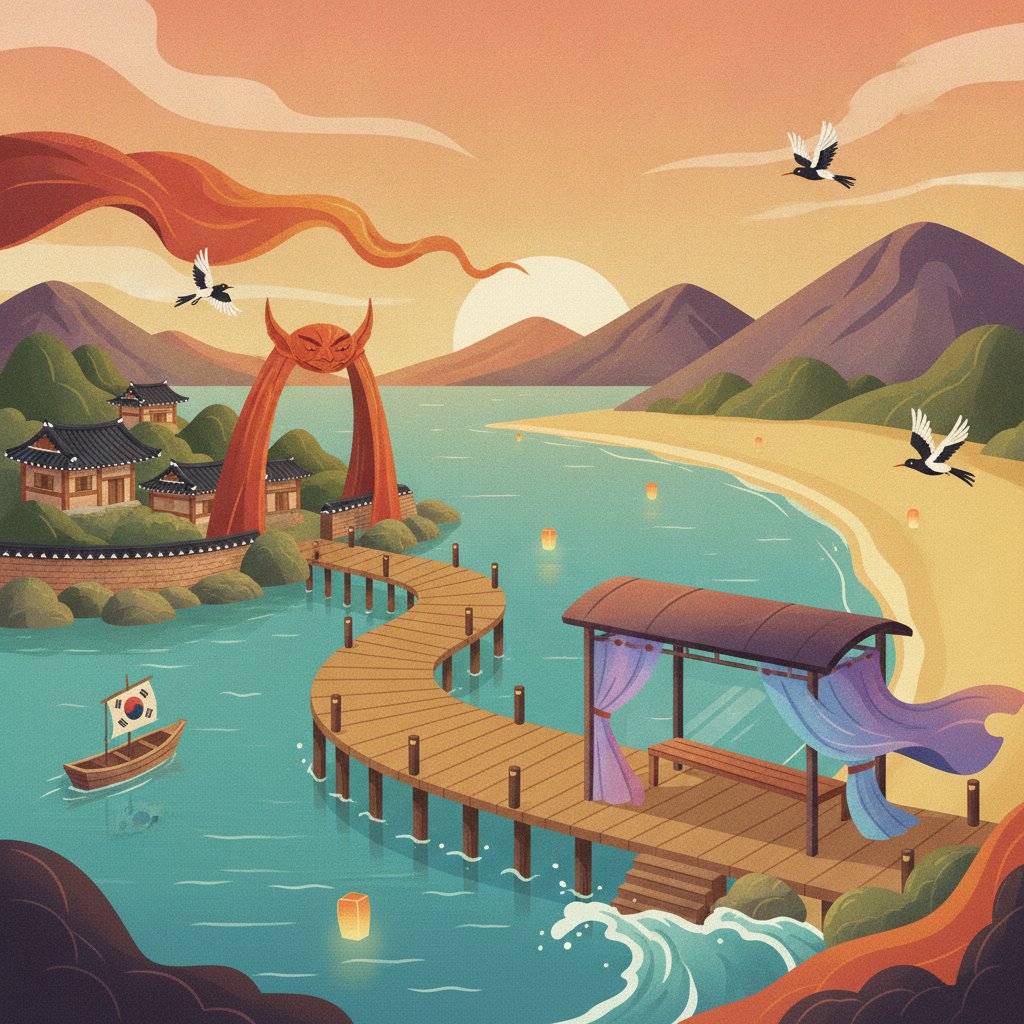
Located in the northern part of Gangneung, the breakwater at Jumunjin Beach reached global fame as the filming site for the beloved 2016 fantasy drama Goblin (Dokkaebi), starring Gong Yoo and Kim Go-eun. This is where the female lead unexpectedly summons the Goblin while holding a bouquet of buckwheat flowers by the crashing ocean waves.
When you arrive, you will notice several concrete breakwaters extending into the sea. The exact filming spot is marked with photo boards showing the original scene. As a local, I always advise visitors to prepare for a short wait. On sunny afternoons, a polite line forms along the pier. Korean travel etiquette here is simple: wait your turn patiently, take a few photos, and step aside so the next group can capture their moment.
During busier seasons, local vendors sometimes set up small stalls renting out red scarves and artificial buckwheat bouquets for around 1,000 to 2,000 won (approx. $0.75–$1.50 USD). These props help you recreate the exact drama poster scene. Be mindful of the sea spray and wave conditions, as high tides can splash onto the slippery concrete rocks.
Hyangho Beach: The BTS “You Never Walk Alone” Bus Stop
Just a short distance north of Jumunjin lies Hyangho Beach, home to the famous BTS bus stop photo zone. Originally constructed purely as album artwork for the 2017 album You Never Walk Alone, the bus stop was dismantled after shooting. However, due to overwhelming demand from global fans, the Gangneung City government re-erected the bus stop as a permanent installation.
Unlike busy transit stops, no real buses service this wooden shelter. Instead, it sits peacefully against a backdrop of golden sand and pine trees. Benches inside allow you to recreate the album cover pose while listening to the sound of waves hitting the shore. Nearby public speakers often play BTS tracks on a soft loop, creating a joyful, welcoming atmosphere for visitors from all over the world.
Taste of the East Coast: Food and Coffee Culture
A day trip to Gangneung is incomplete without experiencing its distinct culinary tradition. In Korea, Gangneung is just as famous for its rich coffee heritage and unique regional dishes as it is for its TV filming locations.
Anmok Beach Coffee Street
In the late 20th century, Anmok Beach was famous among locals for its row of coffee vending machines, where people would grab cheap warm coffee while looking at the sea. Over time, master roasters moved to the city, transforming Anmok Beach into the celebrated Gangneung Coffee Street. Today, dozens of multi-story cafes line the coastal boulevard, featuring glass windows facing the ocean.
As a Korean, my favorite routine is ordering a warm latte or signature cream coffee and taking a seat on a upper-floor terrace. Specialty coffees and signature roasted blends at these oceanfront spots usually cost between 5,000 and 8,000 won (around $3.80–$6.00 USD). Popular local specialties include cream coffee infused with black sesame or local sweet corn. Pair your beverage with a slice of cake while taking in panoramic views of the coast.
Gangneung Jungang Market: Local Food Highlights
Located near the city center, Gangneung Jungang Market is the beating heart of local food culture. It is an ideal spot to stop for lunch or early dinner before heading back to Seoul on the train. The market features dozens of vendors serving traditional dishes prepared fresh on site.
- Dakgangjeong (Sweet & Spicy Crispy Chicken): Deep-fried boneless chicken bites glazed in a sweet, sticky garlic sauce and topped with crushed peanuts. Boxes range from 10,000 to 20,000 won ($7.50–$15.00 USD) depending on size.
- Squid Sundae (Ojingeo Sundae): Fresh squid stuffed with minced glass noodles, vegetables, and pork, dipped in egg wash and pan-fried on a flat griddle right in front of you. Expect to pay around 10,000 to 15,000 won ($7.50–$11.50 USD) per portion.
- Gangneung Garlic Bread: Cream cheese-stuffed rolls soaked in rich garlic butter, baked until soft and aromatic. Usually priced around 4,500 to 5,500 won ($3.40–$4.20 USD) per loaf.
- Sundubu Gelato: Soft-serve ice cream made from Gangneung’s famous uncurdled soft tofu (sundubu). It offers a smooth, nutty flavor profile with options like green tea, sesame, and original tofu, running roughly 4,000 to 5,000 won ($3.00–$3.80 USD) per cup.
🎟️ Popular tours & experiences in Korea
Klook.comTransportation Strategy Comparison
Getting between Gangneung Station, the northern beaches (Jumunjin and Hyangho), and the southern sights (Anmok Beach and Jungang Market) requires a basic travel plan. Here is how local transport options stack up for day-trippers:
| Transport Type | Best For | Est. Cost Range |
|---|---|---|
| Kakao Taxi / Cab | Fast travel between spots | 10,000–25,000 won per leg |
| Local City Bus | Budget solo travelers | 1,500–2,000 won per ride |
| Day Tour / Driver | Groups & tight schedules | 60,000–120,000 won per person |
If you travel in a group of two to four people, taking taxis using the KakaoT app is often the most time-efficient method. A taxi ride from Gangneung Station up to Jumunjin Beach takes roughly 25 to 30 minutes, costing around 20,000 to 25,000 won ($15–$19 USD). Local buses are very cheap and take T-money card payments, but transit times can double due to frequent stops along rural coastal roads.
Essential Local Tips for Navigating Gangneung
To make your day trip run smoothly from start to finish, keep these practical travel habits in mind:
- Set up KakaoTaxi beforehand: Standard street hailing can be tough outside major train stations. The KakaoT app accepts international credit cards and allows you to pinpoint exact destinations without speaking fluent Korean.
- Pack windproof layers: Ocean winds off the East Sea are noticeably cooler and stronger than in inland Seoul, even during spring and summer evenings. Bring a light windbreaker or cardigan.
- Check train return times carefully: The last KTX trains back to Seoul usually leave Gangneung between 9:30 PM and 10:30 PM. Give yourself at least 30 minutes at Gangneung Station to grab snacks or souvenirs like Gangneung Coffee Bread before boarding.
- Use Naver Map for navigation: Google Maps does not provide reliable walking or transit directions in South Korea. Download Naver Map or KakaoMap to search bus routes and cafe locations in real time.
FAQ
Can you do a Gangneung day trip from Seoul without a car?
Yes, absolutely. Taking the high-speed KTX train from Seoul Station or Cheongnyangni Station gets you to Gangneung in under two hours. Once at Gangneung Station, you can easily reach all major beaches, drama locations, and local markets using taxis, local city buses, or pre-booked tour services.
What is the best time of year to visit Gangneung?
Gangneung is a great year-round destination, but spring (April to June) and autumn (September to November) offer the most pleasant weather for walking along coastal piers and visiting outdoor markets. Summer brings lively beach crowds, while winter offers clear blue skies and crisp mountain air, perfect for cozying up inside coastal cafes.
How much budget should I plan for a Gangneung day trip?
A typical budget for a day trip ranges from 80,000 to 140,000 won per person (roughly $60–$105 USD). This covers round-trip KTX train tickets (approx. 52,000–60,000 won total), local transportation via bus or shared taxis (15,000–30,000 won), market street food or lunch (15,000–25,000 won), and drinks or desserts at oceanfront cafes (8,000–15,000 won).
More on Day Trips from Seoul
- Suwon Hwaseong Fortress Day Trip GuideA practical guide to visiting Suwon Hwaseong Fortress from Seoul, including transit options, routes, and food.
- Day Trip Guide to Nami Island from SeoulCovers transport options, attractions, food, and timing for a day trip from Seoul to Nami Island.
- Incheon Day Trip Guide: Chinatown to SongdoA guide on taking a day trip from Seoul to Incheon to explore Chinatown, historic sights, and futuristic Songdo.
See every Day Trips from Seoul post in our K-Travel guide.
Handy toolsKorea travel essentials · Trip budget calculator · Korea Guide Finder
🎟️ Popular tours & experiences in Korea
Klook.comKeep Reading
- Essential DMZ Tour Tips: Visiting the Border from Seoul
- How to Travel Jeju Island Without Driving
- Changkkom: Natural Basalt Window in Bukchon-ri, Jeju
- Gyeongju Travel Guide for First-Time Visitors
🎟️ Popular tours & experiences in Korea
Klook.com