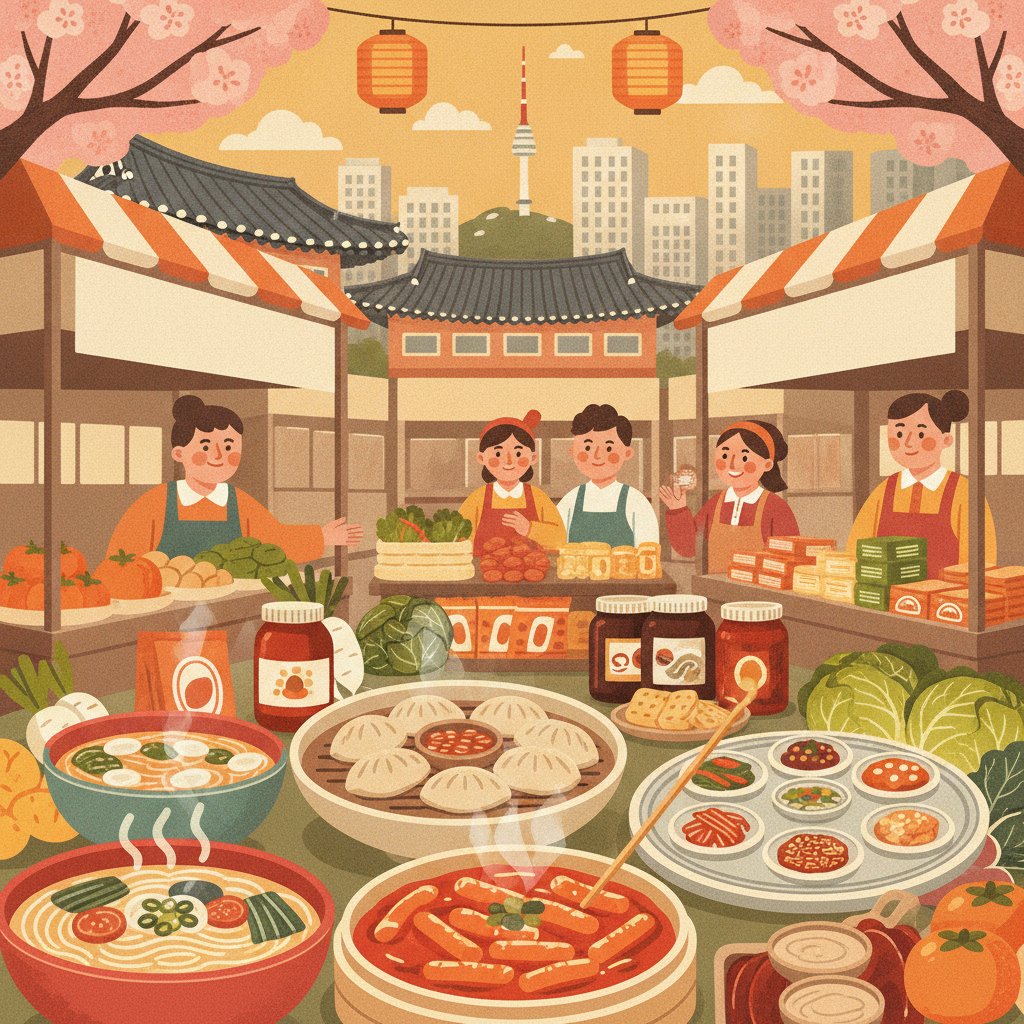
Mangwon Market Food Guide: What Locals Actually Eat
Why Mangwon Market Belongs on Your Seoul Itinerary
While tourists queue for an hour at Gwangjang Market just to get a plate of overhyped mung bean pancakes, neighborhood locals in western Seoul quietly head to Mangwon Market with empty stomachs and reusable tote bags. Located in Mapo-gu, just a stone’s throw from the trendy Hongdae district, Mangwon Market (망원시장) offers something that many heavily promoted markets have lost over the years: an authentic, living community food culture where grandmothers buy their weekly produce right alongside university students grabbing cheap afternoon snacks.
As a Korean who has spent countless weekends wandering the covered alleyways of Mapo-gu, I always tell foreign friends that Mangwon Market represents the sweet spot of Seoul street food. It is cleaner and easier to navigate than older traditional markets, significantly cheaper than tourist-heavy zones like Myeongdong, and surrounded by one of the coolest residential cafe neighborhoods in the city. In this practical mangwon market food guide, I will share how to navigate the stalls, what to order, and how to enjoy your food like a true neighborhood resident.
✈️ Book your trip to Korea — hotels, flights & more
The Core Dishes You Must Try
The market is structured primarily along one main covered lane with smaller side alleys branching off. While dozens of vendors sell everything from fresh banchan (side dishes) to live seafood, a handful of legendary food stalls form the heart of the Mangwon eating experience.
1. Deep-Fried Stuffed Chili Peppers (Gochu-튀김)
If you only eat one item at Mangwon Market, make it the giant stuffed chili peppers from Uhaso / Swaegi-Gochu-Twigim or the famous Woori Wonsanghoe stall. In Korea, traditional chili peppers are often stuffed with seasoned minced pork, tofu, glass noodles, and chopped vegetables, then dipped in batter and fried until shatteringly crisp. At Mangwon, these peppers are unusually large—nearly the size of a banana—and fried twice for extra crunch. They are served piping hot, cut into bite-sized pieces with kitchen shears, and served with a side of pickled onions in soy sauce. A portion of two or three large peppers usually runs around 4,000 to 6,000 KRW ($3 to $4.50 USD), making it an incredible value.
2. Famous Boneless Sweet and Spicy Chicken (Dakgangjeong)
Dakgangjeong is Korean double-fried boneless chicken coated in a thick, sticky glaze. Mangwon Market is famous throughout Seoul for its chicken vendors, most notably Kyusung Dakgangjeong and Yuktong Dakgangjeong. Unlike standard fried chicken shops that only offer sweet or spicy glazes, the stalls here serve up to six different flavor varieties, including fruit-sweet glaze, garlic soy sauce, cheese powder, and intensely spicy pepper sauce. You can order by cup size or box size. Small takeaway cups usually cost between 4,000 and 6,000 KRW ($3 to $4.50 USD), while full family-sized boxes range from 12,000 to 20,000 KRW ($9 to $15 USD). It is an absolute local tradition to pick up a box here before walking down to the nearby riverbank.
3. Handmade Knife-Cut Noodle Soup (Kalguksu)
Tucked into the mid-section of the market arcade are several small, humble noodle counters where cooks knead and slice wheat dough by hand all day long. A bowl of warm, soothing kalguksu (knife-cut noodles in anchovy broth) or sujeobi (hand-torn noodle soup) typically costs between 5,000 and 7,000 KRW ($3.75 to $5.25 USD). The broth is light, clean, and savory, spiced up with chopped scallions and a spoonful of spicy seasoned soy sauce. Each bowl is served with freshly made cabbage kimchi from an open crock on your table. It is the ultimate local comfort food, especially during Seoul’s chillier autumn and winter months.
4. Artisanal Marshmallow Ice Cream & Sweet Hotteok
For sweet treats, Mangwon balances traditional street food with viral modern bites. On the traditional side, you will find vendors pressing ssiat hotteok (sweet griddled pancakes stuffed with brown sugar, cinnamon, and mixed seeds) for about 1,500 to 2,000 KRW ($1.10 to $1.50 USD). On the modern side, look for stalls torching giant square marshmallows filled with ice cream right in front of you. The contrast between the warm, caramelized outer marshmallow skin and the frozen ice cream core makes it a huge favorite among younger crowds.
Mangwon Market Popular Food Quick Reference
| Food Item | Approximate Price (KRW) | Local Eating Tip |
|---|---|---|
| Stuffed Fried Peppers | 4,000 – 6,000 KRW | Dip in pickled onion soy sauce for acidity balance. |
| Dakgangjeong Cup | 4,000 – 6,000 KRW | Get half-and-half flavors if buying a larger box. |
| Hand-Cut Kalguksu | 5,000 – 7,000 KRW | Add seasoned soy paste for a spicier broth. |
| Ssiat Hotteok | 1,500 – 2,000 KRW | Eat carefully; melted brown sugar inside is very hot! |
🎟️ Popular tours & experiences in Korea
Klook.comHow to Eat Like a Local: Navigating and Etiquette
Visiting a bustling traditional market in a foreign country can occasionally feel intimidating, but Mangwon Market is remarkably accessible if you keep a few practical logistics in mind.
Payment Methods: Cash vs. Card
A common misconception among visitors is that Korean street markets are cash-only. Today, virtually every established stall in Mangwon Market accepts domestic and international credit cards (Visa and Mastercard), as well as contactless T-money transit cards. However, bringing around 10,000 to 20,000 KRW in physical cash is still recommended. Small snack stalls selling single hotteok or quick skewers appreciate cash, and having bills speeds up transactions when queues get long.
The Hangang Park Picnic Hack
Here is my favorite insider tip as a Korean local: do not eat all your food standing in the middle of the crowded market aisle. Space inside the market passage is narrow, and blocking shop fronts to eat can frustrate merchants and shoppers walking past. Instead, do what local residents do on pleasant days: order your dakgangjeong, fried peppers, and kimbap packaged to-go (ask for 포장 / po-jang). Walk approximately 10 to 15 minutes straight down Mangwon-ro toward the river, and you will reach Mangwon Hangang Park. You can sit on the grassy lawns or along the river steps, enjoy your market feast with a view of the Yeouido skyline, and watch the sunset over the Han River.
Timing Your Visit
Mangwon Market operates roughly from 9:00 AM to 8:00 PM daily, though individual vendor hours vary. To avoid overcrowding while ensuring all hot food stalls are open, aim to arrive between 2:00 PM and 4:30 PM on weekdays. Avoid weekend afternoons if you dislike long lines, as both locals and out-of-towners gather here in large numbers on Saturdays and Sundays.
Exploring Mangridan-gil After Your Meal
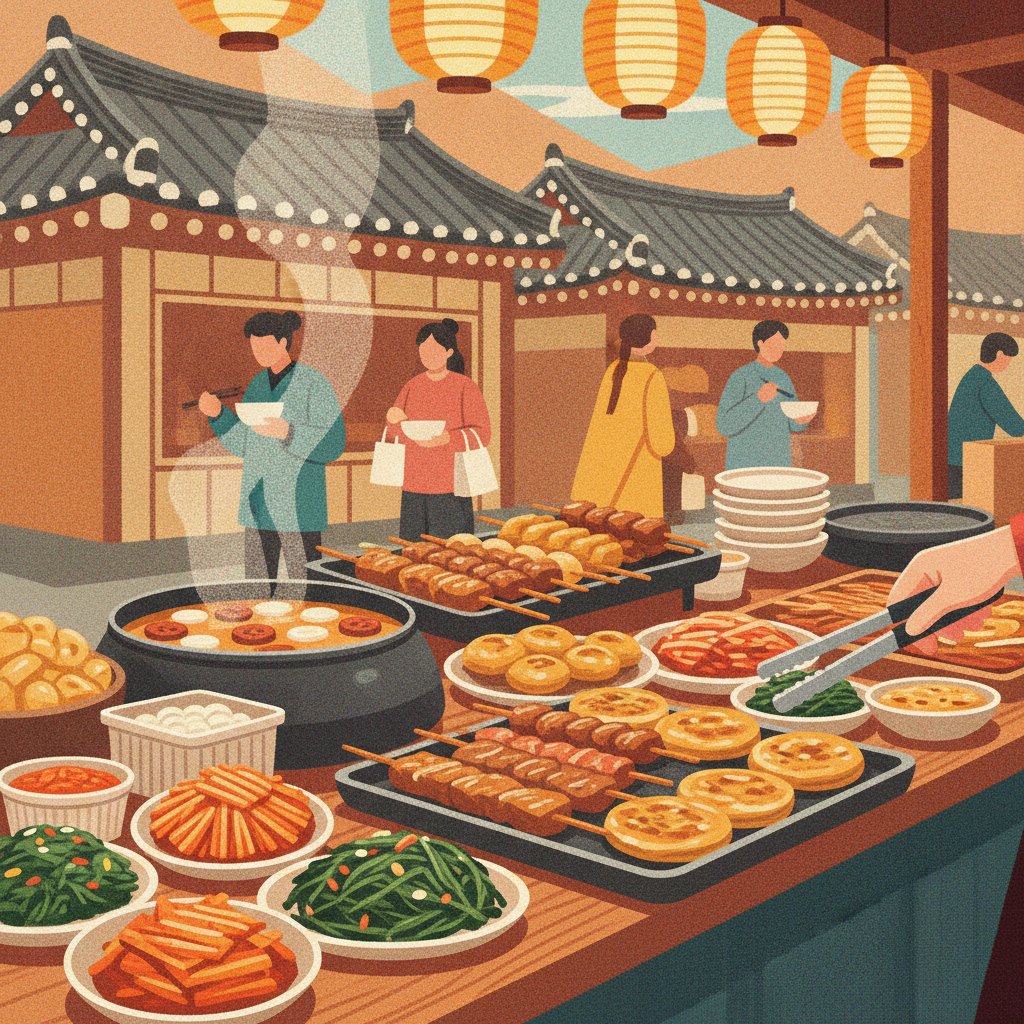
Once you have sampled the market’s savory treats, take time to explore the surrounding neighborhood known as Mangridan-gil (망리단길). The narrow residential streets branching off the market are packed with independent coffee roasters, minimalist dessert cafes, small craft shops, and vinyl record bars. Unlike commercialized retail districts, many of these small businesses are run by young creative entrepreneurs who live in Mapo-gu, giving the entire area a warm, relaxed, and community-driven vibe.
FAQ
How do I get to Mangwon Market on the Seoul Subway?
Take Seoul Subway Line 6 to Mangwon Station and leave via Exit 2. Turn right into the main street (Mangwon-ro) immediately upon exiting, and walk straight for about 5 minutes (roughly 300 meters). You will see the large covered entrance arch for Mangwon Market on your left side.
Do vendors at Mangwon Market speak English?
While extensive English is not universally spoken by older market vendors, almost all food stalls have clearly displayed visual menus with prices, photos, or English labels. Pointing at your desired dish or using simple numbers is completely standard and welcomed by sellers.
Is Mangwon Market vegetarian or vegan friendly?
While traditional markets in Korea heavily feature meat and seafood broth, plant-based travelers can still enjoy options at Mangwon. Look for vegetable hotteok, plain fried sweet potatoes or squids, braised corn, fresh fruits, and rice cakes (tteok). Always confirm if soups or fried items use anchovy broth or pork fat, as hidden animal ingredients are common in Korean cuisine.
Keep Reading
- Euljiro Nogari Alley (을지로 노가리골목): A Local’s Guide
- Seongbuk-dong–Bukchon Hanok Village Course (성북동고택북촌산책길): A Local’s Guide
- Seoul Mountain Climbing & Culture Center (산악문화체험센터): A Local’s Guide
- Hallyu Self-Photos at Youngchive Seongsu (영카이브 성수점)
🎟️ Popular tours & experiences in Korea
Klook.com