Finding Bathrooms and Trash Cans in Seoul Like a Local
The Unspoken Quest of Walking Through Seoul
First-time visitors to Seoul almost always experience the exact same moment of confusion: you finish an iced Americano while exploring Myeongdong or Hongdae, look around for a place to throw away your plastic cup, and realize there is not a single trash bin in sight for blocks. Shortly after carrying that sticky cup for twenty minutes, you realize you also need to locate a clean facility. Finding public restrooms in seoul and figuring out where to dispose of daily waste are two of the most common hurdles travelers face in South Korea’s capital.
As a Korean who has spent my whole life navigating this city, I can reassure you that you are not losing your mind. Trash cans really are rare on our streets, but public restrooms are actually abundant once you know where to look. With a few local habits and digital tools, you will never have to wander aimlessly with a handful of waste or a full bladder again.
✈️ Book your trip to Korea — hotels, flights & more
Why Are Street Trash Cans So Hard to Find in Seoul?
To understand why public trash cans are so scarce, it helps to know a bit of local history. In 1995, South Korea introduced the Volume-based Waste Fee System (쓰레기 종량제). Under this policy, households must purchase specific government-issued plastic bags to dispose of domestic waste. Shortly after this law went into effect, some residents began dumping private household garbage into street trash bins to avoid paying for the official bags. In response, local district municipal offices across Seoul removed public trash cans from sidewalks entirely.
While this dramatically reduced illegal dumping and encouraged sorting and recycling at home, it created a unique daily challenge for pedestrians. Today, Seoul city officials are slowly reintroducing public recycling bins in high-foot-traffic areas like subway entrances and major bus transfer hubs, but they remain far less common than in cities like New York, London, or Tokyo.
Where to Dispose of Waste When You Are on the Go
Because street bins are rare, locals have developed specific habits to manage waste throughout the day. Here are the most practical solutions when you have trash to discard:
- Subway Stations: Nearly every subway station in Seoul features recycling stations near the turnstiles or customer service desks. These usually have separate slots for clear plastic, paper, cans, and general trash.
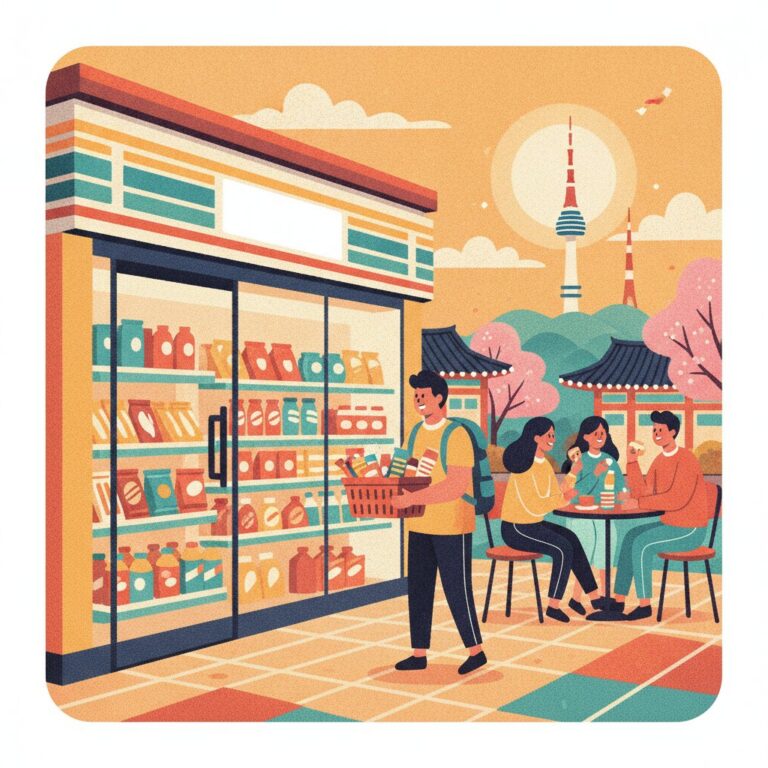
- Convenience Stores: Stores like GS25, CU, 7-Eleven, and Emart24 almost always have small waste bins near their seating areas or entrance doors. If you buy a quick snack or drink at the store, it is completely acceptable to drop your wrapper in their bin. However, dumping outside street trash into a store bin without making a purchase is considered bad etiquette.
- Bus Stops and Transit Hubs: Major bus stations along main thoroughfares often feature combined general waste and plastic recycling containers.
- Cafes and Juice Bars: If you purchased a beverage at a chain coffee shop or takeaway fruit juice counter, you can return your empty cup to the pickup/return counter (*taepyubansnap*) of any branch of that same chain.
- Carry a Small Bag: Many locals carry a small plastic pouch or ziplock bag inside their daypack. Collecting your receipts, tissues, and wrappers in your bag until you return to your hotel or reach a subway station is standard practice here.
How to Locate Public Restrooms in Seoul
While trash cans require some patience, finding public restrooms in seoul is surprisingly easy once you learn the city’s urban layout. Korea takes immense pride in maintaining clean, safe, and accessible facilities for citizens and international guests alike. You are rarely more than five minutes away from a free toilet if you know where to turn.
1. Subway Station Restrooms
Seoul’s world-class subway network is your absolute best friend when nature calls. Every single subway station across all metropolitan lines has clean, well-lit public restrooms equipped with soap, running water, and toilet paper.
Some station restrooms are located *outside* the ticket turnstiles (in the concourse areas near shopping arcades), while others are located *inside* the gated boarding platforms. If the restroom is inside the turnstile gates and you do not intend to ride the train, look for the help button or gate sensor near the disabled access barrier. You can tap your T-money card or press the intercom button (*dowi-bel*) and explain to the station agent that you need to use the restroom (*”Hwajangsil imnida”*). Agents will almost always let you pass through without charging you a transit fare.
2. Open Restroom Policy (Gaebang Hwajangsil)
Seoul operates a fantastic municipal initiative known as the “Open Restroom” policy (*Gaebang Hwajangsil* / 개방화장실). Under this program, the city government subsidizes private office buildings, commercial complexes, and public facilities in exchange for keeping their ground-floor restrooms accessible to the general public.
Look for a blue rectangular or circular sign near building entrances depicting a white toilet icon alongside Korean text reading **개방화장실**. Common locations participating in this program include:
- District municipal offices (*Gu-청*) and community service centers (*Jumin Center*)
- Major office towers in business districts like Gwanghwamun, Yeouido, and Gangnam
- Public libraries and cultural centers
- Underground shopping arcades (such as Gangnam Underground Shopping Center or Express Bus Terminal)
3. Department Stores and Large Retail Hubs
When you are in commercial districts, department stores offer the most comfortable and pristine restrooms available. Major retail chains such as Shinsegae, Lotte, and Hyundai Department Store provide spacious facilities on almost every floor, often complete with modern washlets, vanity mirrors, and nursing rooms. You do not need to buy anything or speak to staff to access department store facilities.
Large bookstore chains, particularly Kyobo Book Centre branches located at Gwanghwamun and Gangnam, also offer excellent public facilities on their basement levels.
🎟️ Popular tours & experiences in Korea
Klook.comUsing Navigation Apps to Find Restrooms Instantly
While foreign tourists often rely on Google Maps, it does not function fully in South Korea due to national security mapping restrictions. To find public restrooms in seoul quickly and accurately, you should download **Naver Map** or **KakaoMap**, both of which support full English interface modes.
Step-by-Step Guide to Search on Naver Map
Finding an accessible facility takes just a few seconds using local mapping apps:
- Open the Naver Map application on your smartphone.
- Set your language preference to English in the app settings menu.
- Type **”public restroom”** or the Korean word **”화장실”** (hwajangsil) into the top search bar.
- The map will display red and blue pins showing nearby facilities inside subway stations, parks, and public buildings.
- Tap a pin to see user reviews, facility accessibility, and whether the location is inside or outside a subway gate.
Alternatively, on KakaoMap, you can tap the search bar, select the “More Services” or feature layer menu, and toggle on the facility filter for toilets to see every registered open facility near your GPS location.
Navigating Cafe Passcodes and Bathroom Etiquette
If you prefer stopping by a local neighborhood cafe, bakery, or small restaurant, keep in mind that many small business operators lock their restroom doors to reserve them for paying customers. Using cafe facilities involves a few local quirks that are useful to know beforehand.
Finding the Door Code on Your Receipt
When you purchase a coffee or dessert at an independent cafe or a chain like Mega Coffee or Compose Coffee, look closely at the bottom or top of your printed paper receipt. You will often see a four-digit code followed by an asterisk or pound sign, labeled as **비밀번호** (*bimulbeonho* / password) or **화장실 암호** (*hwajangsil amho*). Next to it, you will also see the direction to the toilet (e.g., “2nd floor stairwell”).
At some older establishments, the cafe staff may hand you a large, heavy keychain—often attached to a wooden spoon, a large stuffed toy, or a brick—when you ask for the restroom key (*”Hwajangsil yeolsoe isseoyo?”*). The oversized item ensures guests do not accidentally walk off with the key.
Important Flushing Etiquette
Modern plumbing in Seoul handles toilet paper without any issues, and in almost all public buildings, subway stations, and department stores, you should flush your used toilet paper directly down the toilet. You will see official municipal notices asking users to flush paper to maintain cleanliness.
However, in older low-rise buildings or traditional neighborhood alleyways, older piping systems remain delicate. If you see a small plastic waste bin placed right next to the toilet bowl along with a sign asking you not to flush paper, respect the building guidelines and place used paper into the designated bin.
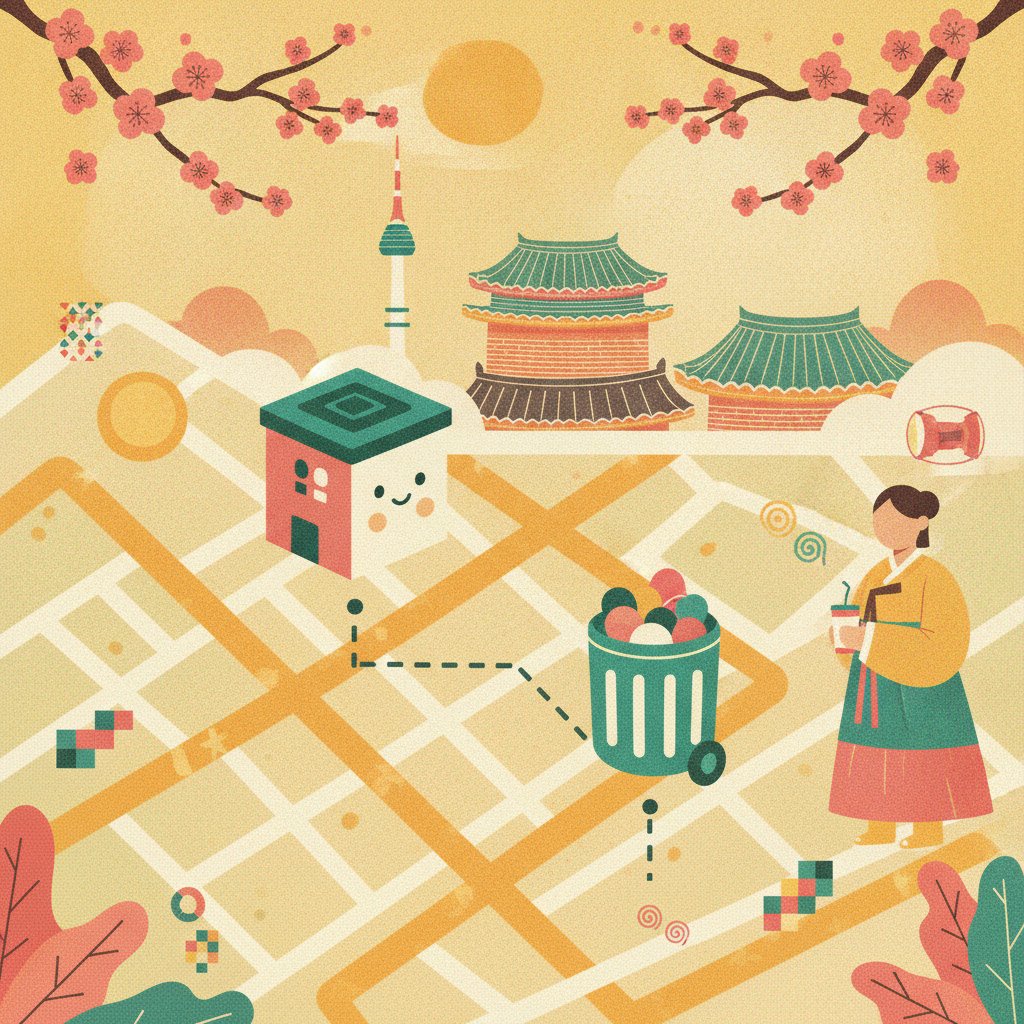
Quick Overview: Seoul Sanitation and Restroom Options
Here is a concise breakdown comparing common locations in Seoul regarding access and facility availability:
| Location Type | Restroom Access | Trash Bin Availability |
|---|---|---|
| Subway Stations | Free & Always Public | High (Recycling Bins) |
| Department Stores | Free & Always Public | Moderate (Restroom Areas) |
| Convenience Stores | Private / Customers Only | High (For Store Items) |
| Open Buildings (개방화장실) | Free & Public Access | Low to Moderate |
| Independent Cafes | Passcode on Receipt | Low (Busboy Return) |
As long as you keep your navigation app handy and remember that subway stations are your central safety net, navigating Seoul’s streets is smooth and worry-free. For more local tips on exploring Korea like an insider, check out our guide on mastering Seoul’s subway system and T-money cards.
FAQ
Are public restrooms in Seoul free and clean?
Yes, public restrooms in Seoul—especially those located in subway stations, government buildings, parks, and department stores—are free to use and maintained to very high cleanliness standards. Almost all locations provide soap, running water, and toilet paper free of charge.
Can I flush toilet paper in Seoul restrooms?
In modern locations such as subway stations, department stores, airport facilities, and main office towers, you should flush toilet paper directly down the bowl. In older buildings or small neighborhood eateries with aging plumbing, you may see a small trash bin next to the toilet with instructions to discard paper there instead.
What should I do if a subway restroom is behind the turnstile gate?
If you need to use a restroom located past the ticket gates without riding the train, press the intercom button (*dowi-bel*) near the gate or approach the station worker. Explain that you need to use the facility by saying “Hwajangsil,” and the staff will open the service gate for you without charging a transit fare.
🎟️ Popular tours & experiences in Korea
Klook.comKeep Reading
- Euljiro Nogari Alley (을지로 노가리골목): A Local’s Guide
- Seongbuk-dong–Bukchon Hanok Village Course (성북동고택북촌산책길): A Local’s Guide
- Seoul Mountain Climbing & Culture Center (산악문화체험센터): A Local’s Guide
- Hallyu Self-Photos at Youngchive Seongsu (영카이브 성수점)
🎟️ Popular tours & experiences in Korea
Klook.com