How to Plan a Suwon Hwaseong Fortress Day Trip from Seoul
At a glance
- In shortA practical guide to visiting Suwon Hwaseong Fortress from Seoul, including transit options, routes, and food.
- Best forTravelers planning a day trip from Seoul to Suwon
- WhereSuwon
- Key pointsReach Suwon from Seoul in 25–60 minutes by KTX, Mugunghwa, or Line 1 subway. · Choose between a scenic 2-hour half-loop or a 3+ hour full perimeter walk. · Try local specialties like Suwon Galbi and fried chicken in Haenggung-dong.
- Heads-upThe Seoul Climate Card does not cover unlimited travel on Suwon transit.
Why Suwon Hwaseong Fortress Belongs on Your Seoul Itinerary
Taking Subway Line 1 south out of Seoul brings you to Suwon Station in less than an hour, but many foreign travelers pass by the best entry points because they do not realize how expansive Suwon Hwaseong Fortress actually is. Built between 1794 and 1796 by King Jeongjo of the Joseon Dynasty to honor his late father and bolster military defense, this UNESCO World Heritage site stretches nearly six kilometers around the core of modern Suwon. As a Korean who grew up taking family day trips to Suwon on crisp autumn weekends, I always tell visitors that Hwaseong is not a static museum behind glass. It is a living neighborhood where 18th-century stone ramparts wrap around hipster coffee shops, traditional markets, and tree-lined walkways.
Planning a Suwon Hwaseong fortress day trip gives you a break from the skyscraper density of central Seoul while showing you how historical preservation and everyday local life exist side by side in South Korea. Whether you want a full morning hike along the ramparts, a casual afternoon browsing K-drama filming spots, or a late-night view of lit-up pavilion gates, Suwon is one of the easiest and most rewarding excursions you can make from Seoul.

✈️ Book your trip to Korea — hotels, flights & more
Getting from Seoul to Suwon: Transit Breakdown
Reaching Suwon from Seoul is straightforward, but choosing the right transport method depends on your budget, where your hotel is located, and how fast you want to get there. You have three main train options departing from key hubs like Seoul Station, Yongsan Station, or Yeongdeungpo Station.
| Transit Type | Travel Time | Approximate Fare | ||||||
|---|---|---|---|---|---|---|---|---|
| Mugunghwa / ITX Train | 30 mins from Seoul Station | 3,000–5,000 won ($2.20–$3.80) | Local Line 1 Subway | 45–60 mins from Yongsan | 1,500–2,000 won ($1.10–$1.50) | KTX High-Speed Train | 25 mins from Seoul Station | 8,400–12,000 won ($6.30–$9.00) |
If you prefer a guaranteed seat and a quick ride, booking a Mugunghwa or ITX-Saemaeul train ticket through Korail’s official website or platforms like Klook is ideal during peak weekends. However, for most travelers using standard T-money or Korean transit cards, simply hopping on a Subway Line 1 train heading toward Sinchang or Cheonan is the most flexible option. Just make sure to check the train destination on the overhead digital displays, as Line 1 forks at various points.
Important local tip on transit passes: If you are using the popular Seoul Climate Card (Gihu Donghaeng Card), note that Suwon Station and Suwon city bus networks fall outside the unlimited Seoul zone. You will need to swipe out using a standard T-money card or pay the regional fair difference at the station counter when exiting outside Seoul borders.
Arriving in Suwon and Reaching the Wall Entry Points
Once you step off the train at Suwon Station, you are still about two kilometers away from the actual fortress walls. You have two main ways to reach the fortress gates from the station exit:
- By City Bus: Exit through Suwon Station Exit 4 or the main bus transfer platform. Take bus number 11, 13, or 35 and ride it for about 10–15 minutes. Get off at Paldalmun (South Gate) or Janganmun (North Gate).
- By Taxi: A short 10-minute taxi ride from the station taxi stand to Janganmun or Haenggung-dong generally costs around 6,000–8,000 won ($4.50–$6.00), depending on traffic.
Walking the Fortress Wall: Route Recommendations
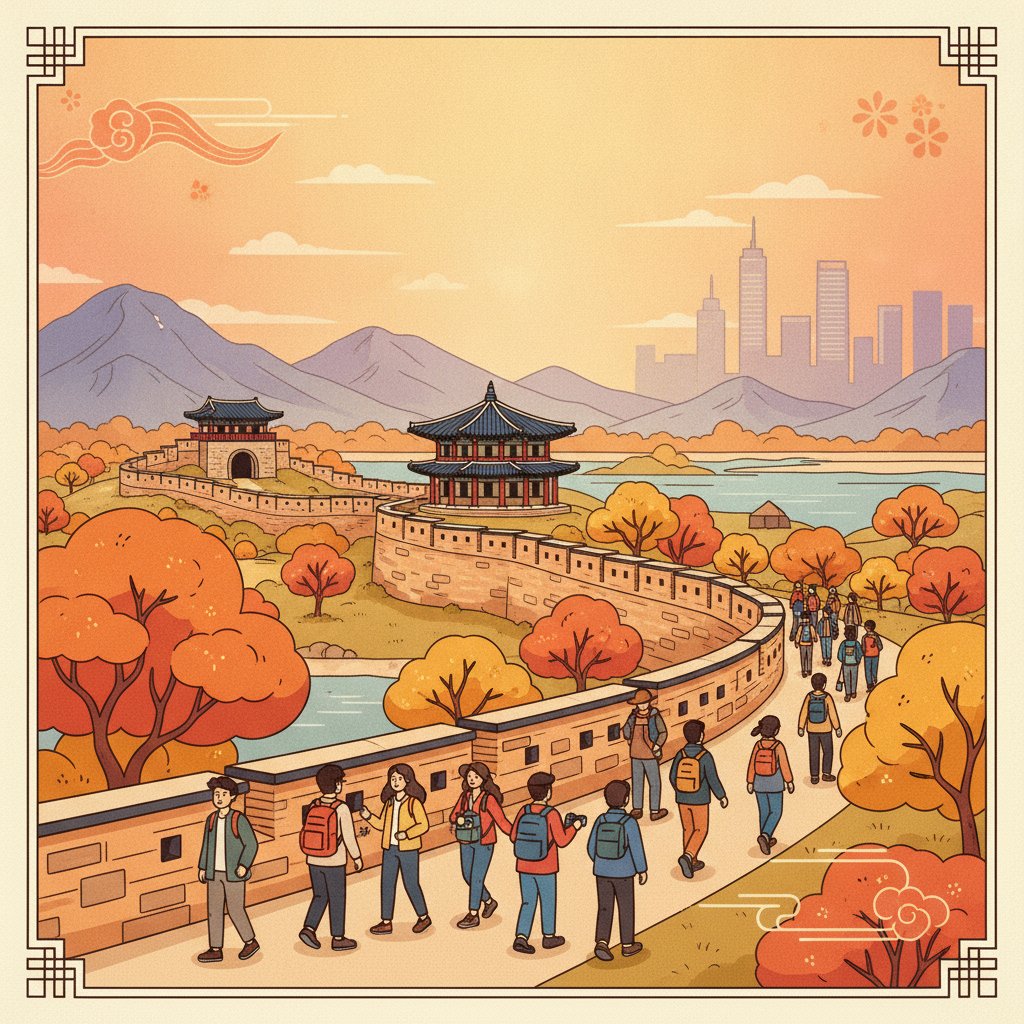
The total perimeter of the fortress wall is roughly 5.7 kilometers. Walking the entire loop takes anywhere from two to three and a half hours, depending on how often you stop to take photos or grab drinks. As a local, I recommend doing a half-loop if you want a balanced day of walking, history, and food, or the full loop if you enjoy outdoor hiking.
Option A: The Highlights Half-Loop (2 Hours)
This route covers the most picturesque architecture without requiring intense uphill climbs. Start at Janganmun Gate, the massive northern entrance that served as the primary gate for royal arrivals from Seoul.
From Janganmun, walk east along the stone battlements toward Hwahongmun Gate, a stone bridge featuring seven arched sluice gates over the Suwoncheon Stream. Right past Hwahongmun sits Bangasuryujeong Pavilion, perched above the serene Yongyeon Pond. This spot is famous throughout Korea for its willow trees and reflection pools. It is easily one of the most scenic spots in the entire fortress complex for taking photos.
Continue east toward Yeonmudae Post and Changryongmun Gate, where the fortress terrain opens into broad grassy fields where Korean soldiers once trained in archery and horse riding.
Option B: The Full Perimeter Walk (3+ Hours)
If you choose to hike the entire wall, extend Option A by climbing up the forested slopes of Paldalsan Mountain on the western side. At the summit sits Seojangdae (Western Command Post), offering panoramic views of the entire city of Suwon, the high-rise urban landscape, and the historic layout below. The climb involves several steep flights of stone stairs, so wear sturdy walking shoes.
🎟️ Popular tours & experiences in Korea
Klook.comExploring Haenggung-dong and Local Food Culture
No Suwon Hwaseong fortress day trip is complete without spending time inside the neighborhood surrounded by the walls: Haenggung-dong (often called Haengnidan-gil). Once a quiet residential neighborhood, local artisans, young chefs, and baristas transformed these traditional alleys into one of the trendiest culture zones near Seoul.
Where to Eat: Suwon Galbi and Fried Chicken Alley
Suwon is famous across Korea for two specific dishes: beef short ribs (Suwon Galbi) and crispy fried chicken cooked in large cast-iron cauldrons.
- Suwon Galbi: Suwon galbi is known for large cuts of marinated beef seasoned with salt, garlic, and sesame oil rather than heavy soy sauce, letting the flavor of the beef shine through. Popular historic establishments like Bonsuwon Galbi or Kabojung serve generous sets. A typical galbi meal ranges from 35,000 to 65,000 won ($26–$48) per serving, making it a treat meal.
- Suwon Chicken Street (Tongdak Alley): Located near Suwoncheon stream, this street is packed with long-running fried chicken joints like Jinmi Tongdak and Yongsung Tongdak. A whole fried chicken served with pickled radish and fried chicken gizzards usually costs around 19,000–22,000 won ($14–$17), easily feeding two people.
K-Drama Spotting and Cafe Hopping
Haenggung-dong’s unique mix of old low-rise Korean houses (hanok) and trendy red-brick cafes makes it a favorite filming location for Korean dramas. Fans of Our Beloved Summer, Twenty-Five Twenty-One, and Extraordinary Attorney Woo will recognize several alleyways and storefronts throughout the area. Take your time strolling through the narrow side streets, where you can pick up hand-crafted souvenirs, try craft beers at neighborhood microbreweries, or enjoy a pour-over coffee overlooking the ancient stone wall.
Practical Tips for Visiting Suwon
- Footwear Matters: You will be walking on uneven flagstones, paved paths, and steep stone staircases. Leave fashion boots in Seoul and wear comfortable sneakers.
- Night Views: Suwon Hwaseong is fully illuminated after sunset. If your schedule allows, stay until dusk. Seeing the illuminated fortress gates framed against the dark sky is a memorable experience.
- Tethered Balloon Ride (Flying Suwon): Near Changryongmun Gate, you can ride Flying Suwon, a helium balloon anchored by a cable that rises up to 150 meters in the air. Adult tickets run approximately 18,000–20,000 won ($13–$15), offering incredible aerial views of the fortress loop at night.
FAQ
How long should I spend on a day trip to Suwon?
Plan for roughly 6 to 8 hours, including travel time from Seoul. This gives you enough time to walk a major section of the fortress wall, tour Hwaseong Haenggung Palace, eat lunch at Chicken Street or a local Galbi restaurant, and enjoy a cafe in Haenggung-dong before heading back to Seoul.
Do I need to buy tickets in advance to enter Suwon Hwaseong Fortress?
No, the fortress walls and open park areas are free to walk through 24/7 without tickets. Small admission fees (usually 1,000–2,000 won / under $1.50) apply if you enter inner historic structures like Hwaseong Haenggung Temporary Palace, which you can pay directly at the ticket booth upon arrival.
What is the best season to do the Suwon wall walk?
Spring (April to May) and autumn (September to November) offer the best walking weather. Autumn is particularly beautiful because the trees along Paldalsan Mountain turn bright red and gold, framing the ancient stone guard towers with autumn foliage.
More on Day Trips from Seoul
- Day Trip Guide to Nami Island from SeoulCovers transport options, attractions, food, and timing for a day trip from Seoul to Nami Island.
- Incheon Day Trip Guide: Chinatown to SongdoA guide on taking a day trip from Seoul to Incheon to explore Chinatown, historic sights, and futuristic Songdo.
- Seoul to Damyang: Bamboo Forest Travel GuideA practical guide on traveling from Seoul to Damyang, visiting Juknokwon, and enjoying local foods.
See every Day Trips from Seoul post in our K-Travel guide.
Handy toolsKorea travel essentials · Trip budget calculator · Korea Guide Finder
🎟️ Popular tours & experiences in Korea
Klook.comKeep Reading
- Gangneung KDrama Day Trip: Goblin Pier to BTS Bus Stop
- Essential DMZ Tour Tips: Visiting the Border from Seoul
- How to Travel Jeju Island Without Driving
- Changkkom: Natural Basalt Window in Bukchon-ri, Jeju
🎟️ Popular tours & experiences in Korea
Klook.com