K-Pop Photocard Binder Storage and Toploader Decorating Guide
Storing a rare photocard directly inside a PVC binder without an acid-free inner sleeve is the quickest way to ruin a piece of collectible cardboard that might be worth more than the album itself. Acidic plastics break down over time, leaving chemical residues that make glossy surfaces sticky and cause colors to fade. As someone living in Seoul who has been collecting and trading K-pop photocards for years, I have seen far too many precious collection pieces damaged by improper storage or careless decorating techniques.
Whether you just pulled your dream bias card from a recent album release or acquired a rare broadcast event photocard, building a safe setup is essential. This photocard binder storage guide walks you through essential archival materials, binder choices, step-by-step decorating methods, and where to source reliable supplies locally in Korea or online.
Understanding Photocard Materials: Why Archival Quality Matters
Standard K-pop photocards are printed on coated paper stock, measuring around 55 by 85 millimeters (similar to a standard credit card). Because the surface coating is sensitive to moisture and synthetic chemicals, putting your cards in contact with soft polyvinyl chloride (PVC) will cause irreversible damage over time. PVC contains plasticizers that off-gas, causing cards to stick to the plastic, warp, or lose their vibrant finish.
To protect your collection, always look for archival-grade, acid-free, and PVC-free materials made from one of the following plastics:
- Polypropylene (PP): The gold standard for binder pocket pages and thick card sleeves. PP is rigid, chemically stable, and crystal clear.
- Cast Polypropylene (CPP): Sightly softer and smoother than standard PP, making it ideal for snug inner sleeves that fit directly over the photocard without scratching the edges.
- Oriented Polypropylene (OPP): Highly transparent with a crisp texture, frequently used for clear sealable outer bags and protective sleeves.
✈️ Book your trip to Korea — hotels, flights & more
Building Your Photocard Binder Storage System
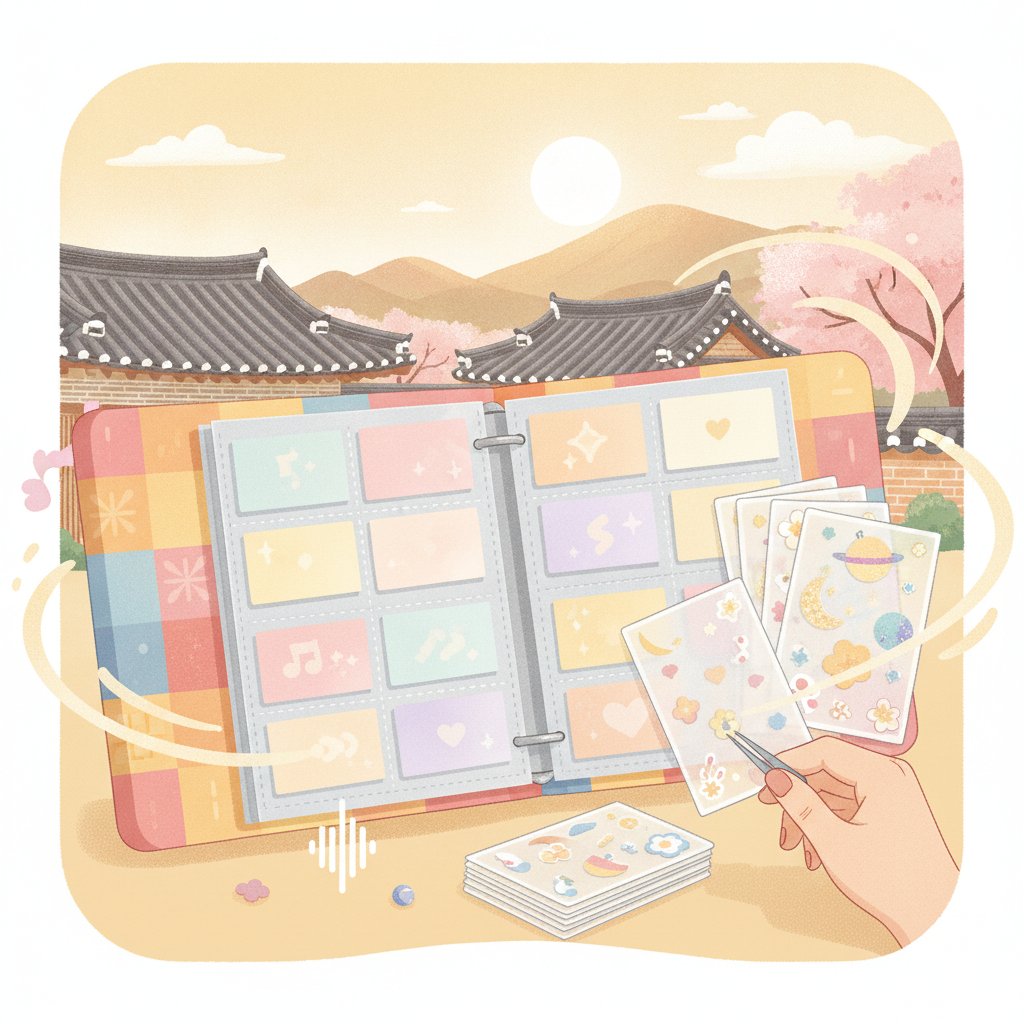
A reliable photocard binder storage guide starts from the inside out. Your storage strategy should use a layered system: an inner sleeve to protect against friction, an outer sleeve or toploader for extra rigidity, and a binder page to organize your collection cleanly.
1. Choosing the Right Inner Sleeves
Never put a bare card straight into a binder pocket. Always use a close-fitting inner sleeve first. In the Korean collecting community, standard sizes for photocard sleeves generally fall into two categories:
- 56 x 87 mm (Hard or Soft): Fits standard album photocards with minimal overhang. Sleeves from Korean brands like Popcorn Games (56x87mm size) are widely popular among local collectors for their precise fit.
- 57.5 x 89 mm: Gives slightly more room, making it suitable for thicker or non-standard cards.
For high-value cards, many collectors practice double-sleeving. Put the first sleeve on from the top down, and then slide a second, slightly larger sleeve (like 58 x 89 mm) from the bottom up. This seals the card on all edges and prevents dust or humidity from creeping inside.
2. Selecting Binders and Pocket Pages
Your binder layout depends on how you prefer to display your collection and how much shelf space you have available. Here are the three most popular binder formats:
- A5 Binders (2-Pocket or 4-Pocket): Portable and compact. A5 4-pocket binders are currently the most popular format in Korea because they fit neatly on smaller desks and hold a reasonable number of cards per page.
- A4 Binders (9-Pocket): Ideal for large, completed collections or full album sets. A 9-pocket A4 page lets you display an entire set across three balanced rows.
- Collect Books (1-Pocket Mini Albums): Compact single-pocket mini-albums with a cute front cover window. While stylish, check that the interior pages are explicitly labeled PVC-free. If you use a collect book made of traditional PVC material, double-sleeve your cards with heavy-duty PP sleeves beforehand.
Look for binders that include a sturdy zipper closure or a solid elastic band. Zippered binders are especially effective at keeping light and ambient atmospheric moisture away from your cards.
Toploader Decorating: The Art of Topdae
In South Korea, customizing clear hard plastic cases is called topdae (short for toploader kkumigi or toploader decorating). Toploader decorating turned into a massive trend during the pandemic as fans wanted a creative way to showcase their favorite photocards for cafe events, pop-up visits, and social media photos.
A decorated toploader (often styled with stickers, glitter, or resin) lets you display a card safely without sticking anything directly onto the photocard itself. The card sits inside an inner sleeve inside the hard case, while all decorative elements stay on the outer plastic surface.
Essential Decorating Supplies
To begin decorating your own toploaders, gather the following basic tools:
- Clear Toploaders (B8 Size): Standard B8 toploaders comfortably hold standard-sized photocards. Blue-tinted or crystal-clear varieties are both common, though crystal-clear offers truer color accuracy for photos.
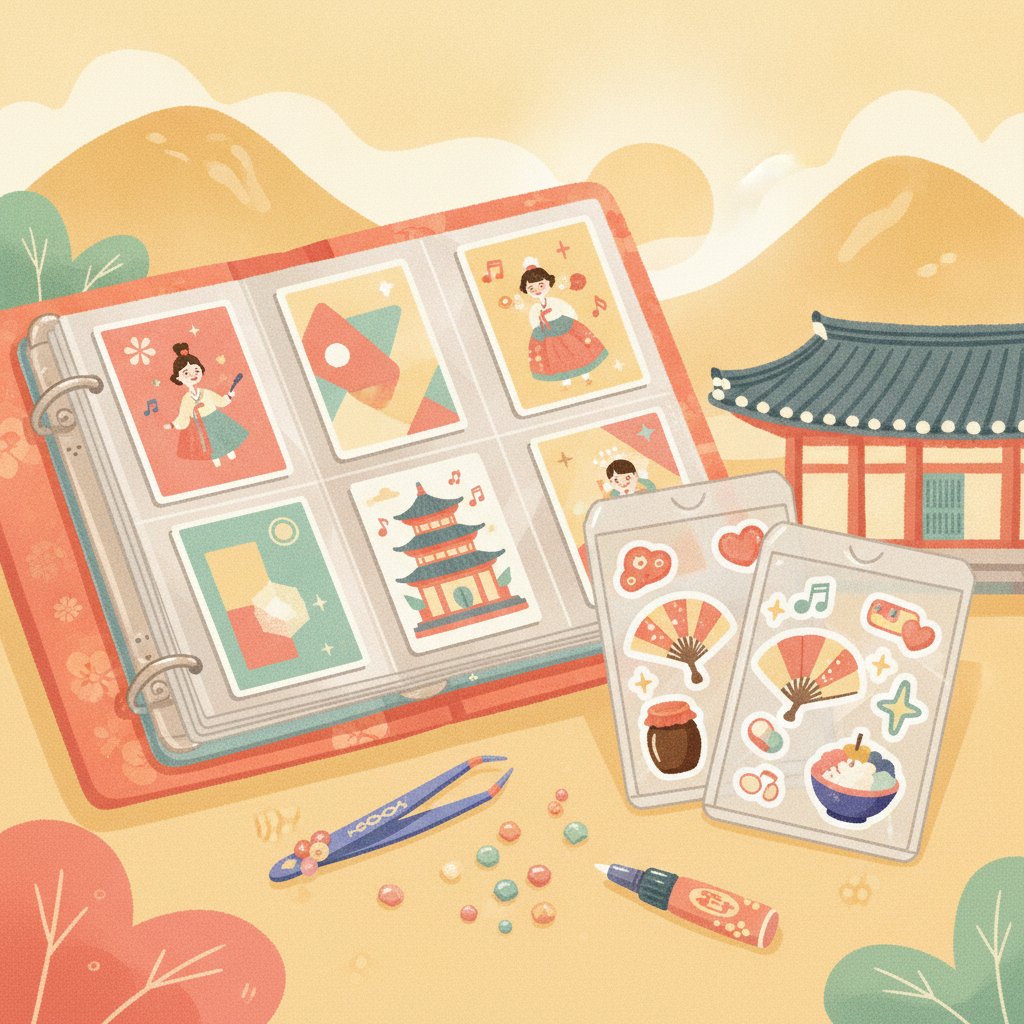
- Polco Stickers: Special sticker sheets designed for frame decorating. Look for ribbon stickers, alphabet stickers, lace borders, butterflies, and holographic sparkle patterns.
- Fine-Tip Tweezers: Precision tweezers make placing intricate sticker details significantly easier than using your fingers.
- Microfiber Cloth & Alcohol Wipes: Used to clean fingerprint oils or dust off the outside of the hard case before applying adhesives.
🎟️ Popular tours & experiences in Korea
Klook.comStep-by-Step Guide to Decorating Your Toploader
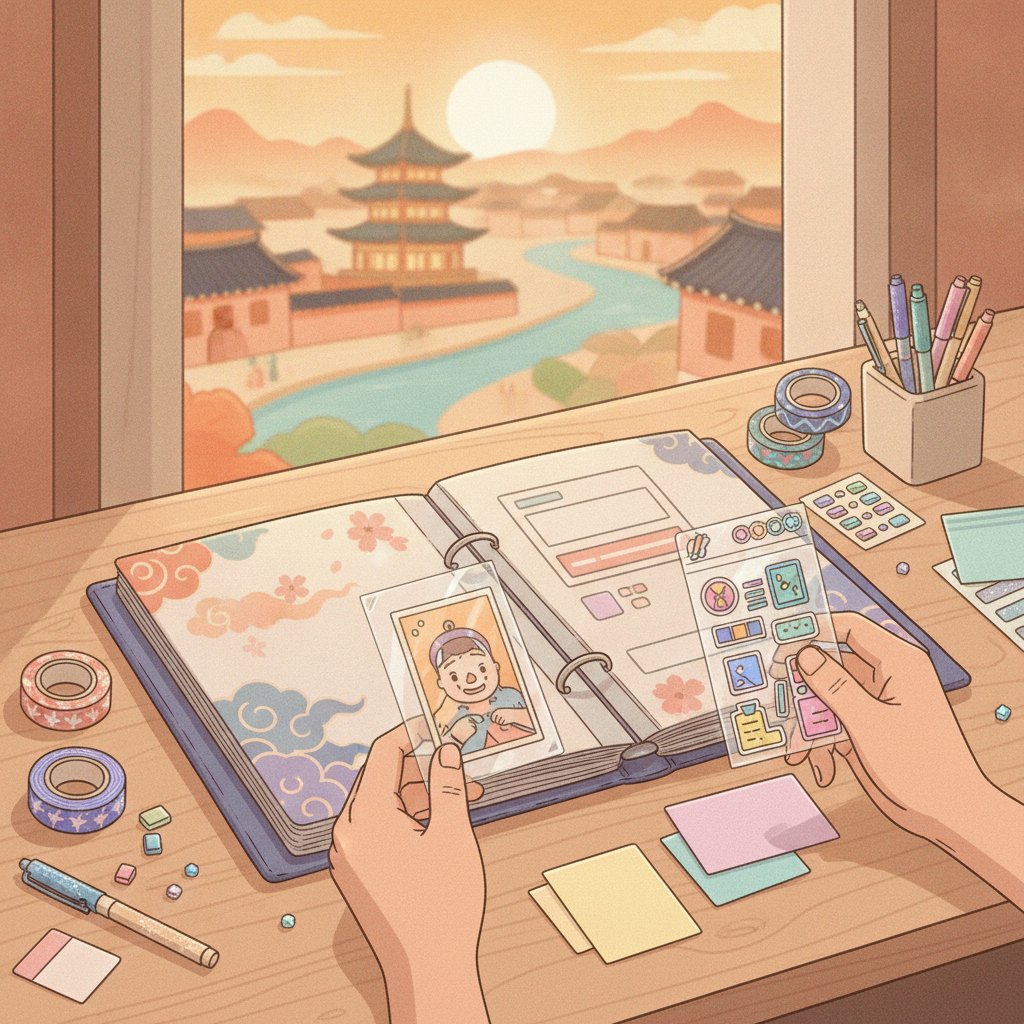
Decorating a toploader takes patience, but following a structured process ensures clean and long-lasting results.
Step 1: Prep the Materials
Start by wiping down both sides of your clear toploader with a soft microfiber cloth to remove manufacturing dust. Place your target photocard inside an acid-free inner sleeve, then insert it into the toploader. Keeping the photocard inside during the decorating process helps you balance colors and align border stickers around the idol’s face.
Step 2: Establish a Theme and Color Palette
Choose stickers that complement the photo’s color aesthetic. For instance, if your photocard features bright outdoor lighting, pastel yellows and greens work well. If the aesthetic is dark or dramatic, silver foil, black lace, or deep red jewel stickers create a cohesive mood.
Step 3: Lay Down Frame and Border Elements
Using your fine-tip tweezers, apply border stickers around the outer edges of the toploader. Ribbon, vine, or lace stickers work best for creating a visual frame. Leave the central area around the facial feature clear so the photocard remains the main focal point.
Step 4: Layer Accent Details and Text
Once your main frame is set, layer smaller accent stickers over the base design. Place sparkles or small star stickers near the corners, and use alphabet stickers to spell out your bias’s name or birthday at the top or bottom edge. Layering stickers slightly on top of each other gives the design depth.
Step 5: Seal and Protect
Press down firmly across all applied stickers using a clean soft cloth to eliminate air bubbles. If you plan to carry your decorated toploader in a bag or display it on a keyring, slide the entire completed hard case into a clear sealable OPP bag to prevent sticker edges from peeling off over time.
Where to Buy Photocard Storage and Decorating Gear
Finding high-quality binder pages, sleeves, and decorating tools is straightforward whether you are living in Korea or ordering internationally.
If you are visiting or living in Seoul, stop by local stationery sections in major retail chains. Daiso Korea carries an extensive budget line of PVC-free inner sleeves, photocard collect books, and theme sticker packs. Major bookstore chains like Kyobo Hottracks and Artbox offer a wide variety of binder sizes, premium sleeves, and specialized polco sticker sheets from local Korean indie designers.
For collectors shopping globally, popular online platforms carry authentic supplies:
- Ktown4u carries official K-pop binders, specialized sleeve sizes, and fan-made collect books shipped worldwide.
- Weverse Shop offers official tour and album binders tailored specifically to specific group photocard dimensions.
- Amazon provides easy access to trusted global archival brands like Ultra PRO, Dragon Shield, and Popcorn Games sleeve packs.
Estimated Costs for Photocard Gear
Building a collection setup does not have to be overly expensive. Below is a general overview of typical price ranges for photocard storage and decorating supplies in Korean Won and US Dollars. Prices vary depending on seller, brand, and local availability.
| Item | Price (KRW) | Price (USD) |
|---|---|---|
| Inner Sleeves ( Pack of 100) | 1,500 – 4,000 KRW | $1.20 – $3.00 |
| A5 Binder + 20 Pages | 8,000 – 18,000 KRW | $6.00 – $14.00 |
| Toploaders (Pack of 10) | 2,000 – 5,000 KRW | $1.50 – $4.00 |
| Deco Sticker Sheets (Each) | 1,000 – 3,500 KRW | $0.80 – $2.80 |
Best Practices for Long-Term Storage
To keep your photocard collection in mint condition over many years, adopt these simple maintenance habits:
- Avoid Direct Sunlight: Store your binders on a bookshelf away from direct sunlight, which causes UV fading over time.
- Control Moisture: Drop a small silica gel packet inside the back cover of your binder to absorb ambient humidity, especially during summer months.
- Store Binders Vertically: Avoid stacking heavy binders flat on top of one another. Weight pressure can cause sleeve indentations on sensitive glossy card surfaces.
🎟️ Popular tours & experiences in Korea
Klook.comFAQ
What sleeve size fits standard K-pop photocards best?
Standard K-pop photocards measure roughly 55 x 85 mm. Inner sleeves sized 56 x 87 mm or 57.5 x 89 mm offer the most exact and secure fit without bending the card edges.
How do I safely remove stickers or adhesive residue from a toploader?
Remove the photocard completely before cleaning. Use a dab of rubbing alcohol or hand sanitizer on a microfiber cloth to dissolve sticky residue on the plastic surface, then dry it thoroughly before reinserting any cards.
Can I fit a decorated toploader directly into a binder page?
Standard binder pages are usually too narrow for hard plastic toploaders. If you want to store decorated toploaders in a binder, purchase specialized wide 2-pocket or 1-pocket A5 pages specifically designed for hard cases.
Keep Reading
- K-pop Generations: From 1st Gen to Today
- Seoul K-Pop Dance Classes for Tourists
- A Korean Local’s Noraebang Guide: Your First Time in a Korean Karaoke Room
- Beyond the Album: A K-Pop Merch Guide to What Fans Truly Collect
🎟️ Popular tours & experiences in Korea
Klook.com