How to Visit the Historic Boseong Green Tea Fields
Standing at the base of Daehan Dawon in early May, surrounded by rising terraces of vibrant emerald green, the crisp scent of fresh leaves in the morning fog is something you never quite forget. Most international visitors focus their South Korea itineraries strictly on Seoul and Busan, or perhaps a quick flight to Jeju Island. But if you want to experience a quiet, poetic side of Korean nature and tradition, heading down to the rolling hills of Boseong in Jeollanam-do province is an absolute must.
As a Korean, Boseong has always held a special place in our collective imagination. We see it featured in classic K-dramas like Summer Scent and The Legend of the Blue Sea, as well as in countless advertisements and travel shows. Beyond the screen, Boseong is the undisputed heart of Korean tea culture, producing roughly 30 to 40 percent of the nation’s tea leaves. Visiting the historic boseong green tea fields offers a refreshing change of pace from the fast electric energy of Korea’s modern metropolises.
The Story Behind Boseong Green Tea Fields
While wild tea leaves have been harvested in southern Korea for well over a thousand years, Boseong’s modern identity as a tea capital began in the late 1930s. Agricultural researchers discovered that the region offered the ideal microclimate for cultivation: high humidity, moderate rainfall, well-draining acidic soil, and a coastal breeze from the nearby southern sea.
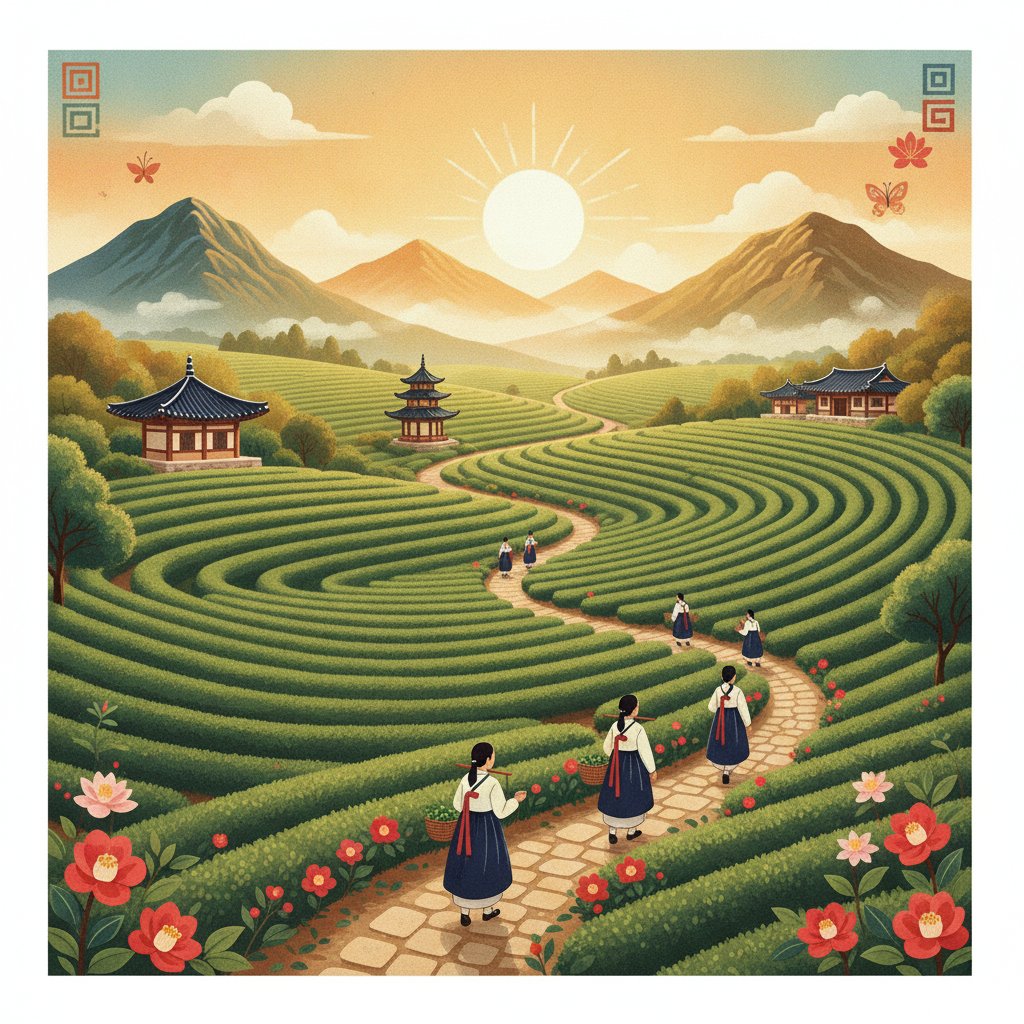
The most famous site, Daehan Dawon (also known as the Daehan Dawon Tourist Tea Plantation), was established in 1957 on land originally planted decades earlier. Over the years, local growers meticulously sculpted the hillside rows into sweeping curved steps. Today, when people think of the boseong green tea fields, they are usually picturing these dramatic emerald terraces nestled under towering cedar trees.

✈️ Book your trip to Korea — hotels, flights & more
Best Time to Visit Boseong
Boseong changes dramatically throughout the seasons, but timing your visit around the agricultural calendar makes a huge difference in what you see and taste.
- Late April to May (Spring Harvest): This is peak season. The fields are at their absolute greenest, filled with tender new shoots. Late April marks the first harvest of the year, producing the highest quality green tea. The annual Boseong Green Tea Festival typically takes place around early May.
- June to August (Summer Lushness): The fields are deep green and full. While summers in Korea are warm and humid, the shaded forest paths around the plantations offer cooler air and beautiful morning sea breezes.
- September to November (Autumn Calm): Crisp autumn skies make hiking up to the ocean view lookout points comfortable. The crowds diminish significantly compared to spring.
- December to February (Winter Tranquility): The fields take on a quiet, peaceful atmosphere. Occasionally, snow blankets the green rows, creating a striking visual contrast. Historically, light festivals have also been held during the winter months.
How to Travel to Boseong from Seoul and Busan
Because Boseong is located in the southwestern corner of the Korean peninsula, getting there requires a bit of planning, but it is straightforward if you know your options.
Option 1: KTX High-Speed Rail + Local Bus or Taxi
The fastest public transit route from Seoul involves taking the KTX high-speed train from Yongsan Station or Seoul Station to Gwangju-Songjeong Station or Suncheon Station. Train tickets generally range from 40,000 to 50,000 won (approximately $30–$38 USD) one way.
From Suncheon or Gwangju, you can take a local intercity bus to Boseong Bus Terminal, which takes about one hour. Once at Boseong Terminal, local city buses run directly to Daehan Dawon every 30 to 60 minutes. Alternatively, a taxi from Boseong Bus Terminal to the main tea fields takes around 15 minutes and costs roughly 12,000 to 18,000 won ($9–$14 USD).
Option 2: Express Bus Direct to Boseong
Direct express buses depart from the Central City Bus Terminal (Express Bus Terminal) in Seoul to Boseong Bus Terminal. The journey takes around 4 hours and 30 minutes, with tickets priced around 25,000 to 38,000 won ($19–$29 USD). This option is slower than the KTX but avoids transfer points.
Option 3: Packaged Day Tours and Car Rentals
For travelers who prefer hassle-free logistics, booking a day tour or private transport service via platforms like Klook is a convenient option, particularly during the peak spring season. Many tours bundle Boseong with neighboring attractions like Suncheonman Bay Wetland Reserve or Naganeupseong Folk Village. If you feel comfortable driving in Korea, renting a car using an International Driving Permit allows you to explore Jeollanam-do at your own pace.
🎟️ Popular tours & experiences in Korea
Klook.comNavigating the Main Tea Plantations
While Boseong has several tea farms, two main locations welcome public visitors and offer distinct experiences.
| Plantation Spot | Key Highlight | Best For |
|---|---|---|
| Daehan Dawon | Iconic terraced hills and cedar path | Photography and scenery |
| Botjae Plantation | Panoramic road view and modern museum | Relaxed cafe seating |
| Yuldopo Beach Fields | Ocean views combined with tea rows | Off-the-beaten-path walk |
Daehan Dawon Plantation
Upon entering Daehan Dawon, you step onto a grand path shaded by towering, decades-old Japanese cedar trees (metasequoias). Admission tickets generally cost around 4,000 to 5,000 won ($3.00–$4.00 USD) per adult.
Beyond the cedar avenue lies the main amphitheater of terraced boseong green tea fields. The paths wind upward through the rows. If you continue climbing to the highest point—the Ocean View Lookout (Bada Jeonmangdae)—you will be rewarded with a view over the green slopes stretching out toward the waters of the southern sea on clear days. Wear sturdy walking shoes, as the dirt paths can be steep and slightly slick after rain.
Botjae and Surrounding Fields
Located just a few minutes drive from Daehan Dawon, Botjae offers a wide hilltop view over rolling green slopes. It houses a sleek, multi-story tea cultural center operated by the local government, featuring interactive exhibits, tea tasting rooms, and modern cafes serving regional tea beverages.
Understanding Korean Green Tea Grades
When shopping for tea leaves in Boseong, you will notice labels categorized by picking season and leaf maturity. In traditional Korean tea culture, harvest timing determines flavor complexity and price point.
- Ujeon (First Harvest): Picked before the first spring rain (Gogu) around April 20. Made from delicate young buds, Ujeon produces a light, sweet, subtle flavor with low bitterness. It is the most prized and expensive grade, often running 40,000 to 80,000+ won ($30–$60+ USD) for a small tin.
- Sejak (Second Harvest): Picked in early May when the leaves are slightly larger. It balances a fresh grassy aroma with rich savory notes (umami). Sejak is the most popular choice for high-quality everyday drinking and typically costs 20,000 to 40,000 won ($15–$30 USD).
- Jojung & Daejung (Mid to Late Harvests): Picked late May into summer. These leaves produce a stronger, slightly astringent brew, ideal for cold infusions, cooking, or green tea lattes. Tins usually run between 10,000 and 20,000 won ($8–$15 USD).
Unique Food Experiences in Boseong
Visiting the boseong green tea fields is as much a culinary trip as a sightseeing one. Locals have incorporated tea into almost every regional dish.
Green Tea Ice Cream and Desserts
At the base of Daehan Dawon, small shops sell fresh green tea soft-serve ice cream, usually priced around 3,500 to 4,500 won ($2.50–$3.50 USD). Unlike artificial flavorings, authentic Boseong ice cream uses real ground tea leaves, giving it a vibrant green hue and a balanced, nutty, bitter-sweet taste. You can also try green tea churros, green tea shaved ice (bingsu), and green tea lattes.
Nokcha Samgyeopsal (Green Tea Pork Belly)
One of Boseong’s premier regional specialties is pork belly from pigs raised on feed mixed with green tea leaves. Local restaurants claim this diet yields leaner, more tender meat with a clean taste. Sizzling Nokcha Samgyeopsal over a grill accompanied by fresh leafy wraps and local side dishes is a classic post-hike dinner in town. Expect to spend around 15,000 to 20,000 won ($11–$15 USD) per serving.
Shopping for Green Tea Products and Beauty Items
Beyond traditional tea tins, Boseong produces a vast array of green tea products. Green tea extract is widely used in Korean skincare for its antioxidant and soothing properties.
- Tea Leaves & Powder: Purchase directly from small family-run booths near the plantation entrance or from official city agricultural shops. Fine green tea powder (nokcha garu) is versatile for baking, smoothies, or face masks.
- K-Beauty Items: Look out for green tea cleansing foams, sheet masks, and body lotions. If you miss buying them on-site, popular green tea skincare lines from brands like Innisfree can be easily ordered internationally through platforms like Olive Young Global or Amazon.
🎟️ Popular tours & experiences in Korea
Klook.comPractical Travel Tips for First-Time Visitors
To make your day trip smooth, keep these practical points in mind:
- Navigation Apps: Google Maps offers limited foot navigation in South Korea. Download Naver Map or KakaoMap beforehand to look up local bus schedules, walking paths, and taxi routes.
- Payment Methods: Credit cards are accepted almost everywhere in Korea, including ticket booths and local cafes in Boseong. However, carrying around 20,000 won in physical cash is helpful for small fruit stalls or local vendors along the roadside.
- Luggage Storage: If visiting Boseong en route between cities, luggage lockers are available at Boseong Bus Terminal and main train hubs like Suncheon and Gwangju-Songjeong.
Frequently Asked Questions
What is the best month to visit the Boseong green tea fields?
May is widely considered the best month to visit. The fields are vibrant emerald green from the fresh spring growth, the weather is pleasant for outdoor walking, and the annual Boseong Green Tea Festival takes place early in the month.
How long does it take to travel from Seoul to Boseong?
By high-speed KTX train to Suncheon or Gwangju followed by a local bus or taxi, the total journey takes around 3.5 to 4 hours. Direct express buses from Seoul take approximately 4.5 hours depending on traffic conditions.
Is Boseong worth visiting as a day trip from Seoul?
While possible as an intensive day trip using early morning KTX trains, it is best experienced as an overnight trip or as part of a southern itinerary combined with nearby destinations like Suncheon, Yeosu, or Gwangju.
Keep Reading
- Mogok Retreat Chapel (모곡 피정의 집): A Local’s Guide to Serenity in Gangwon
- Nexon Computer Museum (넥슨컴퓨터박물관): A Local’s Guide
- Lotte World Adventure Busan (롯데월드 어드벤처 부산): A Local’s Guide
- Cheongok Golden Bat Cave (천곡황금박쥐동굴): A Local’s Guide
🎟️ Popular tours & experiences in Korea
Klook.com