Seoul to Damyang: Planning Your Bamboo Forest Trip
Standing inside Juknokwon on a humid summer morning, the first thing you notice isn’t the sight of green stalks rising thirty feet into the sky—it’s the sudden, cool drop in temperature. The thick bamboo canopy filters the harsh sunlight into a soft green glow, while the breeze creates a rhythmic rustling sound that Koreans call soothing for the mind. As a Korean who frequently leaves Seoul on weekends when the urban noise gets too overwhelming, Damyang in Jeollanam-do province remains one of my absolute favorite escapes.
Located in the southwestern region of South Korea, Damyang is nationally famous for two things: its sweeping bamboo groves and its incredible regional food culture. While it is located nearly 300 kilometers south of Seoul, visiting this tranquil region is straightforward if you know how to navigate the transit system. Whether you are looking for a long day trip or a relaxing overnight stay, this practical damyang bamboo forest guide walks you through every step of getting there, exploring the park, and eating like a local.
How to Travel from Seoul to Damyang
Getting from Seoul to Damyang requires choosing between speed and simplicity. Because Damyang does not have its own KTX high-speed train station, most travelers either take a direct express bus or combine a KTX train with a local transfer. Both methods are comfortable and safe, but they suit different travel styles.
Option 1: Express Bus (Direct and Convenient)
Taking an intercity express bus directly from Seoul to Damyang Bus Terminal is the simplest option because it requires no transfers along the way.
- Departure Point: Central City Bus Terminal (located at Express Bus Terminal Station on Seoul Subway Lines 3, 7, and 9).
- Travel Time: Approximately 3.5 hours, depending on weekend traffic exiting Seoul.
- Cost Range: Expect to pay roughly 23,000 to 36,000 KRW (about $17 to $27 USD) one-way, depending on whether you choose a Standard or Premium seat class.
- How to Book: Foreign visitors can search schedules and purchase tickets at the terminal station counter or through official reservation portals like Klook or the Kobus website. On weekdays, you can usually buy tickets on-site right before departure, but booking a day in advance is highly recommended for weekend travel.
Option 2: KTX High-Speed Train via Gwangju (Fastest Overall)
If you prefer train travel or want to minimize time spent on the highway, combining the KTX train with a short local connection through the nearby city of Gwangju is your best route.
- Step 1: Board a KTX train from Yongsan Station or Seoul Station heading to Gwangju-Songjeong Station. The high-speed ride takes approximately 1 hour and 45 minutes to 2 hours. KTX tickets generally cost between 45,000 and 50,000 KRW (around $33 to $38 USD) one-way. You can reserve seats on the official Korail website or via travel booking platforms like Klook.
- Step 2: From Gwangju-Songjeong Station, you can either take a local taxi directly to Juknokwon (takes about 40 minutes and costs roughly 30,000 to 35,000 KRW) or take Gwangju city bus #311, which connects Gwangju straight to the gates of Juknokwon in under an hour for around 2,000 KRW.
Transit Comparison Overview
| Transport Method | Total Time | Est. Cost (One-Way) |
|---|---|---|
| Direct Express Bus | 3.5 hours | 23,000–36,000 KRW |
| KTX + Local Bus | 2.5 to 3 hours | 47,000–52,000 KRW |
| KTX + Taxi | 2.5 hours | 75,000–85,000 KRW |
Note: All travel times and prices are approximate standard estimates and vary based on transit schedules, traffic, and exchange rates.
✈️ Book your trip to Korea — hotels, flights & more
Exploring Juknokwon (Damyang Bamboo Forest)
Juknokwon is a massive bamboo park spanning over 160,000 square meters. It features eight distinct walking trails designed around different themes, such as the Memories Byway, Philosopher’s Path, and Loved One’s Road. As soon as you enter through the main traditional entrance gate, the urban landscape disappears entirely.
What to See Inside the Park
The main draw is simply strolling beneath the towering stalks of bamboo, but there are several specific stops you should look for inside Juknokwon:
- Bonghwangru Pavilion: Located near the entrance, the observatory deck offers an elevated view looking back across the stream toward Damyang town. The ground floor houses a comfortable cafe serving bamboo-infused desserts.
- Hanok Village & Cultural Center: Near the rear exit of the park, you will find a quiet area featuring traditional wooden buildings (hanok), calm ponds, and open courtyards where cultural workshops and traditional tea ceremonies take place.
- Bamboo Ice Cream Cafes: Throughout the park, small kiosks sell green-tinted ice cream flavored with bamboo leaf extract. It has a subtle, earthy, light tea-like flavor that is refreshing after walking up the sloped paths.
Admission tickets for Juknokwon typically run around 3,000 to 4,000 KRW for adults. The trails are well-maintained with wooden steps, stone pathways, and resting benches, making it easy to spend two to three relaxing hours wandering through the grounds.
What to Eat: Damyang’s Iconic Food Specialties
In Korea, visiting a region without eating its local culinary staple feels like an incomplete journey. Jeollanam-do is famous across the country for having the richest food tradition in Korea, and Damyang’s local cuisine is centered around two famous dishes that you must try while visiting.
1. Tteokgalbi (Grilled Short Rib Patties)
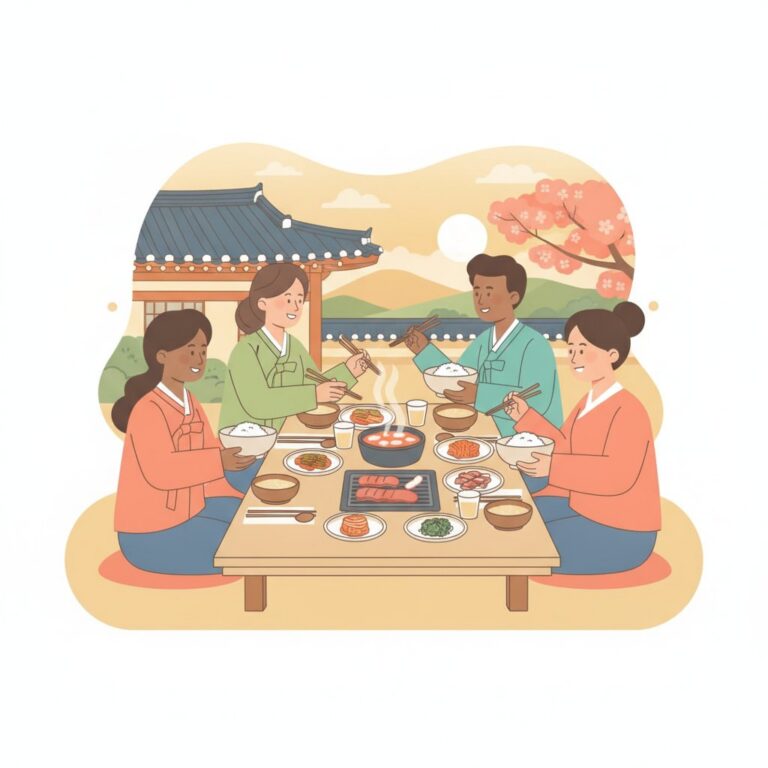
Tteokgalbi consists of beef or pork ribs where the meat is finely minced, marinated in a savory-sweet soy sauce mix, shaped into thick rectangular patties, and grilled over charcoal. Unlike Western hamburger patties, the texture is tender, juicy, and rich with smoky garlic flavors. Local restaurants in Damyang serve tteokgalbi as part of a full Hanjeongsik (Korean full-course meal), filling your table with dozens of side dishes, fresh seasonal greens, and stews.
2. Daetong-bap (Bamboo Steamed Rice)
Daetong-bap is short-grain sticky rice cooked inside a real, freshly cut bamboo stalk along with chestnuts, jujubes (Korean dates), pine nuts, and black beans. As the rice steams inside the wood, it absorbs the natural aroma and essential oils from the fresh bamboo wall. Once you finish eating, the bamboo container is yours to keep as a souvenir.
A full set meal featuring both Tteokgalbi and Daetong-bap typically ranges from 18,000 to 30,000 KRW per person at local restaurants surrounding the entrance of Juknokwon. Most establishments accept standard international credit cards.
🎟️ Popular tours & experiences in Korea
Klook.comNearby Attractions to Add to Your Itinerary
If you take the trip from Seoul, make the most of your travel day by visiting these two scenic spots located right next to Juknokwon.
Gwanbangjeorim Forest Embankment
Located directly across the stream from the main gate of Juknokwon, Gwanbangjeorim is a designated national natural monument. It is a two-kilometer artificially planted forest along a riverbank, featuring giant trees that are over two hundred to three hundred years old. It is flat, shaded, and completely free to walk along. During autumn, the changing foliage here makes it one of the top photography spots in the region.
Metasequoia Lined Road
A short five-minute taxi ride (or a pleasant 30-minute walk from Gwanbangjeorim) brings you to the Metasequoia-garo-su-gil. This famous boulevard is lined with tall, symmetrical Metasequoia trees that form a cathedral-like green tunnel over a pedestrian walking path. Admission to the paved tree trail costs roughly 2,000 KRW. It is featured heavily in Korean TV dramas and music videos, making it popular for quiet afternoon walks.
Practical Local Tips for Your Visit
To make your travel day smoothly organized, keep these practical tips in mind:
- Download Naver Map or KakaoMap: Google Maps does not provide reliable walking or transit directions in South Korea. Naver Map supports English and accurately shows local bus schedules and walking paths from stations.
- Use Your T-money Card: You can pay for local buses in both Damyang and Gwangju using the same T-money public transit card you use in Seoul. Ensure you top up your card balance at a Seoul convenience store before leaving.
- Arrive Early: Juknokwon gets busy on weekends with family tours and travelers after 1:00 PM. Aim to arrive at the park gates around 9:00 AM or 10:00 AM for quiet walks and crowd-free photo spots.
- Footwear Choices: While the main paths are smooth, Juknokwon includes a fair number of gentle hills and wooden staircases. Comfortable sneakers are strongly recommended over sandals or formal shoes.
Frequently Asked Questions
Is Damyang feasible as a single-day trip from Seoul?
Yes, it is feasible if you start your morning early. By taking an early morning KTX to Gwangju or a 7:00 AM express bus, you can arrive in Damyang by late morning, enjoy lunch, explore Juknokwon and nearby spots, and return to Seoul by late evening. However, if you prefer a slower pace, staying overnight in a local Hanok guesthouse is a wonderful option.
What is the best season to visit Damyang Bamboo Forest?
Because bamboo is an evergreen plant, Juknokwon remains bright green all 365 days of the year. Spring (April–May) and Autumn (September–November) offer the most pleasant walking temperatures. Summer is lush but warm, while winter provides striking scenery when white snow settles on the dark green bamboo leaves.
Is Juknokwon accessible for travelers with limited mobility?
The lower areas near the entrance and the Hanok Cultural Village have accessible paved flat paths. However, reaching the higher interior trails requires climbing wooden steps and navigating somewhat steep inclines, which may present challenges for visitors using wheelchairs or heavy strollers.
Keep Reading
- Mogok Retreat Chapel (모곡 피정의 집): A Local’s Guide to Serenity in Gangwon
- Nexon Computer Museum (넥슨컴퓨터박물관): A Local’s Guide
- Lotte World Adventure Busan (롯데월드 어드벤처 부산): A Local’s Guide
- Cheongok Golden Bat Cave (천곡황금박쥐동굴): A Local’s Guide
🎟️ Popular tours & experiences in Korea
Klook.com